
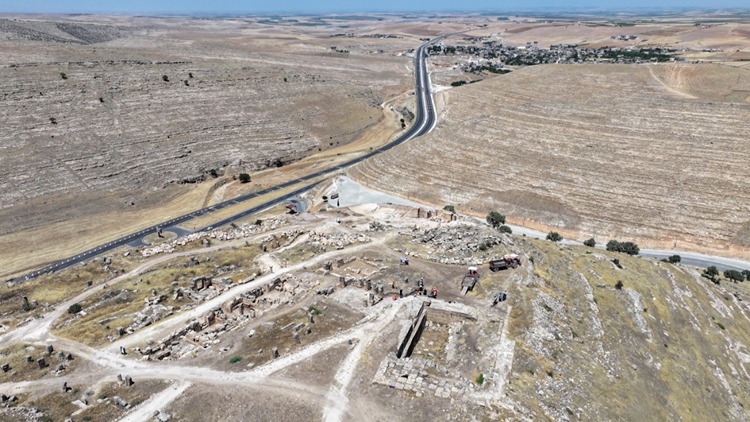
Archaeologists have recently unveiled a remarkable 1,800-year-old water distribution system at the historic Zerzevan Castle, a military settlement from the Roman Empire era. This significant discovery sheds new light on ancient engineering marvels and provides a deeper understanding of life within this strategic fortress.
Located near the village of Demirölçek in the Çınar district, approximately 13 kilometers from Diyarbakır city center, Zerzevan Castle sits atop a rocky hill 124 meters high. The site is famously home to the world’s last known Mithras Temple within a military complex, making it an invaluable archaeological and cultural landmark. Since 2020, the castle has been included in the UNESCO World Heritage Tentative List, boosting its status as a key tourist destination in the region.
Ongoing excavations at Zerzevan Castle, which began in 2014 as part of the Turkish Ministry of Culture and Tourism’s “Legacy for the Future” project, have revealed extensive remains. These include a 15-meter-high defensive wall stretching 1,200 meters, a 21-meter-high watchtower, churches, administrative buildings, residences, grain and weapons depots, rock tombs, water channels, 63 cisterns, an underground church, and a 400-person capacity underground shelter. The castle also features secret tunnels and an underground Mithras Temple, which was central to religious rites before Christianity became dominant in the 4th century AD.
A Roman Engineering Marvel Beneath the Surface
The latest breakthrough centers on the discovery of an intricate Roman-era water distribution system, described by excavation team leader Prof. Dr. Aytaç Coşkun as a “great engineering marvel.” According to Prof. Coşkun, the system includes water channels extending outside the castle walls and an impressive network of 63 cisterns designed to collect and store rain and spring water.
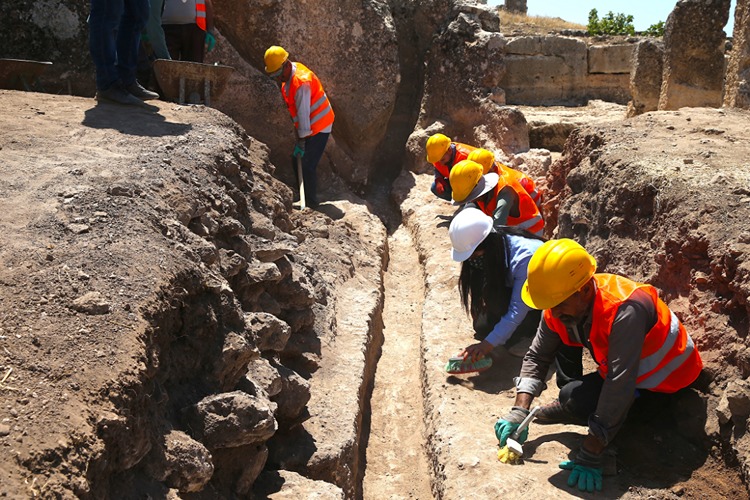
The largest cistern features a vaulted roof capable of holding up to 4,000 tons of water. Water was transported to the castle from three now-dry springs located 8.5 kilometers away through a sophisticated combination of aqueducts and channels. For the first time, archaeologists have uncovered the water distribution channel that conveys water from the main cisterns to various buildings within the fortress, including residential quarters and the Mithras Temple.
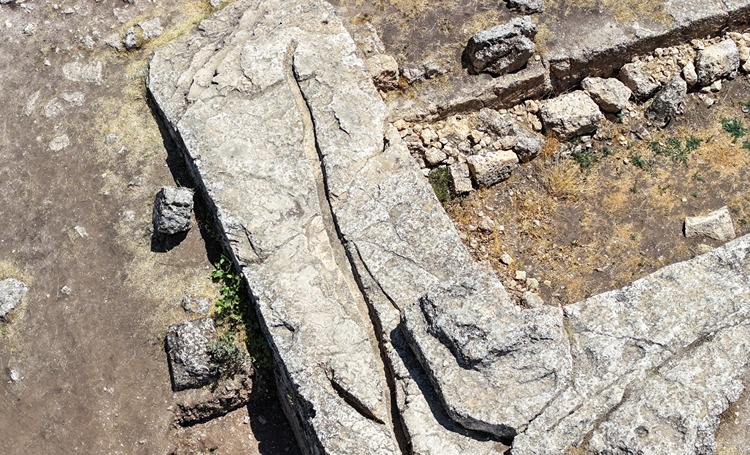
Archaeologists have recently unveiled a remarkable 1,800-year-old water distribution system at the historic Zerzevan Castle, a military settlement from the Roman Empire era. Credit: Osman Bilgin/AA
Adding to this discovery, ceramic pipes known as künk were found, revealing the use of pressurized water systems during the Roman period. This allowed water to be pushed upwards to higher elevations within the castle, an advanced technology for its time. A small waterfall mechanism was also identified inside the vaulted cistern, feeding into the distribution network.
Water Carriers and Life in the Fortress
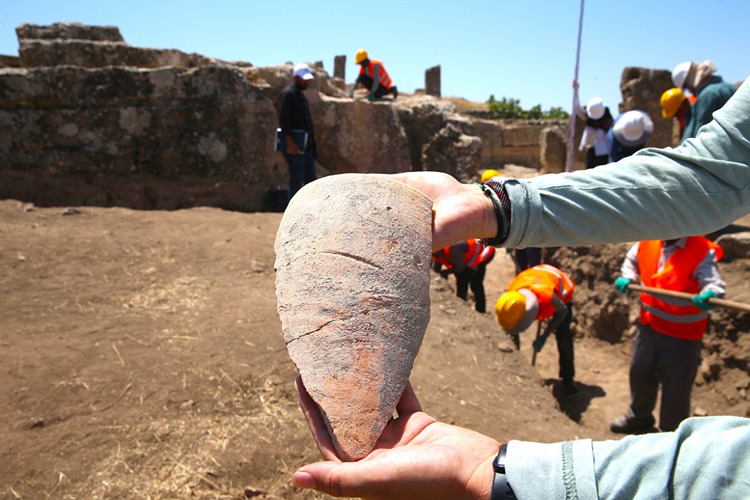
Among the finds were fragments of ancient water bottles, indicating how soldiers and civilians alike carried water with them. Prof. Coşkun highlighted that the castle’s water storage capacity was enormous — capable of sustaining thousands of people for an entire year without external water sources.
The fortress housed around 1,600 inhabitants but could accommodate many more during sieges, as locals from surrounding areas sought refuge underground. The extensive underground city, complete with large water reserves, ensured survival during prolonged attacks.
“This 1,800-year-old water distribution system uncovered at Zerzevan Castle provides us with tangible evidence of the sophisticated engineering and architectural developments of the Roman Empire,” Prof. Coşkun noted.
Zerzevan Castle: A Historic Military Stronghold
Zerzevan Castle holds a strategic position between the ancient cities of Amida (modern Diyarbakır) and Dara, overseeing a broad valley and controlling vital trade routes. The fortress witnessed intense conflicts between the Roman and Sasanian Empires.
Its origins trace back to the Assyrian period, but the main military settlement was established in the 3rd century AD during the Roman era. The castle was continuously used until the Islamic conquests of 639 AD. The fortress walls and buildings were repaired and partially rebuilt during the reigns of Byzantine emperors Anastasius (491–518 AD) and Justinian I (527–565 AD), further enhancing its defensive capabilities.
Why This Discovery Matters
Zerzevan Castle’s newly uncovered water system not only enriches our knowledge of Roman engineering but also highlights the ingenuity required to sustain large populations in remote, fortified locations. The discovery enhances the historical value of the site and underscores its importance as a cultural heritage treasure for Turkey and the world.
As archaeological work continues, Zerzevan Castle promises to reveal even more secrets about the ancient military, religious, and daily life of the region, attracting researchers and tourists alike.
Cover Image Credit: Osman Bilgin/AA
