
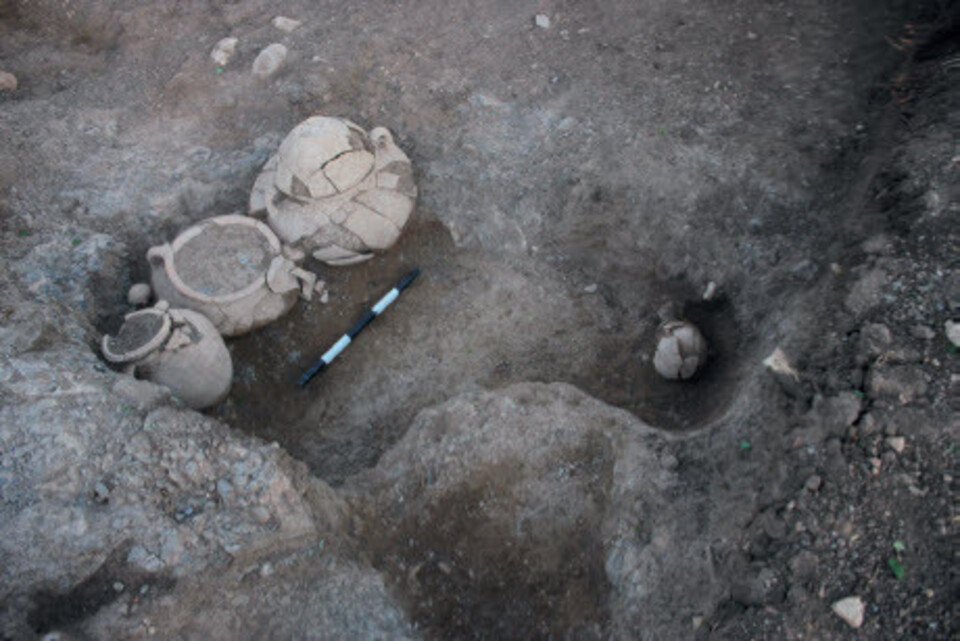
Archaeologists in northern Israel uncover a luxurious Iron Age cremation burial, revealing elite lifestyles, long-distance trade, and Assyrian influence thousands of years ago.
For a long time, life in the ancient world has been imagined as harsh, modest, and largely deprived of luxury. But a remarkable new archaeological discovery from northern Israel is challenging that perception in dramatic ways. Excavations in the Jezreel Valley have uncovered an exceptionally rich Iron Age burial, revealing that some people living thousands of years ago enjoyed a level of wealth, refinement, and global connectivity far beyond what modern scholars once assumed.
The find offers rare and compelling evidence that luxury, elite status, and long-distance trade were already deeply embedded in everyday life during the height of Assyrian imperial power around the 7th century BCE.
A Burial Unlike Any Other in the Southern Levant
The excavation team, led by archaeologist Dr. Omer Peleg, uncovered a unique cremation burial assemblage dating to the Iron IIC period—a time when the Neo-Assyrian Empire expanded its influence across the Levant. Unlike other burial sites in the region, the assemblage from Ḥorvat Tevet is the richest and most varied of its kind ever discovered in the Southern Levant.
The burial site consisted of two pits: one containing the articulated remains of an adult and the other housing a cremation burial accompanied by an extraordinary array of grave goods. Cremation was relatively rare in this region during the Iron Age, making this discovery particularly remarkable.
Luxury Goods Reveal Far-Reaching Networks
What sets this burial apart are the luxury items accompanying the cremated individual. Among them were:
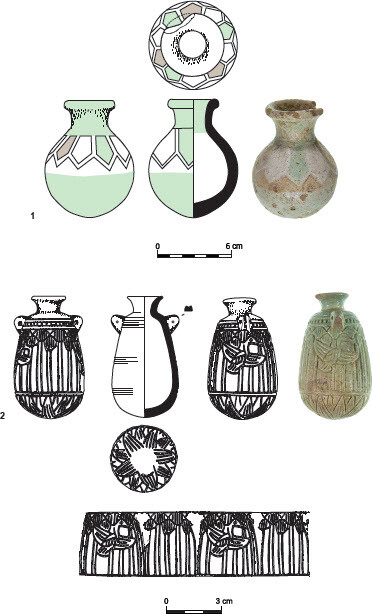
A glazed Assyrian bottle decorated with colored motifs typically found in royal Assyrian contexts.
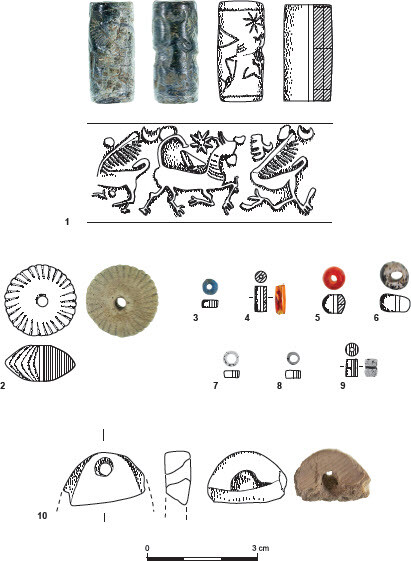
A Neo-Assyrian cylinder seal, often associated with administrative activity.
A stone weight, possibly linked to mercantile or official duties.
An alabastron, a decorative Mediterranean vessel depicting birds and papyrus—an object type circulating across wide trade routes.
Bronze jewelry, beads, and finely made pottery.
These artifacts suggest the deceased may have been a merchant, an official, or both—a person deeply connected to the economic and administrative networks of the Neo-Assyrian Empire. This rich burial contrasts sharply with the relatively modest domestic remains found elsewhere on the site, indicating a pronounced social stratification or special status for this individual.
Challenging Existing Historical Narratives
For decades, historians and archaeologists have debated the extent to which regions like the Jezreel Valley were developed or neglected under Assyrian control. Many scholars argued that the Assyrians focused primarily on exploiting local agricultural resources rather than investing in regional infrastructure or elite burials.
However, the Ḥorvat Tevet burial paints a different picture: one where elite engagement, trade links, and cultural exchange were active in the heartland of the Southern Levant. The lavish grave goods reveal connections stretching from the Mediterranean to Mesopotamia, underscoring how deeply integrated this rural location was within broader imperial and trade networks.
Dr. Peleg and colleagues argue that this discovery challenges previous assumptions about Assyrian disengagement and instead suggests a calculated, strategic presence that aimed to strengthen control over fertile lands and key agricultural zones in the Jezreel Valley.
Connecting Tel Megiddo and the Rural Hinterland
The location of Ḥorvat Tevet—only about 15 kilometers from the major urban center of Tel Megiddo, an Assyrian provincial capital at the time—makes this find even more significant. The burial might reflect the transportation of an elite individual from Megiddo for burial in the surrounding countryside, effectively linking urban authority with rural domains.
Such a practice reinforces the idea that the Assyrian presence in the southern Levant was not merely extractive but involved sustained political and social integration with local communities. It also hints at broader strategies of imperial influence that extended far beyond major fortified cities into smaller settlements and agricultural regions.
New Perspectives on Ancient Societal Structures
Beyond redefining the political landscape of the Iron Age Levant, the Ḥorvat Tevet burial provides an invaluable window into the customs, beliefs, and mobility of ancient people. The rare cremation practice itself adds complexity to understandings of Iron Age mortuary rites in the region, which were usually dominated by inhumation.
Moreover, the artifact assemblage confirms extensive long-distance exchange networks—not just for luxury goods but potentially for ideological and cultural influences that accompanied imperial rule.
An Open-Access Contribution to Archaeological Knowledge
The full scientific study, “A Unique Assemblage of Cremation Burial from Ḥorvat Tevet and Assyrian Imperial Rule in the Jezreel Valley,” was published in 2025 in the Tel Aviv journal and is available as open-access, enabling scholars and enthusiasts alike to explore this landmark discovery in depth.
This remarkable burial from Ḥorvat Tevet stands as a testament to the complexity of Iron Age societies and the rich tapestry of cultural and economic interactions that shaped the ancient Near East.
Peleg, O., Covello-Paran, K., Bezzel, H., Gadot, Y., & Sergi, O. (2025). A Unique Assemblage of Cremation Burial from Ḥorvat Tevet and Assyrian Imperial Rule in the Jezreel Valley. Tel Aviv, 52(2), 217–255. https://doi.org/10.1080/03344355.2025.2550116
Cover Image Credit: Area B, Level 3 burial pits at Ḥorvat Tevet, viewed from the southeast. Photo: Jordan Weitzel; courtesy of the Ḥorvat Tevet Expedition, Credit: Peleg et al., 2025
