
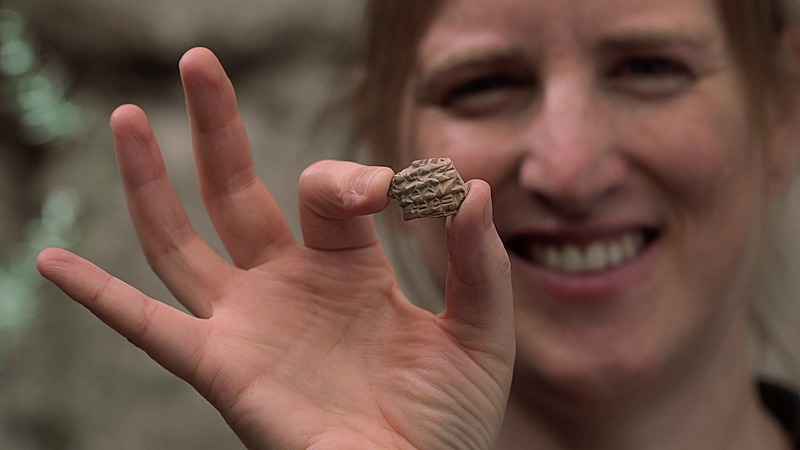
Archaeologists in Jerusalem have uncovered a discovery of extraordinary significance: a tiny, 2,700-year-old pottery fragment inscribed in Assyrian cuneiform — the first of its kind ever found in the city. The inscription, written in the Akkadian language, provides rare evidence of official correspondence between the royal court of Assyria and the Kingdom of Judah, offering a new window into the political and diplomatic life of the First Temple period.
The find was announced by the Israel Antiquities Authority (IAA) and the City of David Foundation, whose joint excavations near the Western Wall of the Temple Mount revealed this fragment in soil dating to the 8th–7th centuries BCE. Measuring just 2.5 centimeters, the shard may once have sealed a royal letter or shipment sent directly from the Assyrian Empire to Jerusalem.
A Moment of Discovery
The fragment was found during excavations directed by Dr. Ayala Silberstein of the IAA, in cooperation with the City of David Foundation. The deciphering team included Dr. Philip Vukosavović and Dr. Anat Cohen-Weinberger of the IAA, alongside Dr. Peter Zilberg of Bar-Ilan University.
“I was sifting the soil and suddenly noticed a potsherd with a strange pattern,” recalled Moria Cohen, a staff member who discovered the fragment. “At first, I thought it was a decoration, but when I realized it was cuneiform writing — I screamed. It’s incredibly moving to think that after 2,700 years, I was the first person to touch this fragment.”
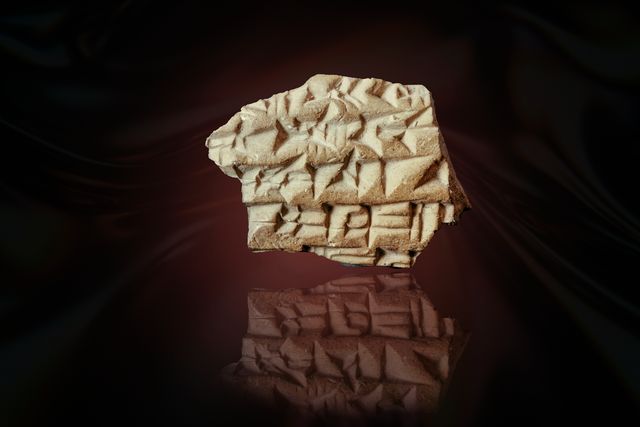
First Assyrian Inscription Ever Found in Jerusalem
Excavation director Dr. Ayala Silberstein of the IAA described the discovery as groundbreaking:
“This is the first Assyrian inscription from Jerusalem’s First Temple period. It provides direct evidence of official communication between the Assyrian Empire and the Kingdom of Judah. The find deepens our understanding of Assyrian influence in Jerusalem and the city’s role in the international politics of its time.”
The fragment was discovered in a layer of soil that had washed into a Second Temple–period drainage channel, likely originating from the collapse of an older structure from the First Temple period. The site lies on the eastern slope of Jerusalem’s western hill — one of the closest excavation points to the Temple Mount ever explored.
A Royal Seal of Power
Assyriologists Dr. Peter Zilberg and Dr. Philip Vukosavović identified the fragment as part of a royal bulla — a clay seal impression used to authenticate royal correspondence. The inscription includes a reference to a “chariot officer,” a high-ranking Assyrian figure responsible for official dispatches, and mentions the first day of the month of Av as a deadline for a payment or administrative matter.
“This small piece may record a delay in the transfer of tax or tribute,” said the researchers. “It’s possible the letter was sent during the reign of Sennacherib, King of Assyria, aligning with the biblical account of Hezekiah’s revolt in II Kings 18:7.”
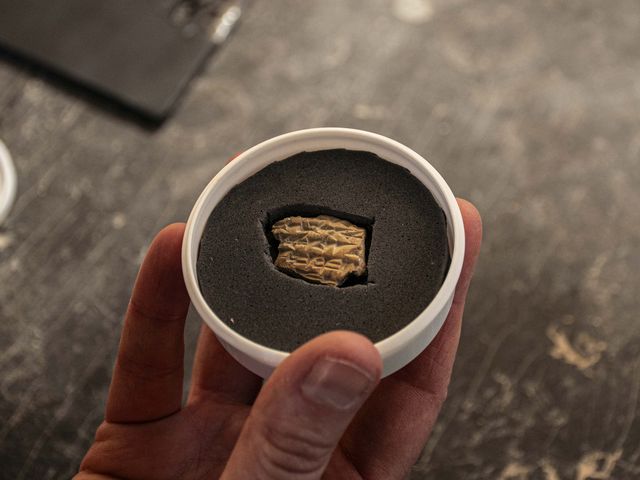
Made in Assyria, Found in Jerusalem
A detailed petrographic and chemical analysis revealed that the fragment was not produced locally. According to Dr. Anat Cohen-Weinberger, its clay composition differs entirely from materials used in Jerusalem and the southern Levant.
Dr. Anat Cohen-Weinberger of the IAA noted, “Petrographic analysis shows the clay’s mineral composition matches deposits from the Tigris basin — where Assyria’s great cities, such as Nineveh, Ashur, and Nimrud, were located.”
This finding confirms that the bulla was manufactured in Assyria and sent to Jerusalem, rather than being produced locally — tangible proof of administrative exchange between the two kingdoms.
Rewriting Ancient History
For historians, this discovery is revolutionary. It confirms that Jerusalem was not an isolated hilltop city but an active participant in the geopolitical network of the ancient Near East. The 2,700-year-old inscription reflects a time when Judah was a vassal kingdom under Assyrian control, and diplomatic letters like this one carried weighty political implications.
“The significance of this tiny artifact is enormous,” the research team concluded. “It’s the first solid evidence of written communication between Assyria and Jerusalem — a message from the empire’s heart to the kingdom at its edge.”
“This fragment reminds us how a single piece of clay can rewrite entire chapters of history.”
Public Unveiling
The Israel Antiquities Authority will unveil the fragment to the public at a special conference in Jerusalem, also broadcast live via Zoom, allowing viewers worldwide to witness this groundbreaking discovery firsthand.
Israel Antiquities Authority (IAA)
Cover Image Credit: Israel Antiquities Authority (IAA)
