
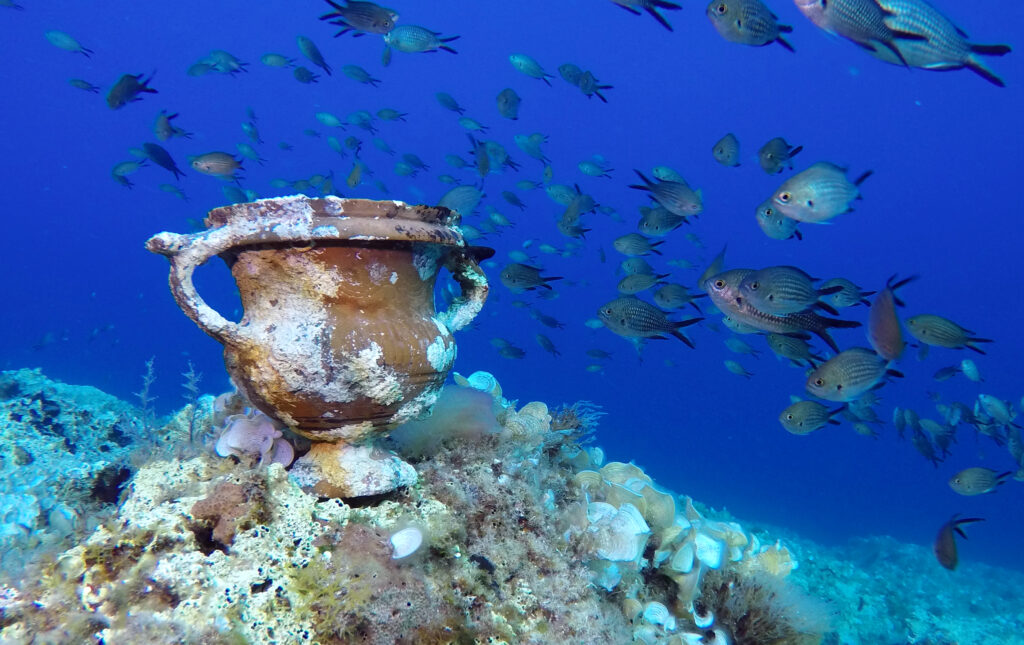
A 2,300-year-old shipwreck off the Croatian island of Vis has revealed an extraordinary collection of ancient pottery, personal belongings, and surviving wooden remains of a merchant vessel that once sailed the Adriatic Sea. Recent underwater excavations have brought to light objects that offer a rare glimpse into the lives of sailors during the Hellenistic period.
The Croatian Conservation Institute (Hrvatski restauratorski zavod) announced the findings on October 4, highlighting discoveries made during archaeological investigations between 2023 and 2025. Among the most remarkable finds are nearly six metres of preserved wooden ship structure, finely crafted drinking vessels, pottery bearing possible personal names, and a coin dating to the fourth century BCE.
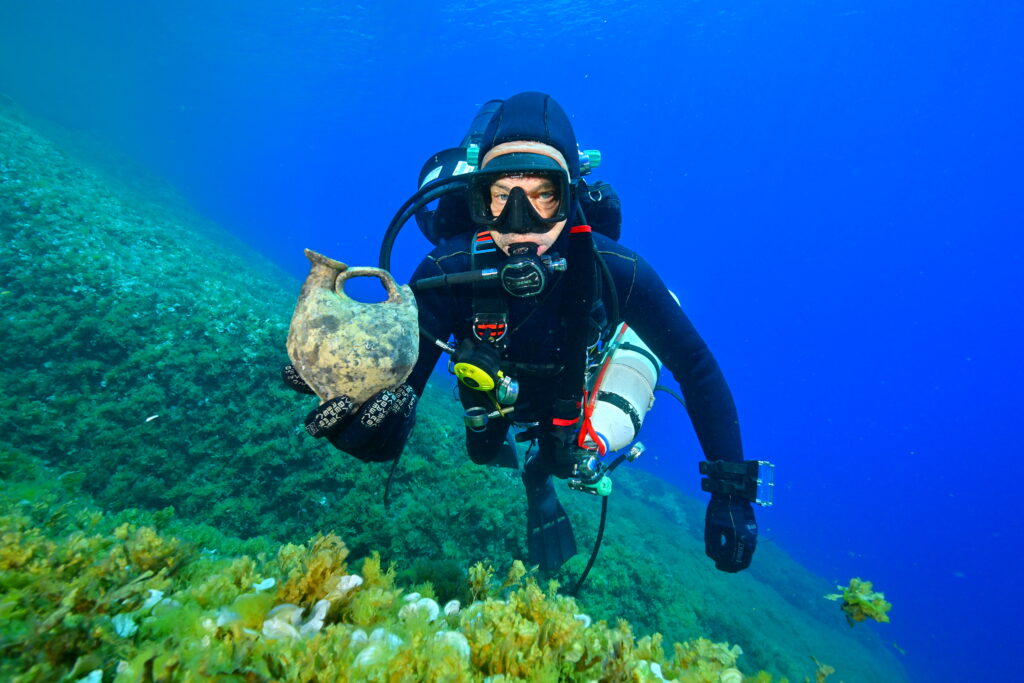
An Ancient Shipwreck Reveals Its Hidden Treasures
The wreck lies in Gnjilna Bay, near the town of Komiža on Vis, an island along Croatia’s Dalmatian coast. Archaeologists initially knew the site through a small number of fragments belonging to Corinthian type B amphorae, large ceramic containers commonly used to transport wine and olive oil.
Subsequent investigation revealed that the seabed concealed considerably more than a scattered cargo of ancient jars. Underwater archaeologists uncovered parts of the vessel itself, equipment, coins, animal bones, and a remarkable assortment of ceramic objects.
Jurica Bezak from the Croatian Conservation Institute’s Department of Underwater Archaeology is leading the investigations. The project also shows how valuable cooperation can be between professional archaeologists and the diving centres around Vis, whose involvement has helped both identify and protect the island’s underwater heritage.
The shipwreck dates to approximately the fourth or third century BCE, when Greek settlements and local communities maintained extensive trading connections across the Adriatic.
Six Metres of an Ancient Wooden Ship Survive
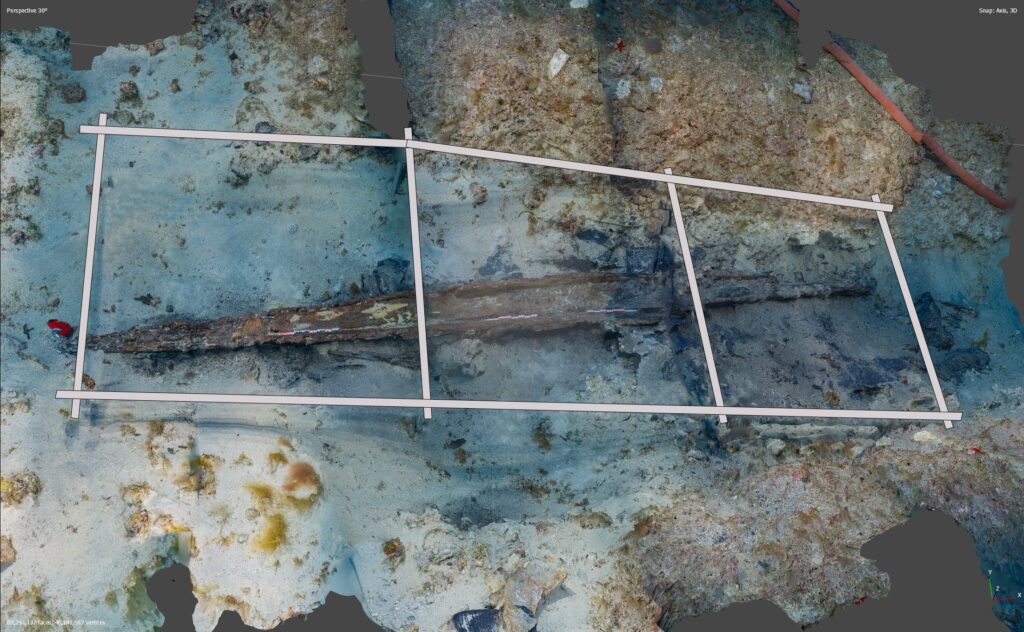
One of the most significant discoveries came when archaeologists exposed portions of the vessel’s wooden construction. Archaeologists uncovered approximately six metres of surviving hull structure, including part of the keel and attached wooden planking.
These timbers provide an opportunity to investigate how shipbuilders constructed merchant vessels more than two millennia ago. While pottery can reveal what a ship carried, surviving wooden components offer evidence of the vessel that transported those goods.
Researchers also recovered a lead component from a ship’s anchor, identified as belonging to the Haldane II A type. Together with the amphora fragments, this object helped establish the shipwreck’s preliminary date.
This discovery holds exceptional significance due to the fact that the majority of ancient shipwreck locations retain exclusively their more resilient cargo materials. Wooden vessel structures are susceptible to degradation across centuries when submerged in marine environments, thereby providing archaeologists with limited structural evidence regarding the vessels’ original construction and design.
Rare Pottery Offers a Glimpse Into Life at Sea
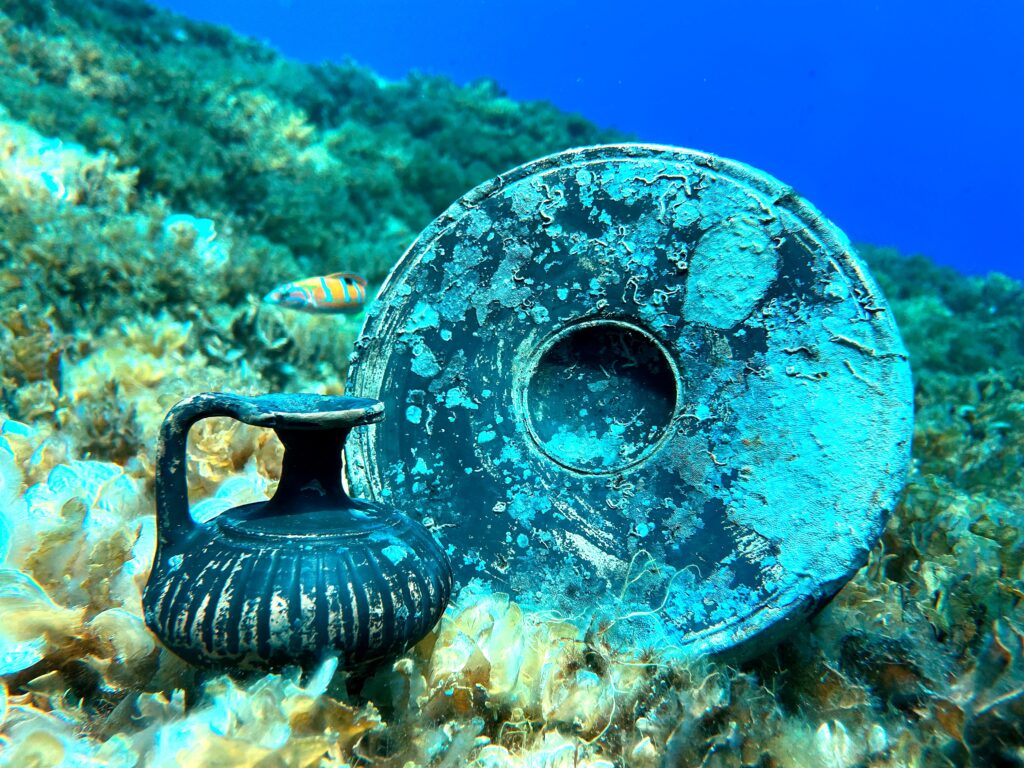
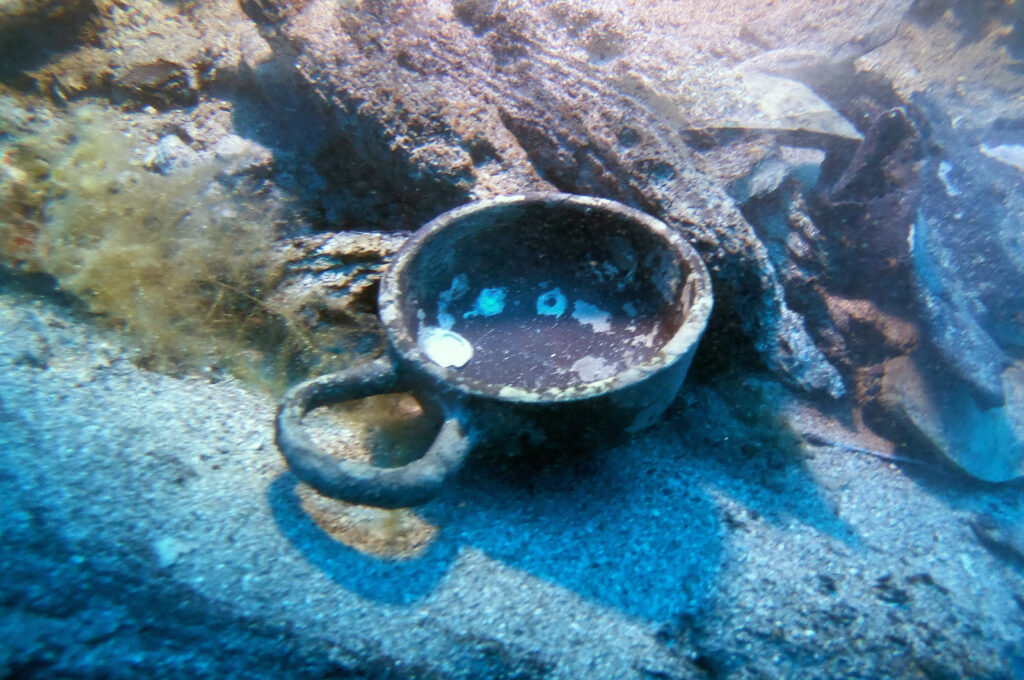
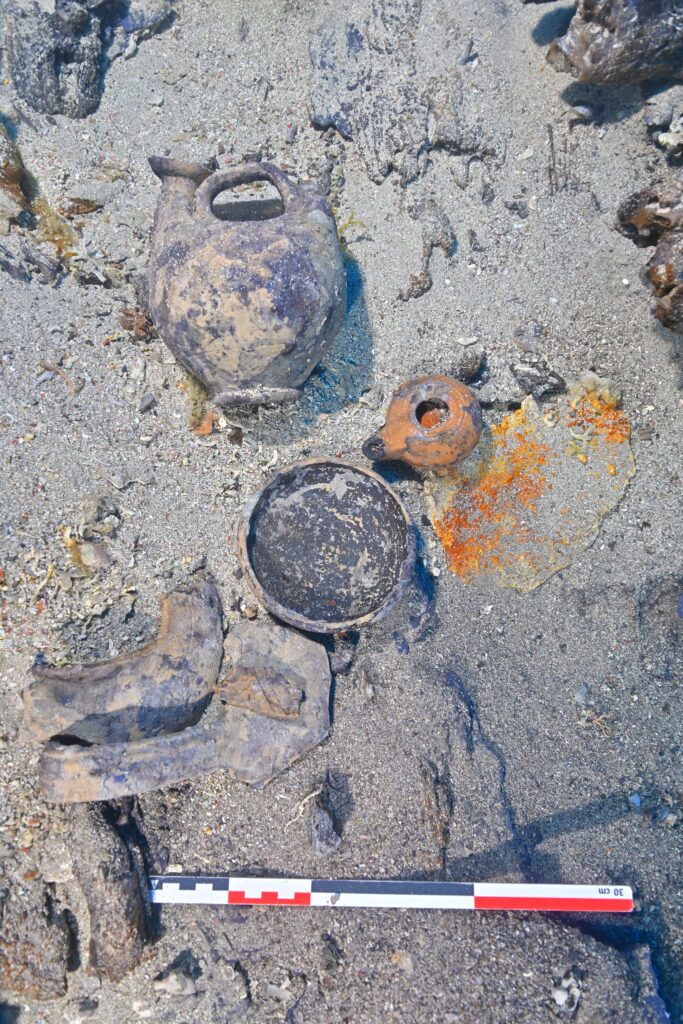
The ceramic collection is perhaps the most visually striking aspect of the Gnjilna shipwreck. Instead of finding only the transport containers usually associated with merchant ships, archaeologists encountered an assortment of smaller vessels connected with drinking, serving, and everyday activities.
Among the finds are skyphoi, drinking cups with handles; kantharoi, distinctive vessels associated with wine drinking; and askoi, small containers designed for pouring liquids. The collection also includes bowls, plates, salt dishes, and aryballoi, small vessels commonly associated with oils or perfumes.
Several objects stand out for their craftsmanship, rarity, and preservation. According to the Croatian Conservation Institute, the assemblage represents the first identified shipwreck with finds of Greek fine pottery, making Gnjilna particularly important for understanding the objects that accompanied maritime trade.
The drinking vessels also connect the discovery to the ancient city of Issa, established on Vis during the fourth century BCE. Issa later became famous for its wine, a product that helped shape the island’s economic identity in antiquity.
Did the Sailors Leave Their Names Behind?
Some of the most intriguing discoveries are surprisingly modest: inscriptions scratched into the surfaces of several black-coated ceramic vessels.
Researchers believe these markings may represent abbreviated personal names. Because someone engraved them after the pottery had been manufactured, archaeologists suggest they could have served as ownership marks, perhaps identifying possessions belonging to a crew member of relatively high social standing.
The markings suggest that some vessels may have belonged to individual crew members rather than forming part of the ship’s commercial cargo. Along with the animal bones and other pottery recovered from the wreck, these objects offer a glimpse into what sailors ate, drank, and carried with them during their voyages across the Adriatic.
Such discoveries may eventually help archaeologists distinguish between objects intended for trade and items that sailors kept for personal use.
Tracing Ancient Adriatic Trade Through the Cargo
The Gnjilna shipwreck also provides valuable evidence of the commercial networks that linked Greek settlements, Italian coastal communities, and the eastern Adriatic during the Hellenistic period.
A 2022 scientific study by archaeologists Maja Miše and Patrick Sean Quinn examined 248 amphora fragments from 15 archaeological sites across the Dalmatian region, including Gnjilna. Their research, published in Archaeological and Anthropological Sciences, used the composition of the pottery to investigate where ancient transport containers originated and how they circulated through maritime trade networks.
The analysis revealed an especially interesting detail about the Gnjilna cargo. Although the merchant vessel carried two different forms of Corinthian amphorae, identified as type A′ and type B, researchers concluded that they originated from the same production workshop.
This connection suggests that workshops could manufacture different styles of transport containers for goods moving through the same commercial networks. The findings also contribute to broader questions about the role of Corinth and other Mediterranean production centres in supplying Adriatic markets.
Gnjilna’s cargo belongs to a period when Issa on Vis and Pharos on neighbouring Hvar were becoming important centres of Greek settlement and commerce. These communities maintained connections with populations along the Dalmatian coast, while merchants carried wine, olive oil, and other commodities between ports.
Among the shipwreck’s discoveries is a coin from ancient Pharos dating to the fourth century BCE. Although a single coin cannot establish the vessel’s precise route, it adds another link to the commercial and cultural environment in which the ship operated.
The Gnjilna wreck now offers archaeologists something more complete than evidence of ancient cargo alone. Its surviving wooden structure, carefully made ceramics, possible personal inscriptions, and coin bring together the commercial and human sides of a maritime journey that ended on the Adriatic seabed more than 2,000 years ago.
Croatian Conservation Institute (Hrvatski Restauratorski Zavod)
Miše, M., & Quinn, P. S. (2022). Origins and distribution of Hellenistic and Late Republican transport amphorae in the Dalmatian region and its implications for Adriatic trade and economy. Archaeological and Anthropological Sciences, 14, Article 225. https://doi.org/10.1007/s12520-022-01689-
