
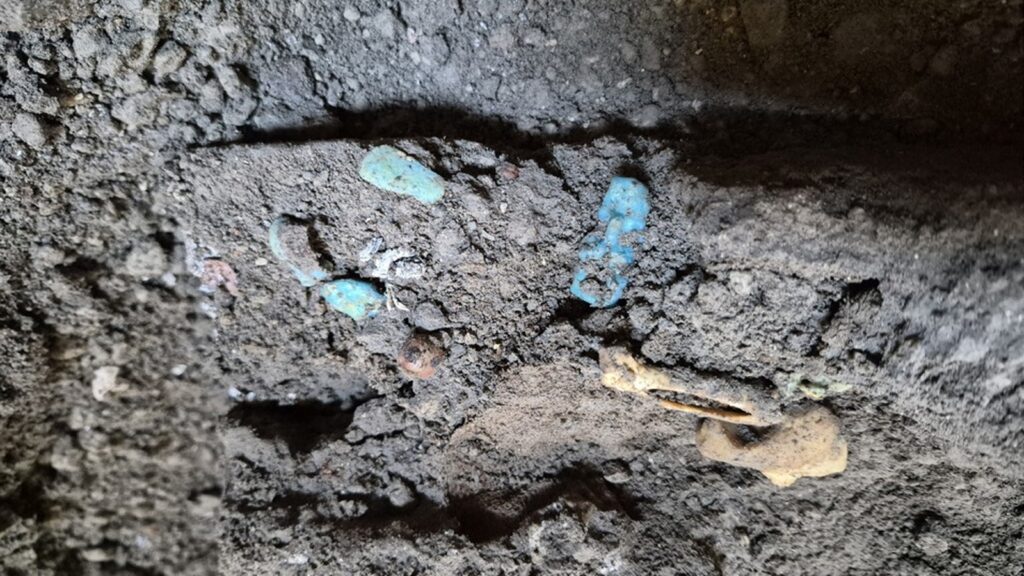
Archaeologists excavating a house in Pompeii have reconstructed the contents of a wooden cupboard abandoned during the eruption of Mount Vesuvius in AD 79. Among the finds are 24 miniature amulets associated with childhood, personal grooming tools, and 38 bronze coins.
Someone in ancient Pompeii kept a collection of childhood amulets alongside household objects and money, never imagining that these possessions would remain untouched for nearly 2,000 years. When Mount Vesuvius erupted in AD 79, the cupboard and its contents were abandoned, preserving traces of a life that archaeologists can now begin to reconstruct.
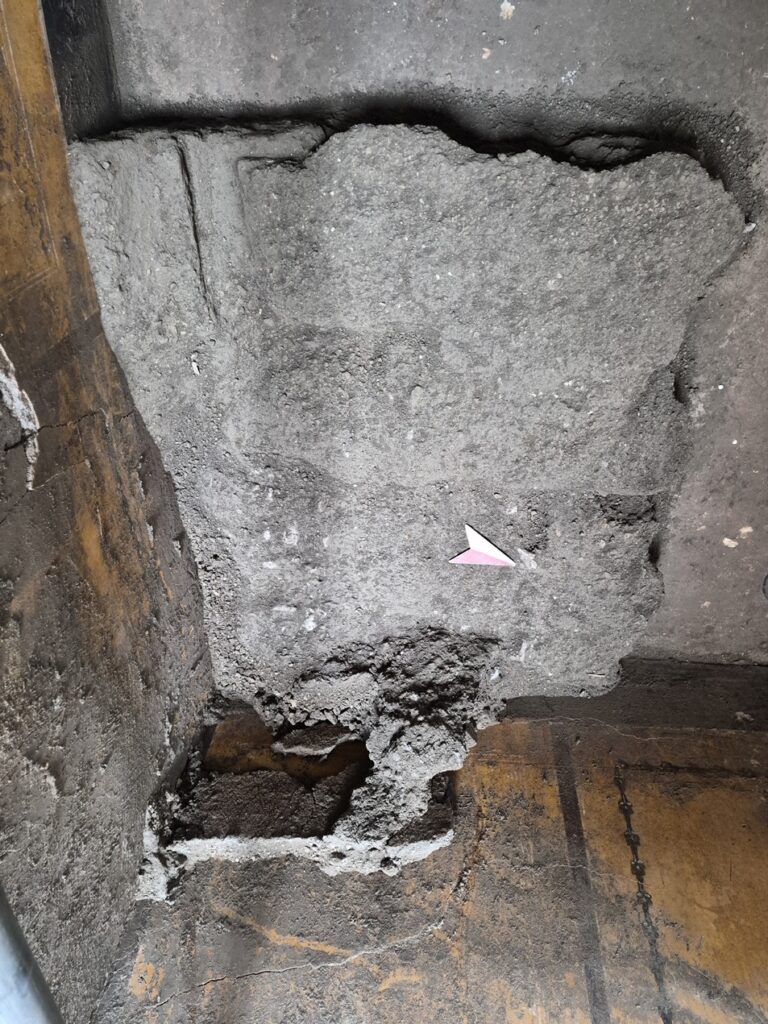
The discovery comes from a house traditionally attributed to Cornelius Maximus on Via dell’Abbondanza, one of Pompeii’s busiest streets. Excavations by the Archaeological Park of Pompeii have identified the remains of a wooden cupboard containing jewelry, cosmetics, cooking vessels, and a small collection of coins. The furniture itself did not survive intact, but its original form and contents can be reconstructed from archaeological evidence.
A Childhood Necklace Kept Among Everyday Possessions
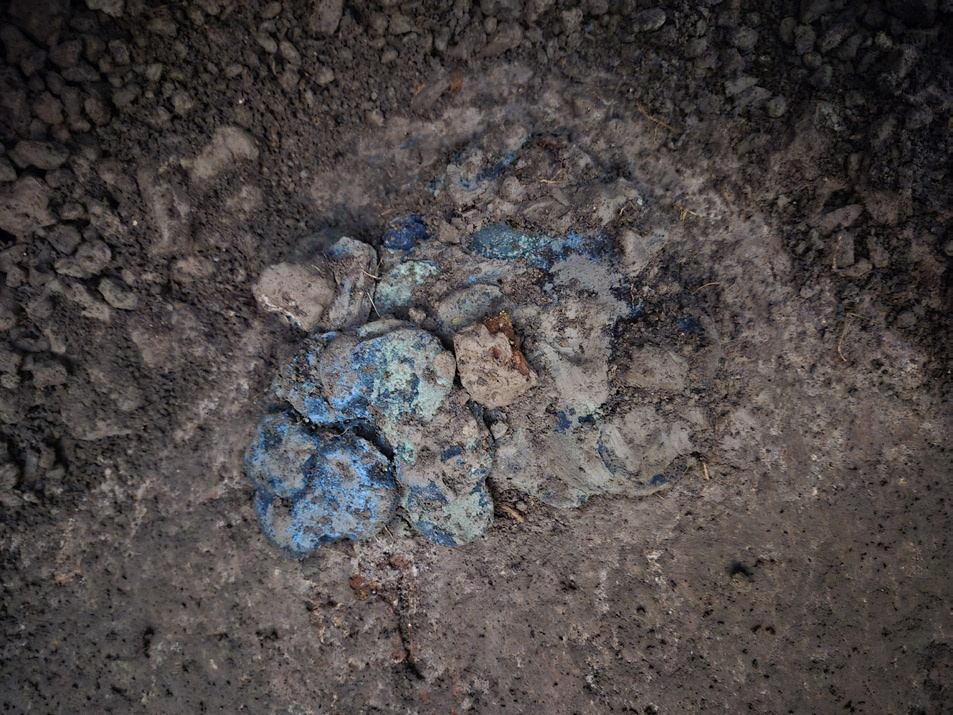
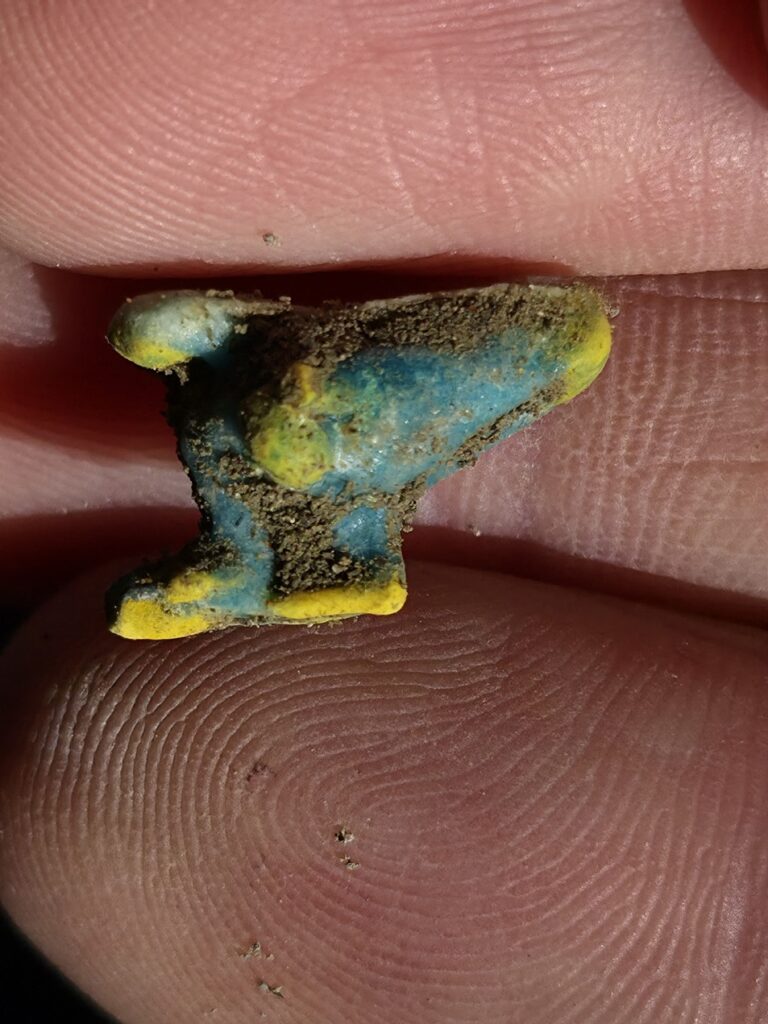
Among the most revealing discoveries is a collection of at least 24 miniature objects that once formed part of a necklace. Made from faience, bone, glass paste, and rock crystal, the tiny pendants depict recognizable figures and symbols, including the gods Bes and Mercury, human hands and feet, pine cones, and bunches of grapes.
Archaeologists identify these objects as crepundia, small ornaments traditionally associated with Roman childhood. Their name derives from a Latin word relating to sound, reflecting their use as rattling ornaments. They could serve both as protective amulets and as objects whose sounds helped adults follow the movements of young children.
Yet such necklaces did not necessarily disappear when their owners grew older. Some adults preserved them as reminders of childhood, particularly in a society where people frequently moved far from their families and places of birth.
The Pompeii necklace may have held a similar personal significance. Although researchers cannot establish who originally wore it, its presence among other possessions suggests that the collection may have been valued for reasons extending beyond its materials.
Cosmetics, Household Objects, and a Small Fortune
The cupboard contained objects associated with personal care, including tweezers, a small tool used for mixing cosmetic pigments, a glass container for perfumes or ointments, and an incense burner. Archaeologists also recovered a bronze lamp and several bronze, glass, and ceramic vessels.
One particularly refined vessel was a small jug decorated with a pattern resembling pine-cone scales. Other finds included cooking pots and utensils, showing how objects associated with personal grooming, household activities, and food preparation could be stored together.
The researchers also discovered lead weights inside a small wooden box, of which only faint traces survived. Their presence may indicate commercial activity within the household, although the precise nature of that activity remains uncertain.
Perhaps the most immediate evidence of the household’s final moments is a collection of 38 bronze coins. The money had been stored inside a small woven container made from plant material, traces of which survived sufficiently for archaeologists to examine its construction.
The coins and potentially sentimental objects were never recovered by their owners. Their presence suggests that the occupants had little opportunity to retrieve their belongings during the eruption, although the archaeological evidence cannot determine whether they escaped Pompeii or died in the disaster.
A House on One of Pompeii’s Busiest Streets
The discoveries were made in house IX 11, 7, traditionally known as the House of Cornelius Maximus. Its identification comes from inscriptions recorded when the building’s facade was excavated in 1912, although those inscriptions are no longer visible and the attribution remains uncertain.
The house stood along Via dell’Abbondanza, a major thoroughfare running through Pompeii. Its location and interior decoration suggest a relatively comfortable urban residence, but the new excavations reveal that everyday life inside was more complicated than its painted walls might suggest.
The room containing the cupboard featured elaborate Fourth Style wall paintings, attributed to a workshop associated with Via di Castricio. These decorations point to an investment in the appearance of the house, even as other parts of the building were undergoing construction or renovation when the eruption occurred.
Archaeologists also found the fragmented skeletons of two young mice inside an amphora stored in an elevated area. Identified as wood mice (Apodemus sylvaticus), the animals provide an unexpected reminder of the practical difficulties of living in an ancient city, where stored food and household supplies could attract rodents.
The excavations form part of a wider restoration and accessibility project involving the neighboring Insula dei Casti Amanti. Although only part of the house has been investigated, the recovered objects offer a detailed picture of activities carried out behind its street-facing facade.
Personal Memories Preserved by a Disaster
For Gabriel Zuchtriegel, director of the Archaeological Park of Pompeii, the importance of the discovery lies in the relationship between objects that might otherwise appear ordinary: items used for personal care, tools connected with work, and possessions that may have carried memories.
The researchers emphasize that the identity of the household’s occupants remains unknown. The objects associated with personal grooming may suggest the presence of a woman, but they do not establish who owned the cupboard or how its contents were shared among residents.
The childhood amulets are particularly significant because they introduce a different dimension to the archaeological evidence. Unlike coins, weights, or cooking vessels, their possible value as keepsakes cannot be measured solely through their original function.
The cupboard does not reveal the fate of the people who left it behind. It does, however, preserve an unusual combination of personal belongings, household equipment, and money at the moment Pompeii’s daily life was interrupted.
Nearly two millennia later, these objects allow archaeologists to examine not only what people owned, but also what they may have chosen to remember.
