
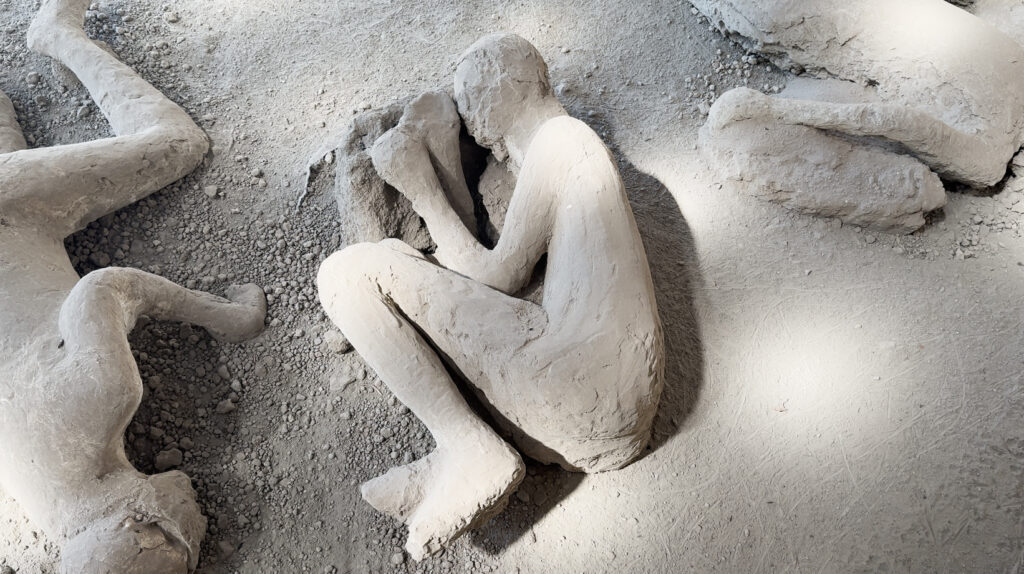
A Pompeii victim who died while trying to escape the eruption of Mount Vesuvius in A.D. 79 may have been a Roman doctor, according to new research announced by the Pompeii Archaeological Park.
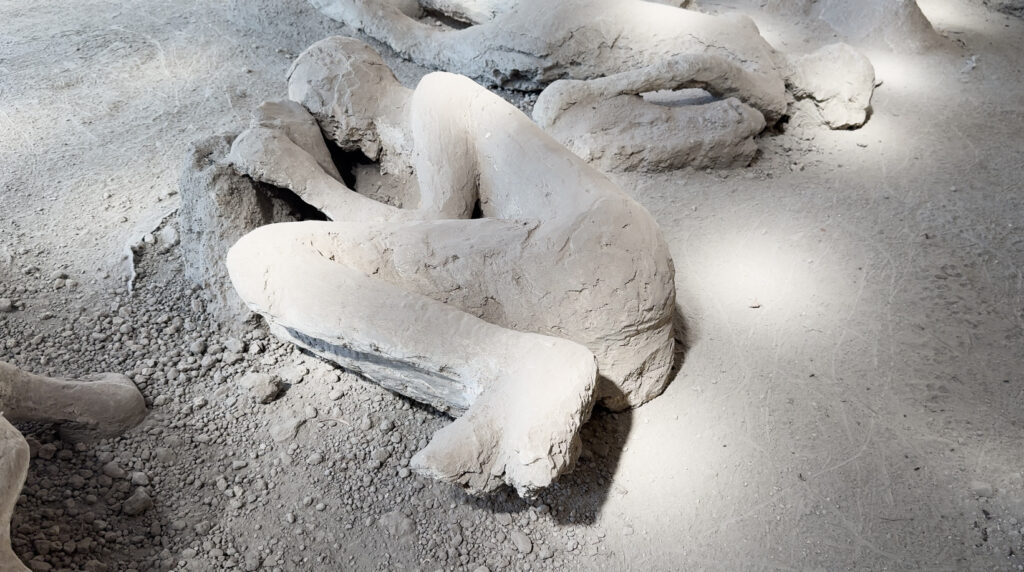
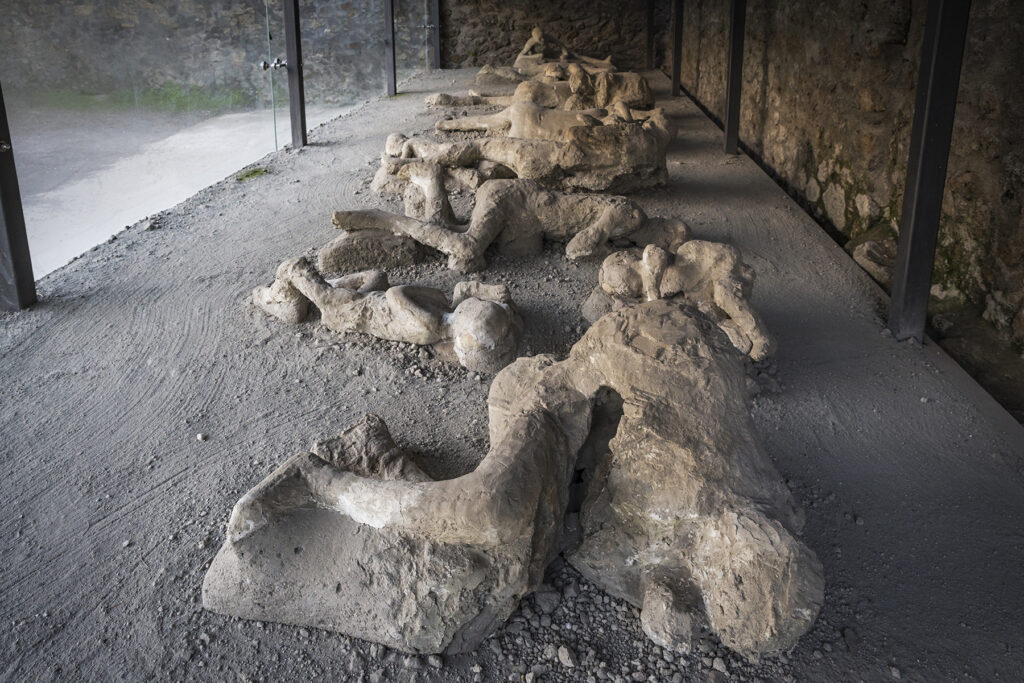
The discovery comes more than sixty years after excavations at the Orto dei Fuggiaschi, or Garden of the Fugitives, one of Pompeii’s most haunting archaeological areas. There, in 1961, archaeologists working under Amedeo Maiuri found the plaster casts of fourteen people who had been overcome by the pyroclastic cloud while attempting to flee the city through the area near Porta Nocera.
Now, modern diagnostic imaging has revealed that one of those victims was carrying a small case containing objects consistent with a medical kit. The find does not give the man a name, but it may restore something almost as powerful: his profession.
A medical kit hidden inside a plaster cast
The key evidence came from a small case preserved within the plaster cast associated with the victim. For decades, the object remained largely hidden from view, locked inside the material used to preserve the void left by the body after the eruption.
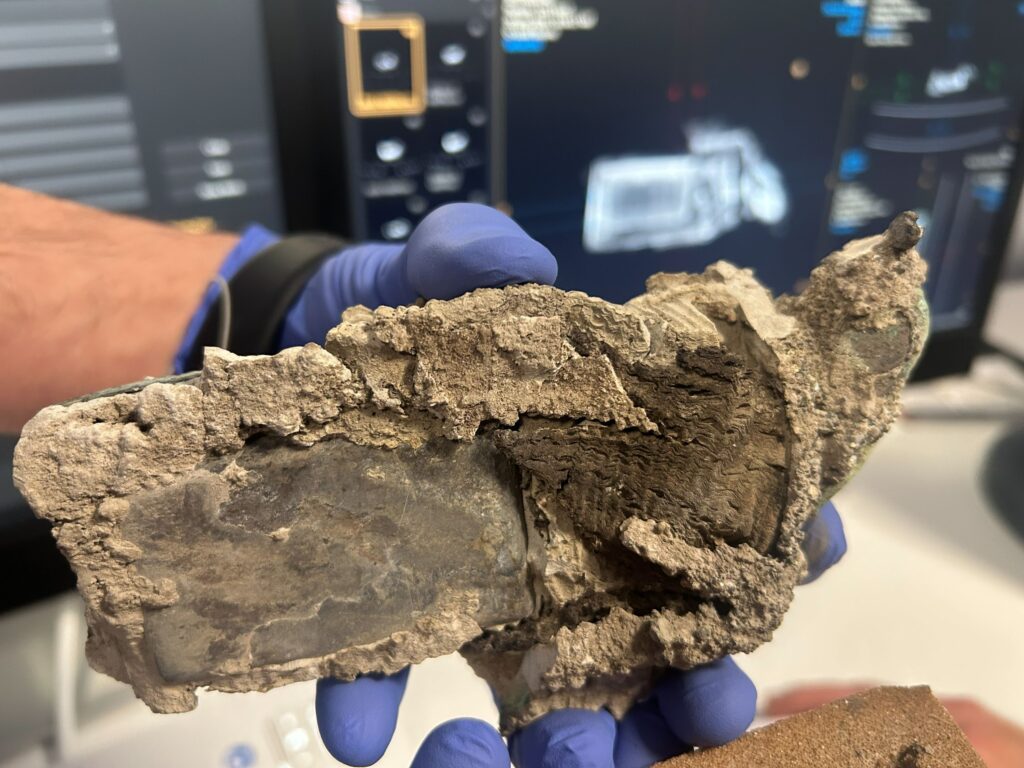
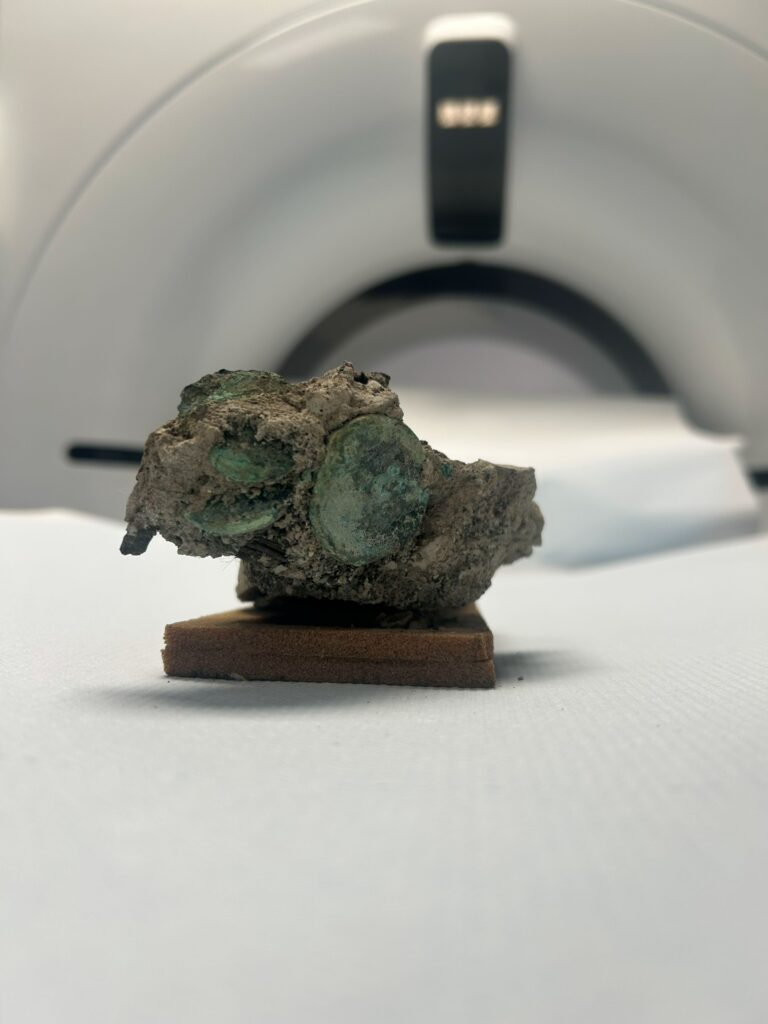
Recent analysis of items kept in the storerooms of the Pompeii Archaeological Park brought the assemblage back into focus. Researchers identified a small container made from organic material with metal fittings, a cloth bag holding bronze and silver coins, and several tools that appear compatible with medical practice.
X-rays and CT scans carried out at the Casa di Cura Maria Rosaria in Pompeii revealed more details inside the case. Among the objects was a slate tablet, likely used for preparing medicinal or cosmetic substances. Small metal instruments were also detected and interpreted as possible surgical tools.
Together, these elements support the hypothesis that the man was a medicus, a physician in the Roman world. The conclusion remains cautious, but the evidence is unusually suggestive. In a city where many victims are known only by the positions in which they died, this discovery offers a rare glimpse into the life they may have lived.
Science reopens an old Pompeii story
The study relied on advanced diagnostic methods, including artificial intelligence-assisted CT scans and three-dimensional reconstructions. These techniques allowed researchers to inspect the contents of the cast without damaging it.
The scans also revealed the refined construction of the small case itself. According to the park, it had a sophisticated locking mechanism operated by a toothed wheel, a detail that points to careful craftsmanship and to the value of the objects it protected.
This is not just a technical success. It shows how Pompeii’s casts, long treated as emotional witnesses to disaster, can still produce new archaeological information when studied with modern tools. The discovery also underlines the importance of museum storerooms, where objects excavated decades ago may still hold unresolved stories.
A profession carried into flight
Gabriel Zuchtriegel, director of the Pompeii Archaeological Park, described the find as a small but meaningful discovery. He said the man may have carried his instruments not only to rebuild his life elsewhere, but perhaps also to help others during the crisis.
That possibility gives the find its human weight. The man was not simply escaping with valuables. If the interpretation is correct, he was fleeing with the tools that defined his skill, status, and practical usefulness.
In Roman society, physicians could work in different settings, from private households to military or urban communities. Medical practice combined learned traditions, practical experience, and portable tools. A small kit could therefore represent more than equipment. It could be a livelihood.
Pompeii’s storerooms still hold unfinished lives
The Garden of the Fugitives has always been one of Pompeii’s most direct encounters with the final moments of A.D. 79. The fourteen casts found there preserve a group caught in motion, probably trying to escape the city as the eruption entered its deadliest phase.
The new analysis adds a sharper human detail to that scene. Among the fugitives may have been a doctor, carrying coins, a bag, and a carefully made case of instruments as the volcanic cloud overtook the group.
The research also reflects a wider shift in Pompeian archaeology. Instead of focusing only on houses, frescoes, and streets, scholars are increasingly using scientific techniques to recover individual stories from old discoveries. In this case, archaeology, restoration, radiology, anthropology, numismatics, and digital modeling have worked together to turn an overlooked object into evidence of a life interrupted.
More than 1,900 years after the eruption, Pompeii continues to change what can be known about its dead. This time, the discovery is not a new building or a spectacular fresco, but something smaller and more intimate: a hidden medical case, still close to the person who may once have used it.
Cover Image Credit: Pompeii Archaeological Park
