
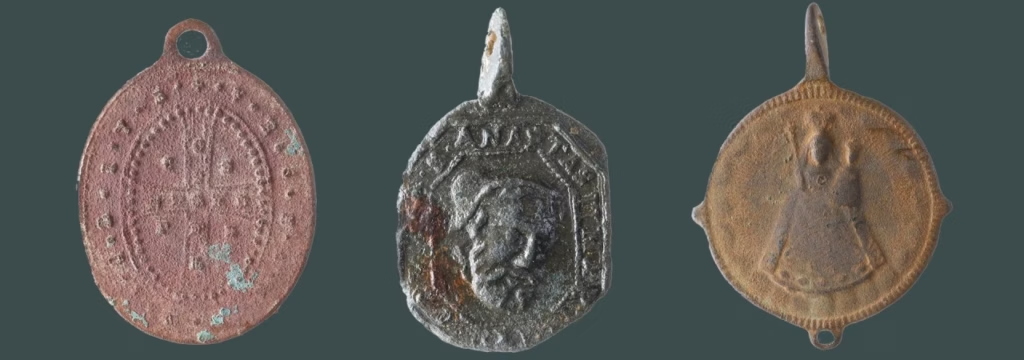
A volunteer metal detectorist working with Aargau’s cantonal archaeology service has uncovered a remarkable group of religious medallions in and around Villmergen, Switzerland. The small metal objects, dating from the 17th to the 20th century, offer a rare look at everyday Catholic devotion, pilgrimage culture, and older ideas of spiritual protection.
The finds were made by Cornel Braunwalder, a volunteer from Wohlen who has searched fields in the Freiamt region for years under the supervision of Kantonsarchäologie Aargau. Most metal detector finds are not treasures at all. They are usually scraps of modern life: aluminium cans, buttons, cutlery, spent objects, and other debris left in the soil over generations. But among that noise, a small number of objects can still carry historical value.
In this case, the signal led to devotional objects that once belonged to people whose names are lost, but whose fears, hopes, journeys, and religious habits can still be traced through what they carried.
Small Objects, Personal Beliefs
The medallions found near Villmergen are not spectacular in the usual archaeological sense. They are small, worn, and easy to overlook. Yet their value lies precisely in their ordinary character.
They were objects of personal devotion. Some were probably worn around the neck or attached to clothing. Many were likely fixed to rosaries used in prayer. Others may have been deliberately placed in fields, near streams, at doors, beds, cradles, or stables as protective objects.
Together, they show how religion entered the daily lives of ordinary people in early modern and modern Switzerland. Faith was not limited to churches, feast days, or formal rituals. It was carried on the body, attached to household objects, buried in the ground, and taken on journeys.
The medallions depict saints, Marian images, and pilgrimage symbols. Their range, spanning roughly four centuries, makes the group especially useful for understanding how popular piety changed — and how much it also remained the same.
Saints for Every Trouble
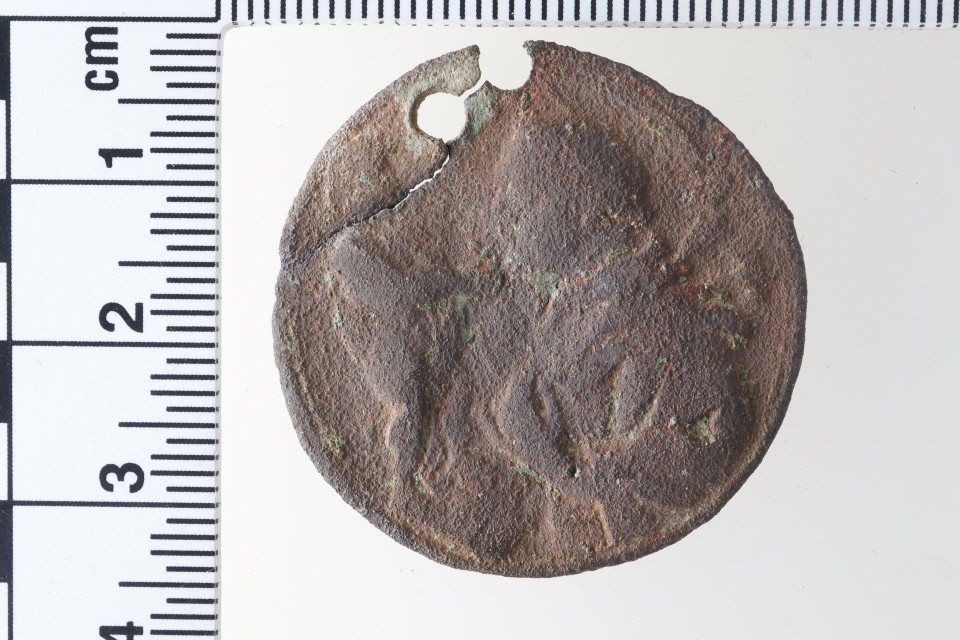
Many of the medallions show saints whose protection was sought in specific situations. This was a world in which illness, failed harvests, childbirth, war, poverty, and sudden misfortune were constant risks. Saints were often approached not in abstract theological terms, but as helpers in very concrete human problems.
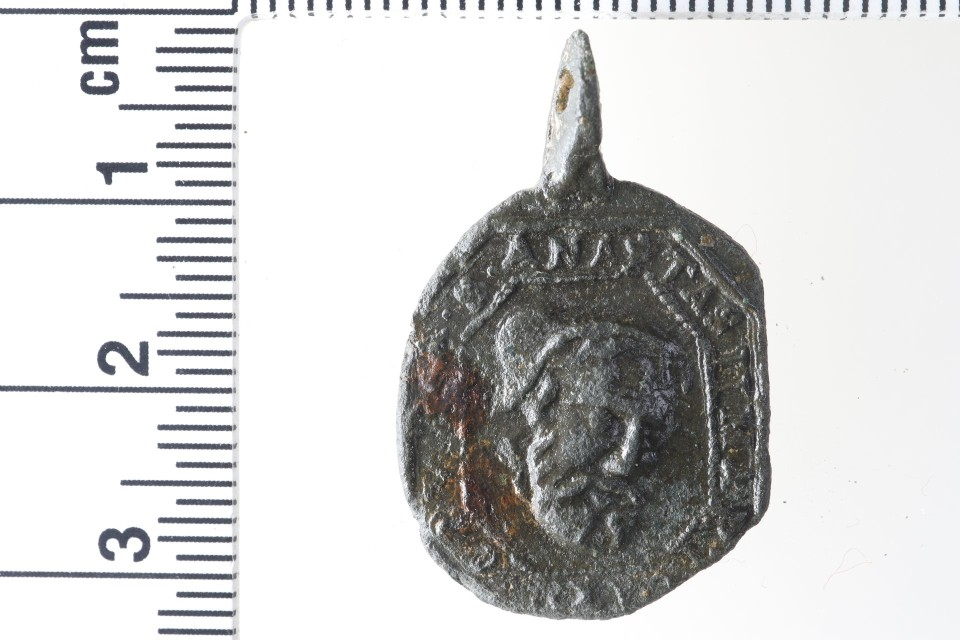
Saint Rita of Cascia, for example, was invoked in hopeless cases and moments of despair. She was also associated with protection in illness. Saint Anastasius the Persian was called upon against headaches and states of frenzy. Saint Anthony was one of the most versatile figures: helper in finding lost objects, patron of the poor, protector in disease, and a saint connected with love, marriage, childbirth, livestock illness, and times of war.
The group also includes saints linked with the Jesuit order. One of them is Aloysius Gonzaga, traditionally associated with youth and students. According to hagiographic tradition, he died while caring for plague victims. In devotional practice, such details mattered. They helped explain why a saint might be invoked against particular dangers or illnesses.
These small medals therefore functioned almost like a personal catalogue of anxieties. Each saint represented a form of help, protection, or intercession.
Pilgrimage Souvenirs from Einsiedeln, Rome and Lourdes
The Villmergen finds are also evidence for pilgrimage. A large number of the medallions are connected with pilgrimage sites, where visitors could obtain devotional objects linked to the holy image or saint venerated there.
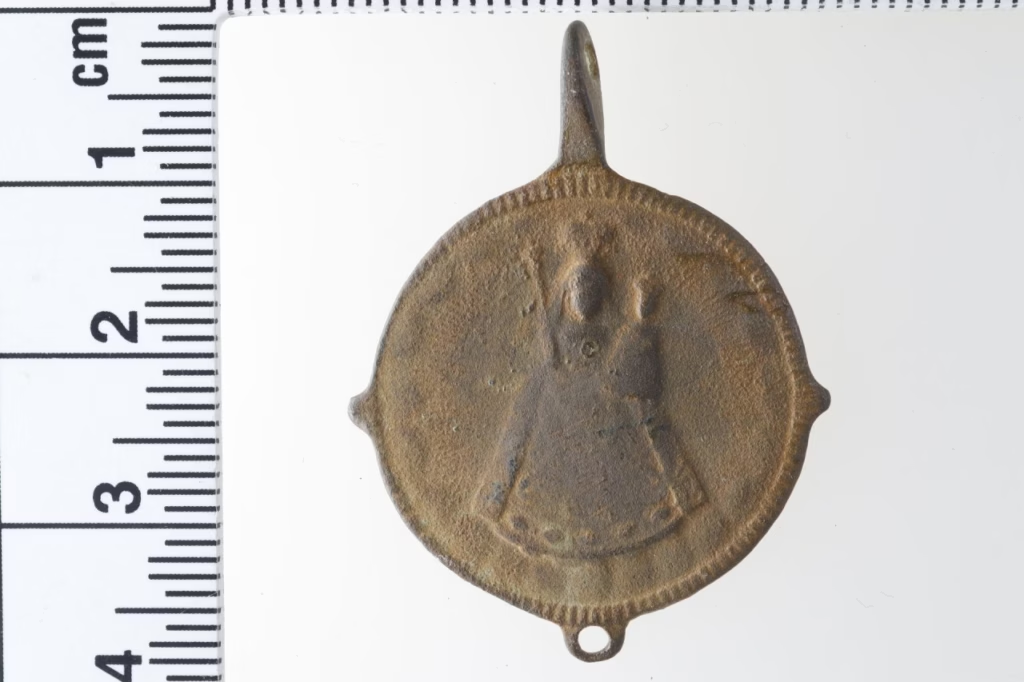
The largest group appears to come from Einsiedeln Abbey, one of Switzerland’s most important Marian pilgrimage centers. These medallions usually show the revered image of the Virgin Mary. For people in the region, Einsiedeln was not just a distant shrine. It was part of a living religious landscape.
Other objects point farther away. Some medallions are connected with Ettal and Wessobrunn in southern Germany. Others refer to Rome. These Roman pilgrimage tokens show the four Holy Doors, which are normally sealed and opened during a Jubilee Year. In Catholic belief, pilgrims passing through the Holy Doors could obtain an indulgence.
The most recent medallions in the group come from Lourdes, the Marian pilgrimage site in France that became one of the most visited Catholic shrines of the modern period after the reported apparitions of 1858.
Seen together, the medallions show that people from the Villmergen area were connected to a wide devotional network. Their religious world stretched from local fields to Swiss monasteries, southern German shrines, Rome, and Lourdes.
Why Some Medallions Were Buried
Not all of the medallions were necessarily lost by accident. Some may have been intentionally placed in the ground.
This is especially likely for medals of Saint Benedict. In Catholic folk practice, Benedictine medals were widely used as protective objects against evil, danger, illness, and misfortune. They could be fixed near beds, cradles, doors, or stables. Outside the house, they might be placed in furrows or buried near streams to protect fields from crop failure, storms, or flooding.
That possibility changes the meaning of the discovery. Some of these objects may not simply mark where someone dropped a rosary or lost a pendant. They may record deliberate acts of protection, carried out by people who believed that danger could be held back through prayer, symbols, and sacred metal.
For archaeology, such finds are important because they preserve traces of practices rarely described in official records. They show how religious belief moved beyond church walls and into the practical routines of farming, family life, and household protection.
Archaeology Beyond Treasure
The Villmergen medallions also show why controlled metal detecting can matter when it is carried out legally and in cooperation with archaeologists.
Most signals in a field lead to rubbish. Only a small portion of objects have archaeological value. But when finds are recorded properly — with location, documentation, and expert assessment — even modest objects can become evidence.
In this case, the value is not in precious metal or artistic quality. It is in the story the group tells. The medallions reveal what people feared, where they travelled, which saints they trusted, and how religious protection was woven into daily life from the early modern period into the 20th century.
A lost Saint Anthony and a buried Saint Benedict may seem like small discoveries. But in Villmergen, they have opened a window onto four centuries of faith carried in pockets, worn on rosaries, taken on pilgrimages, and sometimes placed quietly into the soil.
Cover Image Credit: Kantonsarchäologie, © Kanton Aargau
