A groundbreaking archaeometric study has uncovered an unprecedented Roman painting technique in southeastern Spain, shedding new light on how elite homes in ancient Carthago Nova—modern-day Cartagena—were decorated with some of the most luxurious pigments of antiquity.
Published in Scientific Reports, the research reveals that painters working in the Domus of Salvius developed a sophisticated and previously undocumented method for applying cinnabar, the prized “red gold” of the Roman world. The discovery not only transforms our understanding of Roman wall painting in Hispania but also highlights the technological ingenuity of ancient craftsmen.
A Roman Domus Preserved in Time
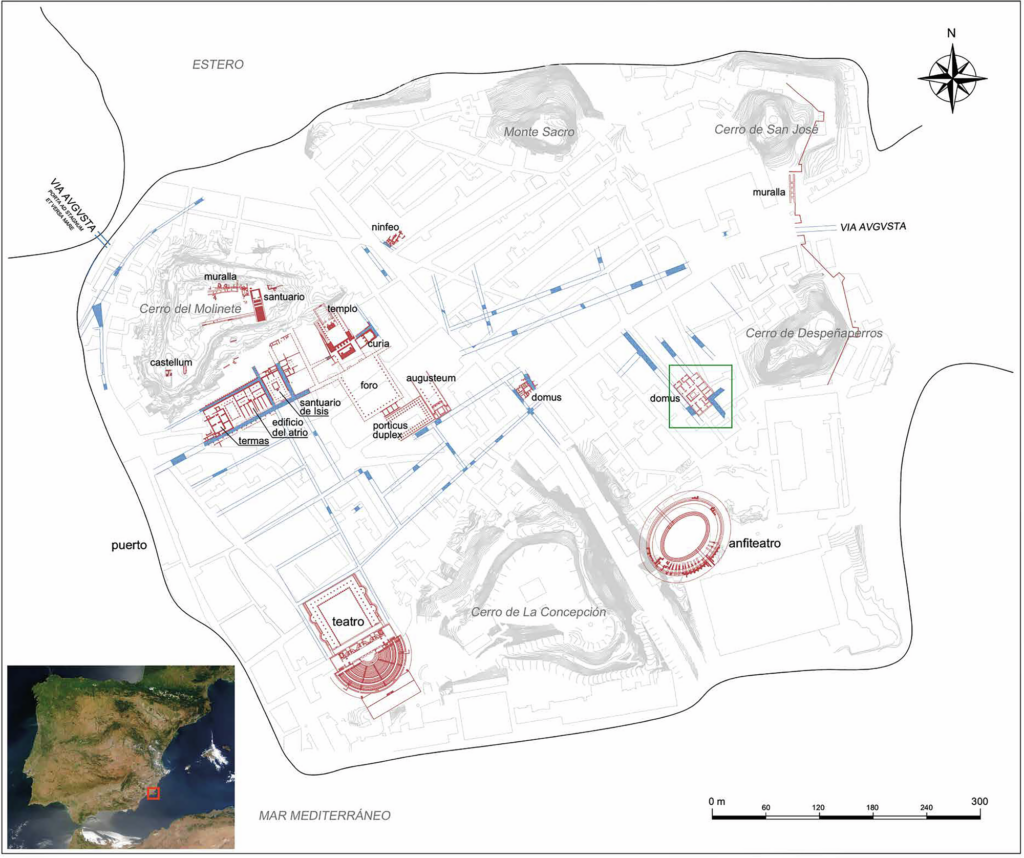
The Domus of Salvius stands among the best-preserved Roman houses in Cartagena. Dating to the late 1st and early 2nd centuries AD, the residence reflects the wealth and cultural refinement of local elites during the High Empire.
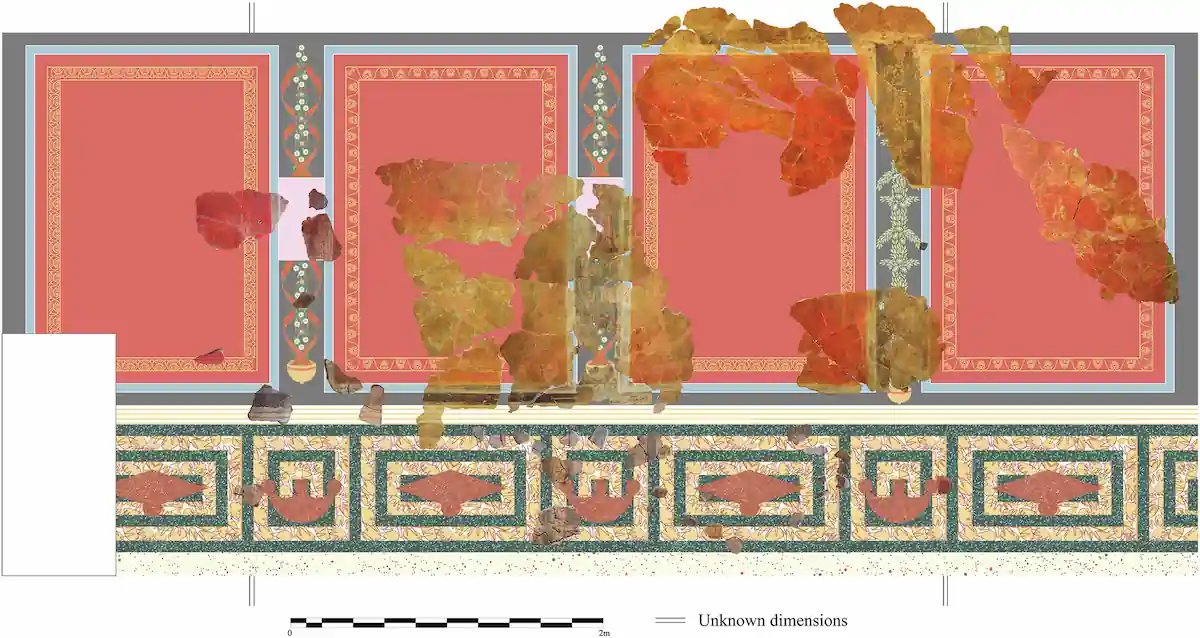
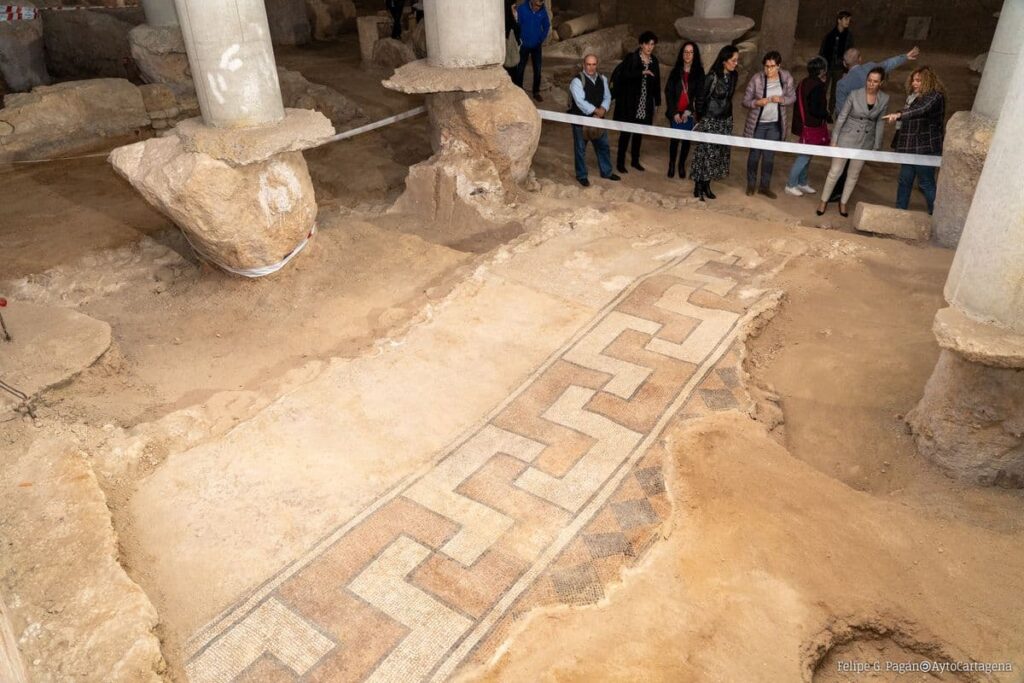
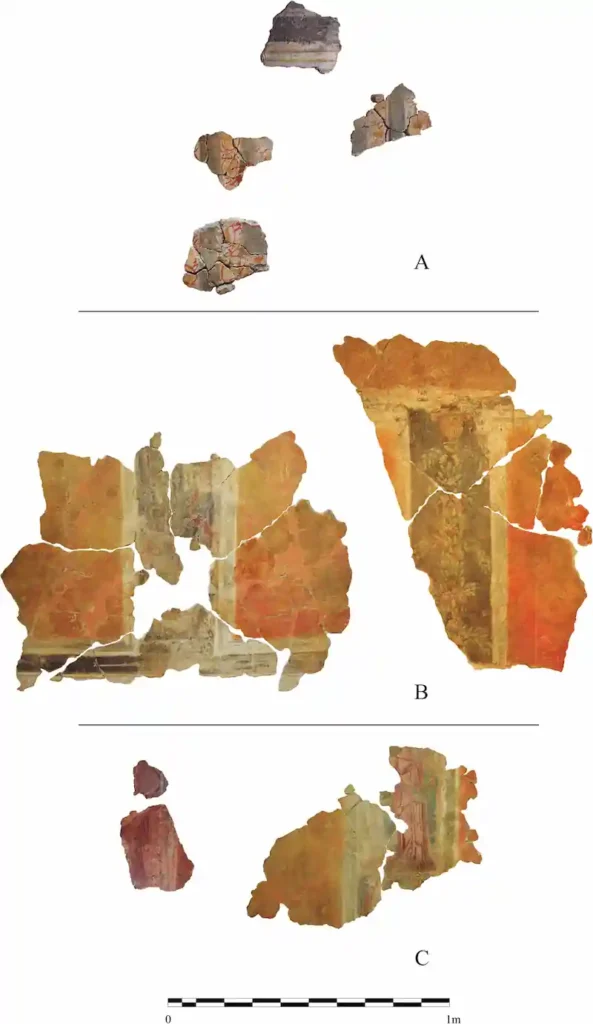
The focus of the study was Room 3, believed to have functioned as a biclinum—a formal dining room identified by the shape of its mosaic floor. What makes this space exceptional is that its wall paintings survive entirely in their original position. Unlike many Roman frescoes found collapsed or fragmented, these remain in situ, allowing researchers to reconstruct the complete decorative program and extract microscopic samples with extraordinary precision.
Rather than limiting their investigation to stylistic analysis, the multidisciplinary team sought to uncover the technical “recipes” behind the paintings—probing materials, workshop practices, and pigment application methods using advanced archaeometric techniques.
📣 Our WhatsApp channel is now LIVE! Stay up-to-date with the latest news and updates, just click here to follow us on WhatsApp and never miss a thing!!
Local Materials, Elite Craftsmanship
The first surprise emerged from the mortar supporting the paintings. At first glance, it appeared to consist of only two layers. However, microscopic thin-section analysis, X-ray diffraction, and X-ray fluorescence revealed a far more complex four-layer system.
The finishing layer—where color was applied—rested atop three preparatory strata. Chemical analysis showed a dominant calcium composition, indicating lime mortar. Yet this was not the common aerial lime typically used in Roman plasterwork. Instead, painters used micritic lime, a more impure but mechanically resistant material likely sourced from local quarries in the Cartagena mountain range.
Aggregates embedded in the mortar included marble, quartzite, schist, limestone, and dolomite. The presence of marble fragments in intermediate layers points to high-quality craftsmanship. Notably, the absence of marine bioclasts suggests that the workshop sourcing materials for the Domus of Salvius differed from others operating nearby, demonstrating a complex network of supply and specialized labor.
The Painter’s Palette: From Humble Ochre to Egyptian Blue
To identify the pigments, researchers turned to Raman spectroscopy, a technique capable of detecting specific chemical compounds through their interaction with light. Analysis of samples taken from white, black, yellow, green, blue, and red areas revealed a carefully selected and technically sophisticated palette.
The white tones were composed of calcium carbonate, or lime, the same material used in the plaster itself. In Roman fresco painting, lime was both practical and effective: inexpensive, abundant, and chemically compatible with wet plaster, it ensured durability while providing a bright, reflective surface that enhanced surrounding colors.
Black areas were produced using vegetal charcoal obtained through controlled combustion of plant material. This carbon-based pigment created deep, stable tones ideal for outlines and shading. The absence of phosphate traces ruled out the use of bone black, confirming that the painters relied on plant-derived carbon, a common and reliable choice in Roman mural decoration.
Yellow hues derived from goethite, a natural iron oxyhydroxide widely known as yellow ochre. This pigment generated warm, earthy tones and was particularly suited to fresco technique due to its stability. In the Domus of Salvius, it was used both decoratively and structurally, sometimes forming underlayers beneath red pigments and contributing to marble imitations such as giallo antico.
Green was identified as green earth, specifically the glauconite variety. This mineral produced muted olive and yellowish-green shades frequently associated with vegetal motifs and decorative detailing. In several instances, microscopic traces of blue particles were detected within green passages, revealing that the painters deliberately modified tones by combining pigments to achieve greater chromatic complexity.
The blue pigment proved especially remarkable. Raman analysis confirmed the presence of Egyptian blue, the earliest known synthetic pigment in history. Manufactured by heating a mixture of sand, lime, and copper compounds at high temperatures, this copper-calcium silicate material produced an intense and durable blue. In the Domus of Salvius, Egyptian blue was sometimes blended with green earth to create cooler, more luminous shades suitable for foliage or water effects. In other areas, it was applied in its pure form within the decorative bands separating painted panels, a placement that emphasized visual contrast and signaled a level of luxury consistent with elite domestic decoration.
However, the most extraordinary discovery lay in the red pigments.
Cinnabar: The “Red Gold” of the Roman World
Cinnabar (mercury sulfide), known in antiquity as minium, was one of the most expensive pigments in the Roman Empire. Extracted from mines such as those at Sisapo (modern Almadén), its production was dangerous and its price exceptionally high. Ancient authors like Pliny the Elder even described its cost and frequent adulteration.
Until now, cinnabar use in Carthago Nova had been documented mainly in earlier decorative phases corresponding to the Second and Third Pompeian Styles. Its presence in the Domus of Salvius—renovated in the late 1st or early 2nd century AD—extends its known use into a later period, suggesting that local elites retained substantial purchasing power even amid economic shifts.
Yet the true breakthrough was not simply the identification of cinnabar—but how it was applied.
An Unprecedented Layering Technique in Hispania
Using scanning electron microscopy with elemental mapping, researchers identified a stratigraphic sequence never before documented on the Iberian Peninsula.
Instead of applying cinnabar directly onto the plaster, painters first laid down a layer of yellow goethite. Over this still-fresh layer, they applied a mixture of cinnabar and hematite (an iron oxide producing earthy red tones).
This complex structure—yellow underlayer, followed by a blended red layer—represents one of the very few known examples of this recipe in the Roman world. Comparable evidence has only been observed in distant contexts such as Ephesus (modern Turkey), hinting at the possible circulation of shared technical knowledge among specialized workshops across the Empire.
Why Such a Complex Recipe?
Researchers propose two complementary explanations.
- Economic Strategy
By mixing costly cinnabar with cheaper hematite, painters could extend the precious pigment while preserving the intense, prestigious red color desired by elite patrons.
- Technical Innovation and Preservation
Cinnabar is photochemically unstable and tends to darken over time, especially in humid or illuminated environments, sometimes transforming into calomel. The yellow goethite sublayer and hematite mixture may have acted as stabilizing barriers, preventing direct chemical interaction with lime plaster and slowing degradation.
In essence, Roman craftsmen were not merely decorators—they were material scientists, experimenting with layered solutions to preserve brilliance and durability.
Rethinking Roman Art in Hispania
The findings significantly reshape our understanding of Roman painting in Spain. The continued use of cinnabar in the Domus of Salvius suggests that luxury decorative practices endured longer than previously believed in Carthago Nova.
Moreover, the pigment combinations—Egyptian blue blended with green earth, complex red layering, and high-quality mortar preparation—demonstrate advanced technical knowledge within the workshop responsible for the house’s decoration.
These artisans were not simply replicating formulas by rote. They displayed deep understanding of material behavior, cost management, aesthetic goals, and long-term preservation.
A Window into the Roman Workshop
Ultimately, the study of the Domus of Salvius offers more than an insight into elite Roman domestic life. It opens a rare window into the workshop itself—revealing innovation, experimentation, and applied scientific thinking nearly two millennia ago.
The unprecedented cinnabar application technique discovered in Cartagena underscores how Roman painters combined artistry with chemistry, economics, and engineering. Far from static traditions, Roman wall painting in Hispania emerges as dynamic, adaptive, and technically sophisticated.
In the glowing red panels of this ancient dining room, we glimpse not only the prestige of its owner—but also the remarkable ingenuity of the craftsmen who transformed “red gold” into enduring beauty.
Cosano Hidalgo, D., Castillo Alcántara, G., Fernández Díaz, A. et al. Archaeometric characterisation of materials and techniques in Roman wall painting: the Domus of Salvius in Cartagena, Spain. npj Herit. Sci. 14, 58 (2026). https://doi.org/10.1038/s40494-025-02198-5
Cover Image Credit: Hypothetical restitution of the east wall. G. Castillo and A. Fernández (2026)