
14 April 2026 The Future is the Product of the Past

A Symbol of Elite Roman Luxury: Frescoed Villa with Fish Pond Discovered in Tripolis

A newly uncovered 1,600-year-old Roman villa in the ancient city of Tripolis dazzles with its colorful frescoes, sophisticated architecture, and a rare freshwater fish pond — a symbol of elite Roman luxury.

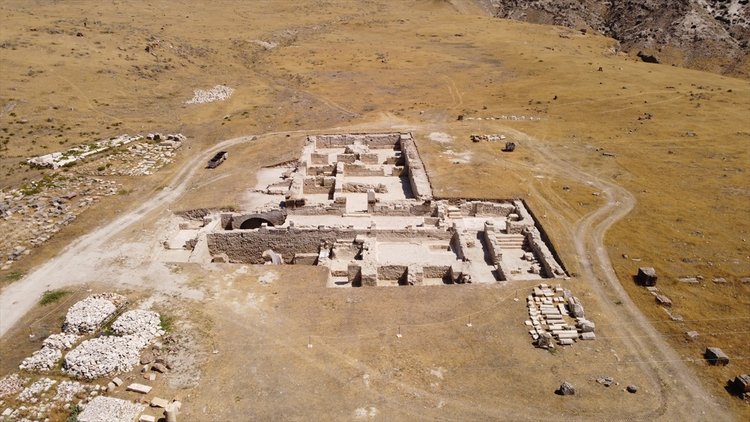
Archaeologists working in the ancient city of Tripolis, located in the Buldan district of Denizli, western Türkiye have unearthed an exceptionally well-preserved Roman-era villa dating back to the 4th century CE. Spanning 1,500 square meters, the villa includes elaborately painted walls, two fountains, a cistern, multiple reception halls, and a rare 40-square-meter fish pond, making it one of the most remarkable finds of the 2025 excavation season.

A Rare Glimpse into Roman Luxury

Excavations led by Professor Bahadır Duman of Pamukkale University’s Archaeology Department have revealed that the villa, located near the Büyük Menderes River, was likely a prestigious residence for the elite. Its architectural design includes four rooms, two large halls, a columned gallery, and a large inner courtyard.

What sets this discovery apart is the decorative fish pond—a feature seldom found in inland Roman sites. The pond’s inner walls are lined with baked-clay water pipes and include niches for fish to take shelter from sunlight or predators. According to Duman, fish such as carp, catfish, and eel were likely raised in the pond and served to guests during lavish banquets.
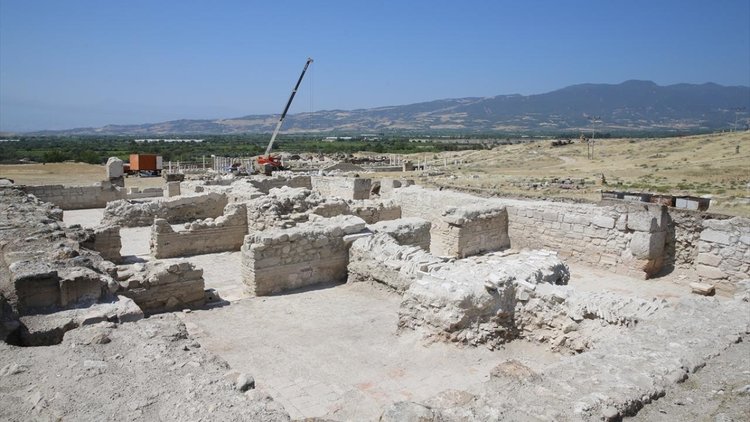
A 1,600-year-old Roman villa featuring colorful frescoes and a unique fish pond has been discovered in Tripolis, Denizli, offering new insight into ancient Anatolian luxury. Credit: Sebahatdin Zeyrek/AA

“Fish ponds during the Roman period were not only for consumption but also status symbols,” said Prof. Duman. “This architectural sophistication indicates that the villa’s owners were affluent and influential.”


📣 Our WhatsApp channel is now LIVE! Stay up-to-date with the latest news and updates, just click here to follow us on WhatsApp and never miss a thing!!


Walls That Speak History

The villa’s interior walls are adorned with vivid frescoes painted in a rich palette—yellow, red, blue, and brown—featuring plant motifs and architectural patterns. These paintings, preserved for over 16 centuries, offer rare insights into the artistic tastes and cultural sophistication of late Roman Anatolia.

Tripolis: A Window to Ancient Western Anatolia

Situated near the modern-day town of Yenicekent, Tripolis was a thriving commercial and administrative center during the Hellenistic, Roman, and Byzantine periods. It is considered one of the best-preserved ancient cities in Western Anatolia.

Over 13 years of excavation have yielded:

A 2,000-year-old villa with 12 mosaic-decorated rooms

A 1,500-year-old church

Roman-era grain silos, marketplaces, and workshops
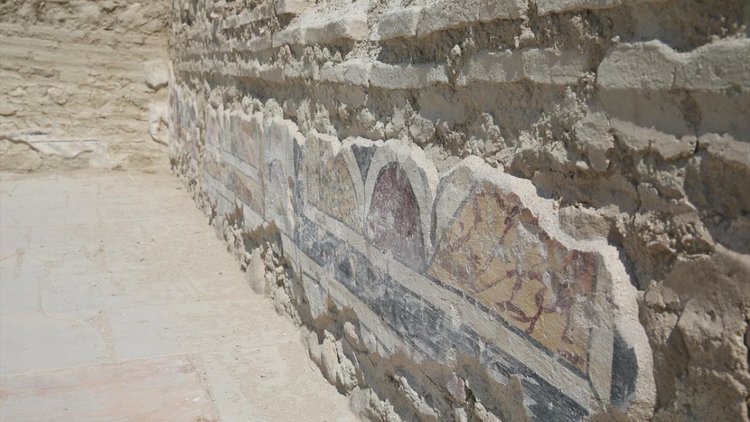
The inner walls of the rectangular pool feature clay water pipes. Small niches were created to protect the fish from sunlight and provide them with shelter. In the ancient city of Tripolis. Credit: Sebahatdin Zeyrek/AA

An early form of backgammon

A monumental fountain and an advanced sewage system

Tripolis once held strategic importance due to its location on trade routes connecting major cities such as Laodicea, Hierapolis, and Ephesus. Archaeological evidence points to a prosperous urban culture, with citizens enjoying advanced infrastructure and artistic achievements.

A Heritage Preserved for the Future

The excavation is part of Türkiye’s “Heritage for the Future” initiative, supported by the Ministry of Culture and Tourism. A team of 40 archaeologists and researchers is working year-round to restore and protect the ancient city, aiming to open larger areas to tourism and academic study.

Cover Image Credit: Sebahatdin Zeyrek/AA

Related Articles

A 3300-Year-Old Canaanite Shipwreck Ever Discovered with All Its Cargo off Israel’s Coast

21 June 2024

21 June 2024

An Energean natural gas surveying vessel operating about 90 kilometers (56 miles) off the coast of Israel discovered a ship...

The Discovery of a Historic Wooden Shipwreck in the North Sea

27 January 2025

27 January 2025

A section of a wooden shipwreck was uncovered near Rantum, a coastal village located on the island of Sylt in...

The Gallo-Roman Sanctuary Unearthed in France

30 June 2024

30 June 2024

During a recent archaeological excavation in the old Hôtel Dieu neighborhood of Rennes in north-western France, archaeologists discovered the remains...

Turkey’s second ancient lighthouse found in the Bathonea

28 July 2023

28 July 2023

The excavations in the ancient Greek city of Bathonea, located in the Küçükçekmece Lake basin in the Avcılar district of...

World’s Oldest Evidence of Wick Use Discovered in 4,000-Year-Old Lamps in Israel

31 August 2025

31 August 2025

Archaeologists in Israel have uncovered one of the oldest known pieces of evidence for wick use in the world—4,000-year-old textile...

The history of Kültepe Mound in central Turkey goes back another 300 years

12 December 2021

12 December 2021

In Kültepe, where the first written documents of Anatolia were unearthed, the date based on 5 thousand years was updated...

A 3800-year-old cylinder seal was discovered at Turkey’s Tepebag Mound excavations

8 July 2022

8 July 2022

In the 2022 excavations of Tepebag Mound, located around Taşköprü, the center of Adana province in Turkey’s Mediterranean Region, a...

Archaeologists in northern Spanish have discovered what they believe to be the oldest Basque language text

15 November 2022

15 November 2022

Archaeologists have discovered what they believe to be the oldest Basque language text, on  Irulegi archaeological site, near the Aranguren...

Ukraine says Russian forces stole Scythian treasures from Melitopol Museum

11 May 2022

11 May 2022

Invading Russian troops have stolen items of ancient Scythian gold and other historical and cultural valuables that were stored in...

World treasure that cannot be displayed in the Local Museum in Pljevlja, Montenegro

30 July 2023

30 July 2023

Despite representing one of the most valuable portable cultural assets of Montenegro, the Pljevlja Diatreta is not accessible to visitors. The...

Pandemics Determined the Fate of Wars in Ancient Times

7 April 2021

7 April 2021

Epidemics have been one of the factors affecting the fate of wars throughout history. Epidemics have sometimes turned the fate...

Archaeologists uncover 4,000-year-old earliest large-scale Archaic fish-trapping facility recorded in ancient Mesoamerica

28 November 2024

28 November 2024

Archaeologists, using drones and Google Earth imagery, have discovered a 4,000-year-old network of earthen canals in what is now Belize...

Illegal digs reveal rare Roman-era mass grave in Turkey

28 July 2022

28 July 2022

A total of 27 skeletons were found in a burial pit carved into the rocks in Adıyaman province, an important...

Runic Alphabet Symbols in the Tombs Found in the Excavations in Istanbul

23 May 2021

23 May 2021

In the excavations carried out by the Istanbul Archeology Museums in the area where the metro station will be built...

The historic Egyptian Palace is being demolished, it may hold a surprise underneath

27 August 2021

27 August 2021

The cause for the evacuation and demolition of the ancient Tawfiq Pasha Andraos Palace, located in the precincts of the...