
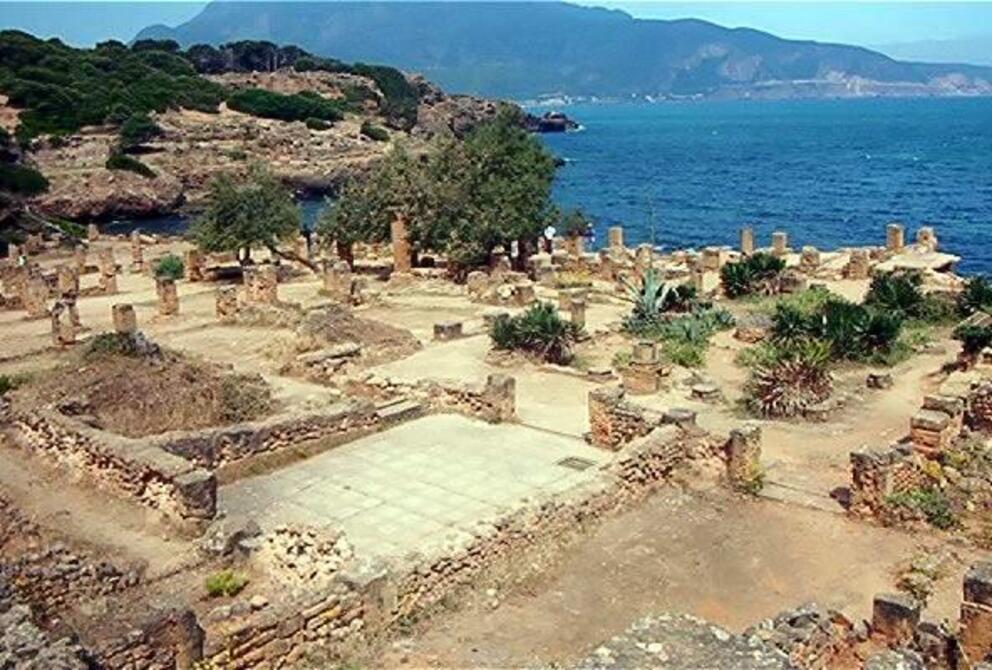
Algeria has launched a new underwater archaeological campaign off the coast of Tipasa, a UNESCO World Heritage Site celebrated for its blend of Phoenician, Roman, and Byzantine history.
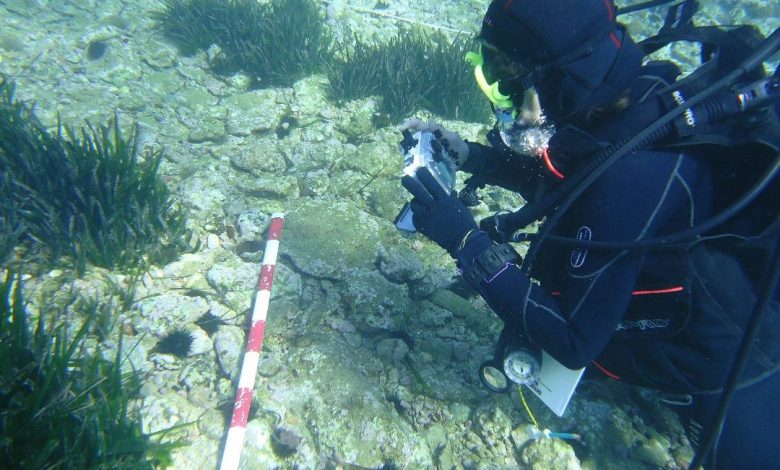
Archaeologists, divers, and researchers are now searching the Mediterranean seabed for long-lost treasures — and possibly, the remains of a submerged ancient city and port.
A New Chapter in Underwater Archaeology
The second phase of this ambitious project began earlier this week at Tipasa’s port, under the supervision of the Ministry of Culture and Arts. The initiative follows recommendations from the UNESCO World Heritage Committee, which urged Algeria to expand the protection zone around the archaeological site.
An eleven-member team — composed of divers, marine archaeologists, and specialists from institutions such as the National Maritime Museum, the National Office for Protected Cultural Assets, and the Bou Ismaïl Center for Marine Research — is leading the operation. Their mission is clear: recover artifacts identified during the first expedition last April and continue surveying the seabed for new discoveries.
The campaign will run until September, weather permitting, and is expected to reveal invaluable clues about the region’s maritime past.
The Mystery of a Sunken City
One of the most intriguing goals of the operation is to test the hypothesis that an ancient city lies hidden beneath the waves. Researchers are also investigating the possible remains of a Phoenician port, dating back to pre-Roman times.
Preliminary surveys have already revealed promising evidence: amphorae scattered across the seabed, stone structures resembling breakwaters and quays, and carved rock formations suggesting the presence of port facilities. Scholars believe these traces point to commercial activities spanning from the 4th century BCE to the 3rd century CE.
“The presence of cisterns, warehouses, and a rock-cut quay within the area known as Sainte Salsa strongly supports the idea of a dynamic ancient port,” explained researcher Rafik Khelaf in a recent academic study. However, experts caution that only further dives and scientific analysis will confirm the true nature of these remains.
A Treasure Trove of Heritage
Tipasa has long been considered one of North Africa’s most extraordinary archaeological sites. Located 70 kilometers west of Algiers, the coastal city once thrived as a hub of trade and cultural exchange. Its surviving monuments — basilicas, theaters, bathhouses, necropolises, and mosaics — reflect the rich layering of civilizations that shaped the Mediterranean world.
Yet much of Tipasa’s story remains buried beneath the sea. Archaeologists believe that uncovering its submerged heritage could shed light not only on ancient trade routes, but also on the daily lives, beliefs, and economic activities of the people who lived there.
“Archaeology is more than just objects,” noted local cultural director Boubekeur Arous. “It is a way to reconstruct history, to understand civilizations, and to preserve memory for future generations.”
Protecting Algeria’s Underwater Heritage
Beyond discovery, the campaign has a crucial preservation goal: defining a precise maritime buffer zone around Tipasa. This protective measure will allow authorities to safeguard fragile remains from natural erosion, unauthorized diving, and looting. The government plans to implement new protection policies by 2025, ensuring that future generations can continue to learn from and enjoy this underwater treasure.
Algeria is also collaborating with international partners to strengthen its expertise in maritime archaeology. Recent agreements with Turkey, which has extensive experience in underwater excavations, signal a growing commitment to protecting the nation’s submerged heritage.
A Window Into the Past
As divers plunge into the Mediterranean waters this summer, hopes are high that Tipasa will reveal more of its hidden legacy. Whether it is amphorae, carved stones, or the long-rumored sunken city, each discovery has the potential to reshape our understanding of North Africa’s ancient history.
For Algeria, Tipasa is not only a jewel of the past but also a key to cultural identity and tourism development. Preserving it means preserving a vital piece of humanity’s shared heritage — one amphora, one stone, one dive at a time.
United Nations Decade of Ocean Science for Sustainable Development Committee
Cover Image Credit: Ruins of Roman Tipasa – Public Domain
