

Two previously unknown sermons by St Augustine have been identified in a 12th-century manuscript in Poland, revealing his treatment of the Witch of Endor, magic, death, and divine authority.
A quiet manuscript in a Polish diocesan library has yielded something scholars rarely expect to find: two previously unknown sermons by St Augustine, one of the most influential minds of late antiquity.
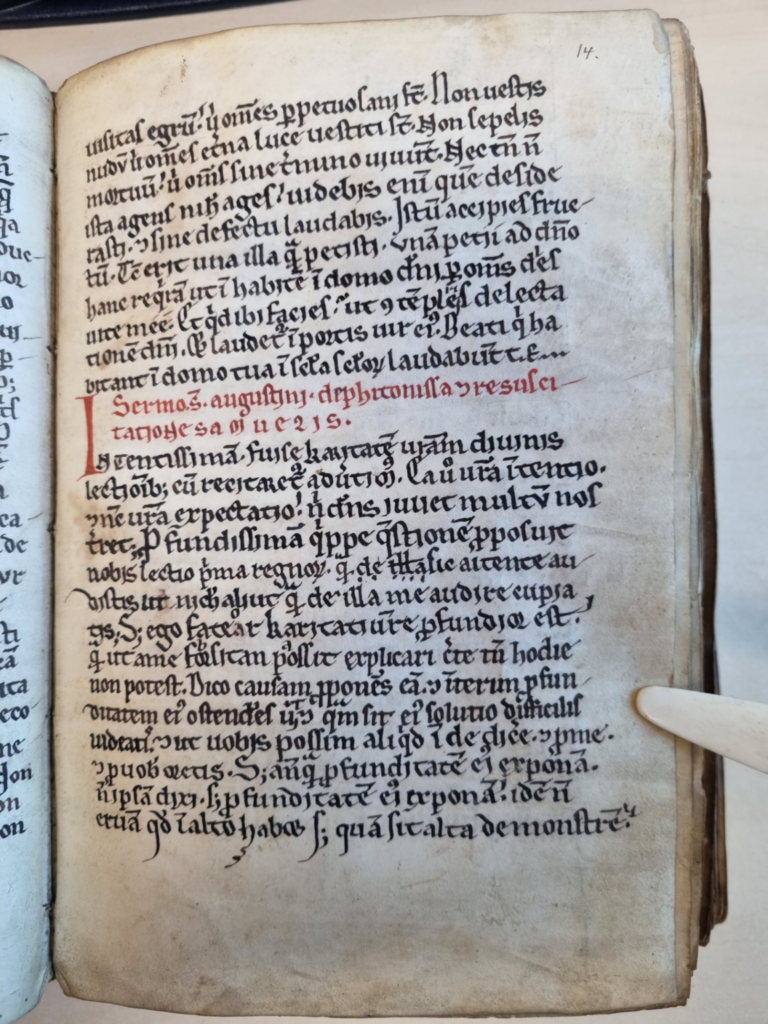
The Latin texts, preserved in a 12th-century manuscript now held in the Diocesan Library of Pelplin, deal with one of the Bible’s most troubling episodes: King Saul’s visit to the Witch of Endor and the mysterious appearance of the dead prophet Samuel. For Augustine, the story raised a question that still feels unsettling. Can magic reach the souls of the dead, or did God allow Saul to see what he saw?
The discovery was made by Prof. Dr. Christian Tornau of the University of Würzburg and Dr. Clemens Weidmann of the Corpus Scriptorum Ecclesiasticorum Latinorum, known as CSEL, a major scholarly project dedicated to editing early Christian Latin texts. Their analysis suggests that the sermons are not medieval imitations, but authentic works of Augustine of Hippo, who lived from 354 to 430 AD.
A routine manuscript request turned into a rare discovery
The story began not with a major excavation or a hidden archive, but with a request to read an old manuscript.
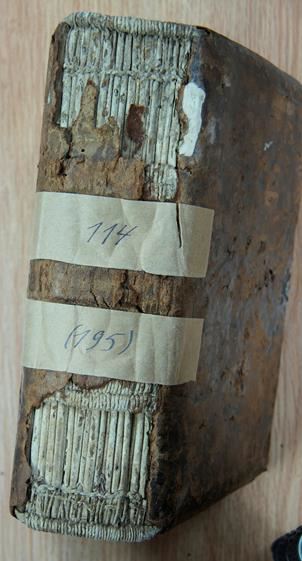
In 2024, Tornau was contacted by the Bad Doberan Monastery Association in northern Germany and asked to decipher a 12th-century Latin manuscript. The book had originally belonged to Bad Doberan Abbey and is now preserved in Pelplin, Poland.
At first, the manuscript appeared to contain six sermons attributed to Augustine. Four were already known. Two were not.
That distinction matters. Augustine’s writings shaped Christian theology, medieval philosophy, ideas of grace, sin, memory, history, and the nature of the Church. His works, especially The City of God and Confessions, became central to the intellectual architecture of Western Christianity. Yet because Augustine was so authoritative, the Middle Ages also produced many texts falsely attributed to him.
A new Augustine text cannot simply be accepted because a medieval scribe wrote his name above it. It has to survive close scrutiny.
The Witch of Endor and Augustine’s difficult question
The newly identified sermons focus on 1 Samuel 28, a passage that has puzzled Jewish and Christian interpreters for centuries.
In the biblical story, King Saul faces war with the Philistines. God no longer answers him through dreams, prophets, or sacred lots. Desperate, Saul seeks out a woman at Endor who is described as having powers of divination. At his request, she summons the dead prophet Samuel, who foretells Saul’s defeat and death.
For Christian thinkers, the episode was dangerous theological ground.
If the woman truly summoned Samuel, does that mean magical powers can command the souls of the dead? If she created only an illusion, what happens to the truth of the biblical account? And if God allowed Samuel to appear, why would divine will work through an act Saul himself had condemned?
The two sermons show Augustine working through these tensions in front of a congregation. The first sermon appears to have been delivered on a Sunday. Rather than closing the matter, Augustine presents the problem and leaves his listeners with competing possibilities. Only in the second sermon, apparently preached the following Wednesday, does he return to weigh the arguments more fully.
That structure gives the discovery unusual force. These are not abstract theological notes. They seem to preserve Augustine as a preacher thinking with his audience, allowing a difficult biblical passage to remain difficult before guiding the congregation toward a conclusion.
Why scholars believe the sermons are genuine
The attribution to Augustine rests on detailed philological work. Tornau and Weidmann examined the sermons’ language, style, syntax, humour, rhetorical movement, and theological reasoning. According to the scholars, these features point strongly toward Augustine rather than a later imitator.
The texts were also discussed with international students during an interdisciplinary CSEL workshop. In autumn 2025, a group of around twenty Latin specialists examined the material in Vienna. The conclusion was unanimous: the sermons are authentic.
That level of caution is essential. Augustine’s name circulated widely in medieval manuscript culture, and sermons were among the easiest genres to misattribute. A short moral or theological text could be copied under Augustine’s authority even when he had nothing to do with it.
Here, however, the internal evidence appears unusually strong. The sermons do not merely sound “Augustinian” in a vague sense. Their method, hesitation, argument, and pastoral pacing fit the way Augustine often handled difficult scriptural problems.
A manuscript with a complicated medieval journey
The manuscript itself raises another question: how did these sermons survive?
According to Tornau, producing such a manuscript in the 12th century is somewhat unusual for this kind of material. A copy made in the 8th or 9th century would have been more typical. He therefore considers it likely that the Pelplin manuscript was copied from an earlier exemplar connected with Amelungsborn Abbey in Lower Saxony.
An old catalogue from Amelungsborn mentions a text with similar headings and a similar sequence of contents. That may point to the source behind the Pelplin manuscript. But the trail cannot be proved with certainty. The Amelungsborn library was destroyed during the Thirty Years’ War in the 17th century, taking with it the very evidence that might have confirmed the link.
The result is a scholarly detective story with a missing archive at its centre. The sermons survived, but the chain that carried them through the Middle Ages is partly broken.
A small addition with large importance
Tornau has described the find with caution. It is not on the scale of the major Augustine discoveries of the 20th century, when larger groups of unknown texts entered scholarship. But even two sermons matter.
They expand Augustine’s known treatment of biblical interpretation, magic, necromancy, the dead, and divine authority. They also add a vivid example of how a late antique bishop could engage ordinary listeners with a passage that resisted easy explanation.
For modern readers, the subject is especially striking. These sermons place Augustine at the edge of theology and the supernatural, asking whether a forbidden ritual could reveal truth, whether demonic deception could mimic prophecy, and whether God’s power could be seen even in an episode marked by fear and disobedience.
The first critical edition of the sermons is now in preparation. It is expected to include the Latin text, a German translation, historical and theological context, and a formal authenticity analysis. Publication is planned for the end of 2026.
Until then, the Pelplin manuscript offers a rare glimpse of Augustine not as a distant monument of Christian thought, but as a preacher facing one of Scripture’s strangest scenes: a king in despair, a forbidden ritual, and a voice from the dead.
Corpus Scriptorum Ecclesiasticorum Latinorum
Cover Image credit: Illustrative image representing St Augustine, a medieval manuscript, and the biblical episode of Saul and the Witch of Endor.
