26 February 2026 The Future is the Product of the Past

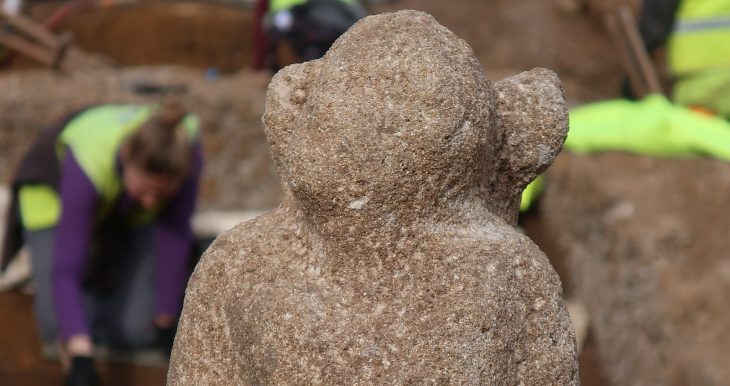
Two Archaic Sculptures was Unearthed in Milas Euromos 2021 Excavations

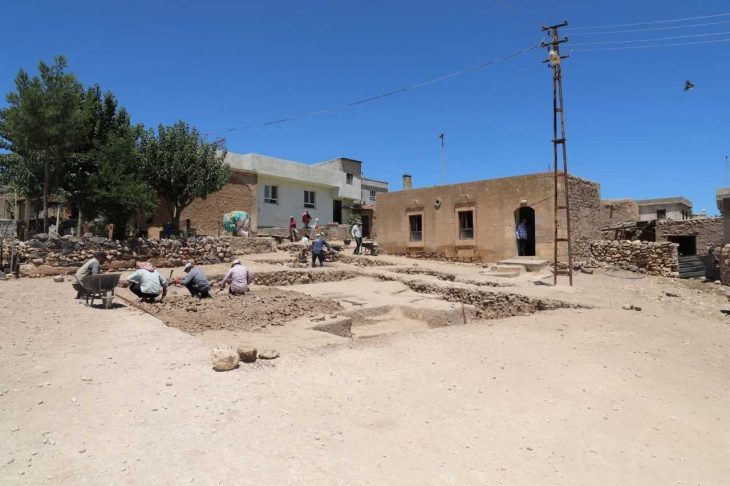
Milas Euromos 2021 archaeological excavations continue.

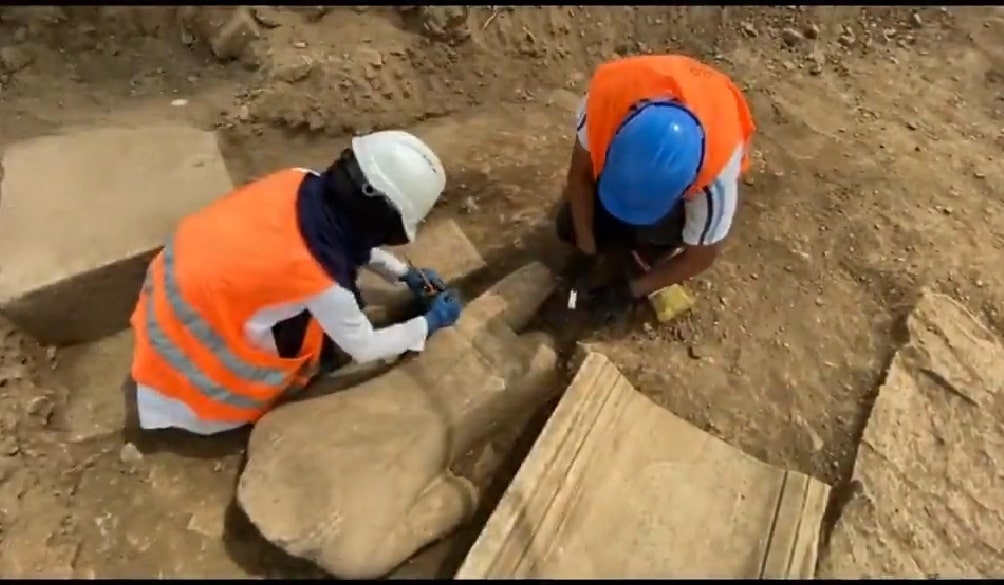
During the excavations of Milas Euromos 2021, archaeologists unearthed two archaic period statues (kuros) measuring 110 cm, approximately 2500 years old.

The Presidency of the excavation department shared the release moment of the sculptures on his Twitter account. It was informed that the sculptures will be delivered to the Milas Museum after the works are completed.

Historical overview

From the 5th century BC, the city was known as Cyramos, and it was located in the region known as Caria (Hyramos). The city was subjected to Milas and lost its independence during the reign of King Mausolus of Halicarnassus (the 4th century BC). At the same period, its name was changed to Euromos (meaning “Strong”) as a result of Mausolus’ Caria Hellenization effort.

Euromos was granted the status of the autonomous city during the Roman period, but it was quickly abandoned. The most likely cause was the Antonine Plague, which broke out in the western region of Asia Minor in 166 AD. Scholars believe it was either smallpox or measles. In the years that followed, an epidemic swept across the Roman Empire’s entire territory, decimating its population within 20 years.


📣 Our WhatsApp channel is now LIVE! Stay up-to-date with the latest news and updates, just click here to follow us on WhatsApp and never miss a thing!!
Related Articles

2,800-Year-Old ‘Pharmaceutical production area’ discovered in ancient Thracian City

19 January 2024

19 January 2024

Archaeologists have unearthed a “pharmaceutical production area” supported by a water source during ongoing excavations in the Thracian Ancient City...

The bronze age village Afragola buried by the Plinian eruption of mount Vesuvius 4,000 Years Ago

30 September 2022

30 September 2022

Mount Vesuvius’ Plinian eruption about 4,000 years ago—2,000 years before it buried the Roman city of Pompeii—left remarkable preservation of...

Well-Preserved Hittite “Bird Omen Text” Discovered at Kayalıpınar–Samuha, a Key Religious Hub of the Ancient Empire

24 July 2025

24 July 2025

Archaeologists working at the ancient Hittite settlement of Kayalıpınar, located in Türkiye’s Sivas province, have uncovered a remarkably well-preserved clay...

Terracotta Figurines of the ancient cult of the goddess Cybele discovered in Pompeii Domus

26 December 2023

26 December 2023

Archaeologists unearthed 13 terracotta figurines during recent excavations in the Domus adjacent to the “House of Leda and the Swan”...

Excavations at the ‘Westminster Abbey of Wales’ Yielded a Few Surprises: a lost Aqueduct and a Buried Celtic Treasure

12 March 2024

12 March 2024

Archaeologists working in Wales revealed recently they may have discovered a Celtic monastery at the site of a 12th-century Cistercian...

Rare Avar-Era Saber Unearthed Near Székesfehérvár, Hungary

13 September 2025

13 September 2025

Archaeologists in Hungary have made a remarkable discovery: a rare Avar-period saber has been unearthed near the city of Székesfehérvár....

1700-year-old Roman shoes and craft district found in France

3 June 2023

3 June 2023

An ancient Roman craft district was discovered by archaeologists working in the southwest of the town of Therouanne near a...

9th-Century Slave-Built Large-Scale Agricultural System Discovered in Southern Iraq

3 June 2025

3 June 2025

A recent archaeological study has unveiled compelling evidence of a vast agricultural infrastructure in southern Iraq, believed to have been...

Ancient Roman city of Pompeii, archaeologists have unearthed a fresco depicting the Greek mythological siblings Phrixus and Helle

2 March 2024

2 March 2024

Archaeologists excavating a house adjacent to the House of Leda in Insula 6, Regio V, in the ancient Roman city...

New Study Reveals That the First English Settlers in North America Ate Dogs to Survive

28 May 2024

28 May 2024

The first English settlers to arrive in North America ate indigenous dogs to survive an extreme period of starvation, according...

Archaeologists discover Europe’s longest prehistoric mound in the Czechia

22 June 2024

22 June 2024

Czech archaeologists in the Hradec Králové area in East Bohemia have discovered what is probably the longest prehistoric mound in...

Elamite clay tablet discovered 4500 years old, in southwest Iran

4 December 2021

4 December 2021

A clay tablet, estimated to be from the Elam period, about 4500 years old, was recently discovered in southwestern Iran....

One of the largest mass burial pits ever discovered in the UK has been unearthed next to Leicester Cathedral

21 November 2024

21 November 2024

While excavating the gardens of Leicester Cathedral for the future construction of a learning center, archaeologists uncovered one of the...

An 8,500-year-old trepanned skull discovered in Çatalhöyük

23 December 2023

23 December 2023

Traces of trepanation (skull drilling operation) were found on a skull found in the 9,000-year-old Çatalhöyük, near the modern city...

2000-year-old passage found after Latrina at Smyrna Theater

28 January 2022

28 January 2022

Archaeologists discovered a 2,000-year-old passage that was 26 meters long and constructed in an “L” form in the theater part...