
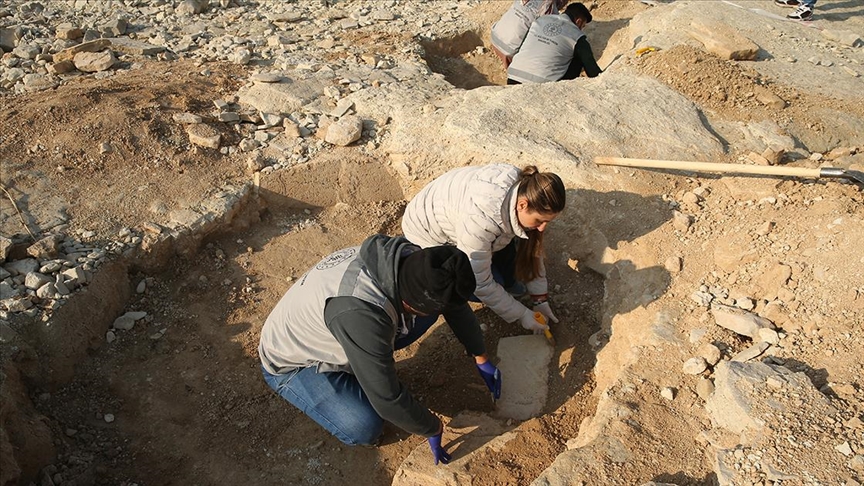
Göbeklitepe-style T-shaped pillars discovered in Adıyaman reveal the wider Taş Tepeler culture and reshape the Neolithic map of Upper Mesopotamia.
A remarkable new archaeological discovery in southeastern Türkiye is reshaping our understanding of the Neolithic world. In Adıyaman’s Samsat district, structures resembling the iconic “T”-shaped pillars of Göbeklitepe have emerged after water levels receded in the Atatürk Dam reservoir. This find strongly suggests that the cultural sphere known as Göbeklitepe or Taş Tepeler culture extended much farther than previously documented.
The discovery was made near Kızılöz village, where falling water levels exposed stone features along the shoreline. Following a local report, teams from the Adıyaman Museum Directorate conducted on-site investigations and identified T-shaped stone structures believed to date back approximately 11,000 years, to the Pre-Pottery Neolithic period.
A New Node in the Göbeklitepe Cultural Network
According to Prof. Dr. Sabahattin Ezer from Adıyaman University’s Department of Archaeology, the newly uncovered stones display architectural and symbolic traits consistent with Göbeklitepe and other Taş Tepeler sites in Şanlıurfa. These include small-scale enclosures, stone slabs arranged around pits, and centrally placed T-shaped pillars, which are considered hallmarks of this early ritual architecture.
The Taş Tepeler (Stone Hills) project, launched in recent years, has already identified multiple Neolithic sites such as Karahantepe, Sayburç, Sefertepe, Kurttepesi, and Çakmaktepe. The Adıyaman discovery now indicates that this cultural horizon was not confined to Şanlıurfa but extended northwest into the Euphrates basin, strengthening the idea of a widespread and interconnected prehistoric landscape.
Meaning of the T-Shaped Stones
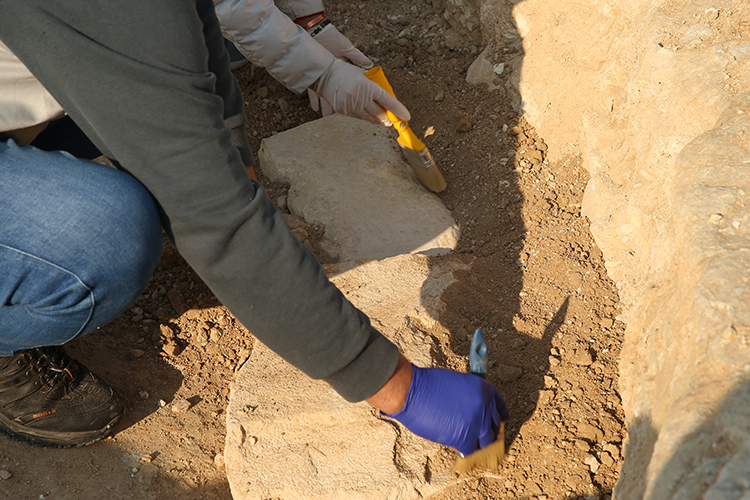
The T-shaped pillars are among the most enigmatic features of early human history. At Göbeklitepe, these massive monoliths are widely interpreted as stylized human figures, often featuring carved arms, hands, belts, and symbolic animals. While the Adıyaman examples are smaller in scale, their form and placement suggest they served similar ritual or communal functions.
The presence of these pillars in Adıyaman implies shared belief systems, architectural knowledge, and social organization across a broad region. This challenges older models that viewed Göbeklitepe as an isolated “exception” and instead supports the idea of a regional tradition of monument building before agriculture became widespread.
Regional Expansion and the Upper Mesopotamian Context
The Samsat discovery is especially significant because of its location near the Euphrates River, a major corridor for human movement, communication, and resource exchange during the Neolithic period. This geographic setting strengthens arguments that Taş Tepeler sites formed a network of ritual centers, rather than a single focal point.
Archaeologists increasingly believe that communities across Upper Mesopotamia participated in shared ceremonial practices, periodically gathering at monumental sites. The Adıyaman structures may represent a local expression of this broader tradition, adapted to regional conditions while maintaining core symbolic elements.
Threats and Rescue Archaeology
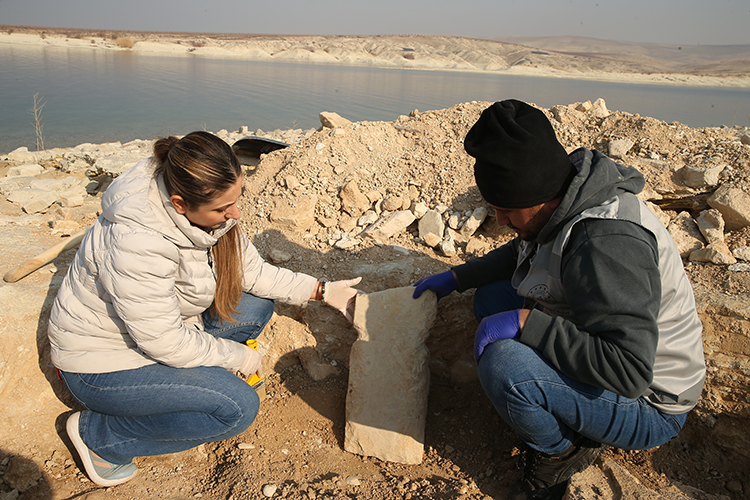
Museum Deputy Director Mustafa Çelik emphasized that the site was originally buried 2–3 meters below soil, but fluctuating dam water levels gradually eroded the sediment, revealing the structures. While this process enabled discovery, it also poses a serious threat.
Rescue excavations are now underway to document and preserve the remains before water levels rise again. Such dam-related discoveries highlight both the risks faced by submerged heritage and the urgency of systematic archaeological surveys in reservoir zones.
From Local Find to Global Significance
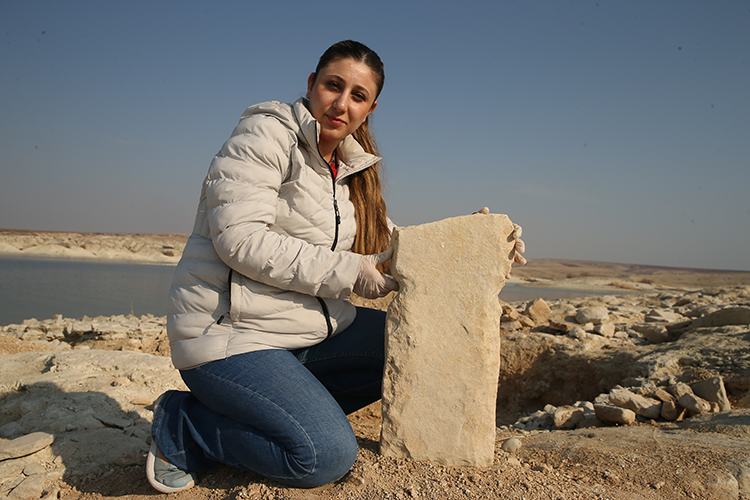
The artifacts recovered from the site are now exhibited at Perre Ancient City, allowing the public to engage with one of humanity’s earliest monumental traditions. More importantly, the find adds momentum to the idea that southeastern Türkiye was a core innovation zone during the Neolithic transition.
As further excavations are planned, researchers expect that Adıyaman may yield additional structures, possibly revealing a larger settlement or ritual complex. Each new discovery reinforces a transformative conclusion: the origins of complex symbolic behavior and monumental architecture were regional, collaborative, and deeply rooted in Upper Mesopotamia.
Redefining the Neolithic Map
The emergence of Göbeklitepe-style T-pillars in Adıyaman marks another step in redefining early human history. Rather than a single birthplace of civilization, the Taş Tepeler region now appears as a vast cultural landscape, stretching across provinces and river systems.
This discovery not only expands the geographical boundaries of the Taş Tepeler culture but also deepens our understanding of how early societies organized belief, space, and community—long before cities, writing, or farming as we knowthem today.
AA
Cover Image Credit: Orhan Pehlül/AA
