
15 February 2026 The Future is the Product of the Past

The ruins of a temple dedicated to Goddess Kubaba found for the first time in ancient city of Kastabala, southern Türkiye

Ruins of a temple belonging to the goddess Kubaba were found in the Ancient City of Kastabala.

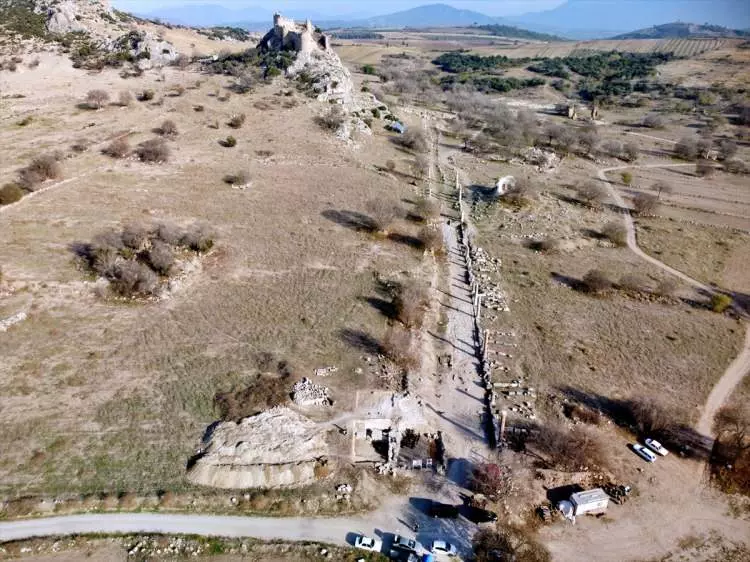
The ancient city of Kastabala is situated approximately 12 kilometers north-northwest of Osmaniye province, along the road from Cevdetiye Town to Karatepe Museum, in the middle of Kesmeburun, Bahçe and Kazmaca villages.

Kastabala, located in the southern region of Türkiye, is an ancient city steeped in history and mythology. Situated in the province of Osmaniye, this archaeological site showcases remnants of a rich past dating back to the Hittite and Assyrian periods. The city was a significant center during the Hellenistic and Roman eras, boasting temples, city walls, and various structures that reflect its cultural and religious significance.

During the excavations started at the end of the historical colonnaded street, ruins of the temple built by the Luwians, who are considered the oldest indigenous people of Anatolia, for their goddess Kubaba were discovered.
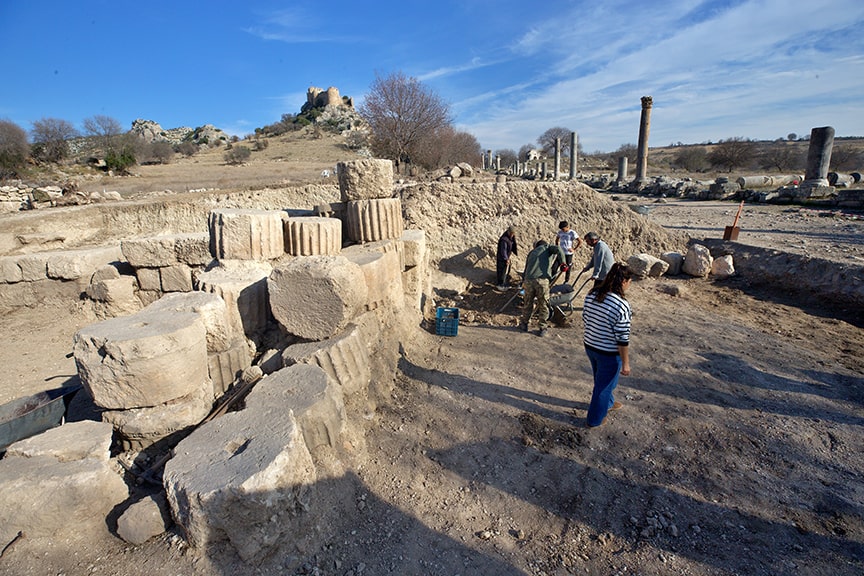
Photo: AA

Head of the excavation, Osmaniye Korkut Ata University (OKU) Archaeology Department Faculty Member Associate Professor Faris Demir told Anadolu Agency (AA) correspondent that the ancient city is the oldest sacred city in the plain Cilicia region.


📣 Our WhatsApp channel is now LIVE! Stay up-to-date with the latest news and updates, just click here to follow us on WhatsApp and never miss a thing!!


Explaining that the ancient city was located in the center of the cultural region of the Luwians, Demir said:

“During the colonnaded street excavations, a building ruin, a temple, that we date to the Archaic period, that is, 540 BC, was unearthed. In Aramaic inscriptions located in the hinterland of Kastabala, the lands of Kastabala and Kubaba are mentioned. This building ruin we unearthed must be a temple belonging to the goddess Kubaba.”
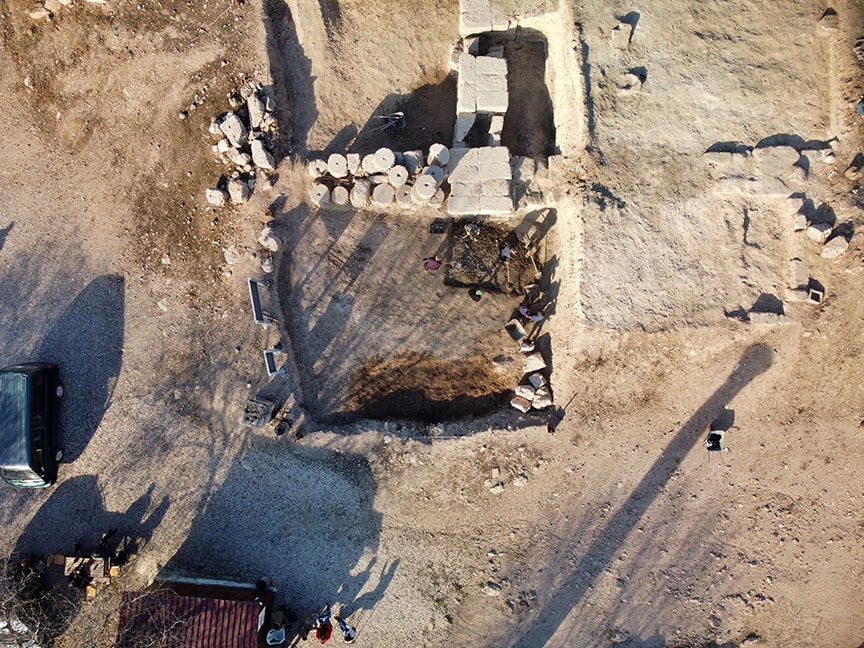
Photo: AA

 “The priests of this Archaic temple walked on hot coals with bare feet, without feeling any pain. These ruins, which provide extraordinary information to Anatolian archeology, made us very excited.”

Demir stated that the excavations in the ancient city of Kastabala will continue to provide extraordinary information to Anatolian archaeology.

The ruins of a temple dedicated to Kubaba were found for the first time

Demir also gave information about Goddess Kubaba and said:

“Goddess Kubaba is a local Anatolian goddess. The fact that we came across a temple of this goddess made us very excited. It is the first time that such a temple ruins belonging to Kubaba have been found in Anatolian archeology.”
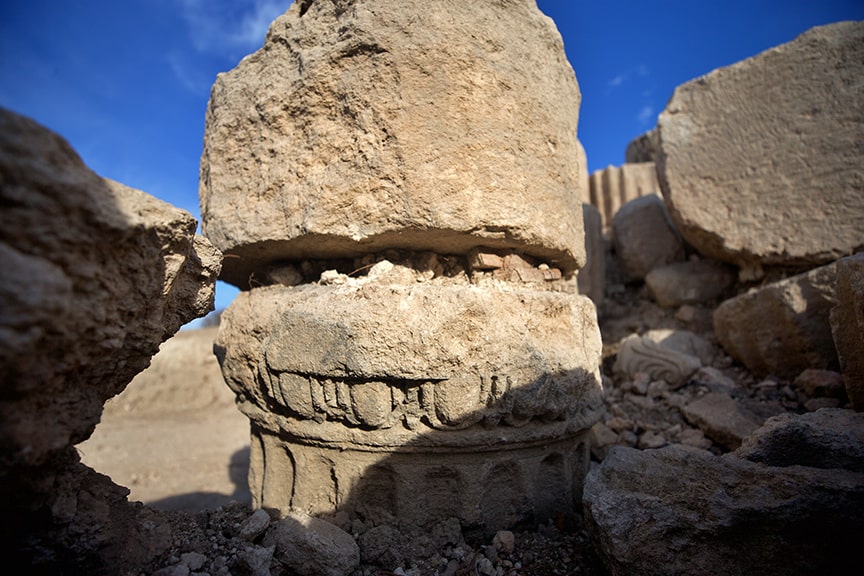
Photo: AA

Kubaba usually was represented as a dignified figure draped in a long robe, either standing or seated and holding a mirror. Her character is poorly known. She is first documented in texts from Kanesh and Alalakh, though her main cult center was Carchemish.

Cover Photo: AA

Related Articles

A new study says genes and languages aren’t always together

22 November 2022

22 November 2022

Over 7,000 languages are spoken around the world. This linguistic diversity, like biological traits, is passed down from generation to...

Medieval Moat and Bridge Discovered Protecting Farmhouse in England

14 March 2024

14 March 2024

Cotswold Archaeology’s excavations in Tewkesbury, a historic riverside town north of Gloucestershire, England, have revealed a medieval moat and bridge...

4,500-year-old rare Canaanite goddess sculpture found by a farmer in Gaza Strip

25 April 2022

25 April 2022

A farmer in the city of Khan Yunis, in the southern Gaza Strip, found a rare 4,500-year-old stone sculpture while...

Paleontologists discovered Super-sized fossil skink

14 June 2023

14 June 2023

According to newly discovered fossils, a giant skink with spiky armor and powerful jaws roamed New South Wales until about...

Archaeologists Discover 2,000-Year-Old Jug in Tajikistan Bearing Woman’s Name

4 July 2025

4 July 2025

In a discovery of rare historical and cultural significance, archaeologists in southern Tajikistan have uncovered a 2,000-year-old clay jug bearing...

A Roman sarcophagus containing two skeletons was found in Bath, England

29 June 2021

29 June 2021

Stone walls, a Roman sarcophagus, and a cremation burial have been unearthed in a renovation project at the Bathwick Roman...

In Pontefract, archaeologists have discovered Neolithic remains

18 June 2021

18 June 2021

Archaeologists working on the site of the former Carleton Furniture factory at Mill Dam Lane in Pontefract, West Yorkshire, England,...

Ancient ‘Cancer-Treating’ Magical Amulet Discovered in Türkiye’s Antioch of Pisidia

30 December 2024

30 December 2024

An intriguing artifact was discovered during excavations in the ancient city of Pisidia Antioch in Isparta province in western Türkiye:...

Ancient Greek Marble Workshop Unearthed on Paros Island

20 May 2025

20 May 2025

The world of ancient Greek art continues to amaze modern scholars, with recent excavations on Paros Island unveiling a long-lost...

Love and hate in ancient times: Exploring Magical Texts

6 February 2024

6 February 2024

Love and hate are universal emotions that have persisted throughout human history. Ancient civilizations developed their own distinct methods of...

An ancient melon genome from Libya reveals interesting insights regarding watermelon relatives

2 August 2022

2 August 2022

The earliest known seeds from a watermelon related were discovered during an archaeological dig in Libya, going back 6,000 years...

Votive Altar Dedicated to Basque Deity Larrahe Found in Medieval Well

23 June 2024

23 June 2024

Archaeologists have unearthed a Roman-era votive altar dedicated to the ancient Basque deity Larrahe at the medieval monastery of Doneztebe...

Stone Age women in Europe were tied up and buried alive in ritual sacrifices

11 April 2024

11 April 2024

New research has identified over a dozen murders where women were traditionally sacrificed in Neolithic Europe across a period of...

The newly discovered fossils are 200,000 years old in Denisova Cave

29 November 2021

29 November 2021

Scientists have discovered the earliest remains of a human lineage known as the Denisovans. Researchers have identified stone artifacts connected...

Oil drilling uncovers a 2,000-year-old cemetery with giant Urn-like tombs in Southwest Iran

16 July 2022

16 July 2022

An ancient cemetery with urn-like tombs was discovered in Ahvaz, the capital city of Khuzestan province in southwestern Iran. The...