
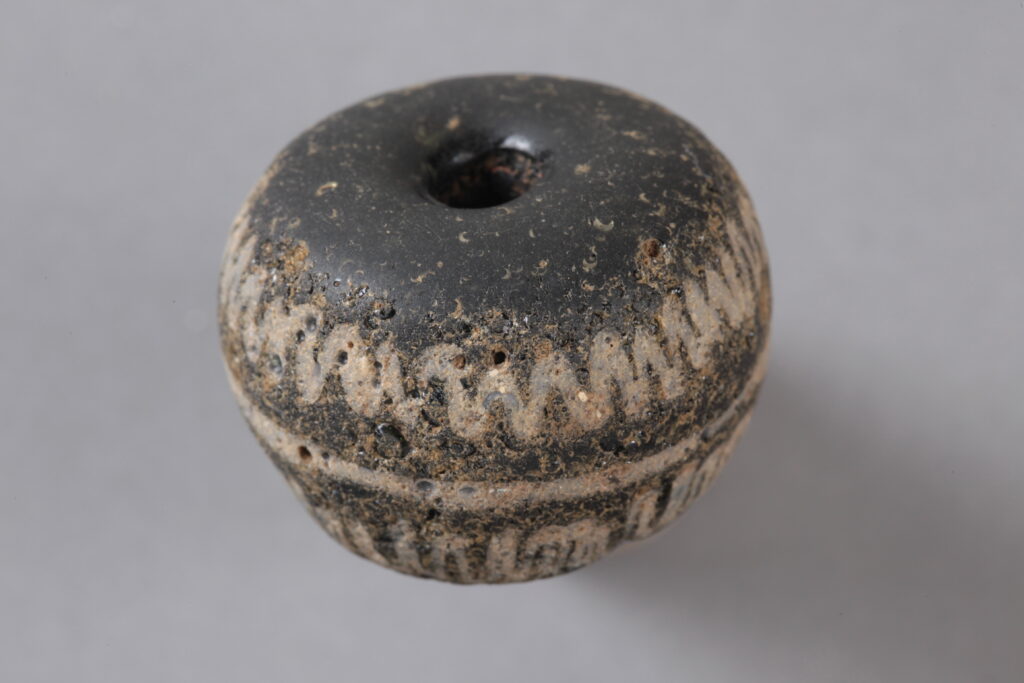
A large, dark, opaque glass bead found in a 1,700-year-old settlement pit in Saxony is raising an unusual question: was this striking object once worn as jewelry, or did it later become a tool for spinning wool?
Archaeologists from the Landesamt für Archäologie Sachsen discovered the bead during excavations at Liebersee, a hamlet in the municipality of Belgern-Schildau in eastern Germany. Decorated with pale wavy bands, the bead stands apart from the everyday pottery fragments found at the site. Objects of this kind are usually known from female graves, but this one appeared inside a rural settlement, changing the way researchers interpret its possible use.
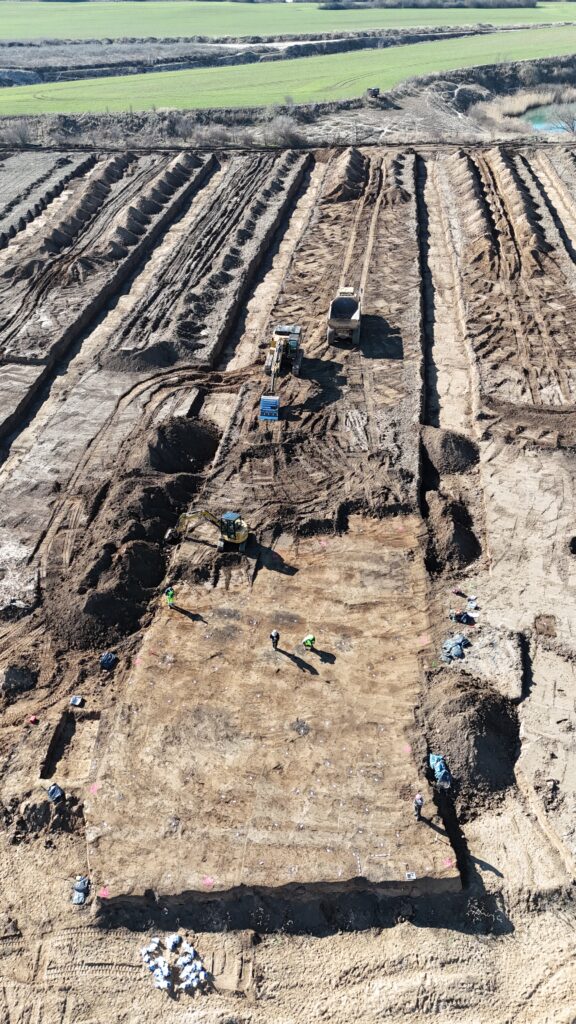
The excavation was carried out from early December 2025 to mid-April 2026, ahead of planned gravel extraction. Since the new quarrying area would have destroyed any archaeological traces in the ground, researchers examined roughly 3,200 square meters before mining work moved forward.
What emerged was not a wealthy estate or a military outpost, but the remains of a rural settlement dating from the 3rd to 5th centuries AD. This was a period that stretched from the later Roman Imperial age into the early phase of the Migration Period, when communities across central Europe were undergoing major political and social change.
A rural settlement before the great migrations
Liebersee lies on the left edge of the Saxon Elbe Valley, between Riesa and Torgau. The region’s favorable natural conditions made it attractive to human communities for thousands of years, and the area is already known as a dense archaeological landscape.
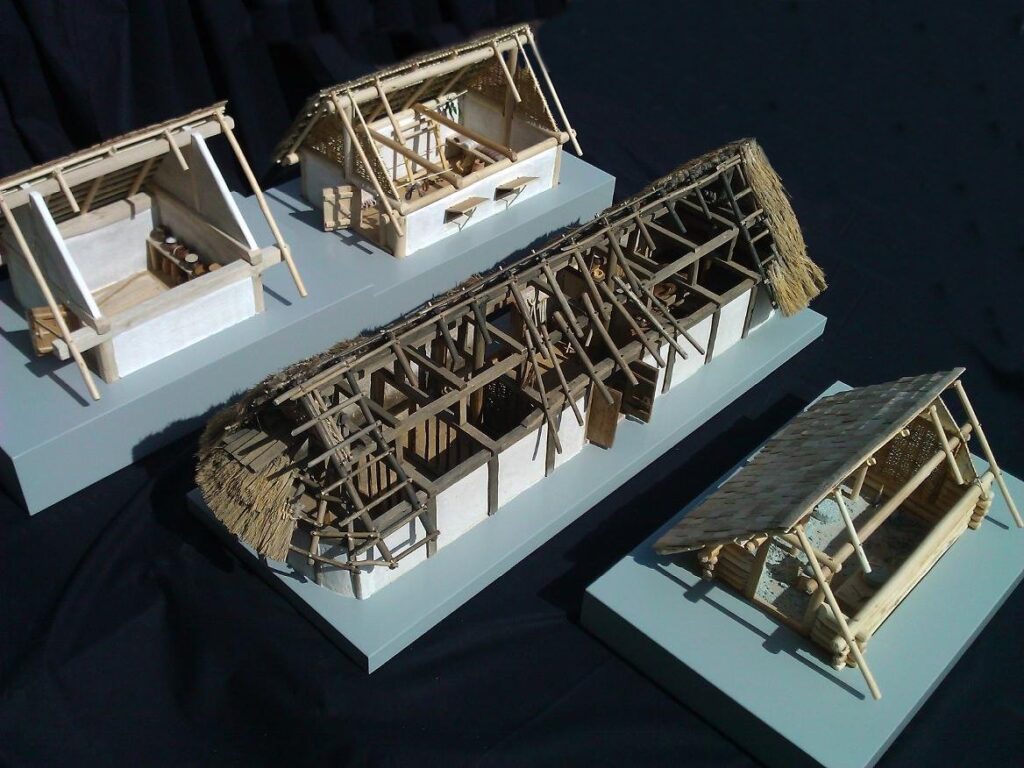
At the site, archaeologists documented pits, postholes, and other traces left in the soil by human activity. These features allowed them to identify at least four large longhouses built with wooden posts, along with three pit-houses, known in German archaeology as Grubenhäuser.
The longhouses measured up to 20 meters in length and five meters in width. They likely functioned as combined living spaces and stables, a practical arrangement for a rural community that relied on animals, grain, and household labor.
The smaller pit-houses were partly sunk into the ground and covered between seven and twelve square meters. These structures appear to have served as storage buildings, workshops, or economic spaces. One of them produced the clearest evidence that textile production was part of daily life at Liebersee.
Textile production inside a pit-house
Inside one pit-house, archaeologists recovered 30 flat, circular clay loom weights. These objects were used to hold the vertical warp threads of a loom under tension while the weft threads were passed through them. The find shows that woven fabrics were being produced inside the settlement.
A clay spindle whorl was also found at the site. Such objects added weight to a wooden spindle, helping raw wool twist into thread. In the Late Roman Imperial period, sheep’s wool was the main raw material for textile production, and the Liebersee finds fit that broader pattern.
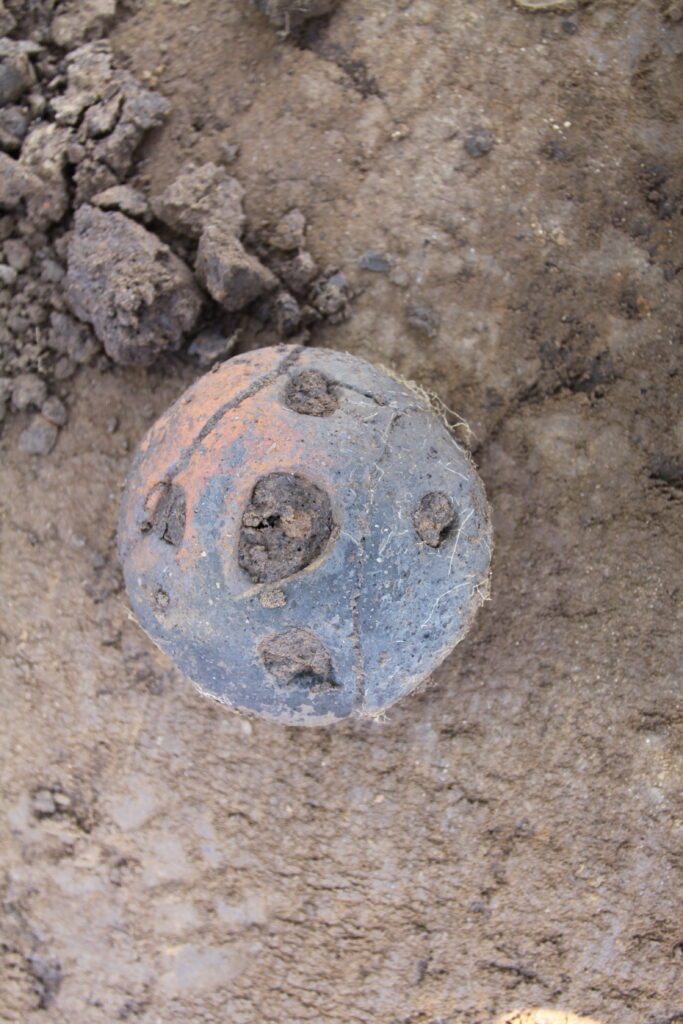
This is where the unusual glass bead becomes more important. Because it was found in a settlement pit rather than a grave, researchers do not rule out the possibility that it was reused as a spindle whorl. In that case, the object may have moved from personal adornment into household labor.
The idea is not certain, but it is striking. A bead that may once have belonged to the world of dress, identity, or burial custom could have been adapted for a practical task inside a working village. Its size, weight, and findspot make that possibility difficult to ignore.
A self-sufficient village marked by fire
The wider evidence from Liebersee points to a self-sufficient rural community. Most of the finds are fragments of everyday pottery, but the buildings, storage traces, textile tools, and grain remains suggest a settlement organized around local production and household survival.
Reddish hut clay, or burnt daub, shows that the buildings were plastered with clay. Charred grain remains indicate that the inhabitants stored agricultural produce. Together, the burned clay and grain also show that the settlement experienced at least one significant fire.
Whether that fire led to the abandonment of the village remains unknown. Archaeologists have not yet reached a firm conclusion, and further scientific tests are still pending. Radiocarbon dating of botanical remains and charcoal may provide a more precise chronology for both the settlement and the fire event.
For now, the Liebersee excavation adds a sharp new detail to the archaeology of rural Saxony in the centuries before and during the early Germanic migrations. Its longhouses, pit-houses, loom weights, stored grain, and burned building material reveal a community built around practical self-sufficiency.
But the most memorable object is still the large, dark, opaque glass bead. Found far from the burial setting where such beads are usually expected, it may preserve the story of an object that changed meaning over time: first as ornament, perhaps later as tool, and finally as one of the most intriguing finds from a lost village on the Saxon Elbe.
Landesamt für Archäologie Sachsen
Cover Image Credit: Landesamt für Archäologie Sachsen
