
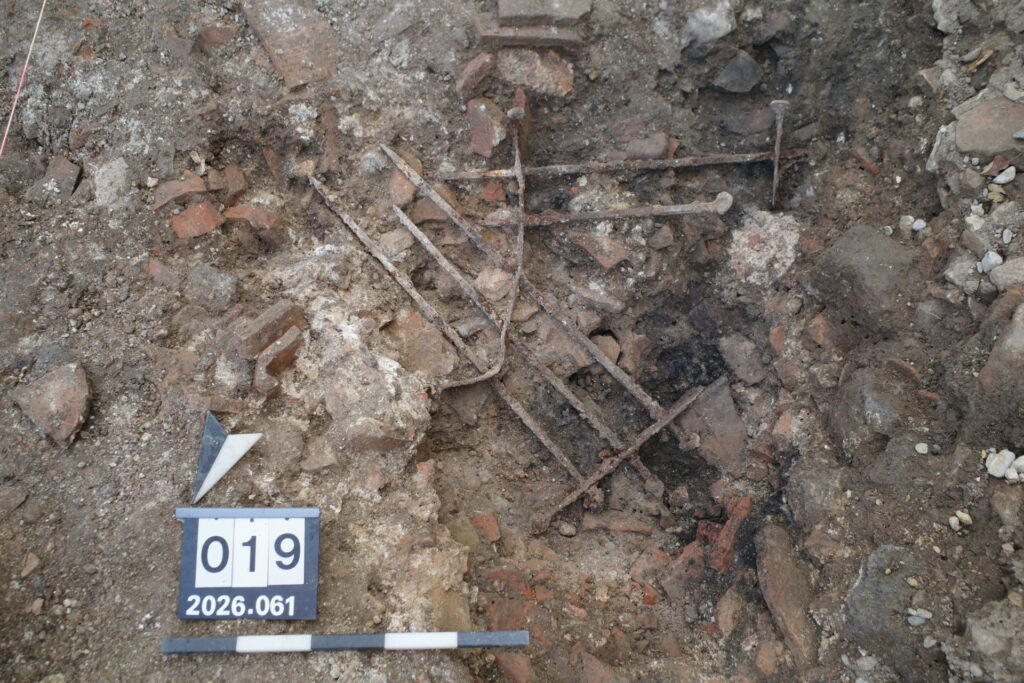
Archaeologists excavating at the Roman site of Augusta Raurica in Switzerland have uncovered a rare, remarkably well-preserved iron window grille. This new find is almost completely intact; two of its original nails remain in place.
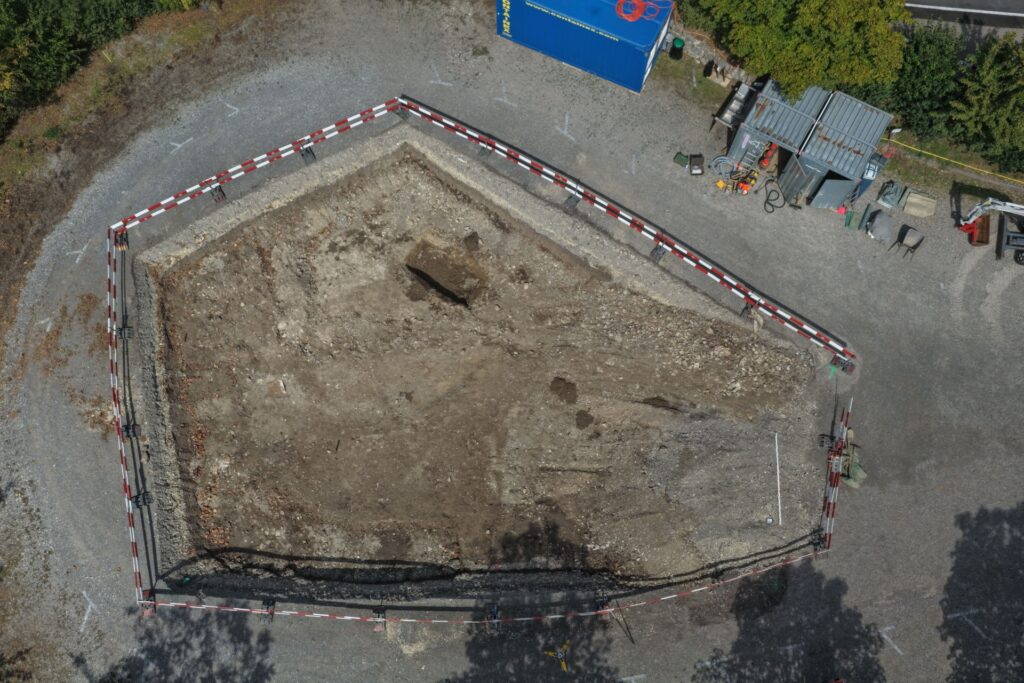
The discovery was made in the initial weeks of digging around a rebuilt Roman home located at Augusta Raurica, a significant ancient town situated near Basel. Archaeologists found the iron grille approximately 1.7 meters beneath the ground, among the remains of a masonry structure whose history they are now investigating.
On October 8, 2026, Augusta Raurica announced that its archaeological collection contains only a few items similar to those found at the site. Unlike pottery, coins, and other everyday objects that frequently survive in Roman settlements, complete architectural ironwork is relatively uncommon.
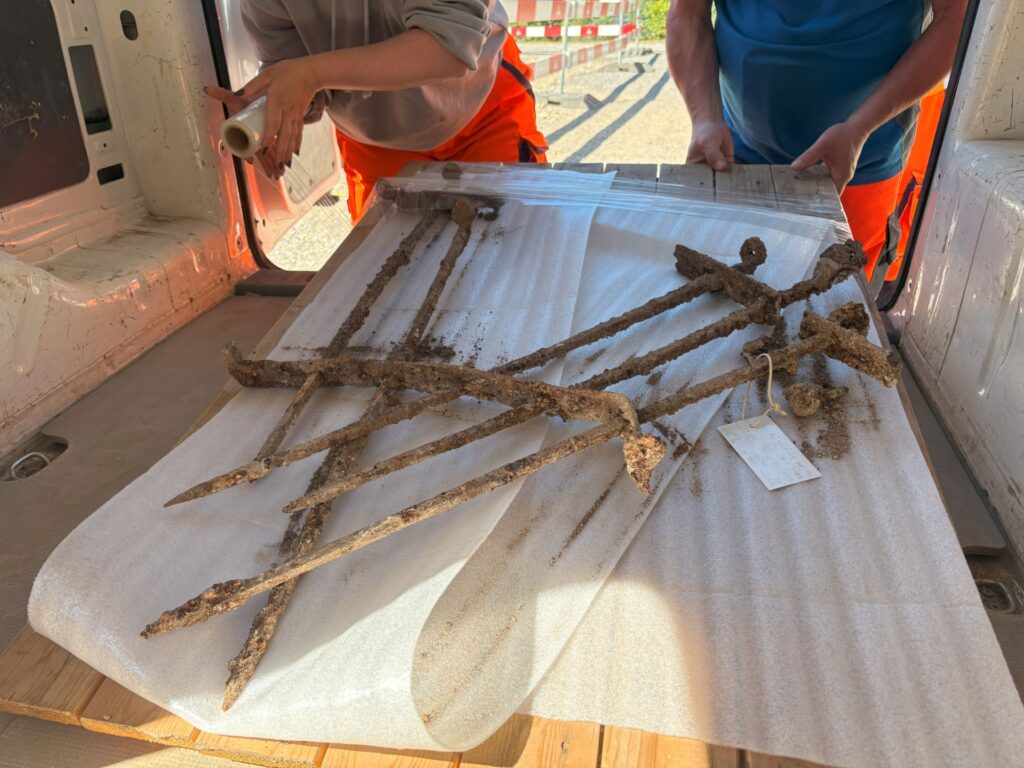
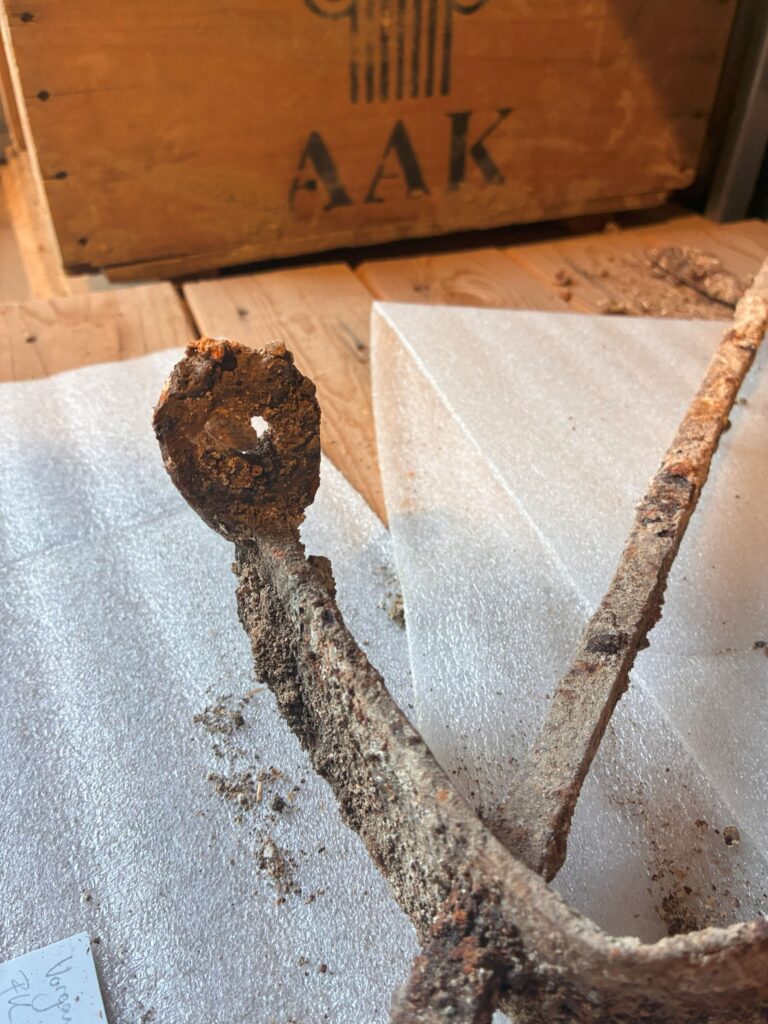
The newly discovered grille: five iron bars run through it, joined by two flat iron strips, and eyelets along the edges show where builders once fixed it to a wooden window frame.
A Roman Building With an Uncertain Fate
The grille lay within the remains of a masonry structure, raising questions about the circumstances that buried it. Archaeologists are considering whether fire weakened the building and caused part of its wall to collapse, or whether another structural failure brought the window down.
Archaeologists conducted two excavations in the 1990s around the area that is now a parking lot; however, recent research is bringing to light architectural remains that were not fully documented in previous studies. The latest excavations have uncovered part of the east-west wall along with the grid.
The team has moved the grille into Augusta Raurica’s archaeological collection depot for specialists to inspect its construction, record its state, and perform conservation work. Further study could assist in determining when the building was erected and how it came down.
Windows in Roman Buildings
Roman windows varied according to the building’s function and the materials available. Wooden shutters were common, while iron grilles provided security without completely blocking daylight or ventilation. The grille discovered at Augusta Raurica illustrates how metal bars could be fitted into a window frame.
Glass windows also appeared in Roman buildings, particularly during the imperial period. Roman window glass was generally thicker and less transparent than modern glass, often with a greenish or bluish tint. Bathhouses frequently used glass panes to admit daylight while helping retain heat, although some private houses also had glazed windows.
The British Museum preserves an early Roman glass windowpane from the Herculaneum area, dating to approximately AD 1–70. Measuring about 54 by 31 centimeters, it demonstrates that Roman craftspeople already possessed the technology to produce substantial glass panels during the first century AD.
The Augusta Raurica discovery does not establish whether the original window contained glass, mineral sheets, or wooden shutters. Nevertheless, the surviving ironwork provides rare physical evidence of how Roman builders secured a window within its frame.
Augusta Raurica: A Roman City on the Rhine
The discovery comes from one of Switzerland’s most important Roman archaeological sites. Augusta Raurica developed near the Rhine, a major communication and trade route connecting the Alpine region with the northern provinces of the Roman Empire.
The colony’s origins reach back to the late first century BC, when Roman expansion transformed the territory inhabited by the Celtic Rauraci people. Its strategic location helped the settlement develop into a regional center of commerce, administration, and craftsmanship.
From around AD 50, stone buildings increasingly replaced earlier structures. As Rome extended its frontier farther north, Augusta Raurica occupied a more secure position within the empire, allowing residential neighborhoods, workshops, and public buildings to expand.
By the second and early third centuries AD, the city had developed the architectural features of a prosperous Roman urban center. Its monuments included a theater, temples, public baths, a forum, and an amphitheater, while its streets accommodated merchants, artisans, and residents from different social backgrounds.
The city’s fortunes changed during the third century, when political instability and military threats disrupted life along the Rhine frontier. Although Augusta Raurica underwent significant changes, Roman occupation continued in the area, including at the fortified settlement of Castrum Rauracense.
Today, the archaeological park preserves substantial remains of this urban history, including a reconstructed Roman house that illustrates domestic life during the imperial period.
