

A small group of silver coins found beneath a former sports field in central Germany has turned into one of Thuringia’s most remarkable Celtic discoveries. Archaeologists say the 11 coins were deliberately hidden more than 2,000 years ago—and, unusually, they believe the entire hoard has survived.
The coins emerged at Singen in the Ilm district, where construction of a new fire station triggered archaeological work on the former sports ground below Singer Berg. What initially appeared to be a handful of scattered finds eventually revealed something much more intriguing: a complete Celtic deposit dating to the 1st century BC.
All 11 coins are silver quinarii of the so-called Prague type. Only around 80 examples of this type had previously been known from the whole of Thuringia, making the Singen discovery the largest hoard of its period yet recorded in the German state.
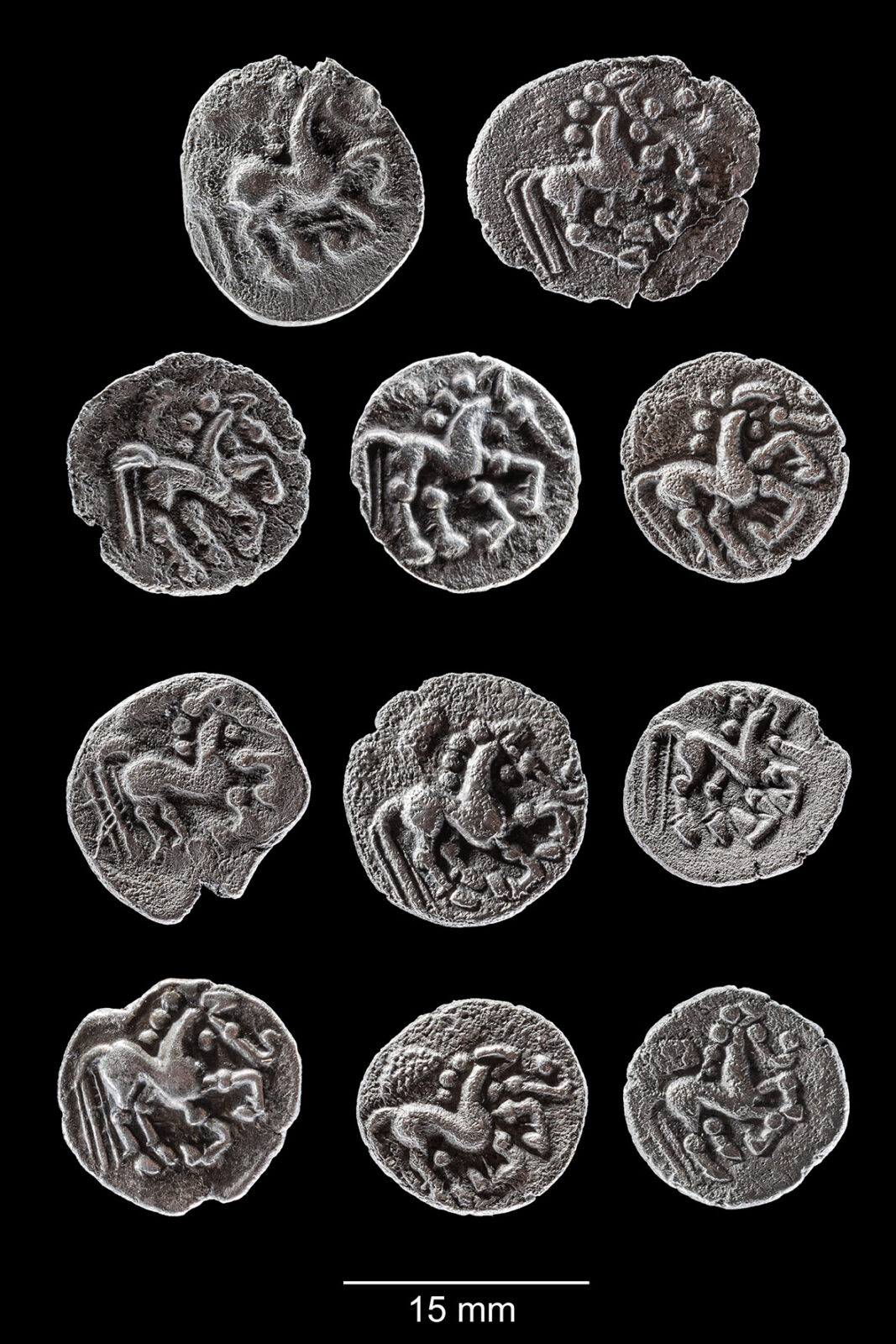
Someone hid the coins and never came back
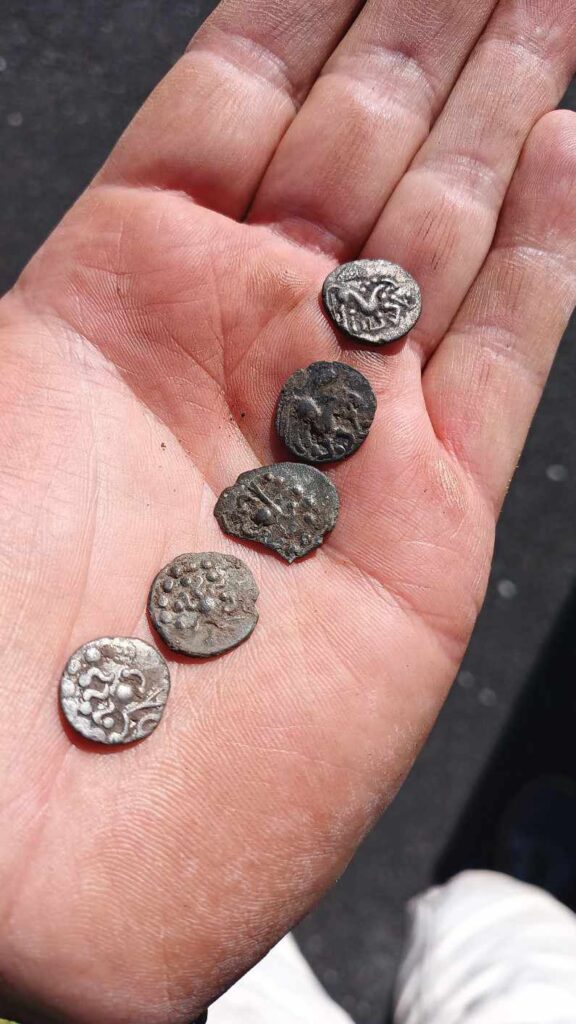
The first coins appeared during archaeological monitoring in July and August 2025, when excavation director Ronny Krause found several examples during work at the site. Archaeologists returned in August 2026 and carried out a targeted investigation around the findspot.
That second search changed the interpretation completely. The team concluded that the 11 coins belonged together and represented what archaeologists call a “closed find”—a group deposited at the same time rather than individual coins lost over many years.
The original container has vanished. Researchers found no pottery fragments, leading them to believe the coins were probably kept in something made from organic material, perhaps a small pouch or another container that decayed long ago.
The coins were no longer lying where their owner had placed them. Centuries of ploughing had dragged them across an area measuring roughly 5.8 by 1.5 meters. Careful documentation nevertheless allowed archaeologists to reconstruct their relationship and distinguish the hoard from later objects found nearby.
That detail gives the discovery a distinctly human dimension. At some point in the 1st century BC, someone gathered these silver coins, concealed them near Singer Berg and apparently never returned to retrieve them. Archaeology cannot yet tell us who that person was, why the money was hidden or what happened afterward, but the deposit survived long enough for its story to be recognized.
A Hoard That Connects Celtic Thuringia
The coins matter not only because they were hidden together, but also because of where they were found. Numismatists believe Prague-type quinarii from Thuringia may have been produced in the Gotha region, northwest of Singen.
Singen lies between that area and the dense concentration of Celtic sites in southern Thuringia. Among them is the Steinsburg on the Kleiner Gleichberg near Römhild, one of the region’s major Celtic settlements and a center associated with craft production.
That makes the Singen hoard more than an isolated cache of silver. Its location adds another point to the archaeological map, helping researchers trace possible connections between production centers, settlements and the routes along which coins and other goods moved through Iron Age Thuringia.
The Thuringian State Office for Heritage Management and Archaeology says the discovery has significantly expanded what is known about these regional connections.
One Place, Many Centuries of History
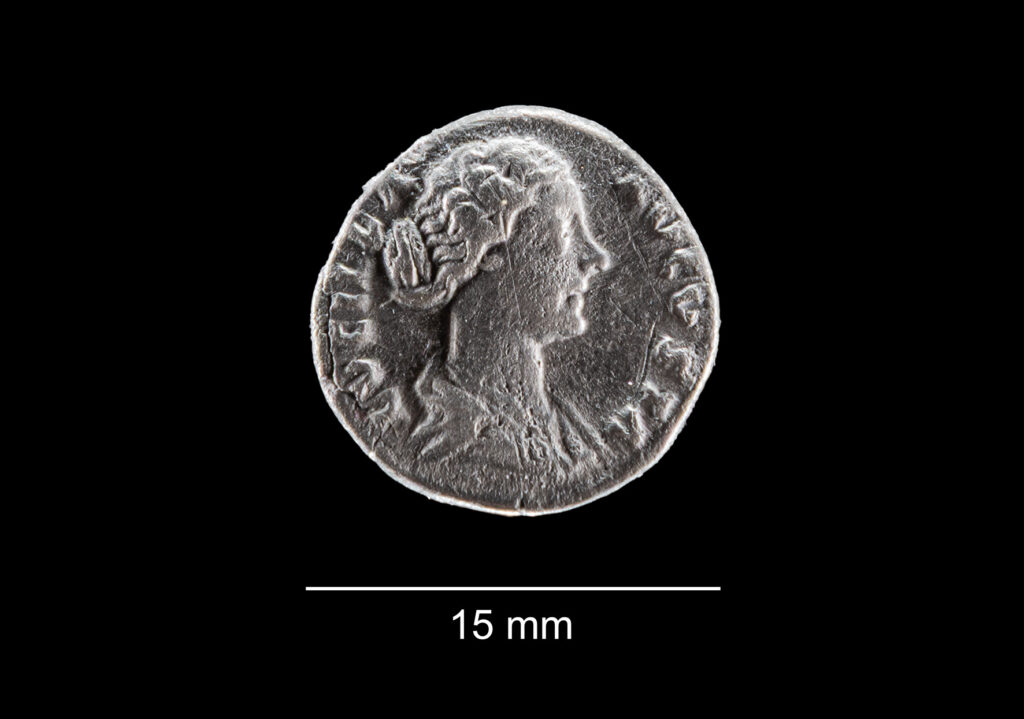
The same excavation also produced objects from much later periods. Archaeologists found a Roman denarius minted between AD 164 and 169, an early medieval red-and-yellow glass bead, a later silver coin and a Prussian uniform button, none of which belonged to the Celtic hoard.
Together, those finds show that this patch of land remained part of human activity for centuries. The Celtic coins, however, belong to one much more specific moment: someone gathered them, hid them, and never came back.
More than two millennia later, after farming had scattered the coins through the soil, archaeologists were able to reconstruct that single act and return the hoard to its original story.
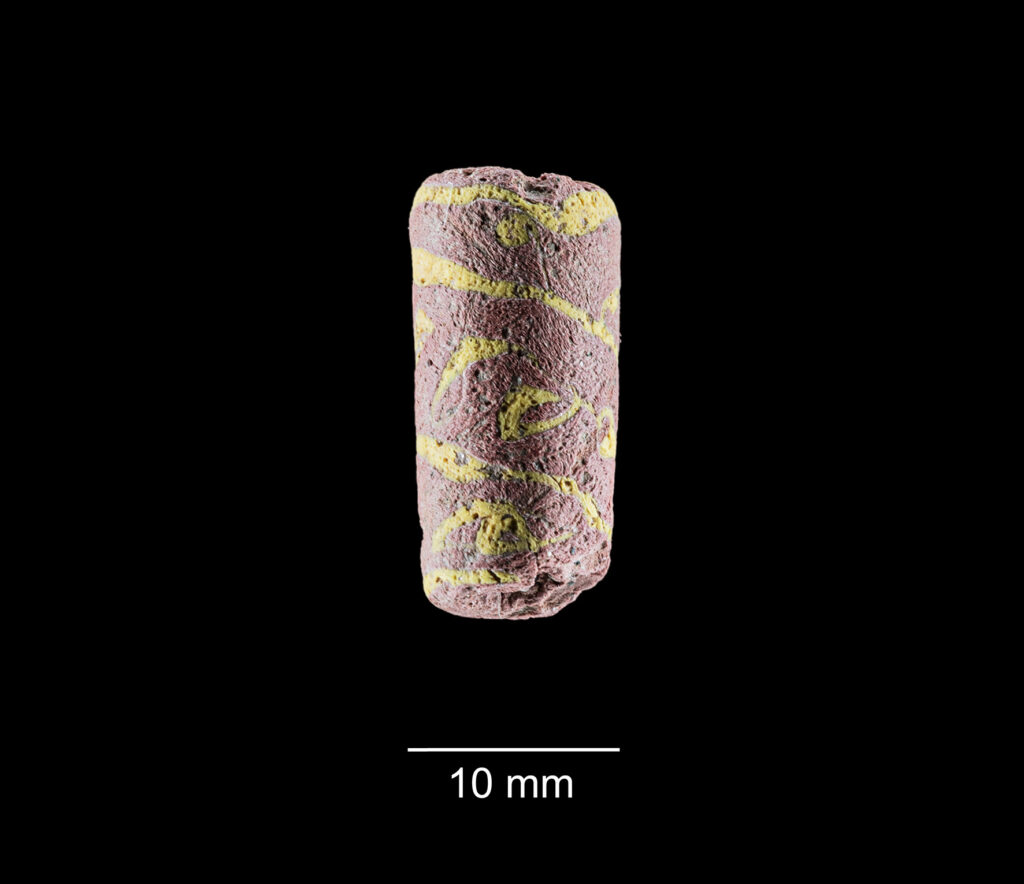
An early medieval red-and-yellow glass bead discovered near later drainage features at the Singen site. Credit: © H. Arnold, TLDA, Weimar
