
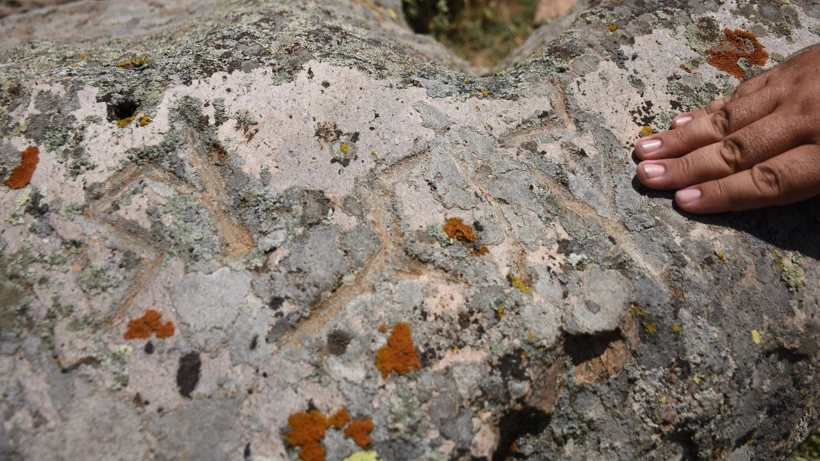
Archaeologists surveying the volcanic landscape of Karadağ in central Türkiye have identified angular signs carved into a rock near a medieval church. Preliminary assessments suggest that the markings may include Old Turkic runiform characters or tribal tamgas connected with Turkic groups that settled in the region during the Middle Ages.
The discovery was made in the Binbir Kilise region, meaning “Thousand and One Churches,” north of Karaman. The area contains one of central Anatolia’s largest concentrations of Byzantine churches, chapels, monasteries, tombs and military structures.
Angular signs found during the third survey season
The inscription was documented during the third season of an archaeological surface survey directed by Associate Professor İlker Mete Mimiroğlu of Necmettin Erbakan University.
The research project has been examining the religious architecture and settlement history of the Karadağ–Binbir Kilise landscape since 2024 under authorization from Türkiye’s Ministry of Culture and Tourism.
According to the initial announcement, the newly recorded signs differ from the graffiti previously documented in the region. They were carved into a large rock block close to a church and consist of straight, angular forms resembling characters used by medieval Turkic communities in Central Asia.
Specialists who conducted the preliminary examination reportedly suggested that the markings could include symbols associated with more than one Turkic tribe. Scientific study of the signs, however, remains in progress. No complete transcription, linguistic reading or precise date has yet been published.
This distinction is important. Although the markings have been described as “runic letters,” researchers have also referred to them as possible tribal damgas, or tamgas. A tamga is an emblem used by Turkic and other Eurasian communities to identify a family, clan, tribe or political group. Such marks are not necessarily pieces of written language.
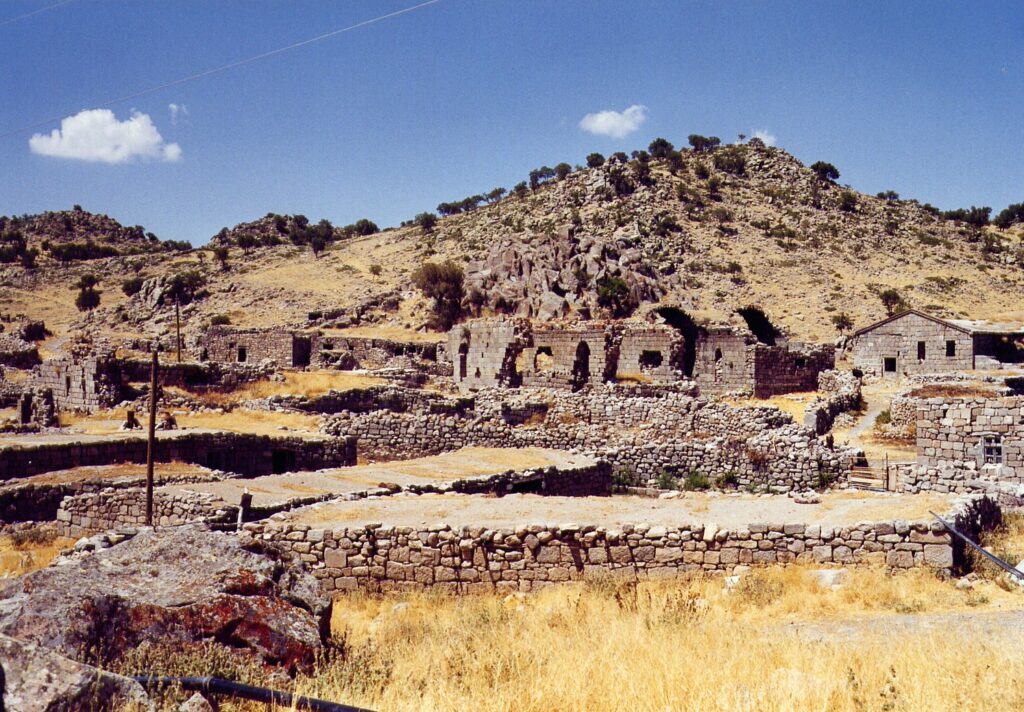
A settlement with churches, soldiers and horses
During the previous survey season, the team identified a settlement containing approximately ten churches and chapels near the large Roman-period pool at Karadağ.
The density of religious buildings suggests that the settlement may have held both religious and strategic importance. Researchers also documented an 11th-century structure with a closed Greek-cross plan, indicating that activity continued in the area during the Middle Byzantine period and close to the beginning of Seljuk rule in Anatolia.
Mimiroğlu believes the newly recorded signs may belong to Turkic groups that reached and settled in the region after the Battle of Manzikert in 1071.
Karadağ’s extensive open ground and large water installations would have been particularly useful for mounted communities and cavalry units. The rock inscription could therefore belong to a later phase in which Turkic settlers reused a landscape previously occupied by Byzantine Christian communities. This interpretation remains a working hypothesis rather than a confirmed archaeological conclusion.
Binbir Kilise: a sacred landscape on an extinct volcano
Binbir Kilise is spread across the slopes, valleys and high ground of Karadağ, an extinct volcanic massif near the Konya–Karaman border.
The name does not indicate that exactly 1,001 churches once stood there. In Turkish usage, “binbir” often expresses a very large or almost countless number. The term appears to have been applied to the region by the Ottoman period and was later repeated by travellers and researchers.
The archaeological landscape includes the ruins of Madenşehir, Değle and the fortified installations of Başdağ. Churches, basilicas, chapels, monasteries, cisterns, houses, tombs and military buildings were constructed across the mountain between approximately the fourth and ninth centuries.
Madenşehir contains the largest surviving basilica in the region, first built around AD 500, together with additional Byzantine churches, dwellings and water systems. Değle preserves domestic architecture, rock-cut tombs and funerary monuments, while Başdağ includes fortifications, barracks, a large cistern and a monumental pool.
Karadağ was considered sacred long before the Byzantine period. Hittite hieroglyphic inscriptions and reliefs survive on the mountain, including an inscription referring to King Hartapu near the summit of Mahalaç. Christian communities later established churches, monasteries and pilgrimage installations throughout the same landscape.
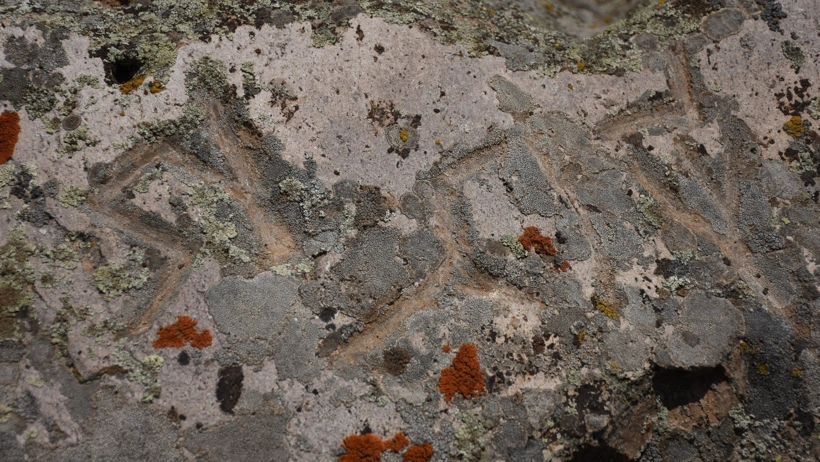
What are Old Turkic runiform letters?
The term “Turkic runes” is commonly used for the Old Turkic or Göktürk writing system. The label comes from the angular appearance of its signs and their superficial resemblance to Germanic runes. It does not mean that the two writing traditions were directly related.
Old Turkic is the earliest known writing system used to record a Turkic language. Its best-known examples are the monumental eighth-century inscriptions of the Orkhon Valley in present-day Mongolia, including memorial inscriptions associated with Kül Tigin and Bilge Khagan.
The script was also used across parts of southern Siberia and Central Asia, with regional forms associated with the Orkhon and Yenisei traditions. Horizontal Old Turkic texts were generally written from right to left.
Many letters have straight lines and sharp angles, forms well suited for carving into stone or wood. The writing system probably developed under the influence of Sogdian, an Iranian-language script widely used along Central Asian trade networks.
For this reason, “Old Turkic runiform” is more precise than “Turkish runic.” The inscription tradition predates modern Turkish and belongs to the broader early history of Turkic languages and societies.
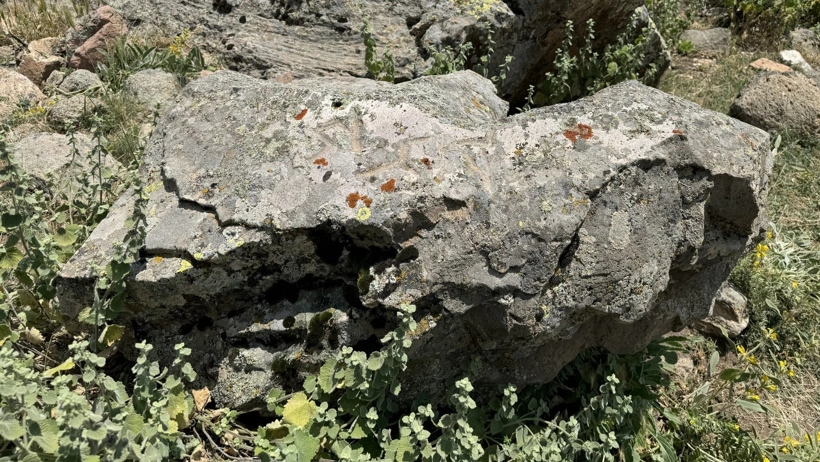
Inscription or tribal tamga?
Determining whether the Karadağ markings represent writing, tamgas or a combination of both will require detailed epigraphic analysis.
Turkic tamgas could identify families, sub-tribes or political groups and were placed on animals, possessions, monuments and rock surfaces. Some monumental Turkic inscriptions contain both linguistic texts and separate tamga signs representing affiliated groups.
Researchers will need to examine the order and orientation of the Karadağ signs, compare them with known Old Turkic character forms and document their relationship with the rock surface and nearby buildings.
High-resolution photography, photogrammetry, microscopic examination and comparison with securely dated inscriptions may help establish whether the marks were carved during the early Seljuk period or at another stage in the site’s long history.
Until those results are published, the discovery is best described as a possible Turkic runiform inscription or collection of tamgas. Even with that caution, the markings add a new layer to a landscape already shaped by Hittite, Roman, Byzantine, Seljuk and later communities.
AA
