

People were using Badanj Cave in Bosnia and Herzegovina around 20,000 years ago, roughly 5,000 years earlier than previous evidence had shown, according to a new study that reshapes the timeline of one of the eastern Adriatic’s most important Paleolithic sites.
The new dates suggest that generations of hunter-gatherers returned to Badanj over a period stretching from about 20,000 to 12,000 years ago. That span covers major environmental changes at the end of the last Ice Age and turns the site into an unusually long record of how people lived through a changing landscape.
A shelter above the Bregava River
Badanj lies near the town of Stolac in southern Bosnia and Herzegovina. It is not a deep cave but a large, south-facing rock shelter set into a slope about 30 meters above the Bregava River valley.
Its position was well suited to people moving through the region. The river valley forms a natural route between the Neretva Valley, which leads toward the Adriatic coast, and the mountainous interior of Bosnia. From the shelter, prehistoric groups could reach different landscapes while remaining close to water and other resources.
Badanj first attracted archaeological attention in the 1970s after local people found stone artifacts there. Excavations soon revealed that the shelter preserved a rich Upper Paleolithic record, including stone tools, bone objects, personal ornaments and engraved stone. One carving, traditionally interpreted as part of an animal figure, became one of the best-known examples of Paleolithic art from Bosnia and Herzegovina.
People were there much earlier than previously known
The problem was that archaeologists had only a small number of reliable dates for the site. Earlier work suggested a much shorter period of occupation, leaving uncertainty over when people first began using Badanj and how long they continued returning.
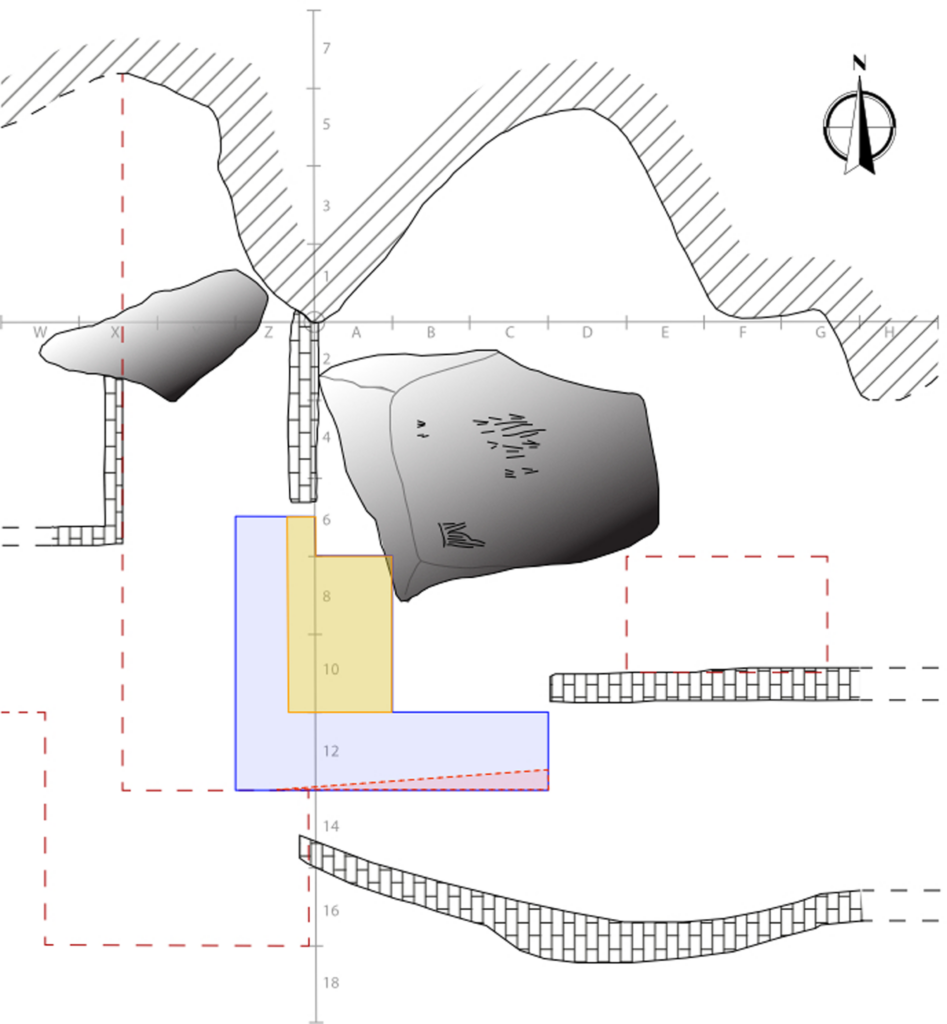
Researchers have now combined results from the older excavations with material recovered during four new field seasons that began in 2019. In total, they assessed 29 radiocarbon dates, 22 of them from secure archaeological contexts. The result moves the earliest known human activity at the shelter back to roughly 20,000 years ago.
That adds at least 5,000 years to Badanj’s known history.
The researchers stress that the oldest part of the sequence still needs further dating, but the broader picture is clear enough: people were using the shelter far earlier and for much longer than archaeologists had previously demonstrated.
Life at the end of the Ice Age
Twenty thousand years ago, the geography of the Adriatic looked very different from today. Global sea levels were lower, exposing large areas of what is now the northern Adriatic Sea and creating broad land corridors through which people, animals and technologies could move.
Badanj sat on the eastern edge of this changing world. The people who came to the shelter belonged to hunter-gatherer communities that archaeologists describe as Epigravettian, a cultural tradition widespread across parts of southern Europe during the later Upper Paleolithic.
At Badanj, they left behind stone tools, worked animal bone, personal ornaments and engraved objects. Together, these finds show that people repeatedly returned to the shelter over thousands of years, using the same place as the climate and surrounding landscape changed.
The new chronology also covers the transition out of the coldest phases of the last Ice Age. That gives archaeologists an opportunity to study not only when people lived at Badanj, but how their tools, food choices and social practices changed as the climate and surrounding environment shifted.
The oldest layers may still be below
One detail makes the new results particularly intriguing: archaeologists have still not reached bedrock beneath the oldest excavated deposits.
The earliest dated layers currently reach roughly 21,000 to 19,500 years ago, but the bottom of the archaeological sequence remains unknown. That means Badanj could potentially preserve evidence of even earlier activity, although researchers will need additional excavation and dating before they can establish that.
The site now joins a very small group of eastern Adriatic locations that preserve evidence across both earlier and later phases of the Epigravettian period. This makes Badanj especially valuable because archaeologists can follow changes within one place instead of comparing isolated snapshots from different sites.
For the people who used the shelter, however, Badanj was unlikely to have been important because of any archaeological category. It was a protected place above a river valley that people knew, returned to, and reused for thousands of years.
The new study, published in the journal Radiocarbon, shows that this relationship began much earlier than previously recognized. With the deepest layers still unexplored, Badanj may yet extend that story further into the Ice Age.
Ruiz-Redondo, A., Vukosavljević, N., & Vander Linden, M. (2026). New radiocarbon determinations for the late Pleistocene site of Badanj (Bosnia and Herzegovina): Implications for the Upper Palaeolithic sequence of the Adriatic basin. Radiocarbon, 68(5), 1184–1196. doi:10.1017/RDC.2026.10220
