
Scientific tests reveal a forgotten chapter in Sasanian metallurgy
Sasanian brass technology may have been far more advanced and widespread than previously known, according to a new scientific study of archaeological finds from Merv and Nineveh. The research suggests that metalworkers in the Sasanian Empire were not simply continuing older bronze traditions. They were also experimenting with brass in ways that connected beauty, military function and technological innovation.
For decades, the metalwork of ancient Iran has been discussed largely through the lens of bronze, silver and gold. Brass, an alloy of copper and zinc, has been better documented in Roman, Byzantine and later Islamic contexts. Its role inside the Sasanian Empire, which ruled from 224 to 651 CE, has remained much less clear.
That picture is now changing.
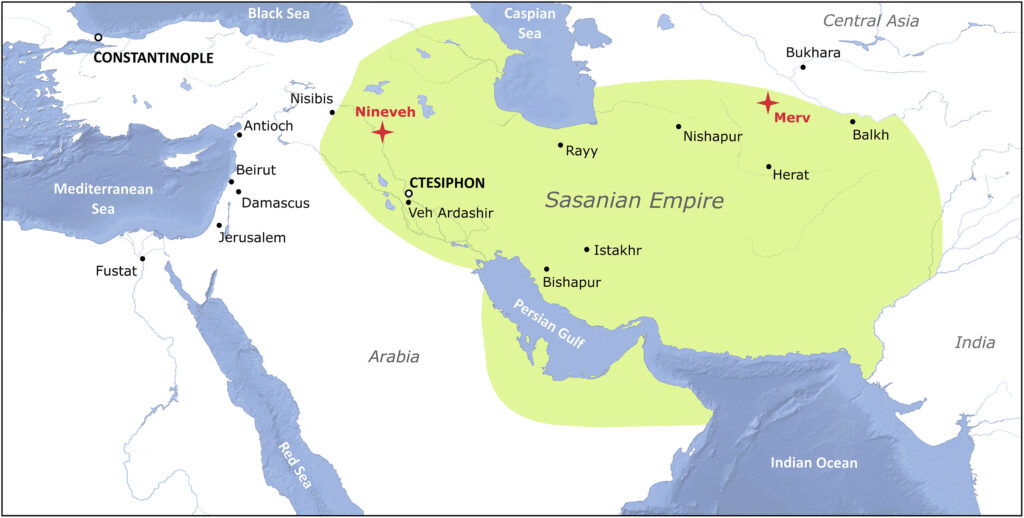
A team of researchers examined copper-alloy objects from two major frontier zones of the Sasanian world: Merv, in present-day Turkmenistan, and Nineveh, in northern Iraq. Using X-ray fluorescence analysis, scanning electron microscopy and digital radiography, they identified evidence for brass in both cast and hammered forms. The results point to a more complex technological landscape than previously recognized.
Brass found at opposite ends of the empire
The choice of Merv and Nineveh is significant. Merv was one of the great urban and military centers of northeastern Iran, positioned near routes linking Khurasan, northern Afghanistan, the Amu Darya and Central Asia. Nineveh, the ancient Assyrian capital, continued to be occupied into Late Antiquity and later yielded rare Sasanian military helmets.
Together, these two sites sit at opposite ends of the Sasanian imperial world. Finding brass in both places suggests that the material was not an isolated curiosity. It was part of a broader pattern of metal use across the empire’s frontiers.
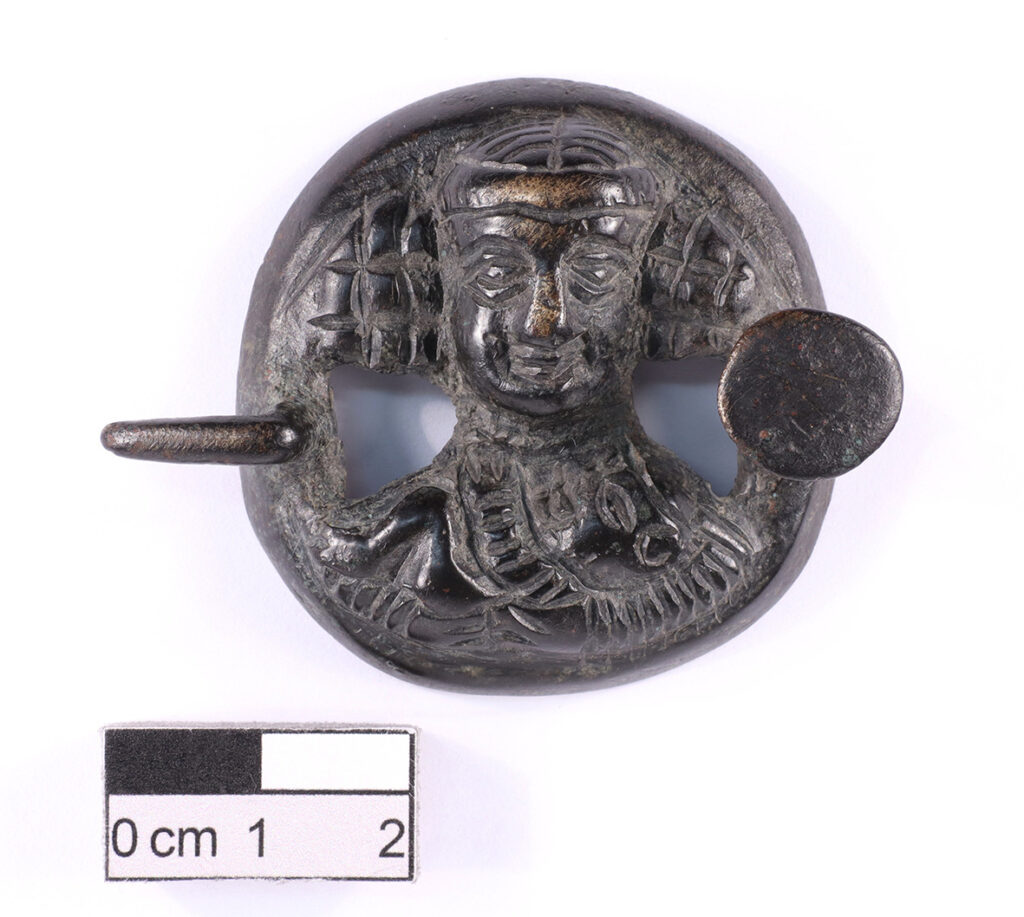
At Merv, the researchers examined copper-alloy fragments from Sasanian contexts and found that around a quarter of a small assemblage showed likely evidence of brass. Some objects came from fourth- to fifth-century contexts, while others belonged to the sixth and seventh centuries. The finds included a hairpin inlaid with lapis lazuli and colored glass, a bangle fragment, fittings, beads and a pinhead.
The zinc content varied widely, from low levels to much higher concentrations. That range matters. Higher zinc levels point to the probable use of primary cementation brass, while lower levels may indicate recycling or mixing with other copper alloys. In other words, Sasanian metalworkers were not merely dealing with accidental traces of zinc. They appear to have had access to recognizable brass materials, even if supplies were inconsistent.
From golden color to practical performance
The earliest brass objects from Merv were mostly cast. This suggests that color may have been the initial attraction. Brass can resemble gold more closely than bronze, and in ancient societies that visual effect carried social value.
A brass hairpin or bangle would not rival elite gold jewelry, but it could have offered a prestigious appearance to people below the highest aristocratic level. In this sense, brass may have occupied a middle zone between luxury and practicality.
The later evidence is even more interesting. Hammered brass objects from Merv and brass components in the Nineveh helmets show that the alloy was valued not only for how it looked, but also for how it behaved under the hammer. Brass is well suited to sheet work because it can be shaped, cut and pierced more easily than many bronze alloys. That made it useful for thin fittings, coverings and riveted components.
This shift is crucial. Cast brass mainly reflects aesthetic choice. Hammered sheet brass reflects technical understanding.
Nineveh helmets reveal a military dimension
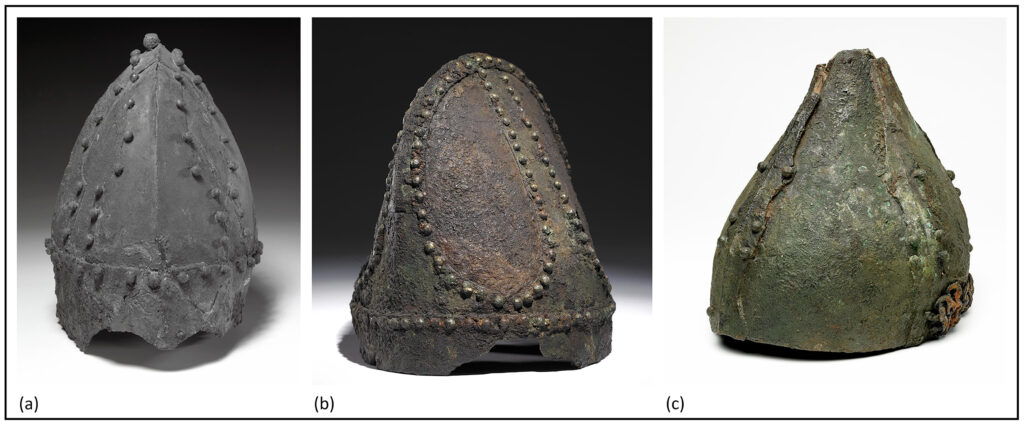
The most striking evidence comes from three Sasanian helmets in the British Museum collection, originally found at Nineveh. These helmets date broadly to the sixth and seventh centuries CE and belong to a rare group of Late Antique segmented or banded helmets.
Radiographic imaging revealed how the helmets were constructed from multiple plates, strips and rivets. Scientific analysis showed that brass or low-tin brass-like alloys were used for support strips, rivets and, in some cases, sheet coverings placed over iron components.
This is a major detail. The helmets were not simply iron protective gear. They were carefully engineered objects combining strength, surface finish and visual impact. Brass components would have created a bright, golden appearance, while iron backing plates provided protection.
The researchers suggest that the use of brass in these helmets may point to a wider Sasanian military application. That remains a working hypothesis, but it is an important one. If brass was regularly used in military equipment, its spread may have involved organized production networks, specialized workshops and possibly state demand.
A bridge to the Islamic brass boom
The study also helps explain a larger historical transition. By the early Islamic period, brass became one of the dominant copper alloys across Western Asia. Yet the origins of that shift have been difficult to trace.
The Sasanian evidence from Merv and Nineveh may represent part of the missing link. At Merv, later early Islamic material shows a greater presence of high-zinc brass, suggesting a more regular supply or perhaps local production by the ninth century. The Sasanian period may therefore have been a crucial experimental phase, when brass moved from a relatively prestigious material toward wider practical use.
This does not mean bronze disappeared. The study emphasizes that bronze traditions continued. But brass was gaining a foothold, especially where its properties offered clear advantages.
Old museum objects, new discoveries
One of the most important lessons of the research is methodological. Some of the key evidence came not from newly excavated artifacts, but from re-examining older museum collections with modern scientific tools.
Many historical catalogues describe ancient objects broadly as “bronze” or “copper alloy.” That language can hide major technological differences. Reclassifying some components as brass changes how we understand Sasanian craft, trade and military production.
The discovery is subtle but powerful. It does not present a newly unearthed palace or a spectacular gold treasure. Instead, it reveals a hidden technological choice inside small objects, frontier fragments and battle helmets.
The Sasanian Empire, long known for silver plates, elite weaponry and monumental power, now appears to have played a more important role in the story of brass than previously understood. On its frontiers, metalworkers were already testing the alloy that would later help define the material culture of the Islamic world.
Davis, M. E., Mongiatti, A., Simpson, S. J., & Martinón-Torres, M. (2026). Brass in the Sasanian frontiers: Assessing metallurgical innovation through archaeological finds at Merv and Nineveh. Archaeological Research in Asia, 46, 100688. https://doi.org/10.1016/j.ara.2026.100688
Cover Image Credit: Davis et al., 2026
