
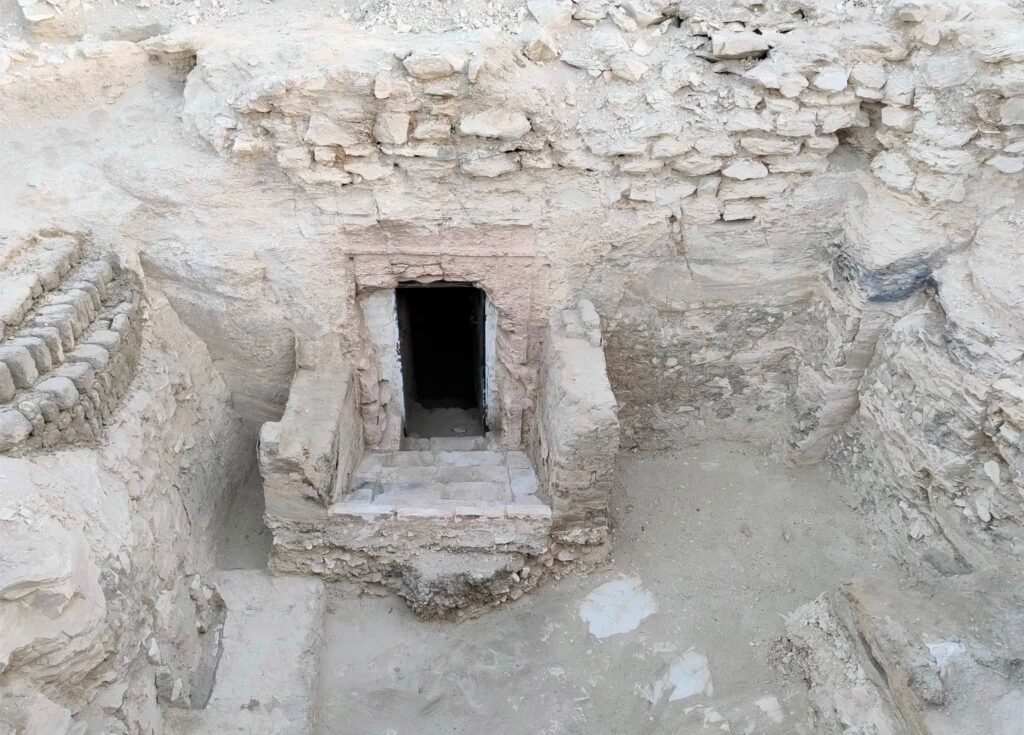
A Dutch archaeological mission has uncovered a decorated tomb belonging to a man named Paser in the lower Sheikh Abd el-Qurna area on Luxor’s West Bank, according to Egypt’s Ministry of Tourism and Antiquities.
The rock-cut tomb lies east of Theban Tomb 45 within the wider Theban Necropolis. Its painted decoration and artistic style suggest that it probably dates to the Ramesside period, although researchers have not yet announced a more precise date.
Painted scenes identify the tomb owner
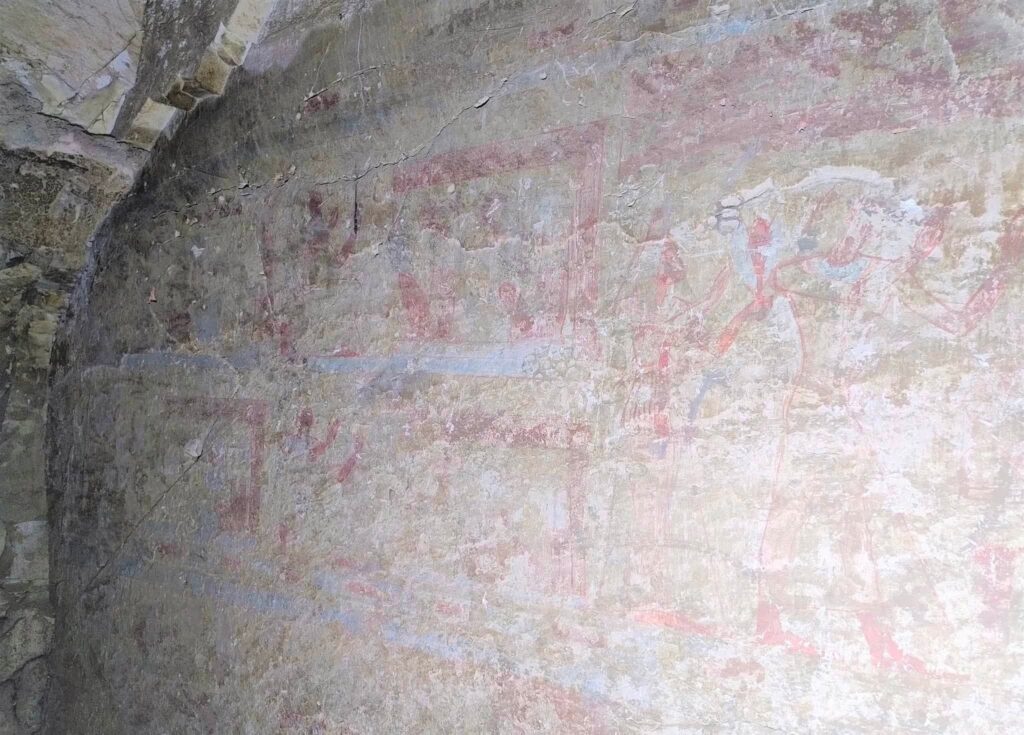
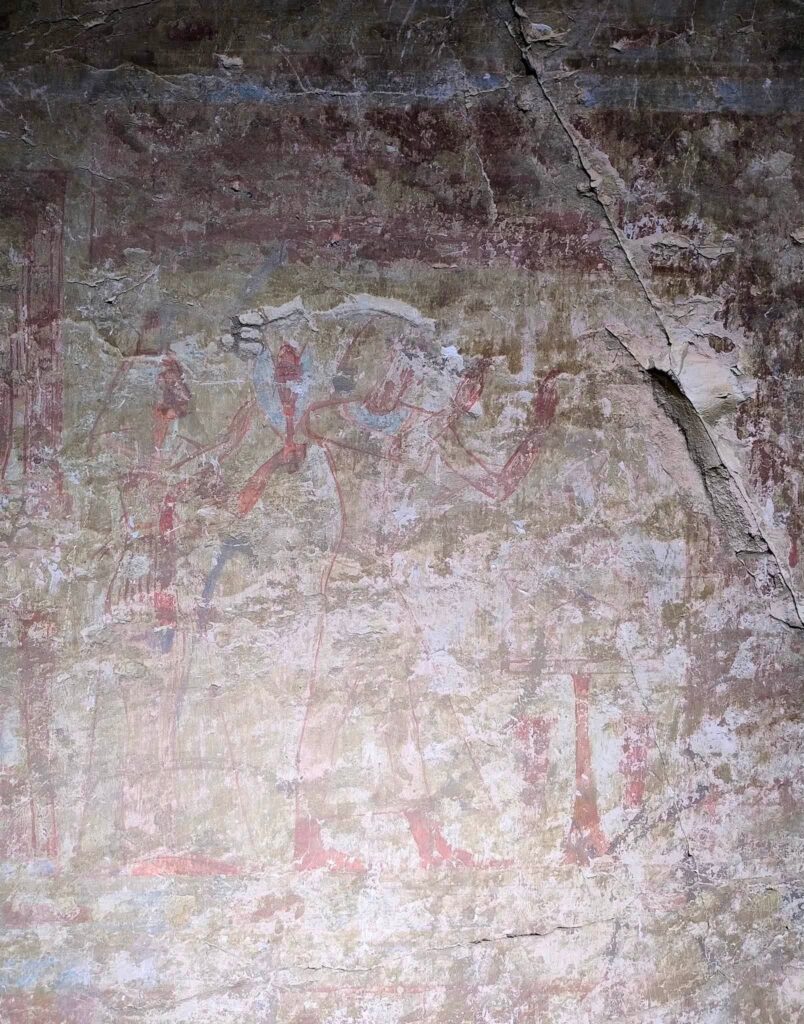
Inscriptions preserved inside the tomb record the name Paser. Portions of the wall paintings remain covered by a thin layer of dust, but visible scenes show him worshipping deities represented inside shrines.
Another composition depicts Paser and his wife seated or standing before an offering table. Further documentation may reveal his titles, occupation and position within New Kingdom society.
The tomb follows a plan commonly used for private burials at Thebes during the New Kingdom. It includes an external courtyard, an inverted T-shaped rock-cut chapel and underground burial chambers.
Among the well-preserved features in the courtyard is a mud-brick bench containing a recess where a funerary stela was probably installed. A staircase bordered by sloping ramps leads towards the tomb entrance.
A tomb from Egypt’s Ramesside age
The New Kingdom, conventionally dated to approximately 1550–1070 BCE, was one of ancient Egypt’s most powerful periods. Egyptian rulers expanded their influence beyond the Nile Valley, while temples, royal monuments and richly decorated private tombs transformed the landscape of Thebes.
The Ramesside period formed the final phase of the New Kingdom and covered the 19th and 20th Dynasties, beginning around 1292 BCE. It takes its name from the succession of rulers called Ramesses, including Ramesses II and Ramesses III.
Sheikh Abd el-Qurna became an important burial ground for officials, priests, and administrators connected with the temples and royal institutions of Thebes. The nearby TT45 tomb was first decorated during the 18th Dynasty and later reused in the Ramesside period, illustrating how burial spaces in the area could acquire new occupants and meanings over several centuries.
Excavation and conservation will continue
The mission is directed by Dr. Carina van den Hoven of Leiden University. Her team has been conducting archaeological research, documentation and preventive conservation work around TT45 and the surrounding landscape for several years. Leiden University describes the wider project as combining excavation with photogrammetry, digital epigraphy, three-dimensional recording and heritage management.
Researchers will continue studying the inscriptions, architecture and burial chambers to identify others interred inside the tomb and reconstruct their biographies. Structural reinforcement and conservation of the surviving coloured decoration are planned for future excavation seasons.
Egypt’s Ministry of Tourism and Antiquities
Cover Image Credit: Egypt’s Ministry of Tourism and Antiquities
