
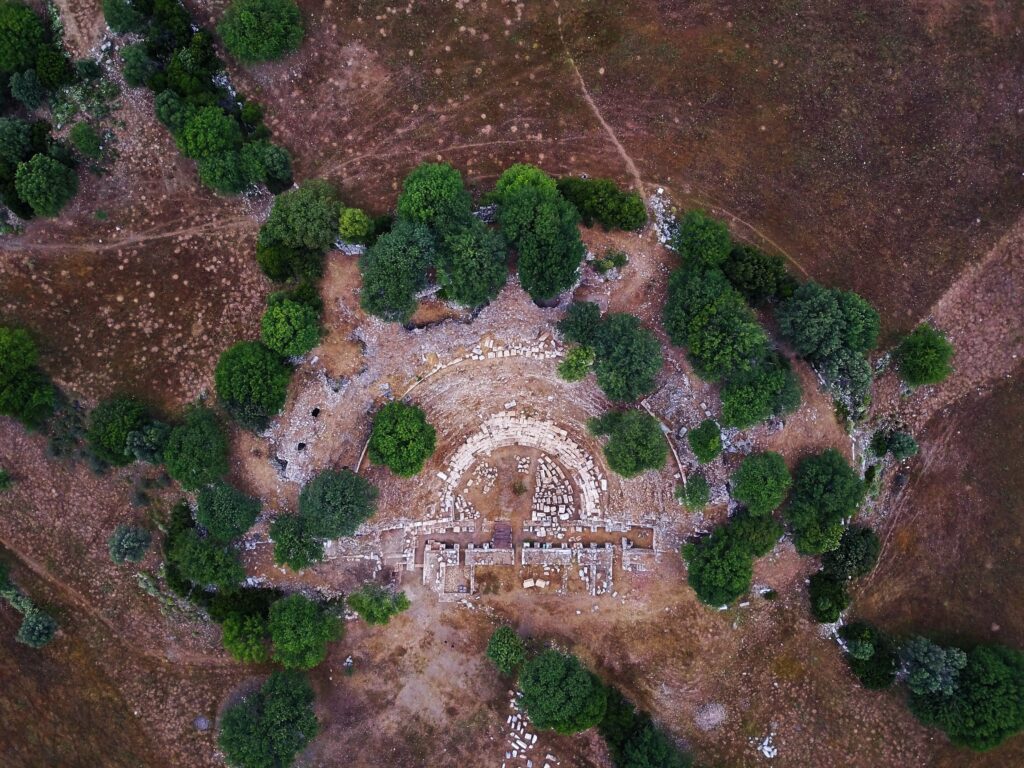
Roman businessmen in Teos may have played a far greater role in the city’s economic life than previously known, according to a new study of two inscriptions discovered in the ancient Ionian city on Türkiye’s Aegean coast.
The inscriptions, unearthed during excavations in 2021 at the Sanctuary of Dionysos in Teos, date to the 1st century BCE. At first glance, they appear to be formal honorific texts. But their wording opens a window onto something much larger: the presence of Roman commercial groups operating inside a Greek city long before the full imperial age.
The study, published in Belleten by Tolga Uzun, argues that the inscriptions provide the first direct evidence for Roman businessmen in Teos and show that Roman trade associations, known as conventus, were active across a wider area of western Anatolia than scholars had previously documented.
A Greek city with Roman money behind the scenes
Teos was not a minor settlement. Located near modern Seferihisar in İzmir Province, the city was one of the important Ionian centers of western Anatolia. It was famous for its Sanctuary of Dionysos, its festivals, and its association with the Artists of Dionysos, a professional guild of performers and musicians that helped make the city a cultural meeting point.
Its economy was also strong. Ancient Teos benefited from agriculture, wine, olive oil, timber, wool production and marble. One of its most prized resources was the stone known in Roman sources as Marmor Luculleum or Africano marble, a colorful marble later used in prestigious Roman buildings.
This commercial profile made Teos attractive to foreign traders. The newly studied inscriptions suggest that Roman businessmen were not merely passing through the city. They were organized, visible and influential enough to publicly honor a local official.
Menophantos and the golden wreath
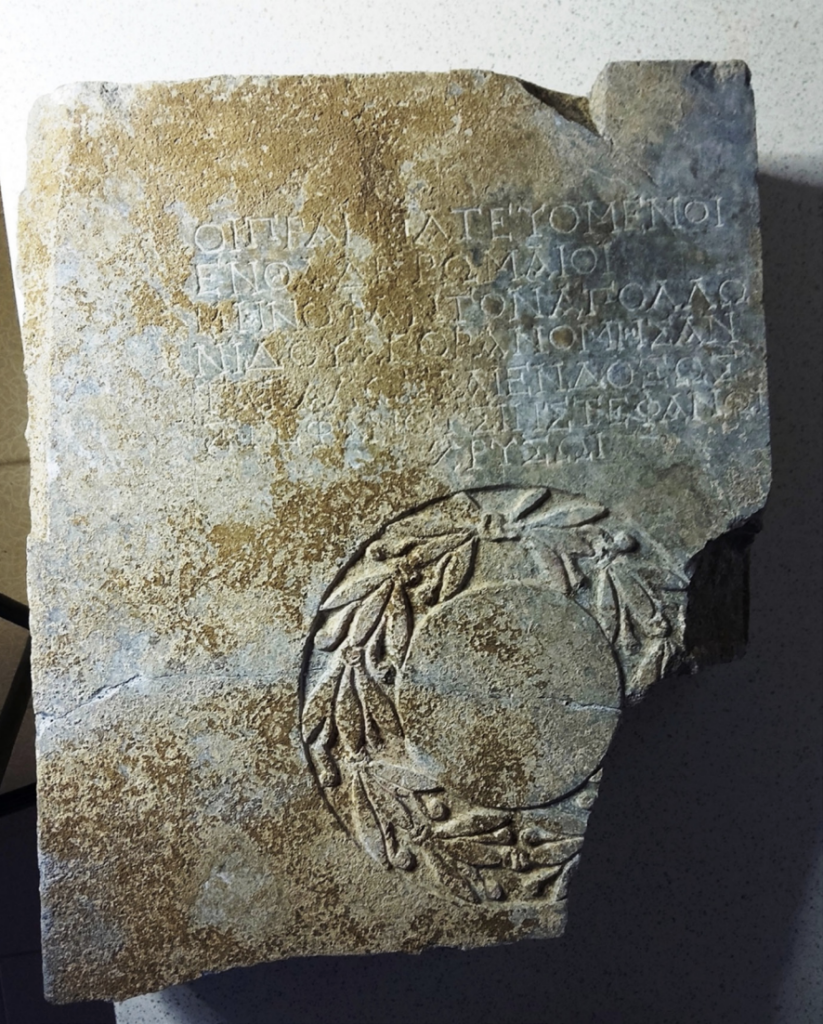
The first inscription records that “the Romans doing business here” honored Menophantos, son of Apollonides, who had served as agoranomos. In Greek cities, an agoranomos was responsible for the proper functioning of the marketplace, including trade, prices, order and commercial disputes.
The inscription states that Menophantos carried out his office “well and gloriously” and was crowned with a golden wreath. This was not a casual gesture. In the Greek civic world, such honors were public statements of gratitude and status.
Why would Roman businessmen honor him? Uzun suggests that Menophantos may have helped them in commercial matters, perhaps in relation to the sale or transport of Teos’ famous marble. Another possibility is that he resolved a dispute involving pricing, shipping or market regulations.
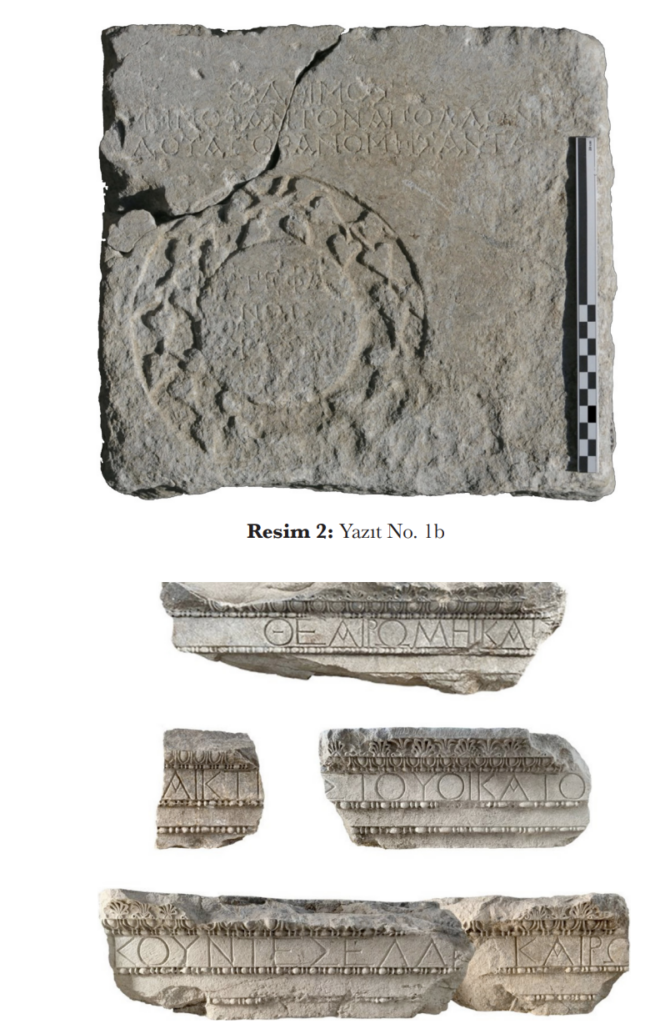
The second inscription shows that the people of Teos also honored Menophantos with a golden wreath. That detail matters. It suggests that Menophantos was recognized both by the local civic community and by Roman businessmen active in the city’s economy.
Not ordinary shopkeepers
The term used for these Roman traders is especially important. The Greek word in the inscription corresponds to the Latin negotiatores. These were not simple retailers or market sellers. In Roman usage, negotiatores were often investors, financiers, creditors and large-scale business figures who operated in provincial economies.
This distinction separates them from mercatores, a term more closely linked to ordinary merchants or smaller commercial activity. The Roman businessmen in Teos likely belonged to a higher economic category. They were people with capital, networks and the ability to move goods, credit and influence across regions.
Their presence in Teos fits a broader pattern already known from cities such as Ephesos, Smyrna, Pergamon, Klaros, Sardis, Kos and Kibyra. But the Teos inscriptions are important because they add another city to that network and show that Roman commercial organization reached deeper into the Ionian landscape.
A wider Roman trade network in Anatolia
The study connects the Teos inscriptions to the concept of conventus, organized communities of Romans living and working outside Italy. These groups were not companies in the modern legal sense, but they functioned as social and commercial networks. They helped Roman citizens and Italic traders cooperate, protect their interests and maintain influence in foreign cities.
In Teos, the evidence suggests that Roman businessmen acted collectively. They did not honor Menophantos as isolated individuals, but as a group. That collective voice is what makes the inscription so valuable.
The discovery also has cultural significance. Roman businessmen did not bring only money into Anatolia. They carried legal habits, social expectations and Roman identity into Greek civic life. Through trade, credit, public honors and relationships with local officials, they became part of the city’s daily political and economic rhythm.
Teos between Dionysos and Rome
What makes the Teos discovery especially compelling is the contrast between the city’s cultural image and its commercial reality. Teos is often remembered as a city of Dionysos, artists, festivals and temples. These inscriptions add another layer: Teos was also a place where Roman capital, local administration and Aegean trade intersected.
A fragmentary text on stone, found in a sanctuary, now shows Roman businessmen thanking a Greek market official for help in a city shaped by wine, marble and maritime exchange.
The inscriptions do not describe a battle, a king or a dramatic collapse. Instead, they reveal the quieter machinery of history. Behind the marble temples and civic rituals of Teos stood networks of traders, financiers and officials who helped connect the Greek East with the expanding Roman world.
For archaeologists and historians, that may be the real value of the discovery. It shows how Rome entered Anatolia not only through armies and governors, but through contracts, ships, market offices and men whose names were carved into stone because business had made them powerful.
Uzun, T. (2026). Teos’taki Romalı Tüccarlar. BELLETEN, 90(317), 99-126. https://izlik.org/JA38UT86ZX
Cover Image Credit: Public Domain
