
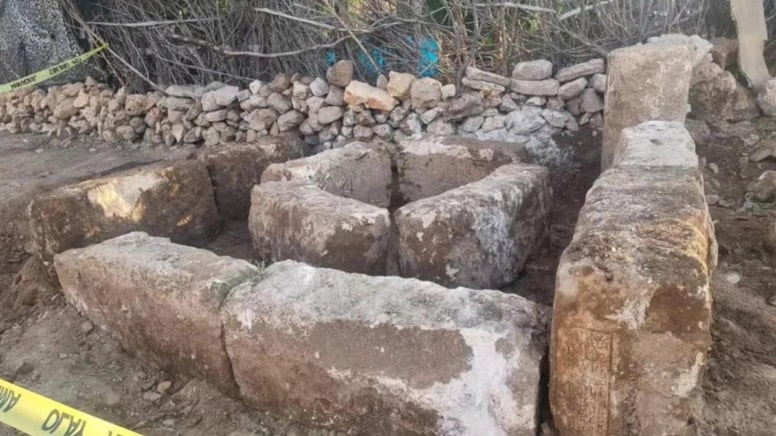
Stone blocks bearing mysterious inscriptions have been uncovered during landscaping work in Midyat, a historic district of Mardin in southeastern Türkiye, where layers of Syriac, Roman, Byzantine, Artuqid and Ottoman heritage still shape the region’s stone-built landscape.
The inscribed blocks were found in the Ortaca neighbourhood after municipal workers noticed writing on the stones and alerted the authorities. According to the newspaper Sözcü, gendarmerie teams and officials from the Mardin Museum Directorate were sent to the area, where the stones were taken under protection for further examination.
Inscribed stones found during municipal work
The discovery was made when workers saw visible writing on several stone blocks. After the notification, security measures were taken around the area, and museum officials carried out an initial assessment.
Preliminary observations suggest that the stones may have historical value, but no firm conclusion has yet been announced. The inscriptions are now expected to be examined by a specialist committee that may include archaeologists, art historians and epigraphy experts.
For now, the most important questions remain open. Which language was used? When were the inscriptions carved? Were the stones originally part of a building, a religious structure, a funerary monument or another architectural setting?
Only detailed scientific study can answer those questions.
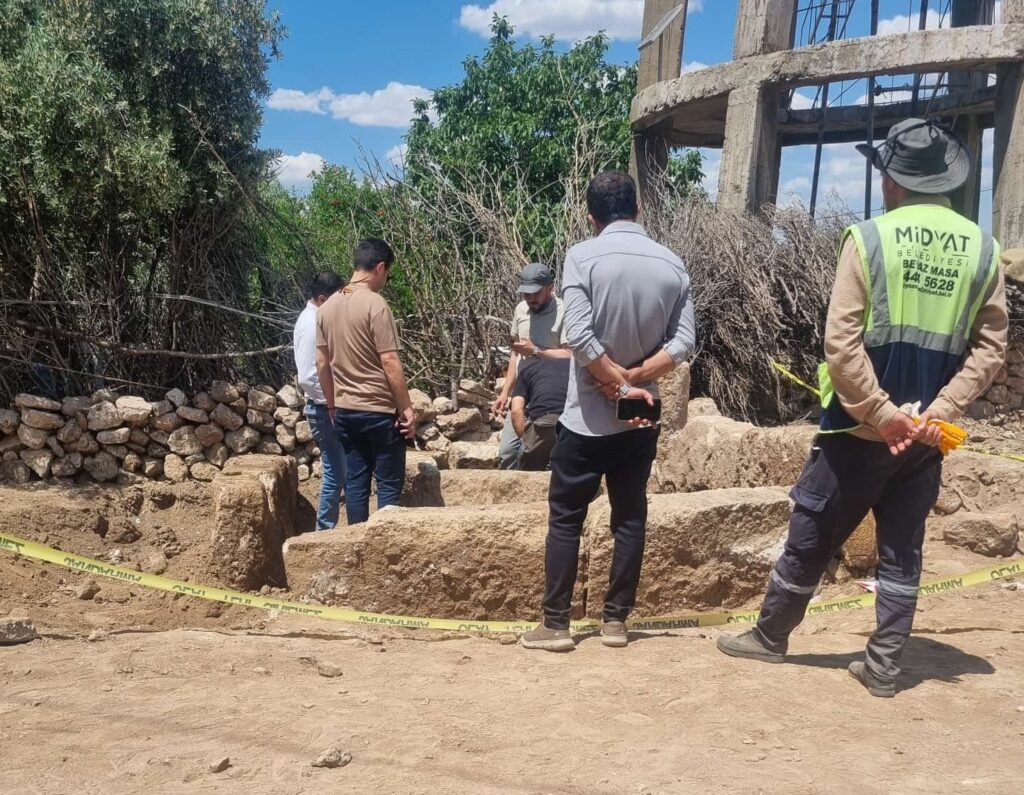
Experts will examine the language and date
The presence of writing on more than one stone block may indicate that the pieces once belonged to a larger structure or inscription group. Authorities are reportedly considering the possibility that the stones could be linked to historic buildings in the surrounding area.
That possibility is significant because Midyat and the wider Mardin region have a long history of religious, commercial and architectural continuity. In this part of southeastern Türkiye, inscriptions are not merely decorative details. They often preserve the names of patrons, builders, religious communities, dates, prayers or administrative records.
If the inscriptions can be read clearly, they may help clarify the history of the structure from which the stones came. They could also offer new information about the communities that lived in Ortaca and its surroundings.
Mardin’s long history makes the find especially important
Mardin is one of Türkiye’s most distinctive historic cities. Rising on a rocky slope above the Mesopotamian plain, it has long stood between Anatolia and northern Mesopotamia. Its stone architecture, terraced urban fabric and religious monuments reflect centuries of cultural exchange.
The region has been shaped by Assyrian, Roman, Byzantine, Artuqid, Arab, Syriac Christian and Ottoman layers, among others. This makes even small archaeological finds important, because they can belong to very different periods and communities.
Midyat is especially notable because it lies within the historic Tur Abdin region, a plateau known for its Syriac Christian monasteries, churches and stone settlements. The area has preserved traces of late antique and medieval religious life, while also remaining connected to older routes linking Nusaybin, Hasankeyf, Mardin and Cizre.
Because of this complex history, identifying the script and language of the newly found inscriptions will be crucial. They could be Syriac, Arabic, Greek, Armenian, Ottoman Turkish or another regional script, depending on their date and original context. At this stage, however, any such identification would be premature.
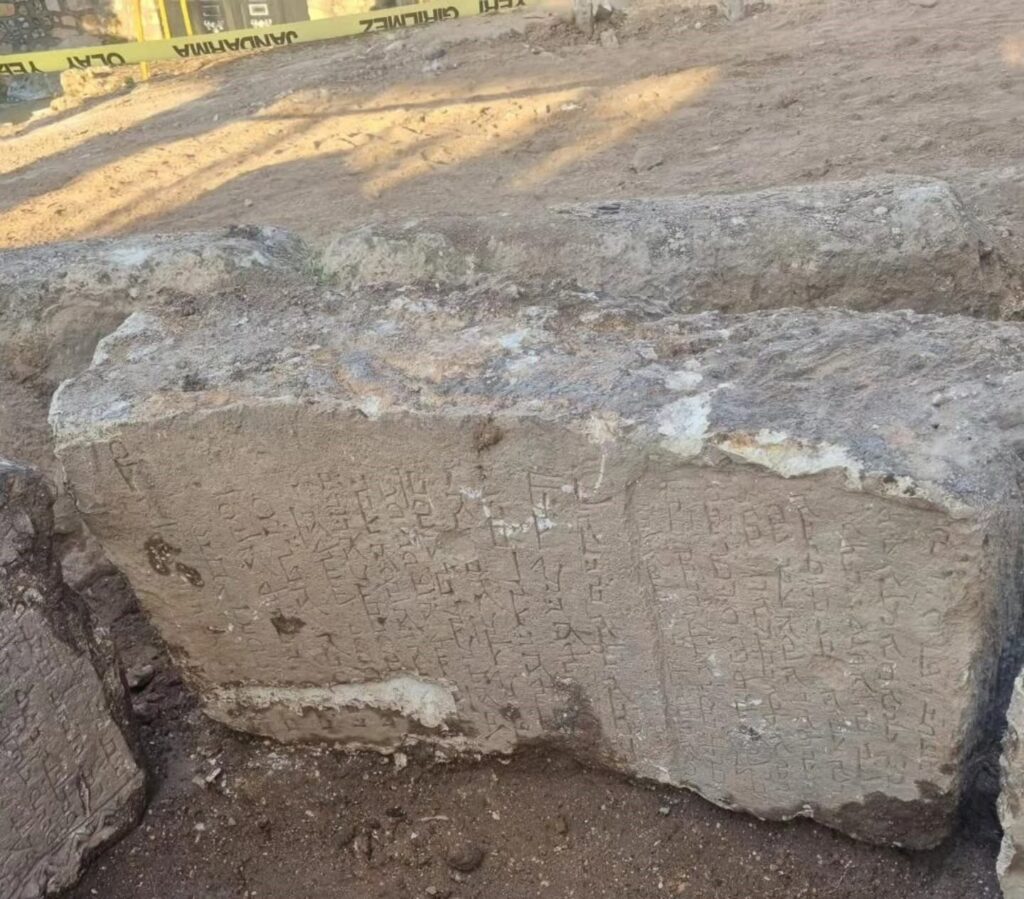
A chance discovery now requires careful study
The find also shows how urban and landscape work can unexpectedly reveal archaeological material in historic settlements. Similar discoveries in Mardin and Midyat in recent years have shown that remains from earlier periods may survive beneath later buildings, roads and public spaces.
For that reason, the response of the authorities is important. By securing the area and transferring responsibility to the Mardin Museum Directorate, officials have taken the first step toward protecting the inscriptions from damage or loss.
The next stage will be more decisive. Specialists will need to document the stones, study the carving technique, photograph and read the inscriptions, examine the stone type and assess whether the blocks were found in their original position or reused in a later setting.
The inscriptions may add a new chapter to Midyat’s past
Until the expert report is completed, the discovery should be treated with caution. There is not yet enough evidence to assign the stones to a specific civilization, century or religious community.
Still, the find is noteworthy. In a region where stone, script and architecture are deeply connected, even a small group of inscribed blocks can carry historical weight.
If the inscriptions prove readable, they may offer new clues about the people who built, worshipped, lived or worked in this part of Midyat. For Mardin, a city already known for its layered heritage, the discovery is another reminder that its history is not confined to monuments standing above ground. Sometimes, it appears suddenly during the most ordinary work.
Cover Image Credits: Sözcü
