
8 December 2025 The Future is the Product of the Past

1,500-Year-Old Roman Mosaic Unearthed in Mardin: Hidden Masterpiece Rescued from Smugglers

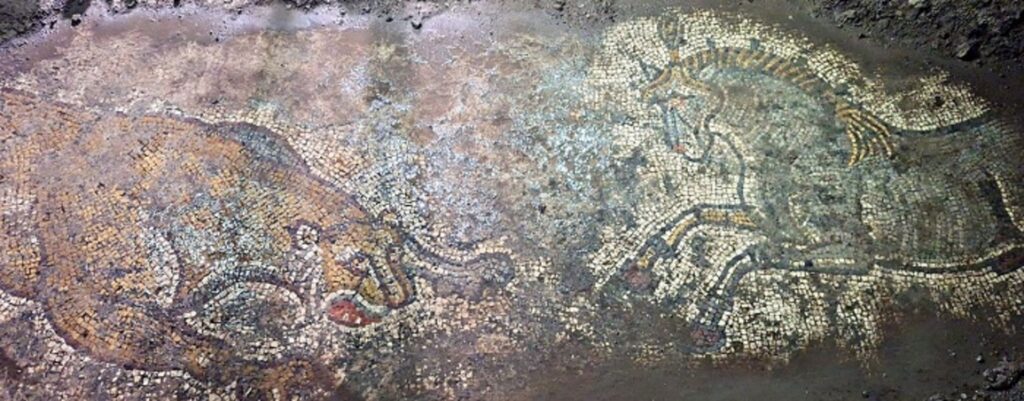
A 1,500-year-old mosaic depicting vivid animal figures has been recovered during an anti-smuggling operation in southeastern Türkiye’s Mardin province. Buried two meters underground and sealed beneath a concrete block, the Late Roman-era floor mosaic spans roughly 60 square meters — a rare and remarkably preserved example of Roman artistry in ancient Mesopotamia.

A Secret Buried Beneath Concrete

The operation, code-named Anatolian Heritage, was carried out by the Anti-Smuggling and Organized Crime units of the Mardin Provincial Gendarmerie. Acting on intelligence, officers searched the garden of a suspect identified as F.K. in the district of Derik, where they uncovered an elaborately decorated mosaic deliberately hidden beneath a concrete slab. Authorities report that the artifact was intended for illegal sale on the antiquities market.

The mosaic was immediately secured and transferred to the Mardin Museum Directorate for conservation and further study. Preliminary analysis indicates that it dates to the Late Roman period (4th–6th centuries CE) and once adorned the floor of a high-status building — possibly a villa or bath complex.
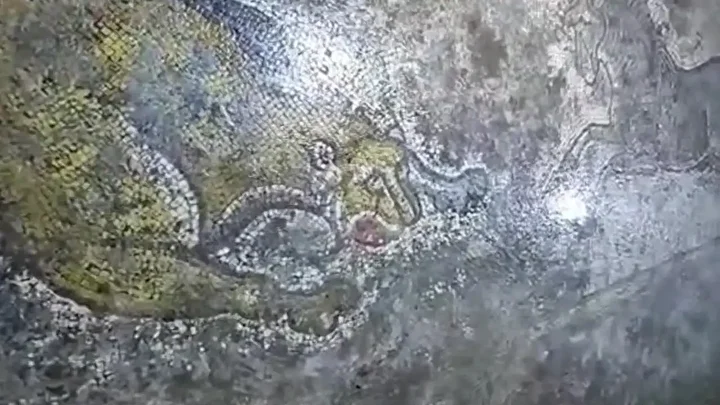
Late Roman–period floor mosaic, approximately 1,500 years old, discovered two meters underground in the garden of a suspect in Mardin’s Derik district.
Late Roman–period floor mosaic, approximately 1,500 years old, discovered two meters underground in the garden of a suspect in Mardin’s Derik district. Credit: Credit: Mardin Provincial Gendarmerie Command

A Glimpse into Late Roman Aesthetics

Art historians describe the piece as a fine example of Late Roman provincial mosaic art, characterized by naturalistic depictions, dynamic movement, and bold contour lines. The scene portrays two animals — likely a feline predator and a horse or deer — locked in confrontation.

According to specialists, such imagery reflects the Roman fascination with power, vitality, and the cosmic struggle between life and death. The tesserae’s color palette — ochre, red, white, and black — is consistent with regional workshops active in southern Anatolia and northern Syria, such as those in Antioch and Zeugma. The mosaic’s craftsmanship, however, shows distinctly local traits, suggesting production by an Anatolian atelier influenced by Mediterranean stylistic currents.


📣 Our WhatsApp channel is now LIVE! Stay up-to-date with the latest news and updates, just click here to follow us on WhatsApp and never miss a thing!!


“The mosaic’s iconography and technique bridge the transition from Roman naturalism to early Byzantine symbolism,” said experts from the Mardin Museum. “Its preservation allows us to trace how art evolved in the cultural crossroads of Mesopotamia.”
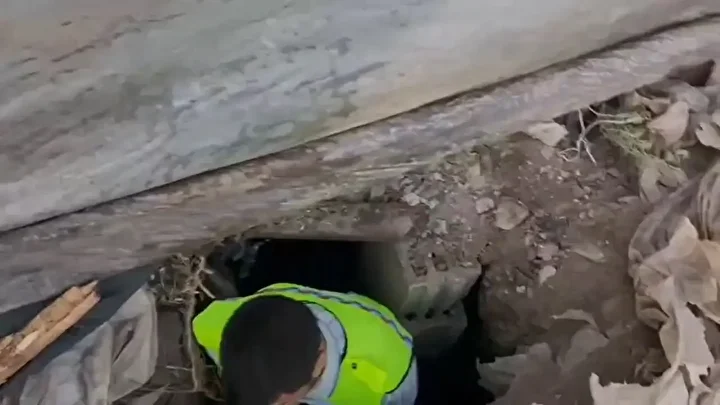
The 60-square-meter figurative mosaic had been concealed beneath a concrete block to be sold to antiquities traffickers. Credit: Mardin Provincial Gendarmerie Command

Archaeological and Cultural Significance

The discovery adds a new chapter to the region’s artistic map. Mardin and its surrounding area flourished under Roman rule between the 4th and 6th centuries CE, serving as a key frontier zone that connected Anatolia with Syria and Mesopotamia. Mosaics from this era often carried layered meanings — both decorative and spiritual — reflecting Christian and pagan influences intertwined.

Once restored, the mosaic will be exhibited and scientifically documented. Specialists expect that iconographic analysis could reveal new insights into local workshops, trade networks, and the spread of Roman artistic traditions in Upper Mesopotamia.
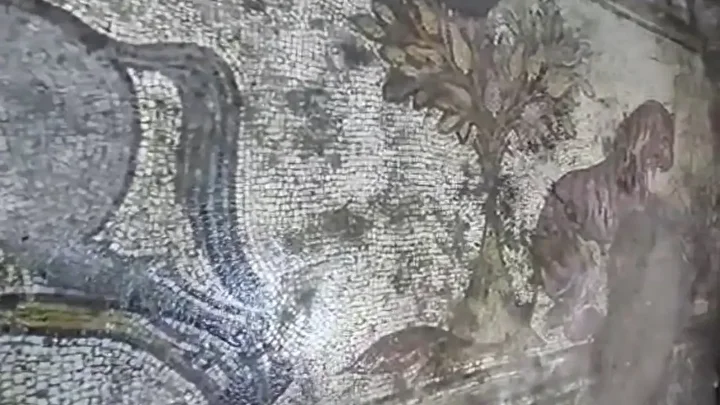
Credit: Mardin Provincial Gendarmerie Command

A Broader Effort to Protect Heritage

Authorities have initiated legal action against the suspect. The operation is part of Türkiye’s broader campaign to combat cultural heritage smuggling, which has intensified in recent years. Officials from the Mardin Gendarmerie emphasized that Anatolian Heritage aims not only to deter illicit excavations but also to raise public awareness about the protection of archaeological sites.

The Ministry of Culture and Tourism will oversee the mosaic’s detailed examination and publish scientific findings in the coming months. Experts believe that this find will significantly contribute to understanding the Late Roman artistic landscape of the Mesopotamian frontier.

Cover Image Credit: Mardin Provincial Gendarmerie Command

Related Articles

Hidden Engineering Beneath the Minoan World: Archanes Palace Reveals a Landslide Defense System 3,700 Years Ahead of Its Time

4 December 2025

4 December 2025

When archaeologists resumed work this year at the Palace of Archanes—one of Crete’s most enigmatic Minoan centers—they did not expect...

Archaeologists uncovered an Aztec altar with human ashes in Mexico City

1 December 2021

1 December 2021

Archaeologists in Mexico have discovered a 16th-century altar in Plaza Garibaldi, the center in Mexico City famous for its revelry...

The “food” thousands of years ago may be the ancestor of a Turkish dessert

25 July 2021

25 July 2021

The rock paintings and kitchen materials found in the cave, which were discovered by a shepherd and emerged as a...

Drought accelerated Hittite Empire’s collapse

9 February 2023

9 February 2023

Researchers have offered new insight into the abrupt collapse of the  Hittite Empire in the Late Bronze Age, with an...

Excavations in Poland uncover Goth graves filled with ornate jewellery

17 August 2023

17 August 2023

A 2,000-year-old Goth burial site filled with ancient jewels has been discovered in Wda Landscape Park (Wdecki Park Krajobrazowy) near...

Origin of Ivory Rings Found in Elite Anglo-Saxon Burials

2 July 2023

2 July 2023

An elite class of ancient Anglo-Saxon women were buried with hundreds of ivory rings, and the origin of these ivory...

A unique 2,800-year-old ivory-decorated piece was discovered in the Ancient City of Hattusa

13 November 2023

13 November 2023

An ivory-decorated piece, estimated to be approximately 2,800 years old, was found during the archaeological excavation in the Hattusa Ancient...

Scottish Archaeologists unearth ‘missing’ Aberdeenshire monastery linked to first written Gaelic

19 November 2023

19 November 2023

One of the biggest mysteries in Scottish archaeological history has been solved with the discovery of the monastery site where...

Archaeologists say 12,000-year-old flutes discovered in northern Israel may have been used to lure falcons

9 June 2023

9 June 2023

New research reveals that about 12,000 years ago, in northern Israel, humans turned the bones of small birds into instruments...

Manot Cave yielded evidence for ritualistic gathering 35,000 years ago, the earliest on the Asian continent

13 January 2025

13 January 2025

Archaeological research at the Manot Cave in what is now the Galilee in northern Israel has uncovered evidence of ritualistic...

3 mummified skeletons were found in Iznik, western Turkey

8 October 2021

8 October 2021

Archaeologists discovered mummified skeletons dating from the 2nd century A.D. within two sarcophagi at the Hisardere Necropolis in Bursa’s Iznik...

A 11,000-Year-Old Neolithic “Amphitheater” Discovered at Karahantepe

28 November 2025

28 November 2025

Archaeologists working in the arid hills of southeastern Türkiye have uncovered one of the most intriguing architectural discoveries of the...

Discovery of Celtic Coins in the Czech Republic Unveils an Unknown Celtic Settlement

8 October 2025

8 October 2025

A remarkable archaeological discovery in northern Plzeň has unveiled hundreds of gold and silver Celtic coins, bronze ornaments, and even...

Remains of 2 houses belonging to the founding period of the city were unearthed in the ancient city of Hierapolis

5 November 2021

5 November 2021

During this year’s excavations in the ancient city of Hierapolis-Pamukkale in Turkey’s Aegean province Denizli, the remains of two houses...

Three-Year-Old Discovers 3,800-Year-Old Canaanite Seal at Archaeological Site of Tel Azekah

2 April 2025

2 April 2025

At the site of the famous battle between David and Goliath, a three-year-old girl named Ziv Nitzan discovered a scarab-shaped...