
A remarkable discovery in Austria has revealed more than a tonne of ancient iron, enough to forge approximately 500 swords. The metal may have been part of a valuable shipment that disappeared into the Danube River more than 2,000 years ago, leaving behind evidence of an unexpectedly large trade in Iron Age Europe.
The collection, consisting of at least 500 iron bars, is the largest known assemblage of its kind from prehistoric Europe. A study published in Antiquity on September 21, 2026, suggests that the cargo could have represented an extraordinary economic transaction at a time when iron production and trade were expanding across Celtic Central Europe.
A Rusty Discovery That Almost Became Scrap Metal
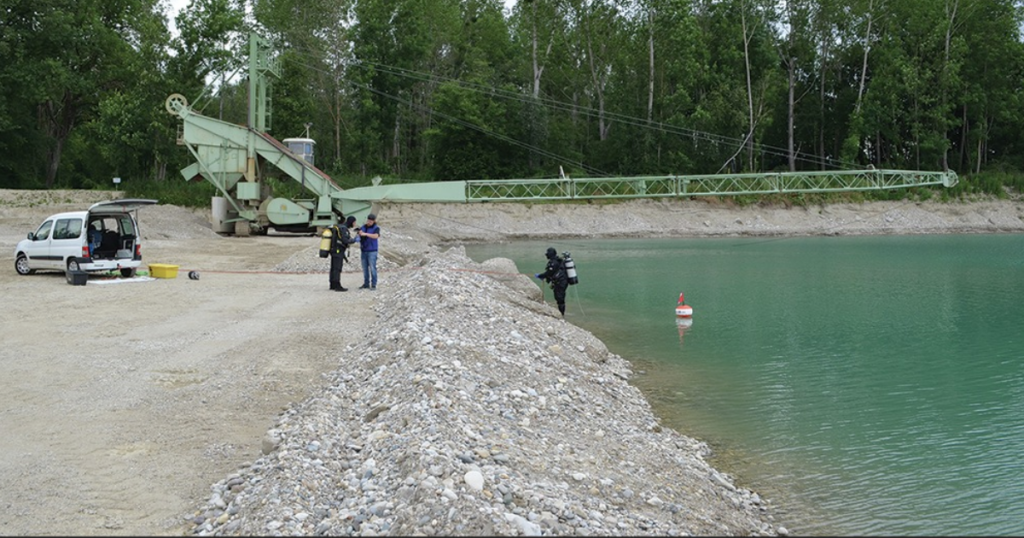
The story began in spring 2019, when workers extracting gravel at Deinham, near the Danube in Upper Austria, noticed unusual double-pointed pieces of iron emerging from the ground. The objects were heavily corroded, and some remained covered in gravel. Rather than allowing the material to disappear into the scrap-metal trade, the workers reported their discovery to Austria’s Federal Monuments Office.
Archaeologists subsequently recovered 540 fragments from the gravel heaps and established that they belonged to at least 500 individual iron bars, including 193 complete examples. The collection was donated to the Upper Austrian state cultural institution in Linz in 2023, allowing researchers to examine the objects in greater detail.
The bars average 28.5 centimetres in length and approximately 2.07 kilograms in weight. Their estimated original combined iron weight is 1,035 kilograms, although individual examples vary considerably in size and shape.
These were not finished weapons or cast ingots. Instead, they were forged iron semi-products, prepared for transport and further processing by blacksmiths. Many have an elongated, willow-leaf shape, with tapering ends.
The sheer quantity immediately raised an intriguing question: why had so much valuable metal ended up in the same place?
A Valuable Shipment Lost in the Danube
Deinham lies near the entrance to the Eferding Basin, where the Danube once flowed through a network of shifting channels. Before the river was regulated in the nineteenth century, sandbanks and submerged obstacles made navigation difficult.
Historical maps indicate that the iron bars were recovered from an area of former river channels. Researchers therefore consider it highly likely that the metal was being transported along the Danube when it was lost.
A shipwreck is one possible explanation. An Iron Age boat could carry more than a tonne of cargo, while larger shipments could be transported on rafts or other vessels.
No remains of a boat were recovered, however. The original archaeological context was also disturbed by the gravel excavator, preventing researchers from reconstructing exactly how the iron entered the river.
An intentional ritual deposit cannot be entirely excluded, but the unusually homogeneous collection differs from more varied ritual deposits elsewhere in Iron Age Europe.
The possibility of a lost commercial shipment raises another intriguing issue. If the iron was being transported for trade, its owner may have lost a substantial fortune.
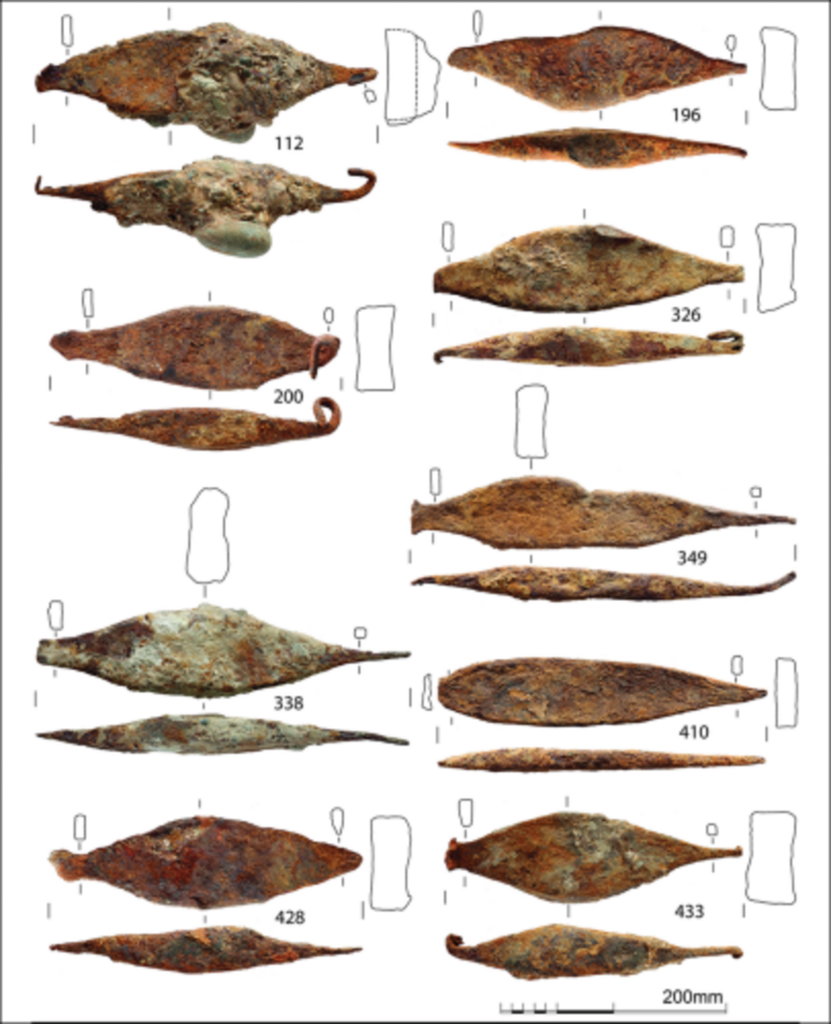
A selection of double-pointed iron bars discovered at Deinham, Austria. The approximately 2,200-year-old objects were part of a hoard containing enough iron to forge 500 swords. (Photo: Andreas Blaickner and Markus Staudt / University of Innsbruck) Credit: Antiquity
Enough Iron for 500 Swords, but Who Could Afford It?
The scale of the discovery becomes clearer when considering what ancient blacksmiths could have produced from the metal. According to the researchers, the recovered iron could have been used to forge approximately 500 swords weighing between 1.5 and 2 kilograms each, even allowing for material lost during manufacture. That would have been enough to equip a substantial group of warriors.
But weapons were not the only possible use. The same quantity could have produced 8,000 iron nails, enough to secure the wooden framework of almost half the seven-kilometre defensive wall surrounding the Celtic settlement of Manching in Bavaria.
Yet another question interested the researchers: how would someone have paid for an entire tonne of iron? Exchanging it for grain, salt or wine would have presented considerable transport difficulties, particularly if the goods had to travel upstream. Other commodities, including glass, coral and amber, may not have been available in sufficient quantities.
The study considers several possibilities, including payments involving cattle, horses, enslaved people, tribute or military service. Gold and silver offer another explanation, particularly as Celtic coinage became increasingly important during the La Tène period.
At Manching, archaeologists previously discovered a hoard of 443 gold coins weighing approximately 3.7 kilograms. Another hoard, found at Großbissendorf, contained 384 gold coins. The researchers suggest that such concentrations of precious metal might plausibly have represented a value comparable to the Deinham iron shipment.
Although no evidence establishes how the cargo was paid for, these comparisons illustrate the substantial economic resources involved in Iron Age metal production and trade.
Where Did the Iron Come From?
To establish when the bars were produced, researchers extracted carbon trapped within the metal itself and subjected samples from three bars to radiocarbon dating.
The results place the objects within the Late Iron Age, with the archaeological comparisons pointing particularly toward the late third and second centuries BC.
The analysis also identifies a previously unrecognised variant of double-pointed iron bar. Comparable examples have been found in parts of Bavaria and Austria, offering clues to the possible production area.
If the metal travelled downstream toward Deinham, its source may have been farther west along the Danube. The researchers identify iron-producing districts around Manching, Kelheim and the Upper Palatinate as plausible candidates.
Kelheim, approximately 220 kilometres upstream from Deinham by river, was associated with an important Iron Age settlement and nearby iron resources.
The origin of the bars remains unresolved. Ongoing trace-element and metallographic analyses may determine whether they came from a single workshop or several production centres.
For now, the Deinham discovery provides a rare measure of the quantities of iron circulating through Central Europe before the Roman conquest. What remains is not simply a collection of unfinished metal objects, but evidence of a commercial shipment large enough to supply weapons for hundreds of warriors—or a substantial portion of a fortified town’s defences.
Trebsche, P., & Berranger, M. (2026). A sunken ship cargo of 500 bipyramidal bars? Implications for La Tène period iron production and trade along the Danube. Antiquity, 1–20. doi:10.15184/aqy.2026.10404
