
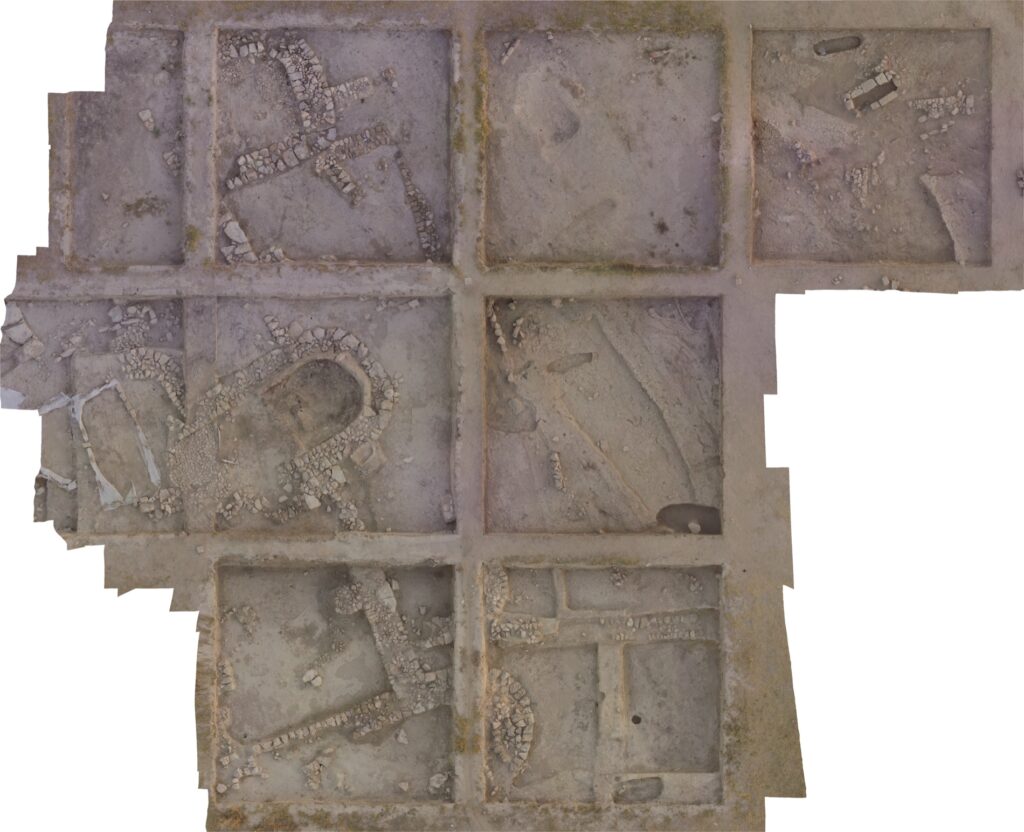
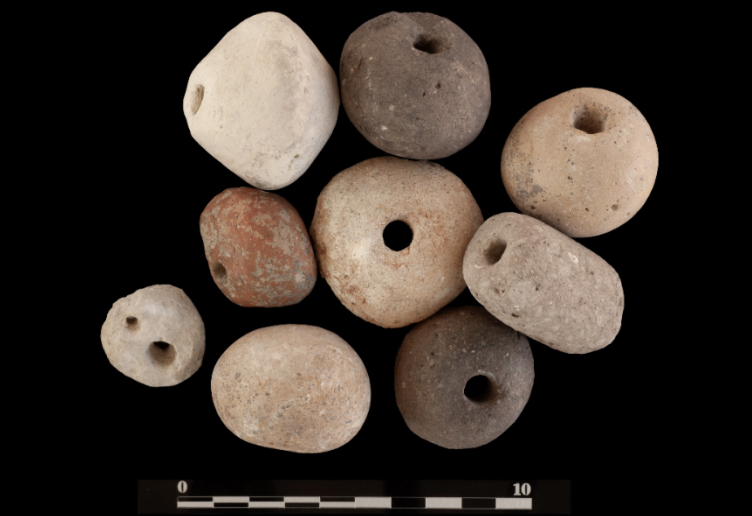
More than 8,000 years ago, people living in western Anatolia were spinning thread, preparing textile-making tools, and wearing clothes that may have featured colorful patterns. A collection of 57 clay spindle whorls discovered at Ekşi Höyük in Türkiye’s Denizli province is now helping archaeologists reconstruct this largely forgotten part of prehistoric life.
Some of the objects were found inside houses, while others remained unfinished, with traces of the straw mats on which they had apparently been left to dry. Together with bone tools and a painted clay figurine, they offer an unusually detailed picture of textile production around 6200–6000/5900 BC.
The discovery comes from a region where textile production remains an important part of everyday life. Denizli is one of Türkiye’s major textile manufacturing centers, known particularly for its towels and home textiles. Thousands of years before modern factories appeared, however, people in the same region were already making thread and preparing the tools needed to produce it. The finds do not establish an unbroken tradition, but they reveal a much older chapter in the region’s textile history.
The findings are presented in a study published in the May 2026 issue of Höyük by archaeologists Fulya Dedeoğlu of Ege University and Bora Temür of İzmir Democracy University. Their research draws on discoveries made during excavations between 2015 and 2022, revealing how textile-related activities were organized within one of western Anatolia’s early farming communities.
Inside an 8,200-Year-Old Neolithic Village
Ekşi Höyük lies in the Baklan Plain of Denizli, close to the Büyük Menderes River. Its inhabitants had access to fertile land, water, and routes connecting the surrounding valleys. The settlement was occupied from the early seventh millennium BC until approximately the middle of the fifth millennium BC.
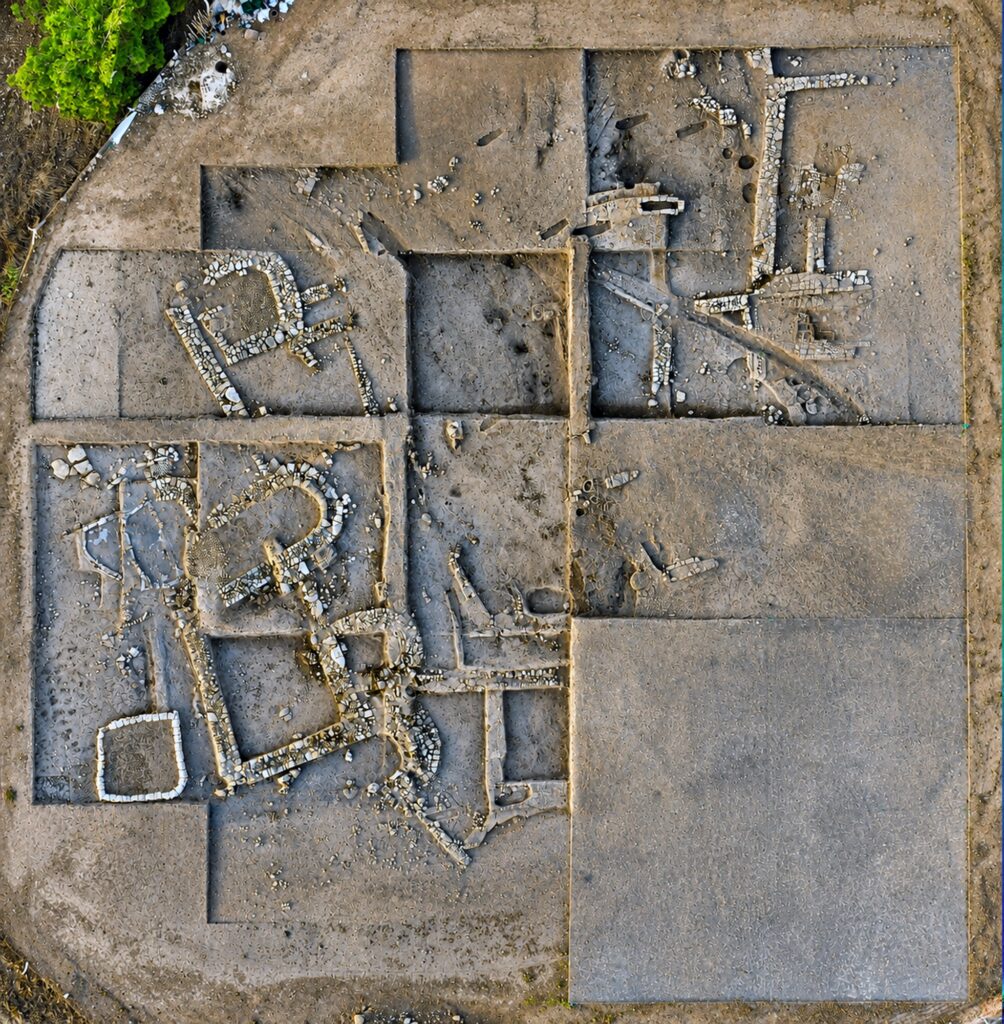
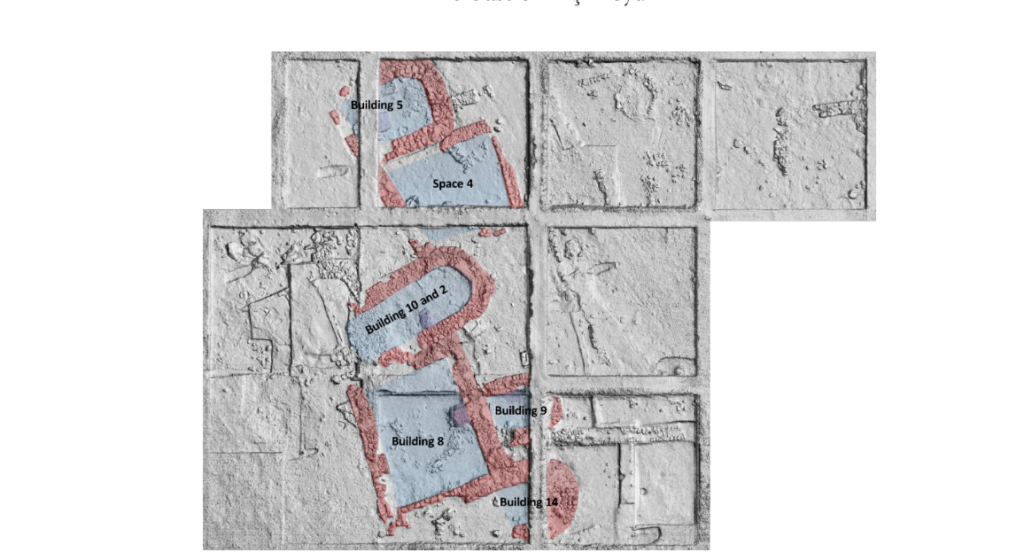
The textile discoveries belong to a period when the village contained buildings of different shapes and sizes. Excavations revealed five structures with rounded ends, known as apsidal buildings, alongside two larger rectangular spaces. Inside them, archaeologists found ovens, grinding stones, bone implements, and objects connected with everyday work.
Among these finds were dozens of small clay weights pierced through their centers. Known as spindle whorls, they would have helped a spindle rotate while fibers were twisted into thread. Such an object could turn loose fibers into yarn suitable for further textile production.
But the researchers wanted to understand more than how the tools worked. They examined where each spindle whorl had been found, looking for evidence of how the villagers organized their activities.
The resulting picture was revealing. Thread-making equipment was concentrated in particular buildings, suggesting that some households devoted more attention to spinning than others. Rather than an isolated activity, textile production appears to have been woven into the ordinary routines of life at Ekşi Höyük.
The Straw Mat That Preserved an 8,200-Year-Old Moment
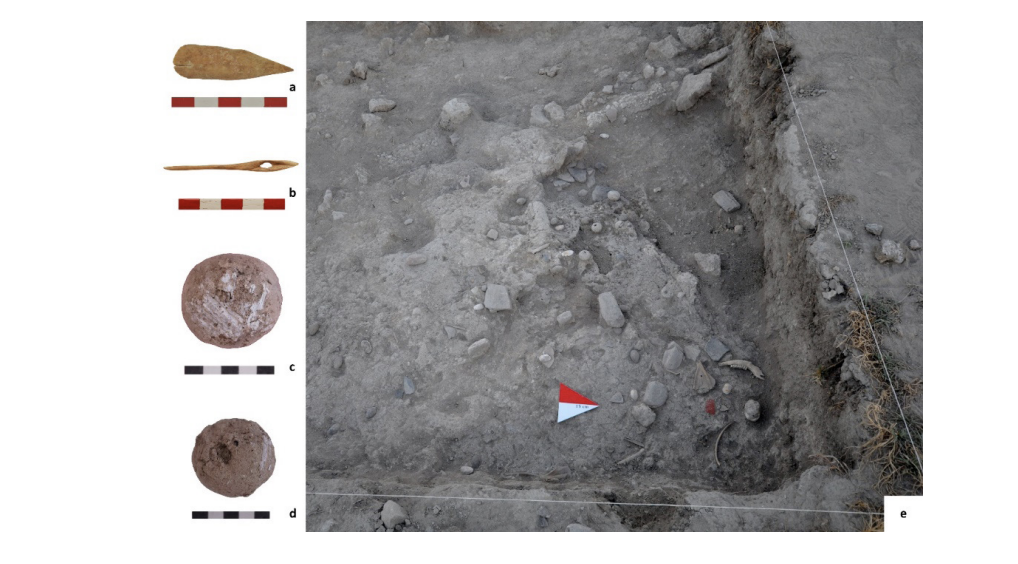
One of the most telling discoveries came from a small building identified as Building 9. Near an oven, archaeologists uncovered six clay spindle whorls that had never been fired. Several retained impressions of the straw mat on which they had apparently been placed to dry.
It is a remarkably ordinary detail to have survived for more than eight millennia. Someone had shaped the clay into tools, prepared them for the next stage of production, and left them on a mat. The objects never reached their finished form, but the impressions beneath them preserved evidence of that process.
The same building contained other unfinished clay objects, including sling bullets. Their presence, together with the oven, led researchers to identify the space as an area where clay implements were manufactured. The surviving spindle whorls suggest that making textile equipment was one of the activities carried out there.
Another building tells a different story. In Building 8, an oven was associated mainly with the production of sling bullets, although three fired spindle whorls and several bone awls were also recovered.
These discoveries provide a glimpse of the practical work that sustained a Neolithic community. People needed tools to spin their fibers, and those tools had to be made somewhere. At Ekşi Höyük, archaeologists have found evidence of both the equipment and the process used to prepare it.
Small Clay Weights and the Tools Behind Neolithic Clothing
The 57 spindle whorls recovered from the settlement were not identical. Some were spherical, others had a double-conical form, and a smaller number were flattened or oval. They also varied in weight, generally ranging from 35 to 80 grams, although one unusually heavy example weighed 140.43 grams.
These differences could have affected the thread produced by their users. The weight and size of a spindle whorl influence its rotation, while lighter examples are generally associated with finer yarn. The people of Ekşi Höyük evidently possessed equipment that could accommodate different spinning requirements, although the precise threads they made have not survived.
Other discoveries bring us closer to the work itself. In Building 5, archaeologists found a bone implement with a deliberately fashioned slit, which may have held thread while the object was used as a weaving shuttle. Two bone awls were recovered from the same structure, and a needle from Phase 4 preserved traces of cord.
The possible shuttle is particularly interesting because spinning and weaving are different stages of textile production. Spinning creates thread, while weaving interlaces threads to make fabric. Although some of the bone tools could have served several functions, their association with spindle whorls strengthens the evidence for textile-related work.
Together, these modest objects reveal how much practical knowledge lay behind a piece of cloth. Producing it required suitable fibers, carefully made equipment, and familiarity with techniques that had become part of everyday life.
A Painted Figurine Offers a Glimpse of What People Wore
The tools reveal how the inhabitants made thread, but another discovery offers clues about what their finished clothing might have looked like.
A clay figurine found at Ekşi Höyük bears a red and beige cross-patterned design across its upper body. Researchers interpret the decoration as a representation of a garment, potentially showing the use of color and pattern in Neolithic clothing.
The figurine introduces a more personal dimension to the discoveries. Clothing may have protected people from the weather, but its appearance could also have mattered. The choice of colors, designs, and ornaments may have communicated something about an individual’s identity or place within the community.
Ekşi Höyük is not the only Anatolian settlement to have produced such clues. Figurines depicting colored garments are also known from Hacılar Höyük, while an actual textile fragment was discovered on the shoulder of a Neolithic figurine at Ulucak Höyük, near İzmir.
The painted design does not prove that the inhabitants of Ekşi Höyük wore an identical garment or that they dyed their fabrics in those particular colors. Nevertheless, the figurine offers a rare visual connection between the equipment used to make thread and the clothing that may have resulted from textile production.
It also leaves an intriguing possibility: the people whose tools were found inside the settlement’s houses may have worn garments that were both practical and visually distinctive.
What the Neolithic Homes Reveal, and the Mystery That Remains
The locations of the discoveries help researchers understand how work was organized across the village. By mapping the spindle whorls, they identified concentrations in several apsidal buildings, particularly Buildings 2, 10, 9, and 14.
Some spaces appear to have been used for spinning, while Building 9 provides evidence of tool manufacture. The larger rectangular buildings were associated with other activities, including the production of clay sling bullets and chipped-stone tools. Not every household seems to have followed exactly the same working routine.
One important question, however, remains unanswered. What were the inhabitants spinning?
No preserved fabric has yet been recovered from Ekşi Höyük, so the researchers could not identify whether its yarn was made from plant fibers, wool, or other materials. Sheep were more common than goats in the relevant animal assemblage, but that alone does not establish wool production. The animals may instead have been managed primarily for dairy products.
Elsewhere in Neolithic Anatolia, surviving linen fragments demonstrate that plant fibers were used to produce textiles. Evidence from other settlements also raises questions about when animal fibers became increasingly important.
At Ekşi Höyük, the material itself has disappeared, but the tools and traces of their manufacture remain. More than 8,000 years after the settlement’s inhabitants shaped clay, spun thread, and decorated representations of clothing, those ordinary activities are becoming visible again through archaeology.
The official Ekşi Höyük website
Dedeoğlu, F., & Temür, B. (2026). Early Evidence for Prehistoric Weaving in Inner Western Anatolia: The Case of Ekşi Höyük. Höyük, 17, 1–18. https://doi.org/10.37879/hoyuk.2026.1.001
