
6 March 2026 The Future is the Product of the Past

From Macedon to the Alps: Two of Switzerland’s Oldest Celtic Gold Coins Discovered in Arisdorf

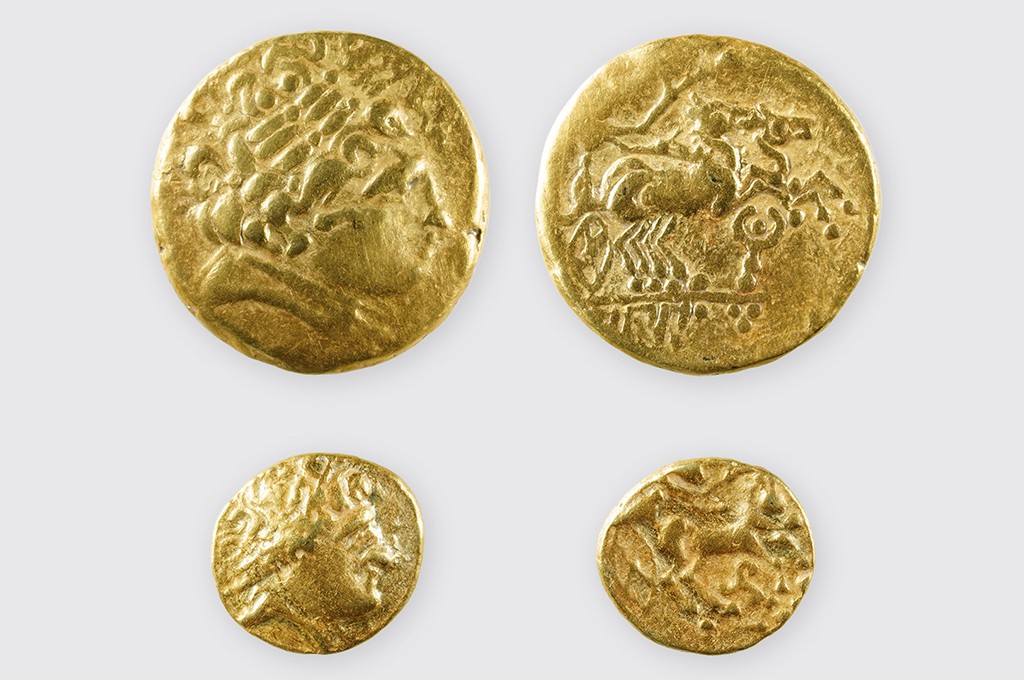
Archaeologists in northwestern Switzerland have made a remarkable discovery: two rare Celtic gold coins dating back more than 2,200 years have been unearthed near the village of Arisdorf in the canton of Basel-Landschaft.

The finds are among the oldest Celtic coins ever discovered in Switzerland and offer new insights into early money, ritual practices, and Celtic culture in Central Europe.

Rare Discovery in a Well-Known Archaeological Area

The gold coins were discovered by two volunteer researchers working with Archäologie Baselland, the cantonal archaeological service. The find location lies in a wooded area known as Bärenfels, near Arisdorf, a site that has already proven archaeologically significant in recent years.

In 2023, archaeologists uncovered a hoard of 34 Celtic silver coins at the same site, dating to around 80–70 BC. As part of a follow-up investigation in spring 2025, volunteers Wolfgang Niederberger and Daniel Mona, together with other team members, conducted systematic surveys of the surrounding area. To the surprise of everyone involved, they discovered two Celtic gold coins: a full stater and a quarter stater.

Among the Oldest Coins in Switzerland

Experts have dated the newly found gold coins to the mid and late 3rd century BC, placing them among the oldest Celtic coins ever found in Switzerland. According to current research, fewer than two dozen comparable examples from this early period are known nationwide.


📣 Our WhatsApp channel is now LIVE! Stay up-to-date with the latest news and updates, just click here to follow us on WhatsApp and never miss a thing!!


Coin specialist Michael Nick from the Inventory of Swiss Coin Finds (IFS) identified the coins as extremely rare types. The larger coin, weighing 7.8 grams, belongs to the Gamshurst type, while the smaller 1.86-gram coin is classified as a Montmorot type.
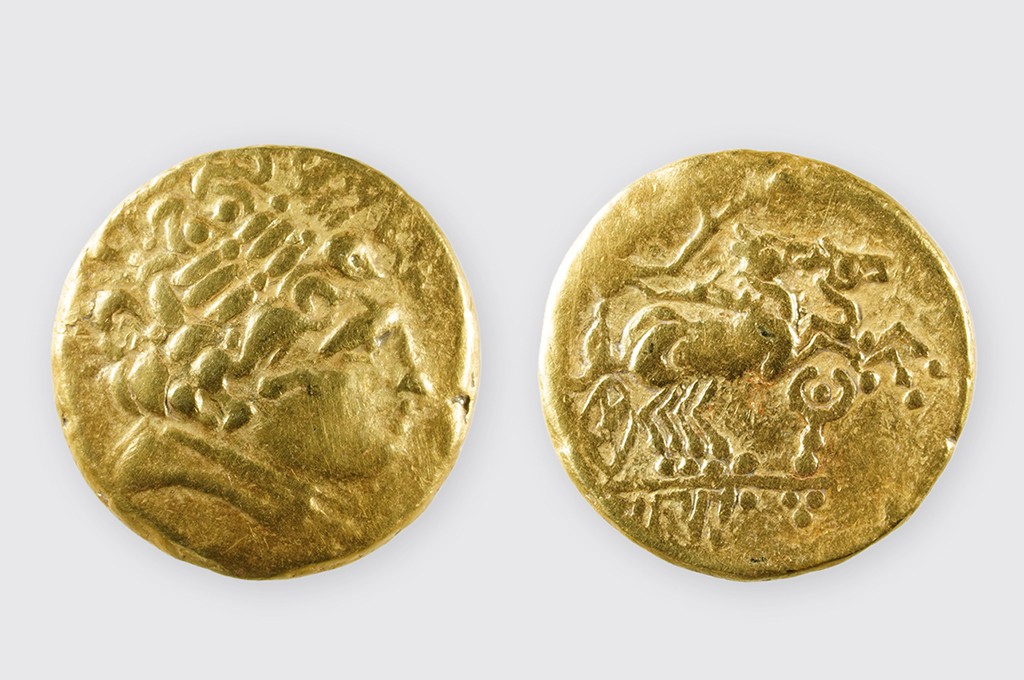
The stater weighs 7.8 g and features the head of the Greek god Apollo on the obverse and a horse-drawn chariot (biga) on the reverse. Photo: Nicole Gebhard. Credit: Archäologie Baselland

Celtic Coinage and Macedonian Influence

Historians believe that the introduction of coinage in Central Europe is closely linked to Celtic mercenaries who served in the Mediterranean world. These warriors were paid in coins during campaigns in Greece and brought the concept of money back to their homelands.

By the mid-3rd century BC, Celtic groups began minting their own gold coins, inspired by those of Philip II of Macedon (359–336 BC). The original Macedonian coins depicted the head of the god Apollo on the front and a two-horse chariot (biga) on the reverse. Celtic minters adopted these motifs but transformed them into a more abstract, distinctly Celtic artistic style.

The Arisdorf coins are part of this early phase of Celtic coin production, making them especially valuable for research into the origins of money north of the Alps.

Ritual Offerings Rather Than Everyday Money?

Archaeologists emphasize that such gold coins were likely not used in everyday trade. Their high value suggests they served special purposes, such as payments to elites, diplomatic gifts, dowries, or symbolic rewards.

Notably, Celtic gold coins are frequently found in graves, wetlands, and near water sources. The Arisdorf discovery fits this pattern. The Bärenfels area contains water-filled sinkholes that form part of a marshy landscape known as the Bärenfels Moor.

Because wetlands and unusual natural locations were often considered sacred in Celtic belief systems, experts believe the coins may have been deliberately deposited as offerings to deities. Such ritual practices are documented in ancient written sources and confirmed by archaeological evidence across Central Europe. A nearby site in Füllinsdorf, known as Büechlihau, is also believed to have been a Celtic sacred grove.
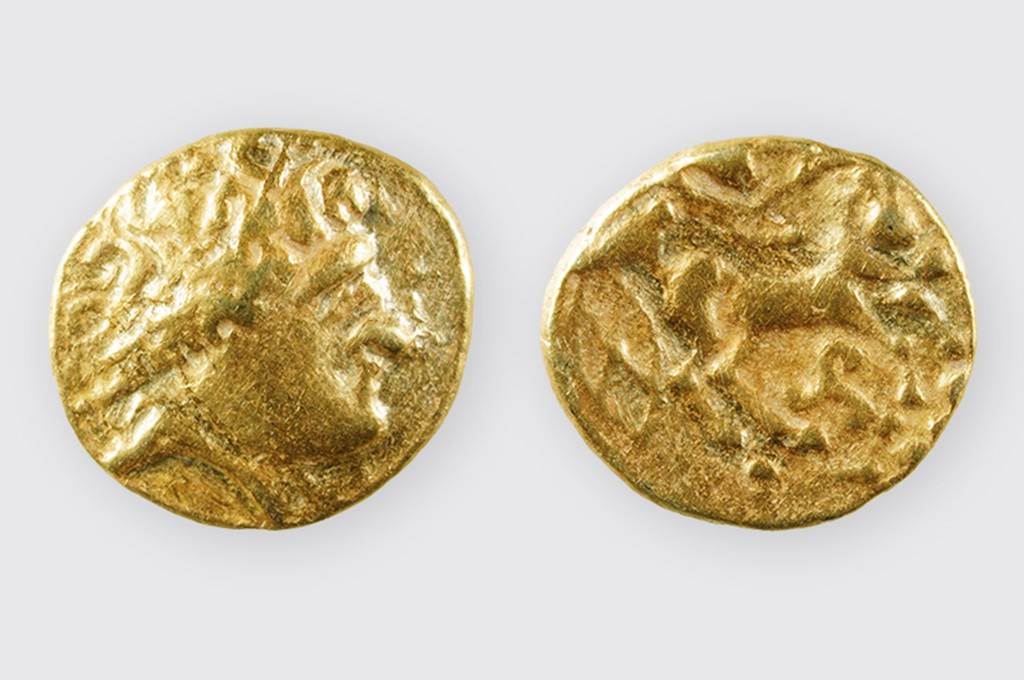
The quarter stater (weight: 1.86 g) also depicts the head of Apollo and a horse-drawn chariot. Credit: Nicole Gebhard. Archäologie Baselland

Coins to Be Displayed in Basel Museum

Due to their rarity and historical importance, Archäologie Baselland and the Historical Museum Basel have decided to include the gold coins in the ongoing exhibition “Treasure Finds”.

Starting March 2026, visitors will be able to see the gold coins alongside the previously discovered silver coins from the same site. The objects will be displayed in a special showcase at the Barfüsserkirche in Basel, offering the public a rare glimpse into Switzerland’s ancient Celtic past.

A Discovery That Rewrites Early Swiss History

The discovery of the Arisdorf gold coins not only enriches Switzerland’s archaeological record but also highlights the crucial role of volunteer researchers in uncovering the past. As archaeologists continue to study the site, the shimmering gold from Bärenfels is already shedding new light on early Celtic society, belief systems, and the origins of money in the region.

Archäologie Baselland

Cover Image Credit: Nicole Gebhard – Archäologie Baselland

Related Articles

Remains of 2 houses belonging to the founding period of the city were unearthed in the ancient city of Hierapolis

5 November 2021

5 November 2021

During this year’s excavations in the ancient city of Hierapolis-Pamukkale in Turkey’s Aegean province Denizli, the remains of two houses...

A rare 6,000-year-old elephant ivory vessel was unearthed near Beersheba

9 April 2024

9 April 2024

A recent excavation near Beersheba in southern Israel uncovered an ivory vessel crafted of elephant tusks dating to the Chalcolithic...

Mandrin cave in France shows Homo Sapiens arrived in Europe almost 10,000 years earlier than thought

10 February 2022

10 February 2022

According to archaeological research published in Science magazine on Wednesday, Homo sapiens ventured into the Neanderthal territory in Europe far...

A Fig Dating Back Over 2,000 Years has been Discovered in North Dublin – A First of Its Kind for Ireland

28 November 2024

28 November 2024

The discovery of a fig dating back 2,000 years during an archaeological excavation of Drumanagh in north Dublin, has been...

Archaeologists found a mysterious stone tablet in Georgia that contains an unknown language

5 December 2024

5 December 2024

Archaeologists have unearthed a basalt tablet with inscriptions in an unknown language near Lake Bashplemi, in the Dmanisi region of...

The world’s largest Byzantine winepresses have been discovered in Israel

11 October 2021

11 October 2021

Archaeologists say they’ve discovered the world’s largest known Byzantine-era winery in the city of Yavne, south of Tel Aviv. The...

Iron Age Ingenuity: Unique Dacian Stonemasons’ Tools Discovered in Romania

10 May 2025

10 May 2025

An extraordinary discovery in a Romanian forest near the hill of Măgura Călanului has unveiled a unique set of 15...

A Rare Design in Roman Military Architecture: Triangular Stone Tower Discovered Near Sofia

22 July 2025

22 July 2025

Bulgarian archaeologists have uncovered a triangular stone tower — a rare architectural form in Roman military design — at the...

Archaeologists Discover Roman-Era Industrial Settlement at Future Bilmer Berg II Business Park in Germany

2 October 2025

2 October 2025

At first glance, the sandy field near the B209 road does not appear remarkable. Yet for archaeologists, the site in...

Turkey to Present 12 Historic Artifacts to Istanbul Patriarch

10 August 2021

10 August 2021

The government said on Monday that Turkey will deliver stolen icons from ancient local churches to Istanbul’s Fener Greek Patriarch...

12,000-Year-Old Rock Carvings Discovered Beneath Waters of Atatürk Dam in Türkiye

22 October 2025

22 October 2025

Archaeologists and museum officials in Adıyaman, southeastern Türkiye, have captured underwater images of rock carvings estimated to be 12,000 years...

A 2000-year-old wooden figure was unearthed in a Buckinghamshire ditch

13 January 2022

13 January 2022

An extremely rare, carved wooden figure from the early Roman era has been discovered in a waterlogged ditch during work...

A Circular Building with Six Towers of the Achaemenid Period discovered in Khorasan

3 April 2024

3 April 2024

Archaeologists have uncovered an almost circular adobe building with six towers, built in the 6th century BC, near Birjand in...

4,400-Year-Old Jade Cylinder Seal Found in Western Türkiye

6 December 2024

6 December 2024

A cylindrical seal made of jade stone dating back to 4,400 years ago was found in Kütahya Seyitömer Höyük (Seyitömer...

Archaeologists discover innovative 40,000-year-old culture in China

2 March 2022

2 March 2022

Ancient hunter-gatherers living in what is now China may have been the first people in East Asia to process mustard...