
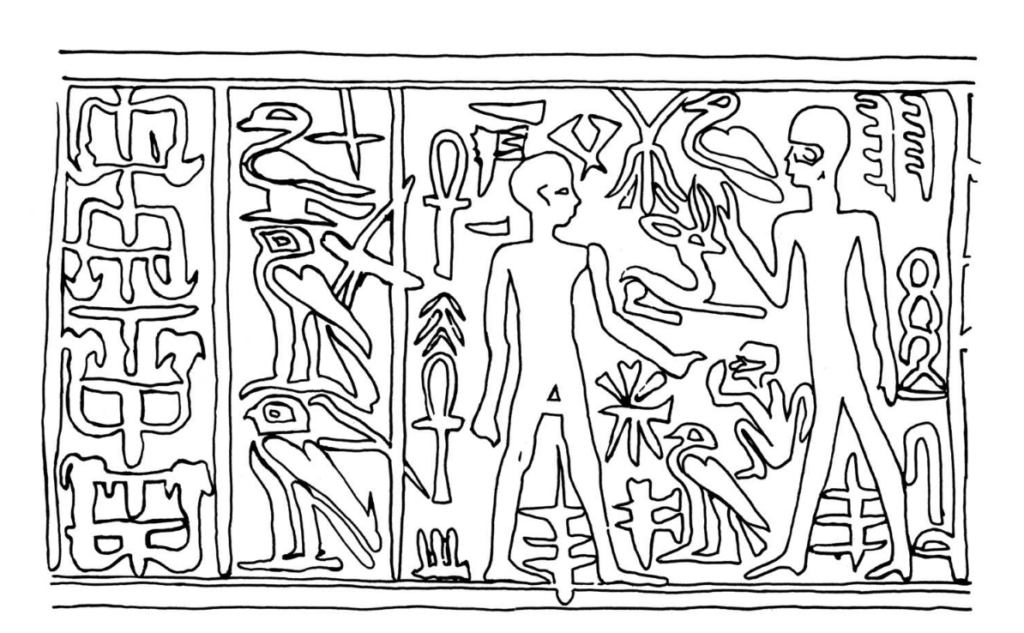
Fake Cuneiform Seals and the Power of Unreadable Writing
Across the ancient southern Levant, some cylinder seals carried inscriptions that looked like cuneiform but could not be fully read as proper text. These “fake cuneiform seals” were not simple mistakes. They were not always meant to be read. They were meant to be recognized.
A new study suggests they used the visual authority of writing itself, turning unreadable signs into markers of status, cultural connection, and power.
A new study published in Levant by Jana Mynářová of Charles University examines 13 cylinder seals from the southern Levant bearing genuine cuneiform and pseudo-cuneiform inscriptions. Spanning the Middle Bronze Age to the Iron Age, the group shows how the appearance of writing could work as a social signal long after, or even without, its linguistic meaning.
Pseudo-cuneiform imitated the visual form of cuneiform signs without producing a stable message. In societies where literacy belonged to a small trained elite, that resemblance mattered. A seal marked with cuneiform-like signs could suggest access to scribal culture, foreign contacts, administrative knowledge, divine protection, or elite status, even when most people around it could not read what they were seeing.
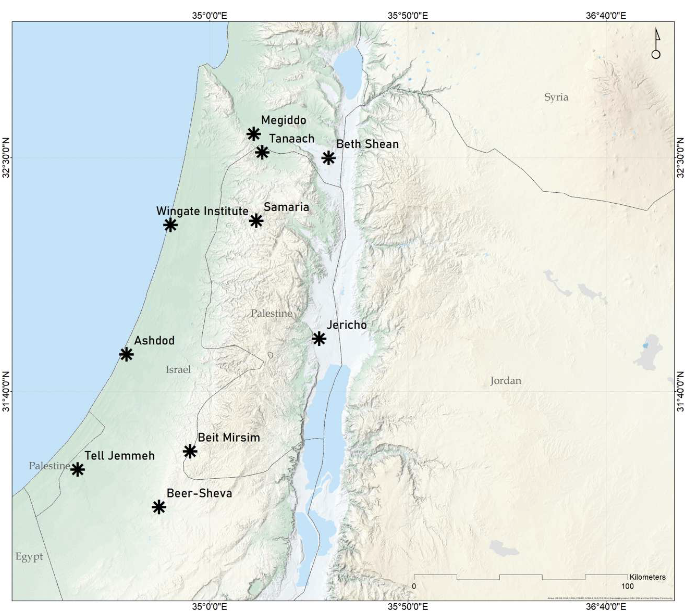
The Beit Mirsim seal is one of the clearest examples of this visual power, but it belongs to a wider story. From Beth Shean and Tell Jemmeh to Megiddo, Taanach, Jericho, Beer-Sheva, Samaria, and the Wingate Institute seal, the corpus follows the changing life of cuneiform in the southern Levant: first as a prestigious foreign visual language, then as a diplomatic and devotional medium, and finally as part of Neo-Assyrian imperial culture.
The Beit Mirsim Seal and the Prestige of Unreadable Writing
The Beit Mirsim 1 cylinder seal brings this world into focus without carrying the whole story by itself. Found in a Middle Bronze Age context, the small seal was probably made of hematite and combines Egyptian-inspired signs, Mesopotamian-style figures, and cuneiform or pseudo-cuneiform elements on a single surface.
Its mixture is the point. The seal does not simply copy one tradition. It gathers several powerful visual languages into one object, showing how the look of writing could project authority even when the signs were not fully readable.
Beit Mirsim, however, is only one part of the wider story. Mynářová’s study follows 13 cylinder seals from the southern Levant, spanning the Middle Bronze Age, Late Bronze Age, and Iron Age. Across those centuries, cuneiform and pseudo-cuneiform moved through different worlds: local prestige, diplomacy, personal devotion, long-distance exchange, and imperial administration.
Three Early Seals, Three Different Uses of Script
The Middle Bronze Age group includes seals from Beth Shean, Beit Mirsim, and Tell Jemmeh. Together, they show that the southern Levant’s engagement with cuneiform was already varied from the beginning.
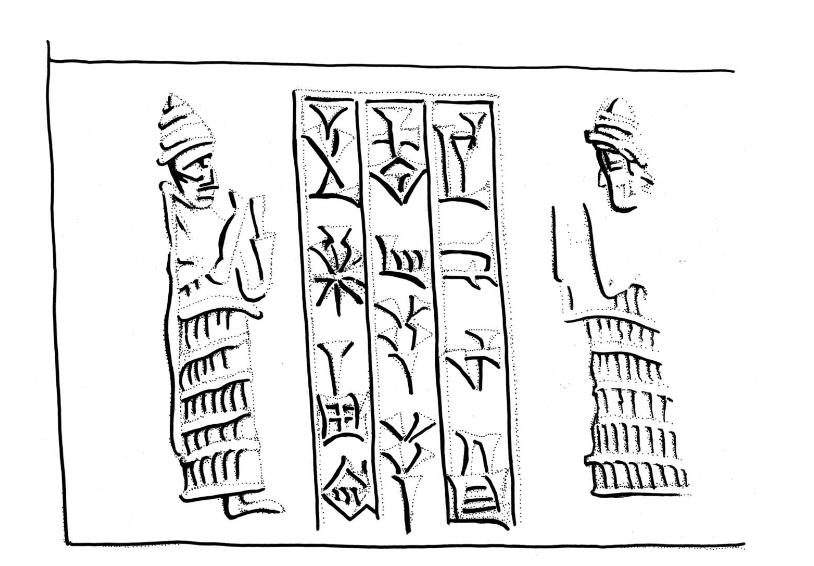
Beth Shean 1 carries a genuine Old Babylonian cuneiform inscription naming “Mânum, the diviner, servant of Ea.” The seal was found in a later Late Bronze Age context, although its style points to an earlier Middle Bronze Age origin. That gap suggests a long life for the object, possibly through inheritance, curation, or reuse.
Beit Mirsim 1 moves in a different direction. It does not simply identify an owner through readable script. Instead, it draws on the visual prestige of several writing systems at once. Its power lies in mixture and appearance.
Tell Jemmeh 1 is different again. Made of baked clay, it carries rows of highly stylized cuneiform-like signs alongside geometric motifs, without the figural imagery seen on other examples. Its simpler appearance widens the picture: pseudo-cuneiform was not limited to elaborate elite scenes. The look of script could travel in more restrained forms as well.
Megiddo and the Late Bronze Age World of Diplomacy
The Late Bronze Age brought a different setting. The southern Levant was closely tied to Egyptian interests, and the Amarna letters show that local rulers communicated with the Egyptian court in Akkadian cuneiform. In this political world, cuneiform was not just prestigious. In certain contexts, it was necessary.
The corpus expands most clearly in this period. The largest cluster comes from Megiddo, alongside Taanach 13, with additional examples from Ashdod and the Jericho region whose dating is less secure.
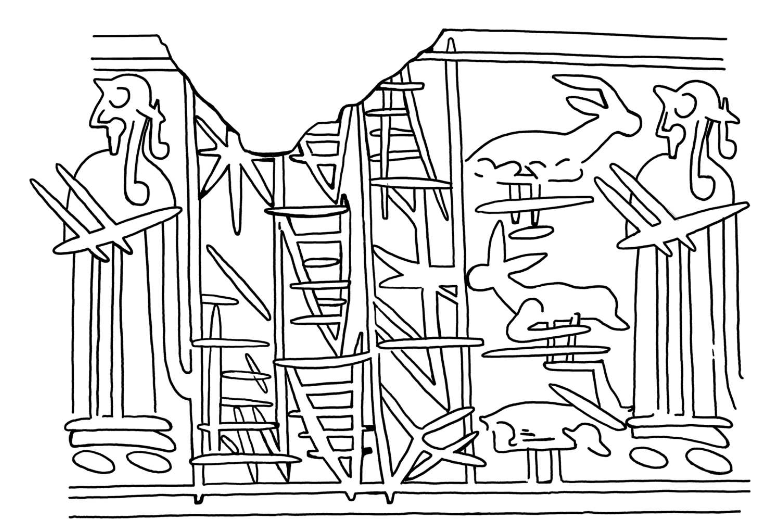
Megiddo 2 carries a Sumerian invocation to Marduk and reflects Kassite-period Babylonian formulas. Its imagery, including standing male deities and animals arranged between them, has been interpreted as a hybrid of Kassite and Mittanian influences. Megiddo 3 appears to name a scribe, Izkur-Addu, though parts of the inscription remain uncertain.
Megiddo 4 is especially striking. Made of faience, it bears a short invocation to Marduk, but the workmanship is crude, and the signs do not conform neatly to standard cuneiform forms. Earlier scholarship described it as “meaningless writing.” Mynářová’s study places it instead within the wider phenomenon of pseudo-cuneiform: signs that looked like script and used that resemblance as a social tool.
Taanach 13, carved from dark syenite and discovered during excavations at Tel Taanach in 1902/1903, belongs to the same Late Bronze Age world of varied materials, styles, and written display. Together with the Megiddo seals, it shows how cuneiform circulated through more than one channel: administration, diplomacy, personal piety, gift exchange, and social prestige.
Old Seals, Recut Seals, and Mixed Visual Worlds
Other seals complicate the story further. Ashdod produced a jasper seal found in an Iron Age II context but believed to date originally to the Old Babylonian period. Its Akkadian inscription names Ili-abnum, son of Billulum, servant of Išum.
Jericho 2, a hematite cylinder seal from Tomb J 54, carries a short inscription invoking Shamash and Aya. It has been interpreted as a Babylonian seal that was later recut outside Babylonia. Jericho 3, also made of hematite, names Marduk-nišu, son of Sin-remeni, servant of Adad. Its imagery blends Mesopotamian and non-Mesopotamian elements, including an Egyptian ankh, a monkey, a bird on a lotus, and a vulture.
These objects do not point to a single route of influence. They suggest a region where seals could move, be reused, be altered, or acquire new meanings far from their original place of production.
When Cuneiform Became Imperial
By the Iron Age, the meaning of cuneiform on seals changed again. After Assyrian expansion into the southern Levant, some cylinder seals belonged more directly to Neo-Assyrian administrative and religious culture.
Beer-Sheva 1, Samaria 3, and Wingate 1 bear grammatically correct Neo-Assyrian inscriptions in standardized cuneiform. These are not best understood as local attempts to borrow the prestige of foreign writing. They reflect direct participation in an imperial system where cuneiform was part of official culture.
Beer-Sheva 1 adds another layer. It was originally a second-millennium object but was reworked in the first millennium in Neo-Assyrian style. Such recutting could mark new ownership, adapt an older seal for a new context, or renew an object whose authority came partly from its age.
The Power of Writing Without Reading
The study shows that writing in the ancient southern Levant was not only a matter of literacy. It was also a matter of appearance, memory, status, and political connection.
Some seals carried readable names and divine invocations. Others carried signs that resembled writing without transmitting stable language. Both belonged to the same wider symbolic world. For scribes, cuneiform could record identity and devotion. For many others, its visual form alone could speak of authority.
The so-called fake cuneiform on these seals was not fake in the modern sense of forgery. It was an ancient way of using the image of writing. Across roughly 1,500 years, from Middle Bronze Age prestige objects to Neo-Assyrian imperial seals, the southern Levant turned cuneiform into more than a script. It became a sign of belonging to worlds of power.
Mynářová, J. (2026). The power of writing: cylinder seals with cuneiform and pseudo-cuneiform inscriptions in the southern Levant. Levant, 1–17. https://doi.org/10.1080/00758914.2026.2677347
Cover Image Credit: Beit Mirsim 1 cylinder seal (Drawing: Stepán Danco). Mynářová, J. (2026)
