
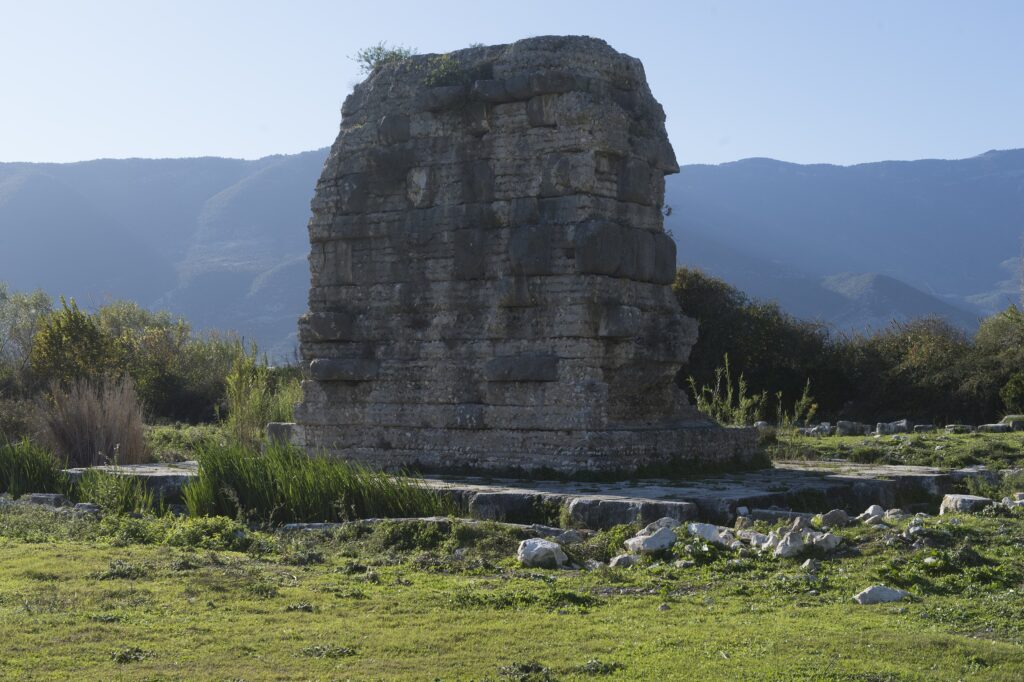
Cenotaphs in Roman Anatolia were not ordinary graves. They were empty tombs built for the absent dead, and a new scholarly study shows that their architecture varied dramatically, from imperial monuments with marble façades and sculpted friezes to modest symbolic graves made for ordinary people.
The study, “Cenotaphs in Roman Burial Practices in Anatolia” by Ece Çoksolmaz, published in Brief Communications of the Institute of Archaeology (Краткие сообщения Института археологии) in 2026, examines cenotaphs in Anatolia from the Roman Imperial period through the Byzantine era. It focuses on how these structures changed across Anatolia in form, meaning, and social use.
Empty tombs for bodies that were not there
The word cenotaph comes from the Greek kenos and taphos, meaning “empty tomb.” In the ancient world, such monuments were often built when a person’s body could not be recovered, transported, or buried in the desired place. Soldiers who died far from home, people lost at sea, and political figures whose deaths occurred away from their final burial place could all be commemorated through symbolic tombs.
In Roman Anatolia, however, the practice became more than a response to absence. It created a physical place for memory. A cenotaph allowed families, cities, or imperial authorities to perform rituals, preserve a name, and claim a sacred or civic space even when no body lay inside.
Imperial cenotaphs turned death into public architecture
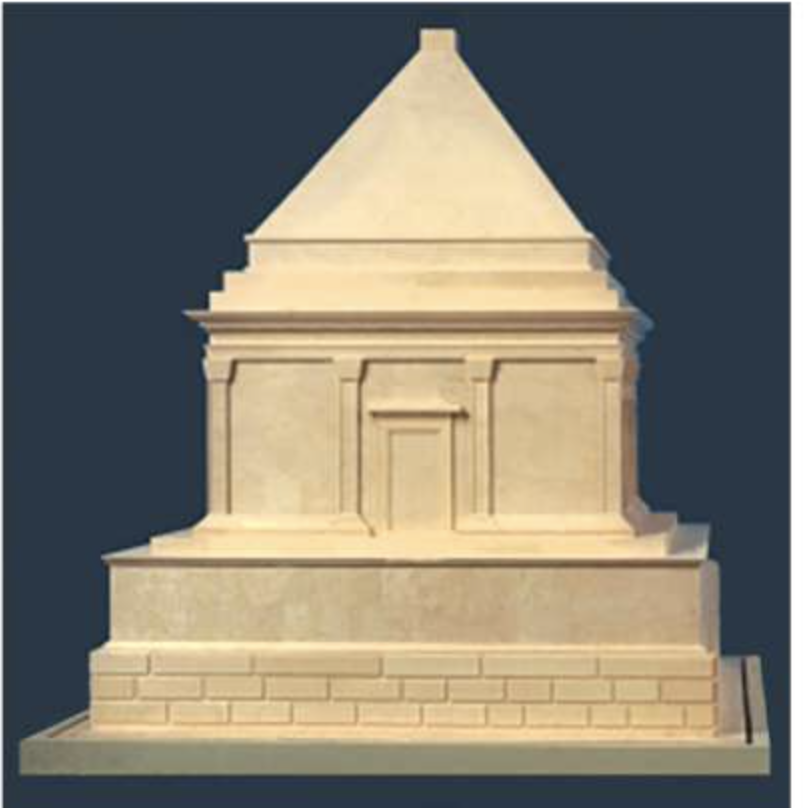
The most monumental examples belonged to the Roman elite. One of the earliest and most important Anatolian cases is the cenotaph of Gaius Caesar at Limyra in Lycia. Gaius, the grandson and adopted heir of Augustus, died in AD 4 after returning from Armenia. His body was taken to Rome, but a cenotaph was erected near the place of his death.
Architecturally, this was far from a simple marker. The structure had a square base measuring about 16 by 16 meters, a high podium of opus caementicium, a marble-clad superstructure, and possibly a pyramidal roof. Around the podium ran an approximately 63-meter-long frieze, with scenes interpreted as imperial ceremonies, Roman-Parthian diplomacy, a chariot procession, and sacrifice.
This monument did not merely say that Gaius had died. It staged his memory in stone. Roman imperial imagery was placed in an Anatolian landscape, probably executed by craftsmen from Asia Minor. That mixture is one of the study’s strongest points: cenotaphs in Anatolia were not architectural copies from Rome. They were local responses to Roman power.
Trajan’s monument shows the limits of identification
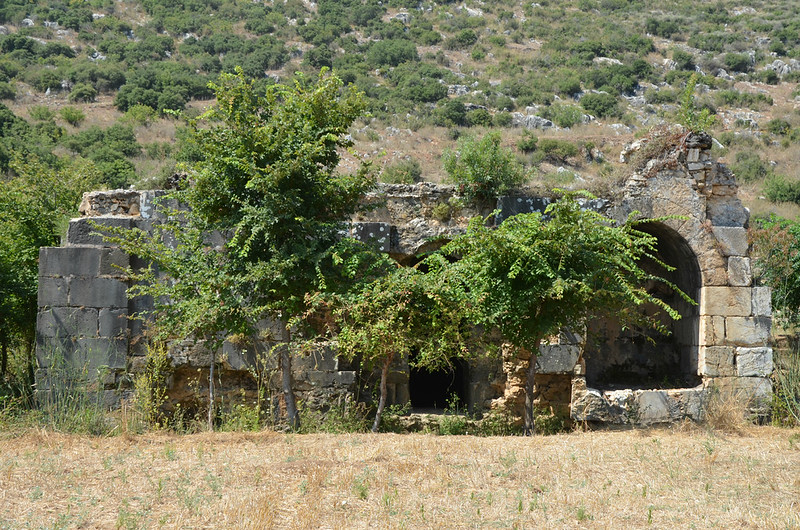
Another major example is linked to Emperor Trajan, who died in Selinus while returning from his Parthian campaign. The structure later known as Şekerhane Köşkü has been interpreted as a cenotaph, although scholars still debate whether it was instead a cult temple dedicated to Trajan.
Its architecture was very different from the Limyra monument. Recent studies give its dimensions as about 14 by 22 meters. It had a temple-like plan, a strong podium, Corinthian columns, a two-story arrangement, inner windowless rooms, a marble-paved sacred space, and a surrounding temenos enclosure.
This ambiguity matters. In Anatolia, the line between tomb, temple, hero monument, and imperial cult building was not always clean. The architecture itself could carry several meanings at once: funerary, religious, political, and commemorative.
Ordinary people also built symbolic graves
The study’s most interesting point is that cenotaphs were not limited to emperors and heirs. Over time, symbolic burial became visible among the broader population.
At Perge, inscriptions from the necropolis use the term cenotaphion. In some cases, the word appears even where human remains were found, suggesting that people may have commissioned empty sarcophagi during their lifetime or that the term could function as a local funerary label rather than a strict archaeological category.
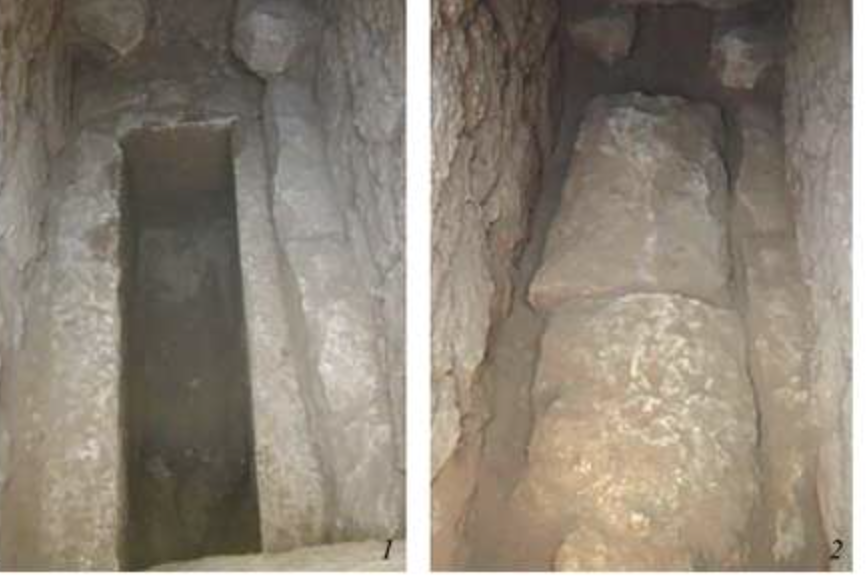
At Magnesia ad Maeandrum, a double-layered sarcophagus offers a more architectural clue. Human remains were found in the upper chamber, while the lower compartment was empty. This lower space may have functioned as a cenotaph, creating a tomb within a tomb, where absence itself became part of the design.
At Aizanoi, an empty sarcophagus with grave arrangements, eagle and kalathos motifs, oil lamps, and symbolic exterior features points to ritual use. At Juliopolis near Nallıhan, a tomb without skeletal remains contained a Charon coin, placed for the soul’s journey to the underworld.
The clearest popular example comes from the Kayağıl Necropolis near Uşak, where 33 Roman-period cenotaphs were identified. Most lacked human remains. These symbolic graves are interpreted as memorials for people who may have died far from home, possibly in war.
Christianity changed the architecture of absence
By the Byzantine period, the meaning of the cenotaph commemorated distant soldiers or elite figures. They also became part of churches, martyr memory, and the cult of saints.
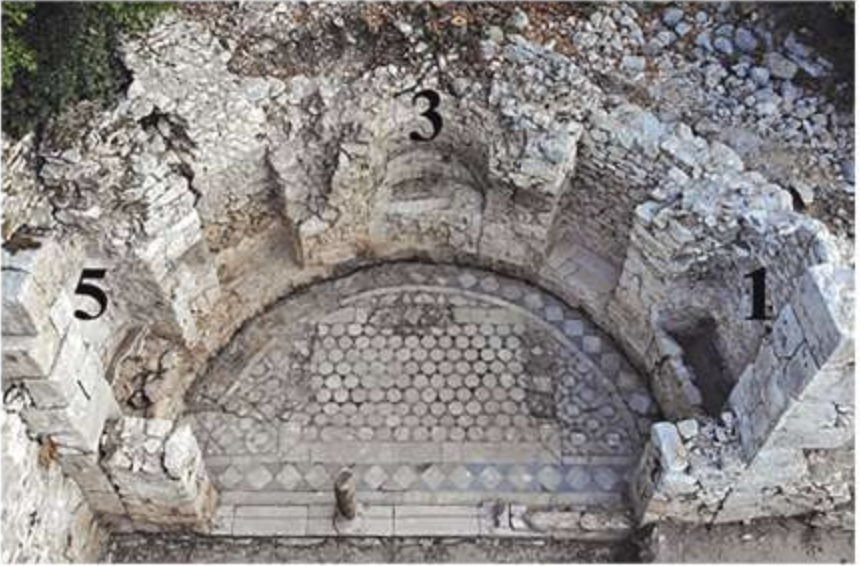
In Olympos, Church No. 3 contained arched niches that imitated arkosolium-type tombs but had no human remains. These are interpreted as cenotaphs connected with early Christian commemorative practice. The church dates between the late 5th and early 6th centuries.
At Balatlar Church in Sinop, another symbolic tomb is associated with Christian imagery, including a faint cross-like figure. In Milas, 13 of 15 Late Byzantine tombs documented in one necropolis area were identified as cenotaphs or cenotaph-like burials.
The architectural language had changed. Roman cenotaphs could look like podium monuments, sarcophagi, tomb chambers, or temple-like buildings. Christian examples often appeared inside or around churches, where memory was tied to sacred space rather than only family or civic ritual.
No single type, but one shared idea
The study concludes that there was no fixed architectural typology for cenotaphs in Anatolia. This is exactly what makes them valuable. A cenotaph could be a marble imperial monument at Limyra, a temple-like structure at Selinus, an empty sarcophagus at Aizanoi, a double-level tomb at Magnesia, a communal symbolic grave at Uşak, or an arched niche inside a Byzantine church.
Their forms differed, but the idea remained consistent: absence needed architecture.
In Roman and Byzantine Anatolia, the empty tomb was not empty in meaning. It held grief, status, ritual, faith, and memory. Across centuries, cenotaphs show how Anatolian communities built places for the dead even when the dead were elsewhere.
Çoksolmaz, E. (2026). Cenotaphs in Roman burial practices in Anatolia. Brief Communications of the Institute of Archaeology (Краткие сообщения Института археологии), 282, 120–136. https://doi.org/10.25681/IARAS.0130-2620.282.120-136
Cover Image Credit: Limyra Cenotaph of Gaius Caesar – Public Domain
