
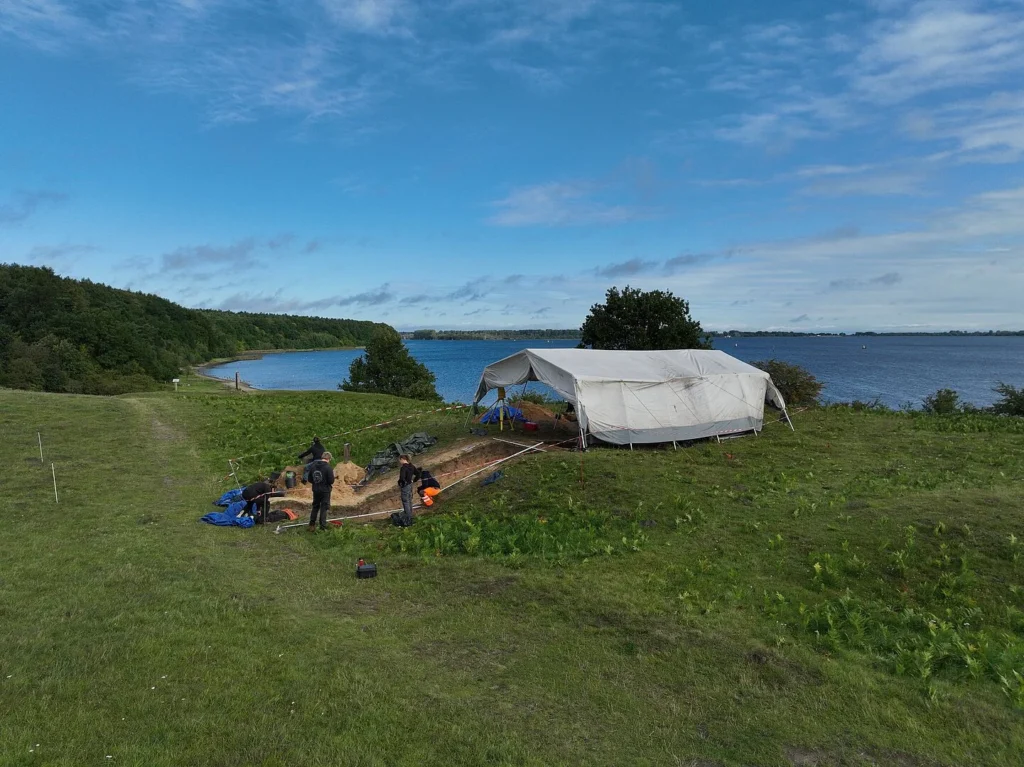
Archaeologists investigating the Stülper Huk, a headland on the River Trave located in the German federal state of Schleswig-Holstein, have revealed evidence of a fortified settlement dating back nearly 2,000 years. The findings suggest that the site played a key role during the late Iron Age, also known as the Roman Imperial Period (ca. 1–400 CE), when Rome’s economic and cultural influence stretched far into northern Europe.
A Landmark Excavation
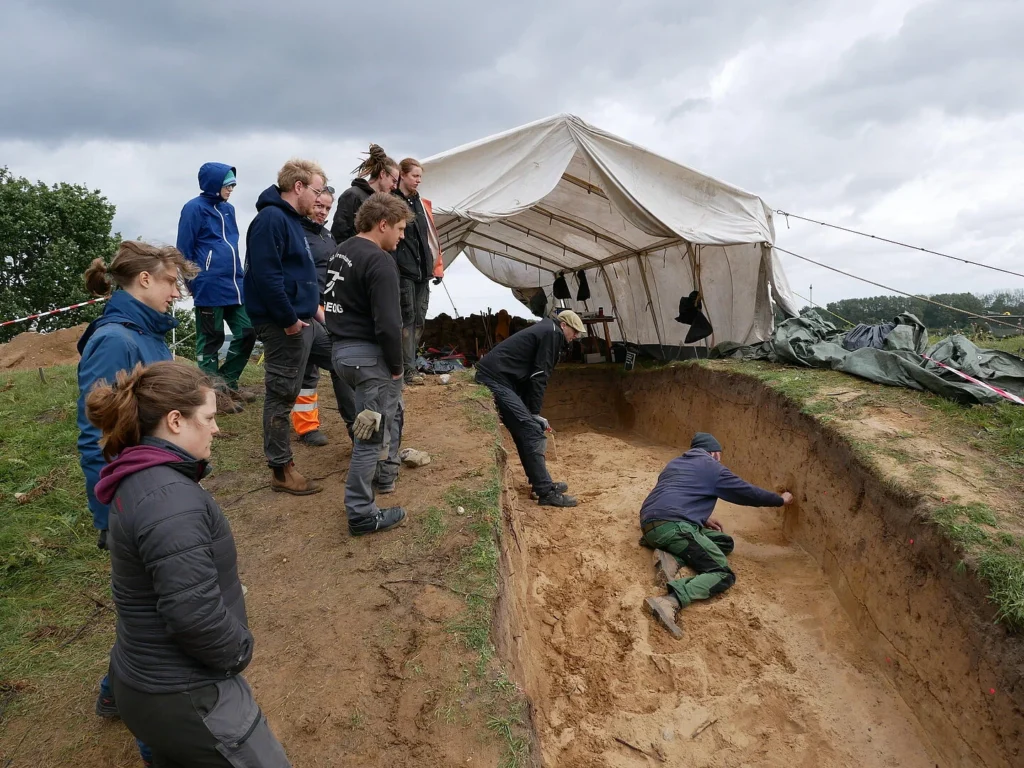
For two weeks, researchers from Kiel University and the City of Lübeck worked alongside students to explore the site. Their excavation confirmed earlier surveys that hinted at fortifications, post alignments, and traces of settlement. According to Dr. Felix Rösch, underwater archaeologist and excavation director for the City of Lübeck, the discoveries “cast an entirely new light on the settlement history of the Lübeck region.”
The Stülper Huk, known today as a scenic destination for hikers and nature enthusiasts, was far more than a picturesque landscape in antiquity. Rising above the Trave, the headland includes the Hirtenberg, a hill still marked by visible ramparts and ditches. Archaeological evidence indicates that during the Roman Imperial Period, the area was not only fortified but also tied into wider networks of exchange.
Strategic Location on the Trave
The River Trave has long been a vital artery connecting inland northern Germany with the Baltic Sea. During the Roman era, while imperial frontiers officially lay further south along the Rhine and Danube, trade and cultural contacts penetrated deep into Germania. Imported goods such as Roman ceramics, glass, and coins have been found across the region, reflecting both commercial exchange and local elites’ desire for Mediterranean prestige items.
The fortified position at Stülper Huk would have controlled movement along this waterway, acting as a hub for commerce and communication. Some historians have even speculated that the headland may have functioned as a toll station or proto-settlement predating the foundation of Travemünde.
Layers of History Revealed
The new excavation was preceded by intensive surveys earlier in 2025, including drilling, surface inspections, and underwater archaeology. These investigations revealed a previously unknown field of wooden piles beneath the shallow waters of the Trave, while boreholes exposed construction details of the ramparts on the headland itself.
Ceramic material recovered during the dig overwhelmingly dates to the first four centuries CE, firmly anchoring the site in the Roman Imperial Period. Wooden remains from the pile field point to similar dates, strengthening the interpretation of a larger, long-term occupation.
Notably, the quantity of medieval material was limited. According to project co-director Dr. Till Kühl of Kiel University’s Institute for Pre- and Protohistory, this suggests that the site did not develop into a permanent medieval castle or a direct forerunner of Travemünde, as earlier theories had proposed.
Nevertheless, the area has continued to produce striking finds from different eras. During earlier surveys, archaeologists uncovered a medieval metal hoard, and in 2023, a sunken 17th-century Hanseatic ship was recovered nearby. These discoveries underline the Trave’s enduring importance as a corridor of trade and maritime power.
Collaboration and Future Prospects
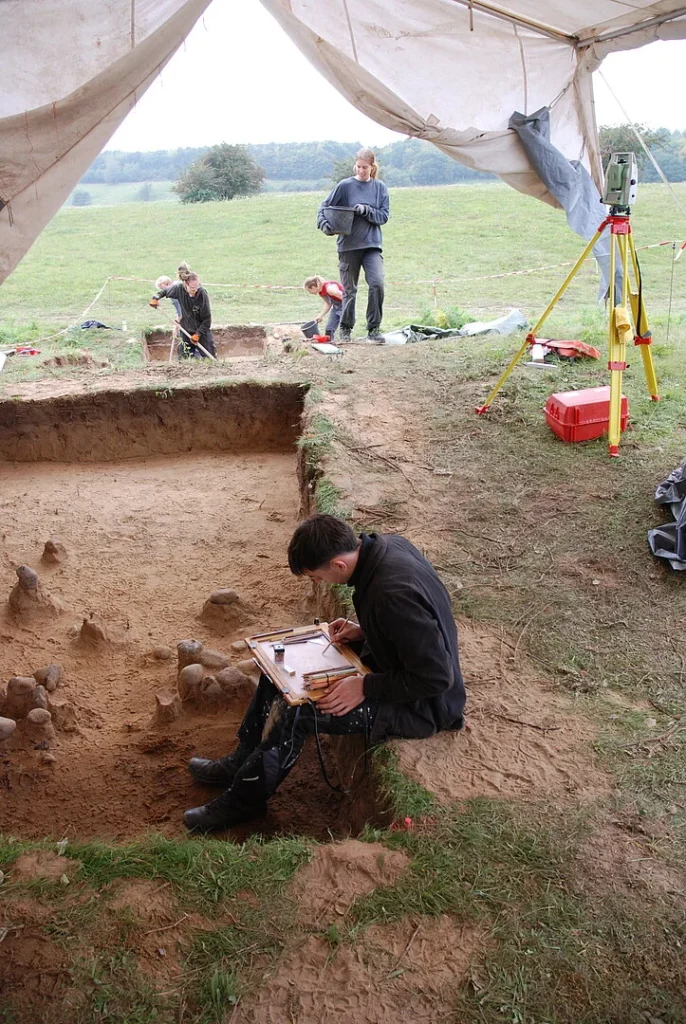
The project is part of a broader collaboration between the City of Lübeck’s Department of Archaeology and Monument Conservation, the Christian-Albrechts University of Kiel, and the Cluster of Excellence “ROOTS.” For the participating students, the excavation also served as a training ground in archaeological fieldwork.
Dr. Ingrid Sudhoff, head of Lübeck’s Department of Archaeology, emphasized the broader significance: “The close cooperation with Kiel University has allowed us to unlock long-suspected secrets of the Stülper Huk. Once again, we see that the Trave has been a crucial trade and communication route for millennia.”
Roman Context in Northern Germany
While Lübeck itself was not part of the Roman Empire, the discoveries at Stülper Huk highlight how deeply Roman influence penetrated beyond the frontiers. Archaeologists across northern Germany and Denmark have documented Roman imports, from luxury goods to military equipment, reflecting both peaceful exchange and occasional conflict.
Sites such as the fortified settlement on the Trave illustrate that local communities were not isolated but actively engaged in regional networks shaped by Rome’s economic pull. The settlement may have served as a defensive outpost, a trading center, or both—providing security and oversight for goods moving between the Baltic and interior markets.
A New Chapter in Lübeck’s Past
With the completion of this season’s excavation, researchers are now analyzing the material to better understand the chronology, construction techniques, and function of the fortifications. Further studies, particularly of the wooden piles discovered underwater, are expected to yield precise dating through dendrochronology.
For Lübeck, a city best known for its medieval Hanseatic heritage, the recognition of a Roman-era fortified settlement nearby expands its historical narrative back by more than a millennium. As Dr. Kühl summarized, “The multi-layered evidence at Stülper Huk gives us a perspective on the past that we simply did not have before.”
Christian-Albrechts-Universität zu Kiel (CAU)
Cover Image Credit: For two weeks, archaeologists from Kiel University and the City of Lübeck investigated settlement traces along the River Trave. Niklas Dopp
