
Two ancient temples destroyed by fire, an Iron Age settlement scarred by a violent attack, and a newly discovered Roman military camp are raising a disturbing question in northern Spain: Did Rome’s conquest involve more than defeating its enemies on the battlefield?
Archaeologists investigating La Peña del Castro, an Iron Age hillfort in the province of León, are uncovering evidence of a Roman military assault and its devastating consequences. Their findings raise the possibility that the destruction went beyond military necessity, targeting places central to the community’s religious and cultural identity.
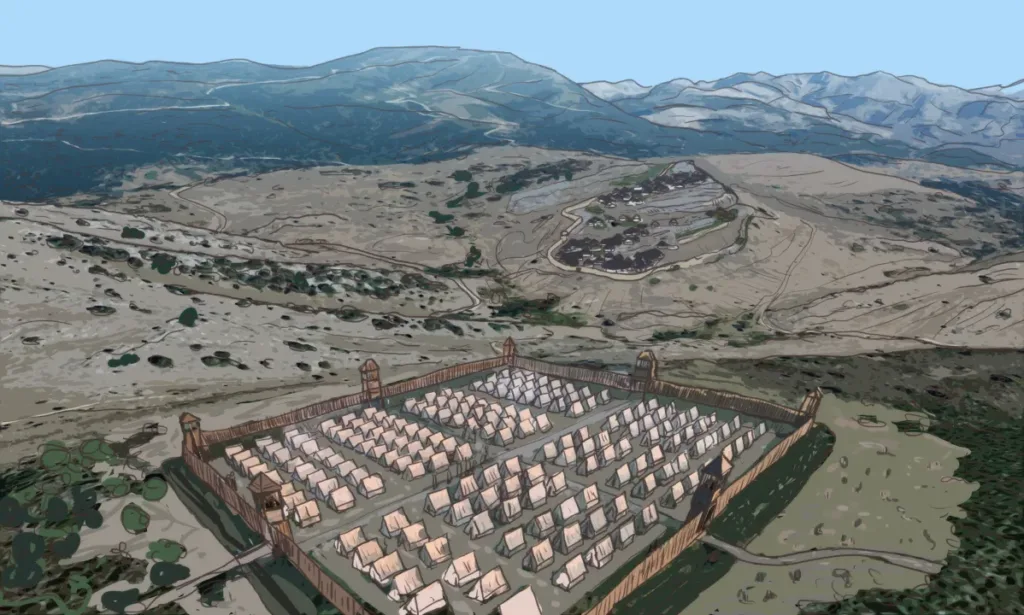
The latest discovery, a 1.7-hectare Roman military camp approximately 500 meters from the hillfort, provides new evidence of military operations associated with the Cantabrian Wars (29–19 BC), the campaign through which Rome completed its conquest of northern Hispania.
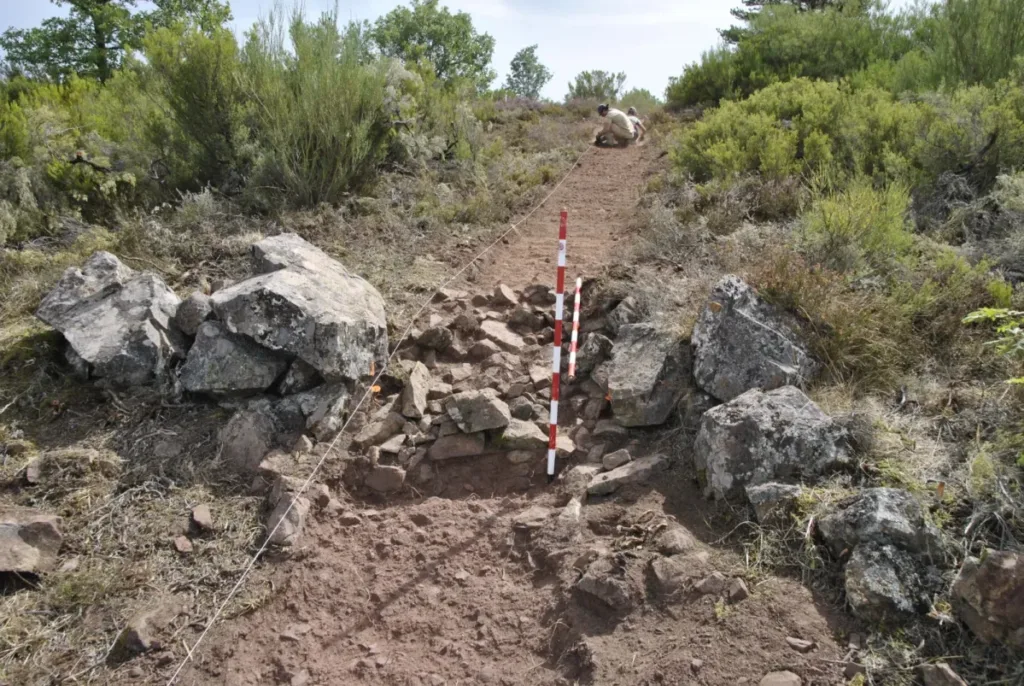
The University of León research team, co-directed by Eduardo González Gómez de Agüero, identified the Roman military enclosure during spring surveys and further investigated it in summer excavations, uncovering fortifications and artifacts associated with Roman soldiers.
Two Temples That Once Defined a Community
Before the Roman conquest, La Peña del Castro possessed an unusual religious complex that archaeologists consider exceptional for northern Iberia.
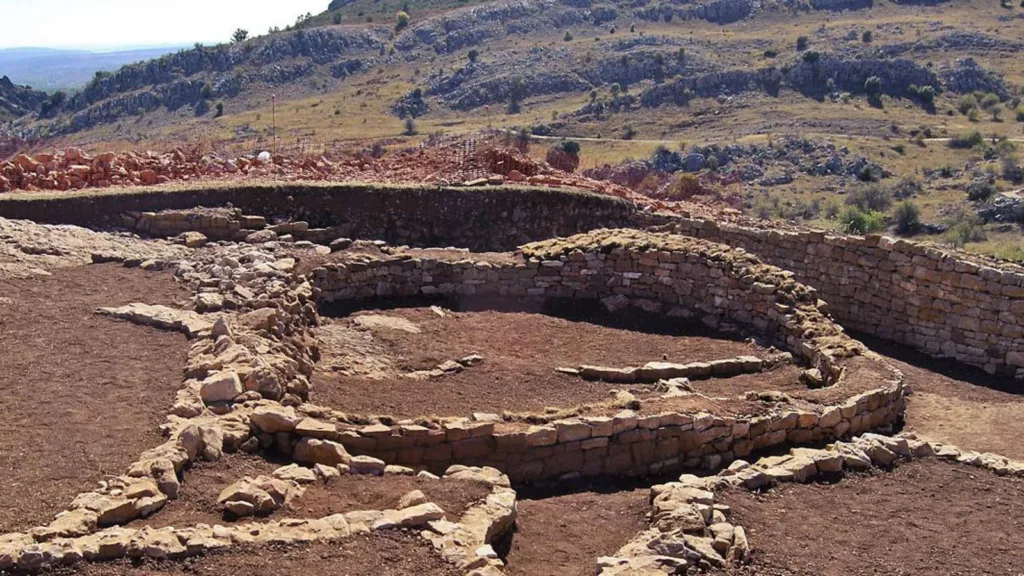
The complex consisted of two temples dating to the second and first centuries BC, positioned opposite one another along a principal street near an entrance to the settlement. Both had distinctive D-shaped plans, raised entrances, and stone architecture, although they differed in size and construction materials.
One temple, measuring approximately six meters across, was built using yellowish sandstone. Inside stood a large rectangular altar whose surface showed evidence of repeated burning associated with ritual activity. Archaeologists recovered charred bones of domestic animals and cereals, providing direct evidence of offerings involving both animals and agricultural produce.
The second temple, excavated in 2014, was larger, reaching approximately eight meters in diameter. Built with reddish stone, it contained three rooms, including one with a stone-slab altar. Among its ritual objects were a large sacrificial knife and vessels associated with purification practices. A pit discovered near the building’s entrance may also have been used for offerings.
The temples formed a unified religious complex linked by an elevated stone passage. Researchers suggest that ceremonies here honored deities associated with agricultural cycles and powers of the earth.
These details reveal a community with established religious traditions, ceremonial spaces, and practices that connected everyday life to the surrounding landscape.
Previous investigations also documented a devastating fire that destroyed both temples and damaged part of the settlement. The contrast is striking: structures where generations may have gathered to perform rituals eventually became part of the archaeological evidence for a violent episode in the hillfort’s history.
Roman Soldiers Left Their Footprints in Iron
Located approximately 500 meters from La Peña del Castro, the newly discovered 1.7-hectare Roman military camp occupied a strategic position overlooking the hillfort and its approaches.
The enclosure had a quadrangular layout and a distinctive clavicula entrance, a curved defensive arrangement associated with Roman military camps. Its perimeter was protected by a stone wall approximately 1.5 meters wide, built from locally available material.
Although the surviving wall stands less than half a meter high, researchers estimate that it originally reached roughly twice that height.
Behind the wall, the soldiers constructed an earthen platform approximately 12 meters wide. This strengthened the fortifications, elevated the interior above the surrounding slope, and provided space for movement along the defensive perimeter.
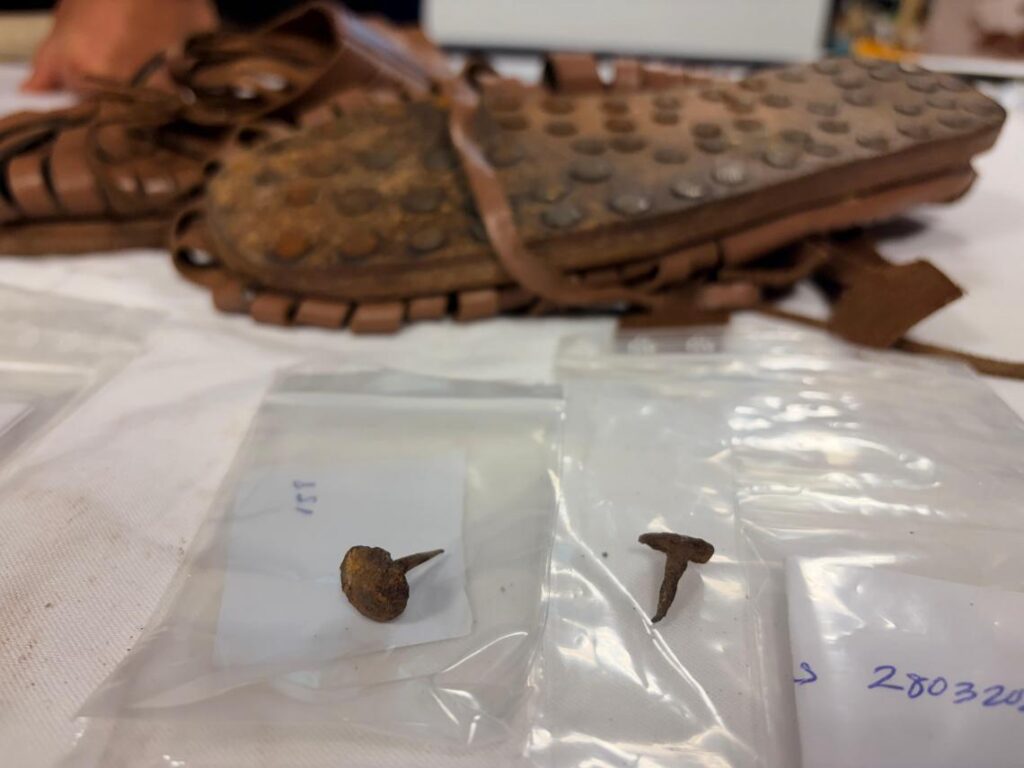
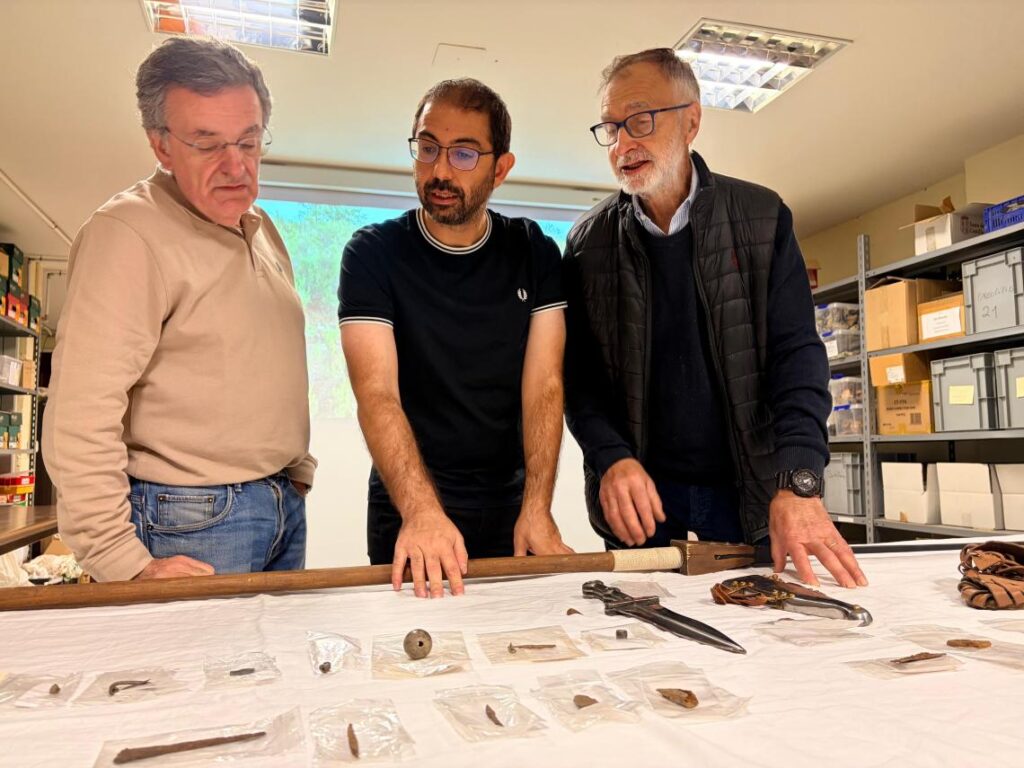
The camp’s substantial fortifications are particularly notable for what appears to have been a temporary military installation. Archaeologists also recovered fragments of military equipment and iron hobnails from Roman soldiers’ footwear, providing further evidence of the military presence at the site.
These small metal studs were fitted into the soles of military shoes to improve traction and durability. While the shoes themselves have not been reported among the finds, the surviving hobnails provide tangible evidence of the soldiers who occupied the camp.
Excavation co-director Eduardo González Gómez de Agüero emphasized the camp’s exceptional preservation, noting that finding an installation associated with an Iron Age hillfort in such condition is unusual.
The Roman Assault and the Destruction of La Peña del Castro
The latest excavations have shed new light on how Roman forces attacked La Peña del Castro. Archaeologists have confirmed that the assault came from the northern slope of the hillfort, a conclusion previously suggested by evidence uncovered during earlier campaigns.
Previous investigations revealed evidence of an intense fire that swept through part of the settlement, destroying important structures, including its two Iron Age temples. These were places where the inhabitants had performed religious ceremonies and made offerings to their deities before the Roman conquest.
Yet the destruction may not have ended with the assault. Archaeologists are now investigating whether Roman forces deliberately demolished additional buildings after taking control of the settlement. One possibility is that the hillfort was attacked and occupied first, with further destruction taking place later.
The distinction is crucial. Damage caused during a battle would tell one story; the deliberate destruction of buildings after a settlement had fallen would raise different questions about Roman intentions toward the defeated population.
A watchtower identified on the upper part of the hillfort adds another dimension to the investigation. Its presence may help researchers understand how the Romans maintained control over the settlement following its conquest.
The chronology of the destruction remains uncertain. Further excavations will focus on determining whether the damage occurred during the Roman assault or resulted from deliberate actions carried out after the settlement was captured.
Was the Destruction Intended to Erase Local Identity?
González Gómez de Agüero has raised the possibility that Roman military operations involved deliberate actions intended to humiliate defeated communities and weaken their relationship with their territory.
“It is not simply a matter of defeating the enemy, but of humiliating them, erasing their identity and breaking their ties to the territory,” he explained in the University of León’s announcement, describing a hypothesis that future excavations will investigate.
The destruction of the temples gives this question particular significance. These were not simply defensive structures. They were places associated with religious ceremonies, ritual offerings, and beliefs that had helped shape the community’s identity before the Roman arrival.
Nevertheless, archaeologists have not demonstrated that Roman soldiers specifically targeted the temples to suppress local religious practices. The possibility of deliberate destruction after the conquest also remains under investigation.
The discovery offers archaeologists a clearer picture of Rome’s military campaign in northern Hispania, revealing how Roman forces positioned themselves near an Iron Age stronghold during the Cantabrian Wars.
The research may also help reconstruct troop movements through the valleys crossing the Cantabrian Mountains and clarify how Roman forces extended their control over northern Hispania.
The Cantabrian Wars (29–19 BC) marked the final stage of Rome’s nearly two-century conquest of the Iberian Peninsula. Fought against the Cantabri and Astures of northern Hispania, the campaigns drew the direct involvement of Emperor Augustus and ended with the region falling under Roman control.
