

A Roman-era skeleton buried face down, surrounded by an exceptional collection of glass and ceramic vessels, has been uncovered at a necropolis in Salona, Croatia. Among the objects placed beside the deceased was a particularly distinctive find: a glass balsamarium shaped like a date fruit.
The burial, designated Grave 162, emerged during the fifth season of archaeological investigations at Hortus Metrodori, part of Salona’s western necropolis. Researchers identified 32 graves during the 2026 season, bringing the total number investigated in this section of the cemetery to 152.
Rare Glass Balsamaria Found in the Grave
According to the Archaeological Museum in Split, Grave 162 stood out for its unusually rich assemblage of grave goods.
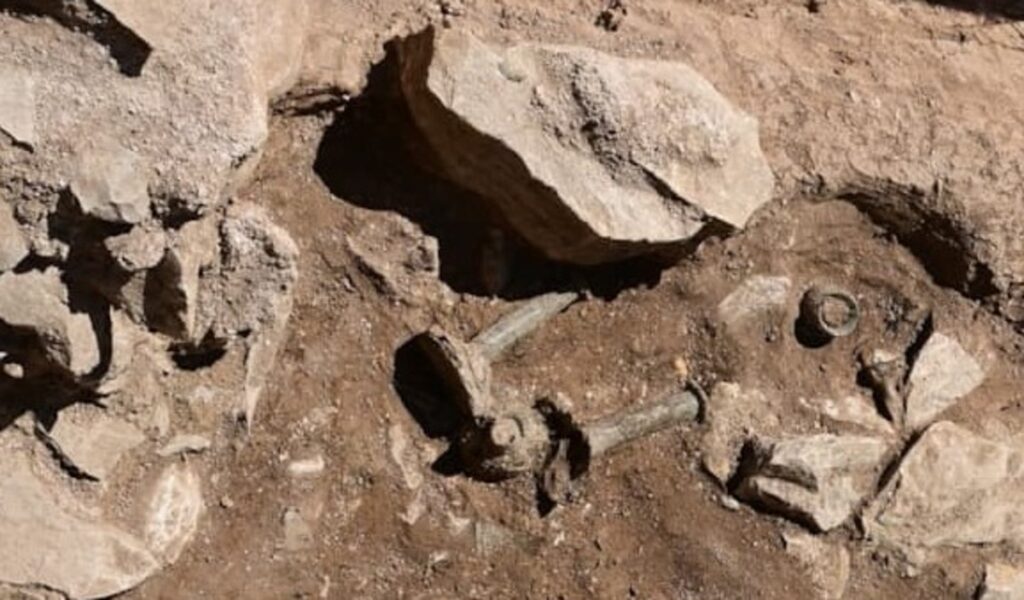
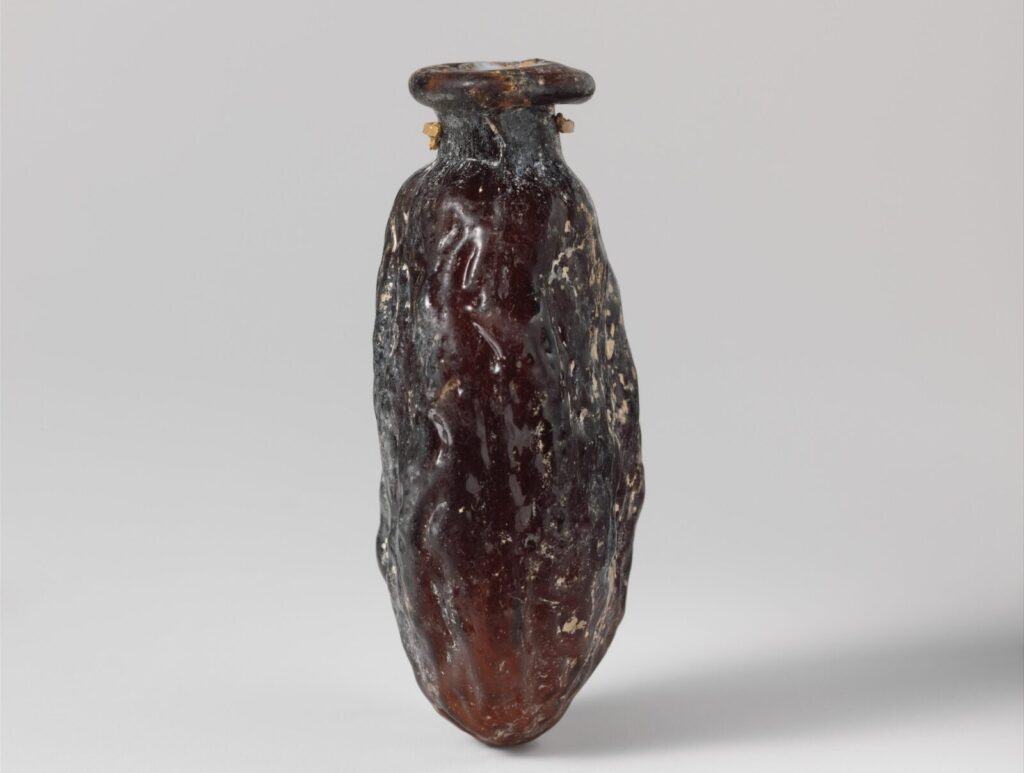
Archaeologists recovered three glass bottles, a small glass vessel, three glass balsamaria and four ceramic vessels. Two engraved gems and fragments of a bronze object were also found in the grave. One of the balsamaria was fashioned in the shape of a date fruit, making it one of the most visually distinctive objects from this season’s excavation.
Small glass vessels known as balsamaria or unguentaria were widespread across the Roman world. They are generally associated with substances such as scented oils, ointments and cosmetics, although their original contents cannot automatically be determined simply from the shape of the vessel.
The date-shaped example from Salona belongs to a recognizable Roman glass tradition. Comparable mold-blown vessels imitate the wrinkled surface and elongated form of a ripe date. Examples in museum collections are generally dated to the 1st and early 2nd centuries AD, while some known specimens have been associated with glass workshops on the Syro-Palestinian coast.
The origin of the newly excavated Salona vessel has not yet been established, however, so it would be premature to identify it as an imported eastern Mediterranean product.
Why Was the Body Buried Face Down?
The position of the individual in Grave 162 adds another layer of interest. Inhumations in this section of the cemetery were normally placed extended on their backs, making the prone position noteworthy.
Face-down burials are known from Roman-period cemeteries across Europe, but they do not have a single explanation. Archaeologists have variously connected individual examples with unusual funerary rites, social circumstances or specific events surrounding death and burial. In the case of Grave 162, researchers have not announced an interpretation for the position of the body.
The rich grave assemblage also cautions against simplistic explanations. Further bioarchaeological study of the skeletal remains may eventually provide information about the individual’s age, biological sex, health and life history.
Centuries of Roman Burial Rites at Hortus Metrodori
Hortus Metrodori formed part of the western necropolis of Salona, one of the most important Roman urban centers on the eastern Adriatic. The cemetery took its modern name from an inscription mentioning in horto Metrodori, or “in the garden of Metrodorus.”
The necropolis developed beside the Roman road leading west from Salona toward Tragurium, modern Trogir, and remained in use from approximately the 1st to the 4th century AD. A boundary structure known as the murazzo separated sections of the cemetery from the road, while individual burial plots were also enclosed.
The new excavations are helping archaeologists reconstruct how this funerary landscape changed over time. Earlier phases of the cemetery were dominated by cremation. During the 2nd century AD, inhumation became increasingly common and eventually replaced cremation in the investigated area.
That transition is particularly visible in the 2026 results. Archaeologists documented exactly 16 cremation burials and 16 inhumations. Twelve of the cremations contained burned human remains deposited directly into pits, while three used ceramic urns and one a stone urn.
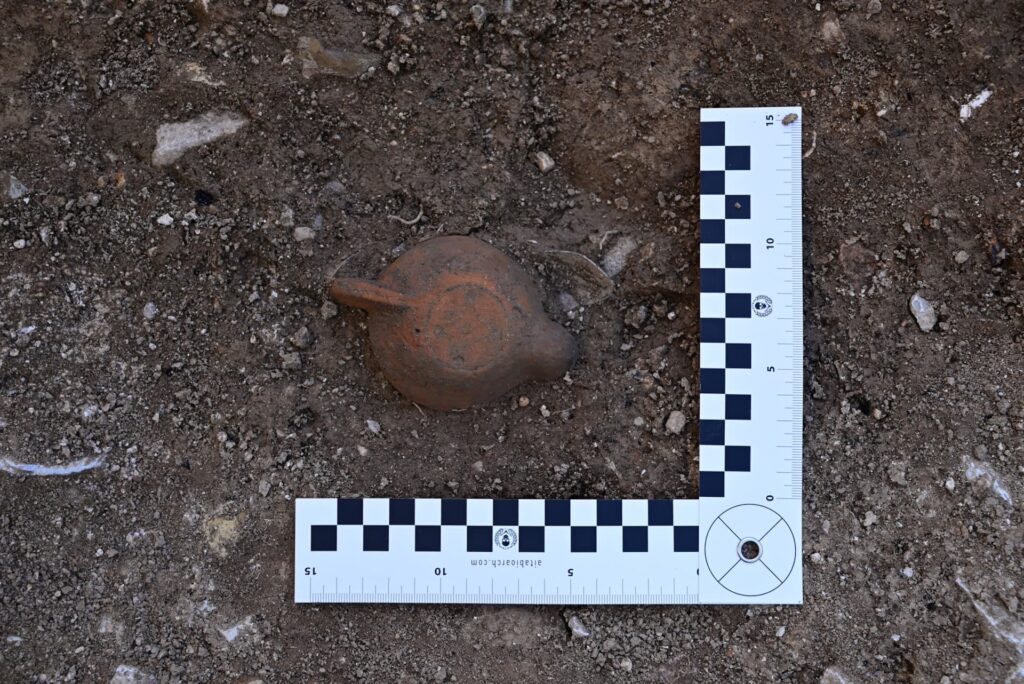
Among the cremation burials, Grave 137 produced another glass balsamarium together with a bone pin and a ceramic oil lamp.
A Discovery That Could Rewrite the Cemetery’s Timeline
Grave 162 may prove important for more than its grave goods. It was dug over the remains of an earlier demolished wall previously interpreted as the northern boundary of a burial plot bordered on the south by the murazzo.
Other graves dating to the 1st century AD also lie over the abandoned structure. Archaeologists therefore suggest that the wall may predate the construction of the murazzo, potentially adding another phase to the architectural history of Salona’s western cemetery.
The continuing excavations are being carried out by the Croatian Conservation Institute and the Archaeological Museum in Split, with bioarchaeological analysis conducted by the Croatian Academy of Sciences and Arts’ Anthropological Centre.
For now, the date-shaped glass balsamarium provides one of the most striking objects from the season. Together with the unusual position of the deceased and the concentration of grave goods, Grave 162 offers a particularly detailed glimpse into the changing funerary world of Roman Salona.
