7 December 2025 The Future is the Product of the Past

Construction Workers Discovered Ancient Sarcophagus in Turkey

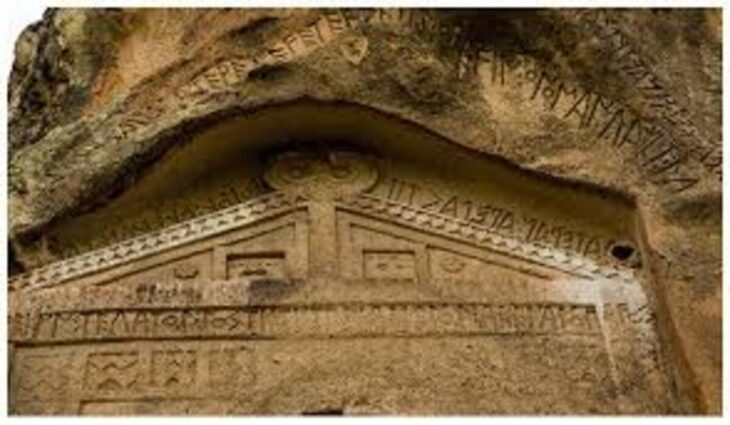
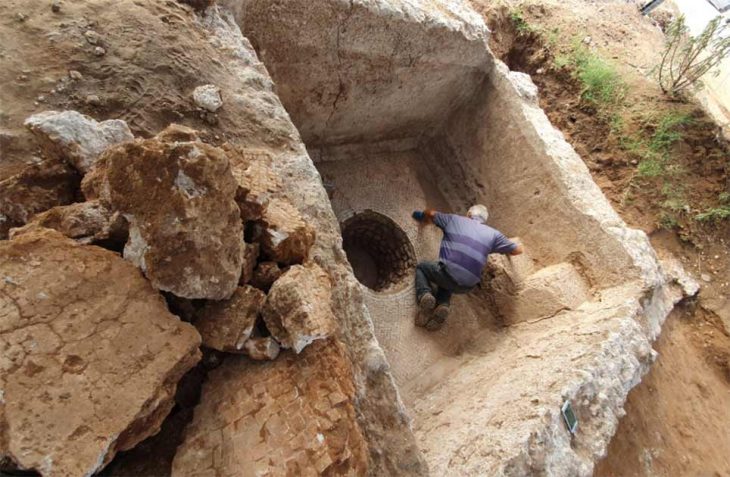
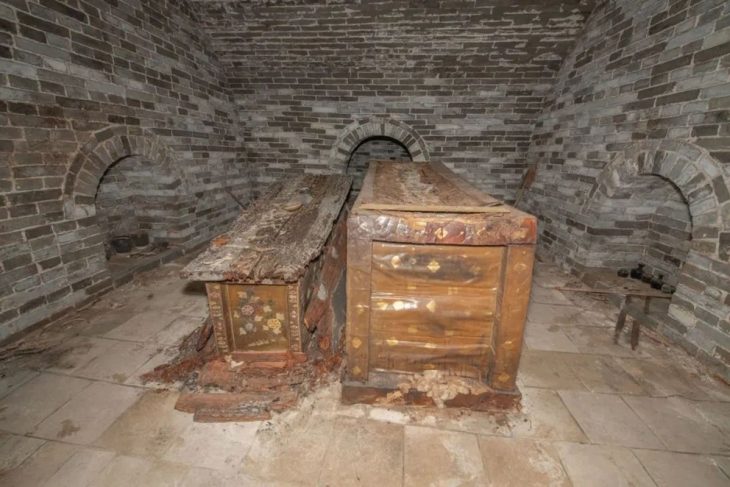
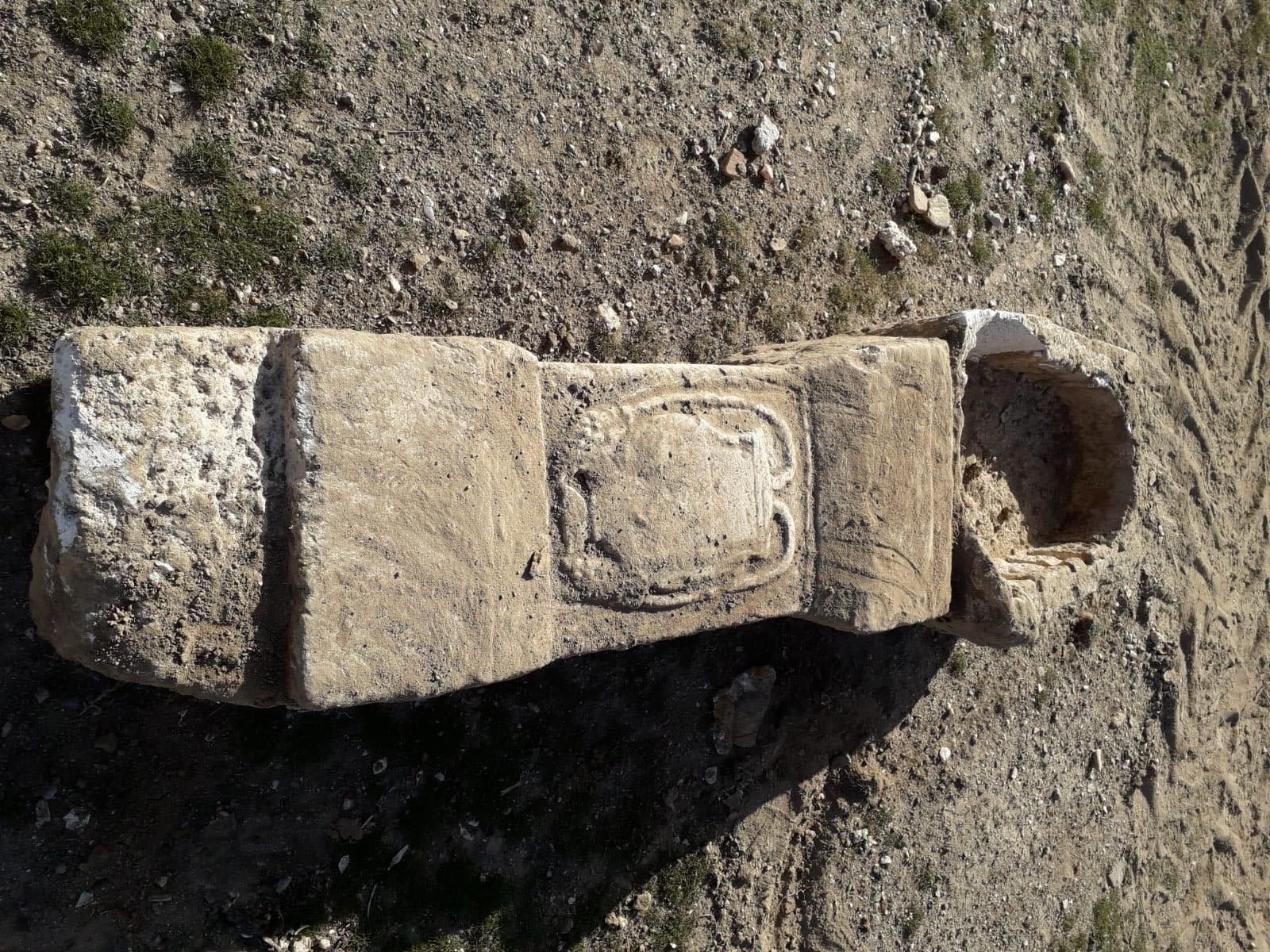
On Monday, reports said that during excavations in the Seyitgazi region of Eskisehir Province in northwestern Turkey, municipal staff unexpectedly discovered an ancient sarcophagus.

Eskişehir has been a rich home to many archaeological discoveries and sarcophagi over the years as the city hosts several official archaeological excavations rather than relying on luck.

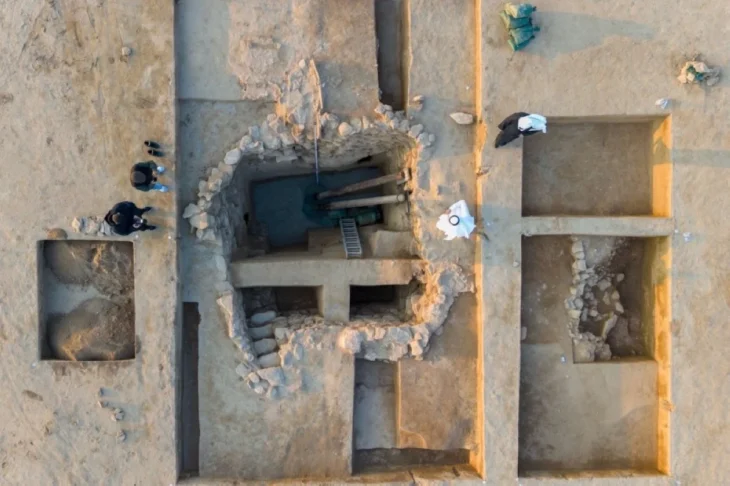
This was the second exciting archaeological discovery recently made in the Seyitgazi district that scientists discovered, a 5000-year-old paint palette that was likely used to paint the dishes in the Küllüoba settlement mound last year.

Excavations at the site of Küllüoba, which is probably 4,500 years old and thus the oldest town of Eskişehir, has been underway since 1996 and so far fifteen burial sites have been discovered, a 3,000-year-old sarcophagus and a 5,000-year-old sarcophagus containing the remains of two possible relatives.

Another interesting cultural observation discovered in Küllüoba is the diet of the ancient people, as Turkish archaeologists discovered in 2019 that ancient people who lived in northwestern Turkey during the early Bronze Age drought period 4,500 years ago consumed dog meat cooked in various ways.


📣 Our WhatsApp channel is now LIVE! Stay up-to-date with the latest news and updates, just click here to follow us on WhatsApp and never miss a thing!!


Eskişehir will certainly continue to offer more historical discoveries as the province is home to the ancient Phrygia civilization that existed in 800 BC. and dominated central Anatolia from the Mediterranean Sea to the south and the Black Sea to the north, according to UNESCO.

ancient sarcophagi
Sarcophagi are usually carved in low or high relief.

What is a sarcophagus?

Sarcophagus, This word was commonly used as the name for large coffins during the Roman Empire and is now used as an archeological term. Sarcophagi can be thought of as a kind of funeral coffin where people from rich families are put when they die.

They are usually made of marble, but there are also those carved from a different stone depending on the stone situation in the region. It should be noted that limestone is used a lot in sarcophagi since it is an opinion that limestone spoils meat quickly.

While relief sculptures of the deceased are usually found in ancient Egyptian sarcophagi, it is seen that ancient Greek sarcophagi are inspired by period temples.
Related Articles

Extraordinary discovery for the Western Baltic Sea region: a 400-year-old shipwreck Found at Bottom of German River

3 August 2022

3 August 2022

During a routine measurement at Trave, near Lübeck, in the northern part of Germany,  Kiel-Holtenau Waterways and Shipping Authority (Wasserstraßen-...

Researchers Say that Neanderthals Had the Same Hearing Capacity as Humans

1 March 2021

1 March 2021

Virtual reconstructions of Neanderthal ears show that had the same physical capacity for hearing as modern humans, and by inference...

Archaeologists uncovered a Roman settlement and what is thought to be an extremely rare early Medieval longhouse in North East Wales

16 August 2024

16 August 2024

The team from the University of Chester, Heneb: the Trust for Welsh Archaeology (Clwyd-Powys region), and the Portable Antiquities Scheme...

Extraordinary Monumental Roman Burial Mound Discovered in Bavaria Stuns Archaeologists

18 October 2025

18 October 2025

Archaeologists in Bavaria have uncovered what appears to be the foundation of a monumental Roman burial mound, a discovery that...

A Decorated Block with Decapitated Gaul Found for the First Time in Toul, France

22 July 2024

22 July 2024

A Corinthian-style carved block that was once part of the entablature of a monumental Gallo-Roman public building has been discovered...

The oldest meerschaum artifact found in Anatolia; of Çavlum Seal

18 July 2021

18 July 2021

The stamp seal unearthed during the rescue excavations of Çavlum Village on the Eskişehir Alpu Plain is the oldest meerschaum...

Archaeologists Unearth 2500-Year-Old Settlement in North Macedonia

10 April 2025

10 April 2025

Recent archaeological excavations at Gradishte, near the village of Crnobuki in North Macedonia, have unveiled a significant ancient settlement that...

Roman soldier’s 1,900-year-old payslip uncovered in Masada

16 February 2023

16 February 2023

During excavations at Masada, archaeologists from the Israel Antiquities (IAA) uncovered a papyrus payslip dated to 72 BC belonging to...

New Study Reveals That the First English Settlers in North America Ate Dogs to Survive

28 May 2024

28 May 2024

The first English settlers to arrive in North America ate indigenous dogs to survive an extreme period of starvation, according...

Gold glass ‘Roma’ unearthed in the excavations of the Rome subway

7 February 2023

7 February 2023

A very rare and refined piece of gold glass representing ‘Roma’, the woman symbol of the Eternal City, has been...

1,600-Year-Old Rare Greek Letter-Shaped Weights and Scale Found in Türkiye’s Uzuncaburç

9 July 2025

9 July 2025

Archaeologists have made a significant discovery at the ancient city of Uzuncaburç in Türkiye’s southern Mersin province — a complete...

Birkleyn Caves is “the Place Where The World Ends”

18 January 2025

18 January 2025

The Birkleyn Caves were known as “the place where the world ends” and as “the place where the water of...

Network analysis of prehistoric relationships using raw archaeological finds and AI

24 July 2023

24 July 2023

A project of the Cluster of Excellence ROOTS uses archaeological raw material finds for network analyses from the Middle Stone...

Neanderthals caused ecosystems to change 125,000 years ago

16 December 2021

16 December 2021

Researchers say Neanderthals changed the ecosystem by turning forests into grasslands 125,000 years ago. Around 125,000 years ago, these close...

Romania’s 1.95 Million-Year-Old Hominin Evidence Pushes Back the Timeline of Human Presence in Europe

25 January 2025

25 January 2025

A recent study revealed evidence of “hominin activity” in Romania that dates back at least 1.95 million years, making it...