
16 January 2026 The Future is the Product of the Past

3,000-Year-Old Rare Carved Stone Unearthed at Prehistoric Cult Site in Norway

Archaeologists in Norway have uncovered a rare 3,000-year-old carved stone at a prehistoric cult site buried beneath clay after a massive landslide.

The discovery, made in Gauldal Valley in Central Norway, sheds light on Bronze Age ritual practices and offers new insight into how ancient communities connected with death, religion, and nature.

A Landslide That Preserved History

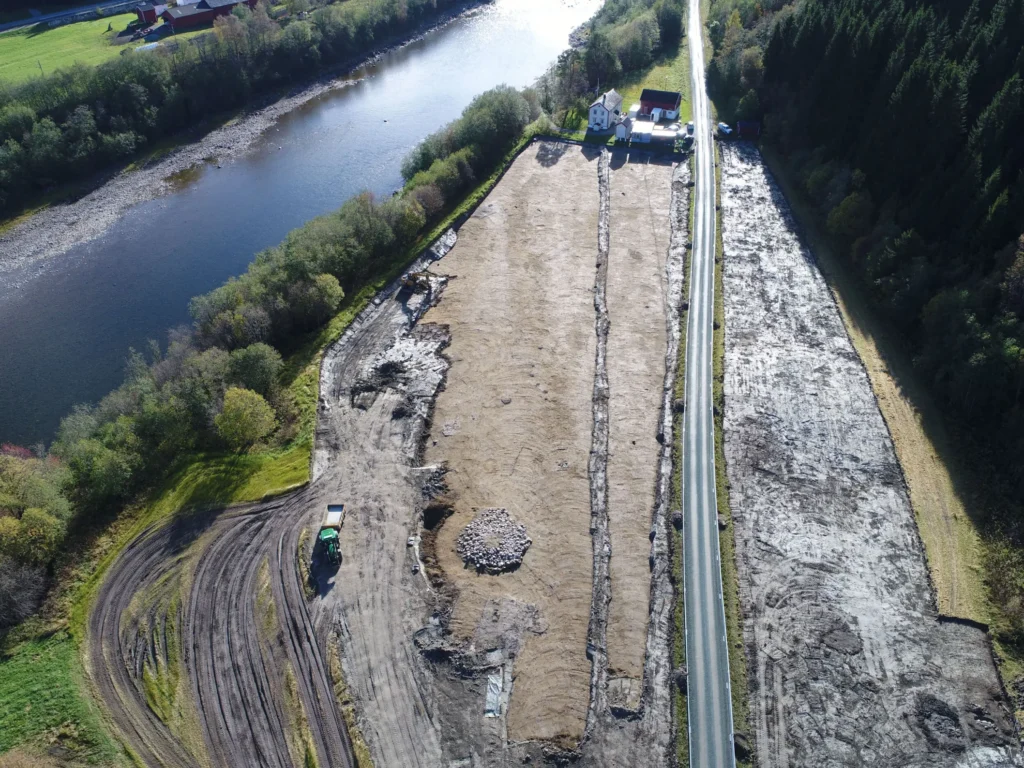
Around 800 BCE, a catastrophic landslide struck Gauldal, covering the river valley with thick layers of clay. For centuries, the ancient site remained hidden until archaeologists began excavations in 2014 during the expansion of the E6 highway.

“The whole area is covered in clay from that landslide,” explained archaeologist Hanne Bryn of the NTNU University Museum, who has led the research since the first survey. “We quickly saw signs of human activity, but what we eventually uncovered was far beyond our expectations.”

The excavation required two full summers instead of one, as the team had to dig through clay layers up to three meters thick. What they found underneath was extraordinary.


📣 Our WhatsApp channel is now LIVE! Stay up-to-date with the latest news and updates, just click here to follow us on WhatsApp and never miss a thing!!


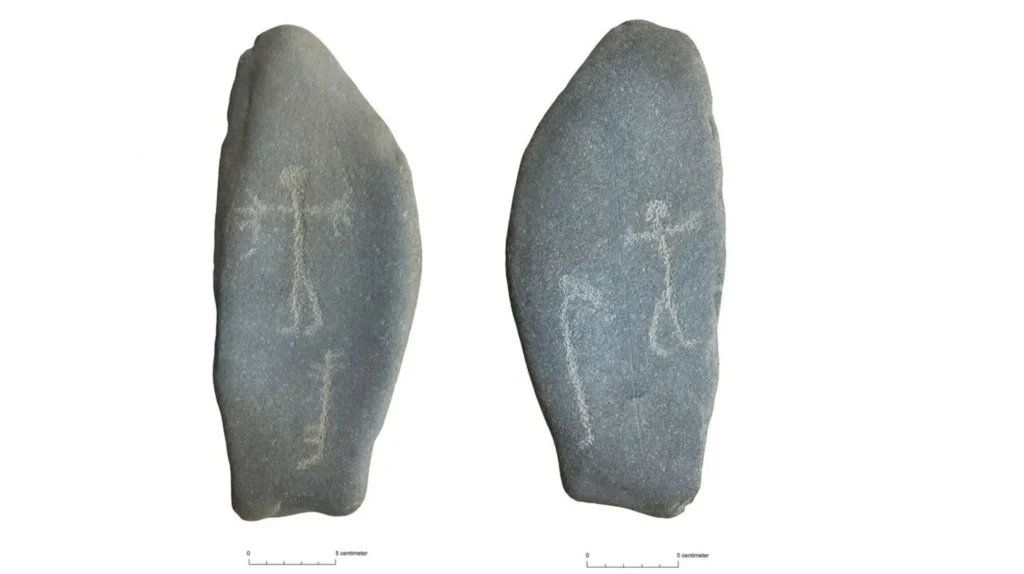
The 3,000-year-old carved stone, measuring 10 × 20 cm, with human, animal, and boat engravings on both sides. Credit: Hanne Bryn / NTNU University Museum

A Unique Cult Site in Central Norway

Archaeologists identified the site as a 3,000-year-old Bronze Age cult center. Unlike ordinary settlements, it consisted of two main zones, each with a longhouse about 10 to 12 meters in length and associated burial structures.

One area featured a large burial cairn—a mound of stones marking a grave—along with three stone slab chambers. These chambers held cremated human bones dated between 1000 and 800 BCE, coinciding with the time of the landslide.

Scattered across the site were several decorated stones, including one with a carved footprint complete with toes and cup marks—small circular depressions common in prehistoric rock art. Near one longhouse, archaeologists found a semicircle of stones with similar markings, suggesting ritual significance.

The Rare Portable Carved Stone

The most remarkable discovery was a small portable stone, about 20 by 10 centimeters, hidden beneath a cluster of larger rocks. Unlike most rock art in Norway, which is carved directly into bedrock, this stone was designed to be carried.

On one side, it features a human figure alongside what appears to be a dog. Above the figure’s hand, a bow and arrow are engraved using a different technique. On the other side, another human figure is depicted next to a ship and an unidentified symbol.

“It’s so small you could carry it in your pocket,” said Bryn. “Finding a portable engraved stone like this in its original ritual context is extremely rare. We have nothing else quite like it in Central Norway.”
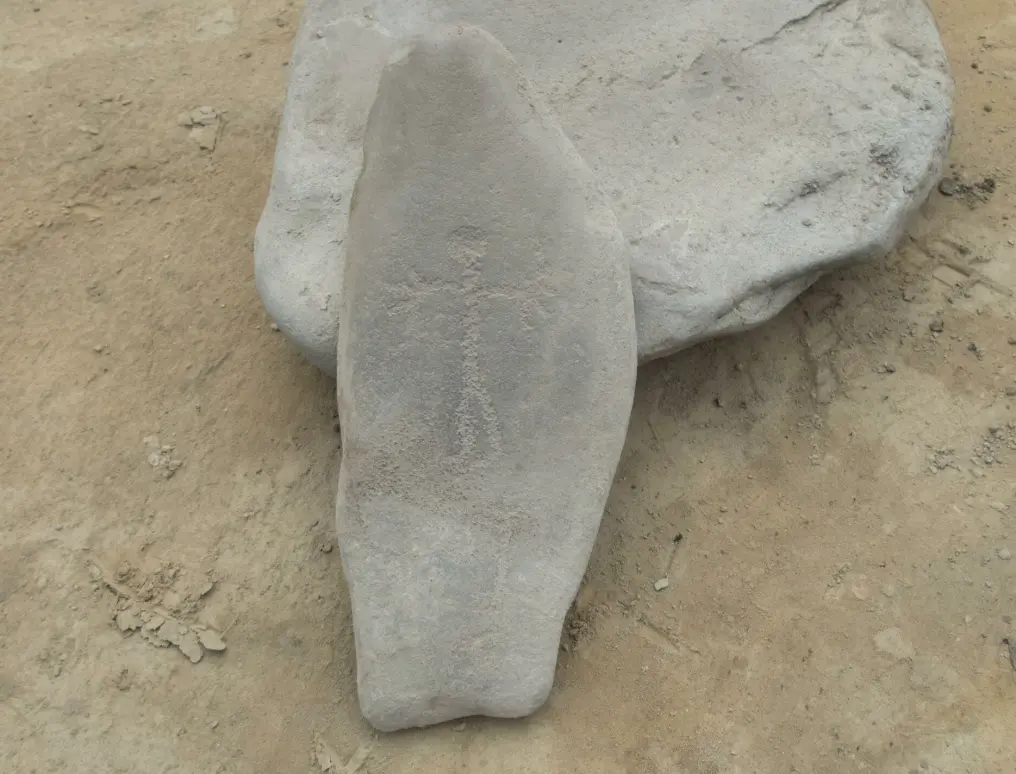

The carved stone shortly after its discovery. Credit: Hanne Bryn / NTNU University Museum

Ritual Practices and Symbolism

The layout of the site suggests it was not a residential area but rather a gathering place for ceremonies, rituals, and burial practices. Cooking pits and traces of bronze casting were also discovered, hinting at communal feasts or offerings.

“The combination of burial mounds, carved stones, and the portable engraving strongly points to ritual use,” Bryn explained. “This was a site of spiritual importance where people connected with their ancestors and the natural world.”

Was the Site in Use When Disaster Struck?

One of the lingering mysteries is whether the site was still active at the time of the landslide. The cremated remains date to the same period, but no direct evidence of people being caught in the disaster has been found.

“It wasn’t a Pompeii,” Bryn noted, referencing the Roman city buried in volcanic ash. “There are no signs of sudden abandonment, but it’s possible the community was still using the site when the clay slide covered it.”
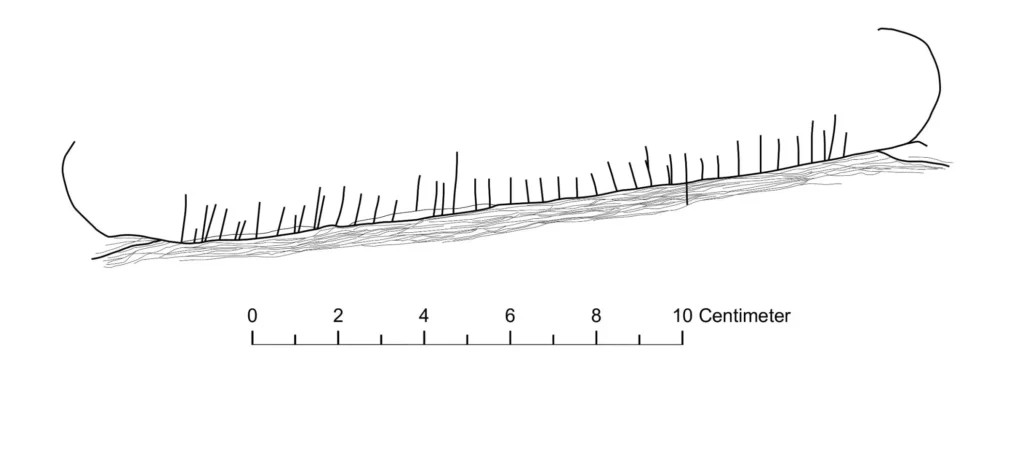
Drawing of the carved boat on the small stone. Image Credit: Kristoffer R. Rantala / NTNU University Museum

A Rich Bronze Age Landscape

Gauldal and the surrounding region are known for Bronze Age rock carvings, particularly depictions of ships and hunting scenes. Similar engravings have been found near Gaulfossen and on nearby plateaus, suggesting the valley was an active ritual landscape thousands of years ago.

“This whole area was culturally significant during the Bronze Age,” Bryn said. “The concentration of carvings and burial sites shows that it was a gathering place for religious activity.”

Future Excavations

Excavations are ongoing, as Bryn and her team continue to investigate a plateau just above the original site. With every new find, archaeologists hope to piece together more of the puzzle about how ancient Norwegians lived, worshipped, and remembered their dead.

For now, the portable carved stone stands out as a singular discovery—an object that survived disaster and time, carrying with it the echoes of ritual, belief, and human creativity from 3,000 years ago.

Science Norway

Cover Image Credit: Drone view of the 2017 excavation in Gauldal Valley. Kristin Eriksen / NTNU University Museum

Related Articles

Archaeologists unearth 600,000-year-old evidence of Britain’s early inhabitants

22 June 2022

22 June 2022

New finds have indicated that some of Britain’s earliest people lived in the Canterbury suburbs. According to the research, led...

A rare statue of K’awiil, Mayan god of Lighting have uncovered in Mexico

1 May 2023

1 May 2023

In southeastern Mexico, archaeologists uncovered a rare sculpture of a powerful Mayan god near the path of a large-scale rail...

Archaeologists Discovered Remarkably Preserved Shrines inside the Assyrian Temple of Ninurta, in Nimrud

29 December 2024

29 December 2024

Recent archaeological work in Nimrud, led by the Penn Museum in collaboration with Iraqi archaeologists, has uncovered two remarkably well-preserved...

A Celtiberian city more than 2000 years old found in Spain

16 July 2023

16 July 2023

The Polytechnic University of Madrid announced the discovery of a Roman camp and the Celtiberian city of Titiakos in the...

Rare Roman Legionary Helmet Looted from Serbia Appears in U.S. Auction

23 October 2025

23 October 2025

Rare Roman legionary helmet sparks international debate over cultural heritage and illicit antiquities trade A rare Roman legionary helmet of...

Stone reliefs describing the Persian-Greek wars were found in the ancient city of Daskyleion in northwestern Turkey

16 August 2021

16 August 2021

A relief depicting a fifth-century BC battle between the Greeks and Persians was discovered in the ancient city of Dascylium...

Unbroken After 10,000 Years: Lake Biwa in Japan Unveils One of the World’s Oldest Pottery Artifacts

26 November 2025

26 November 2025

A team of Japanese researchers has announced a remarkable archaeological discovery at the bottom of Lake Biwa: a nearly intact...

A shipboard 14th-century cannon found off the Swedish coast may be the oldest in Europe

14 September 2023

14 September 2023

An international research team led by maritime archaeologist Staffan von Arbin of the University of Gothenburg has confirmed that a...

Archaeologists Uncover Extensive Ancient Irrigation Network in Eridu, the World’s First City

8 March 2025

8 March 2025

Recent research by a multidisciplinary team of archaeologists and geologists has revealed that the Eridu region of southern Mesopotamia, inhabited...

When Stones Speak of Faith: The Most Significant Religious Archaeological Discoveries of the Last Decade

13 July 2025

13 July 2025

In a world where ancient faith still echoes beneath our feet, the most significant religious archaeological discoveries of the last...

The earliest human remains 11,000-year-old discovered in northern Britain

25 January 2023

25 January 2023

An international team of archaeologists at the University of Central Lancashire (UCLan) has discovered 11,000-year-old human remains in the Heaning...

Two Altars Used for Blood Sacrifices and Divinations Discovered in the Ancient Thracian City of Perperikon

14 September 2024

14 September 2024

In the ancient Thracian city of Perperikon, partly carved into the rock in the Eastern Rhodope Mountains of Bulgaria, two...

A 2,000-year-old whistle was found in a child’s grave in the ruins of Assos, Turkey

18 October 2022

18 October 2022

A terracotta whistle believed to be 2,000 years old from the Roman era and placed as a gift in a...

Turkey’s Urartian Altıntepe Castle transforms into open museum

25 May 2022

25 May 2022

Altıntepe Castle, one of the most important centers of the Urartians and the Eastern Roman Empire, is now set to...

An important discovery in Haltern: Mini temples and sacrificial pit discovered in Roman military encampment

16 November 2023

16 November 2023

Archaeologists from the Westphalia-Lippe Regional Association (LWL) have found remains of the foundations of two mini Roman temples and a...