
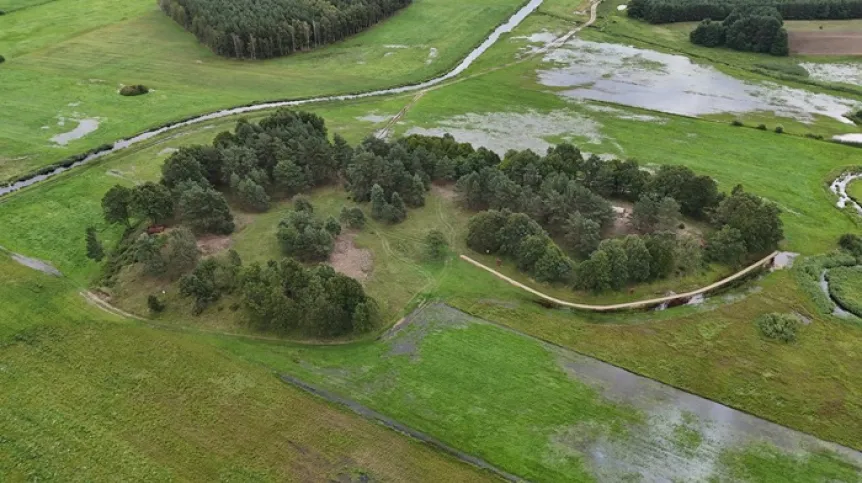
Archaeologists in Poland have made a fascinating discovery that sheds new light on Celtic presence and medical practices in ancient Central Europe. A rare Celtic skull trepanation tool, alongside evidence of iron casting, has been unearthed at the “Łysa Góra” archaeological site in Mazowsze, located in the Chorzele municipality. The find suggests that among the Celts who settled in this region were individuals skilled in medicine and metallurgy.
The research, led by Dr. Bartłomiej Kaczyński of the State Archaeological Museum in Warsaw in collaboration with the Faculty of Archaeology at the University of Warsaw, marks a major milestone in the exploration of Celtic influence in northern Poland.
A Discovery Rarer Than a Celtic Helmet
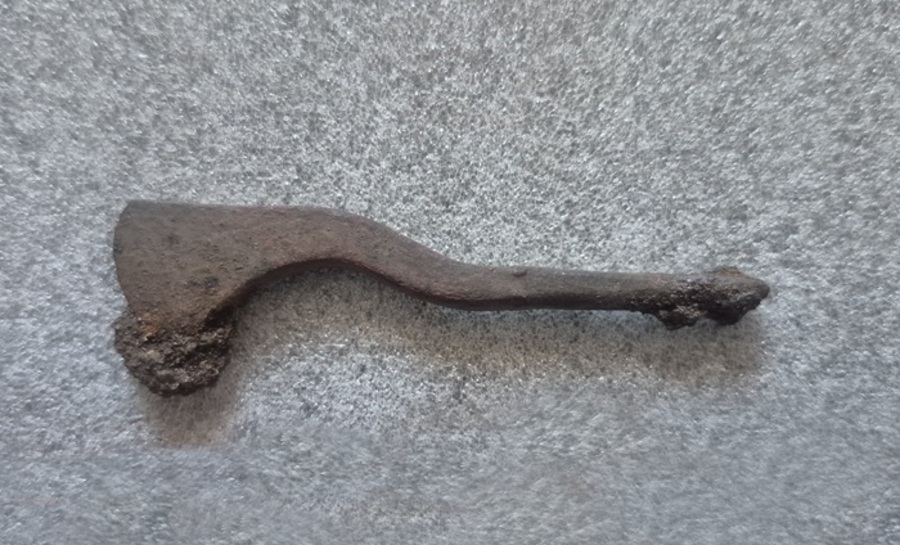
For the past two seasons, the excavation team has been studying artifacts from a local settlement tied to the Western Baltic Barrow culture, where traces of Celtic occupation continue to emerge. Last year, archaeologists discovered a unique Celtic helmet from the 4th century BCE. Now, they have uncovered something even rarer—a surgical instrument used for trepanation, a procedure involving drilling or scraping the skull.
“This is an even rarer discovery than the Celtic helmet,” said Dr. Kaczyński. “Such tools are known only from a few Celtic sites in Central and Southern Europe—Romania, Croatia, and Austria.”
Initially, researchers were unsure of the tool’s function. A detailed study of specialist literature revealed that it was a type of scalpel—a blade extending into a spike that would have been mounted on a wooden handle.
Evidence of an Ancient Healer or Druid
The discovery points to a fascinating possibility: the Celts who traveled through Mazowsze may have brought along a healer or druid. According to Dr. Kaczyński, “The group likely included a person specializing in medical procedures. They probably followed ancient trade routes, carrying not only the helmet and other La Tène-style artifacts but also medical instruments. Perhaps this healer practiced herbal medicine, possessing tools that were both practical and symbolic.”
Such tools suggest that ancient Celtic medicine might have blended ritual and healing, revealing a culture where science and spirituality intertwined.
Forging the Past: Iron Casting on Łysa Góra
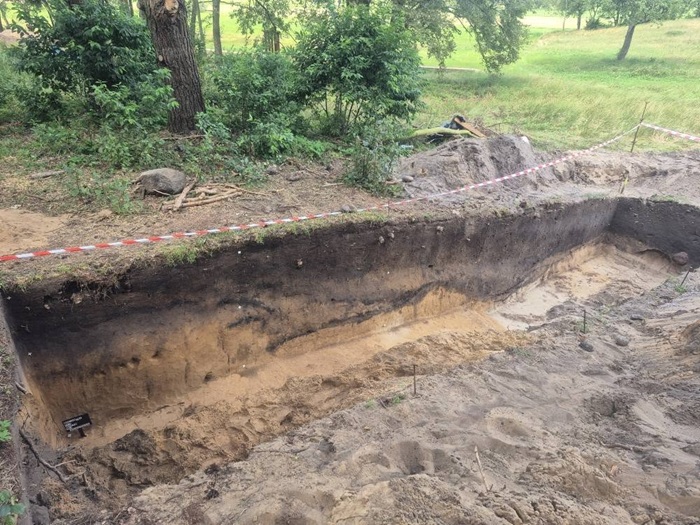
Excavations on the northeastern part of Łysa Góra also revealed evidence of iron production. Archaeologists discovered fragments of so-called bowl-shaped slags and a small iron anvil used for crafting metal tools.
“The anvil looks like a cube fixed to a tree stump. It was used to forge small iron tools,” explained Dr. Kaczyński. “This suggests that some of the iron items we found at Łysa Góra were made on-site. The Celts who settled here might have brought not only a healer but also a blacksmith familiar with Celtic metallurgical traditions.”
This combination of medical and metallurgical evidence paints a picture of a multidisciplinary Celtic community, self-sufficient in both craft and healing.
A Rich Collection of Celtic Artifacts
During the most recent excavation season, researchers unearthed numerous Celtic-origin artifacts—including brooches, spearheads, axes, and horse harness fittings such as clasps and buckles. Each item offers insight into the daily life and craftsmanship of the Celtic settlers.
The team also identified the defensive system of the ancient settlement. The southern part of the hill featured a strong palisade and moat, while the northern section had only a simple fence, likely to protect against wild animals rather than human threats.
“It appears that most of the community’s activity took place in the southern, fortified section,” noted Dr. Kaczyński.
From Excavation to Education
The site at Łysa Góra was first explored in the 1970s and 1980s, but archaeologists returned in 2024 to continue the research and help create an educational trail. After two excavation seasons, the team has completed their work and opened the trail to the public.
Visitors can now walk through Łysa Góra, view the replicas of discovered artifacts, and learn about the Celtic history of Mazowsze through educational panels.
“We are proud to open the educational path at Łysa Góra,” Dr. Kaczyński concluded. “It’s a chance for everyone to see the treasures of Celtic heritage and understand the fascinating history of this region.”
A Window into Celtic Poland
The discovery of the trepanation tool and evidence of ironworking at Łysa Góra provides rare insight into how Celtic traditions merged with local cultures in northern Poland. It offers a glimpse into a time when medicine, metallurgy, and mysticism coexisted—illuminating the ingenuity and adaptability of one of Europe’s most intriguing ancient peoples.
Cover Image Credit: Łysa Góra archaeological site, Mazowsze region. Credit: Dr. Bartłomiej Kaczyński
