
20 January 2026 The Future is the Product of the Past

Rare Medieval Seal of Basel Cathedral Cantor Found From the Rhine in Basel

Rare, well-preserved medieval seal of Basel Cathedral cantor Rudolf Kraft discovered in the Rhine, alongside Roman coins and 19th-century bath remains.

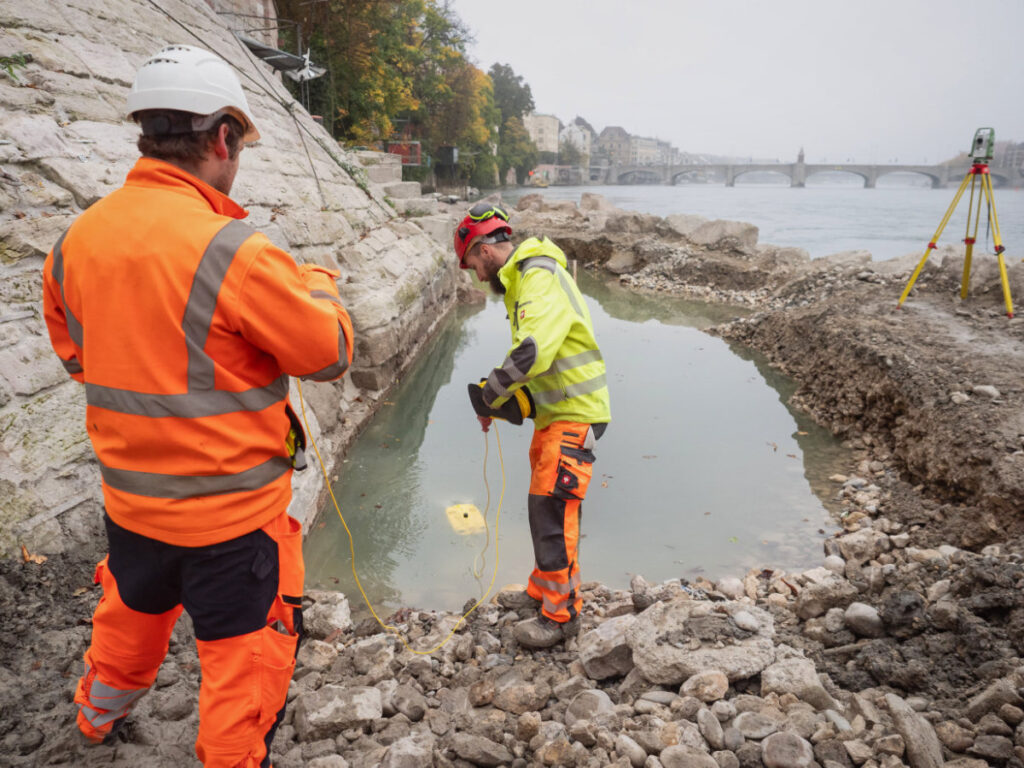
A routine engineering project beneath the iconic Pfalz terrace in Basel has turned into an archaeological sensation. During underwater restoration work along the Rhine, researchers uncovered a remarkably well-preserved late medieval seal stamp belonging to Domkantor Rudolf Kraft—a discovery that is already being hailed as one of the most important finds in recent years.

A Medieval Treasure: The Seal of Domkantor Rudolf Kraft

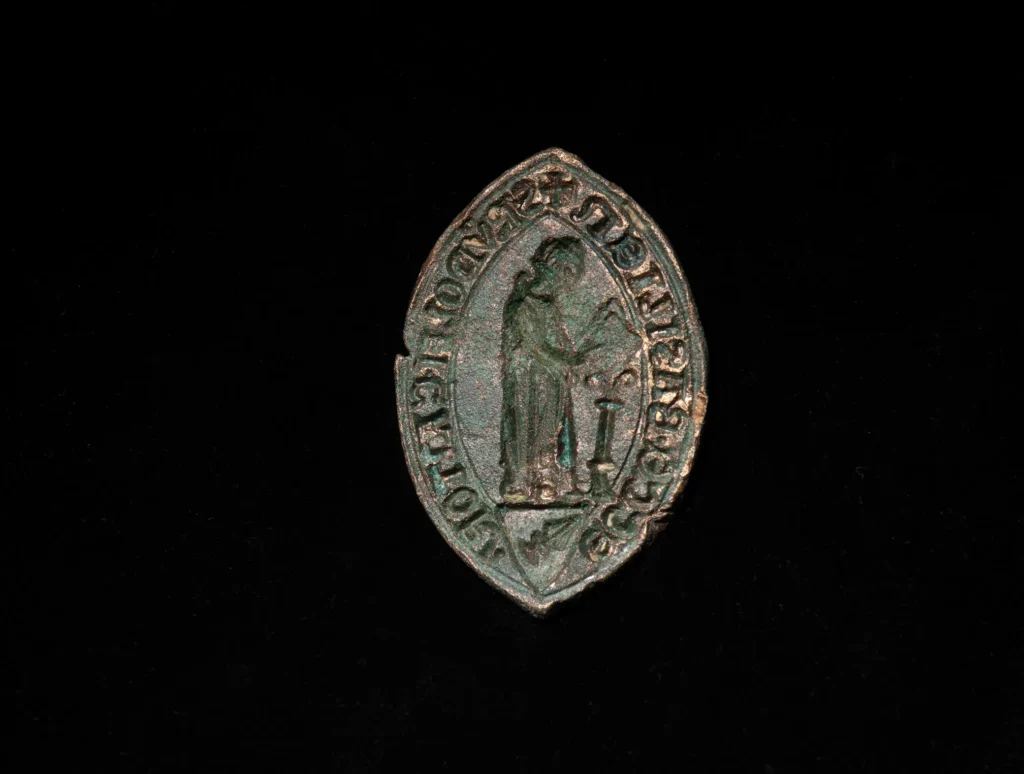
The highlight of the discovery is a 4.8 cm brass seal stamp bearing the inscription «ECCE(LESIA). BASILIEN(SIS) + S(IGILLVM) RVDOLFI.CANTORI». Its emblem, marked with a distinctive boar spear, identifies it as the personal seal of Rudolf Kraft, who served as a Domkantor—a cathedral cantor of Basel—between 1296 and 1305.

In medieval church structures, a cathedral cantor held a prominent and respected position. Beyond leading liturgical singing, the cantor often oversaw the musical education of clergy, managed parts of the cathedral’s administrative life, and played a key role in organizing religious ceremonies. The office combined musical authority with institutional responsibility, making it central to the spiritual and cultural life of the medieval cathedral chapter.

Finding such a complete and beautifully preserved seal in an underwater context is exceptionally rare. The stamp not only represents a personal artifact from one of Basel’s medieval ecclesiastical officials but also provides a tangible connection to the institutional history of the Basler Domkapitel. Archaeologists consider the discovery a “stroke of luck” that sheds fresh light on the city’s religious and administrative past.


📣 Our WhatsApp channel is now LIVE! Stay up-to-date with the latest news and updates, just click here to follow us on WhatsApp and never miss a thing!!


Rare, well-preserved medieval seal of Basel Cathedral cantor Rudolf Kraft discovered in the Rhine. Credit: Philippe Saurbeck, Archäologische Bodenforschung Basel

Roman Coins Resurface After More Than 1,600 Years

The underwater investigations also revealed several Roman coins, including a well-preserved silver siliqua of Emperor Gratian, minted between AD 375 and 378. Although small in size, these objects offer valuable insight into ancient trade routes, river traffic, and daily life along the Rhine.

This stretch of river has produced spectacular finds before. During the low water of the winter of 1932/33, 580 Roman coins and numerous medieval objects emerged, underscoring the archaeological richness of the site.

19th-Century River Life Rediscovered

In addition to ancient and medieval artifacts, the excavation uncovered remnants of Basel’s early modern history. Sediment removal exposed parts of the first Basel outdoor swimming facility, built in 1831 and known as the Pfalzbadhysli. An iron pile shoe—once used to anchor a wooden support post—recalls a time when the Rhine was evolving from a transport artery into a space for leisure and recreation.

The three layers of discoveries—Roman, medieval, and early industrial—reveal how the river served different roles across the centuries.

Cutting-Edge Underwater Archaeology

To document and recover the fragile objects, the Archaeological Service of Basel-Stadt used underwater cameras, drones, and metal detectors. These tools make it possible to explore the difficult zone between riverbank and riverbed, an area shaped by centuries of currents, sedimentation, and human activity.

A 2,000-Year Chronicle Beneath the Waterline

The discoveries at the foot of the Pfalz illustrate how a single stretch of riverbank can hold an extraordinary volume of historical information. From Roman silver, to a medieval ecclesiastical seal, to Basel’s first public riverside bath, the site offers an unmatched cross-section of local urban life across two millennia.

As restoration work continues, archaeologists remain optimistic: the Rhine may yet reveal more secrets—and each new find has the potential to reshape our understanding of Basel’s past.

Archäologische Bodenforschung Basel

Cover Image Credit: David Roth, Archäologische Bodenforschung Basel

Related Articles

Zeus Temple’s entrance was found in western Turkey’s Aizanoi Ancient City

31 July 2021

31 July 2021

During recent digs, the monumental entrance gate of the Zeus Temple sanctuary in the ancient city of Aizanoi, located in...

Ancient Thracian Royal Palace Uncovered in Vratsa, Bulgaria: Possible Seat of the Powerful Triballi Ruler

14 July 2025

14 July 2025

Archaeologists have unearthed what may be one of the most significant Thracian discoveries of the 21st century: the remains of...

Stone Age Architectural Marvel Unveiled Deep in the Baltic Sea: It may be one of the largest known Stone Age structures in Europe

13 February 2024

13 February 2024

Hiding deep beneath the Baltic Sea, an architectural wonder of the Stone Age has been discovered by researchers. This megastructure,...

Friendly Fire: Lost Battlefield from 1758 Found Near Fort Ligonier

16 July 2025

16 July 2025

A foggy evening in November 1758 nearly cost George Washington his life in a friendly fire skirmish between two groups...

A 2,000-year-old ancient “mirror” throws light on aristocratic life in China

17 May 2022

17 May 2022

Archeologists in Beijing have successfully reconstructed a 2,000-year-ago dressing mirror once cherished by the high nobility during the Han Dynasty....

2,200-Year-Old Satyr Mask Unearthed in Phanagoria Confirms Existence of Ancient Greek Theater

26 September 2025

26 September 2025

First tangible evidence of Greek theater in the Black Sea colony sheds light on the cultural life of the Bosporan...

Restoration of the Duomo of Florence has revealed original polychrome paint

1 December 2022

1 December 2022

During the restoration of the Porta dei Cornacchini and the marble cladding of the northern side of Florence’s Duomo, extensive...

A new study reveals, Anglo-Saxon Kings were generally vegetarian, but peasants treated them to huge meat feasts

22 April 2022

22 April 2022

Very few people in England ate large amounts of meat before the Vikings settled, and there is no evidence that...

KIŠIB: A Digital Archive From 80,000 Mesopotamian Seals is Being Created

19 December 2024

19 December 2024

Over the next 16 years, a research team from the Institute for Near Eastern Archaeology at the Free University of...

Famous Egyptologist Zahi Hawass Wants to See Hieroglyphs as an İntegral Part of The Curriculum

23 February 2021

23 February 2021

The Egyptian council of ministers is discussing the introduction of archaeological and tourist materials in the education curriculum to help...

A courtesan ‘hetaira’ tomb was discovered in a burial cave during excavations in Via Hebron

27 September 2023

27 September 2023

During excavations in the Via Hebron in Jerusalem, a burial cave containing the tomb of a courtesan (hetaira in Ancient...

2700-year-old Ancient Blacksmith Workshop Unearthed in Oxfordshire

6 February 2024

6 February 2024

Archaeologists have uncovered a “master blacksmith’s” Iron Age workshop in South Oxfordshire, a local government center in the ceremonial county...

2000-Year-Old Roman Origins Confirmed for Elche’s Monumental L’Assut de l’Argamassa Dam

17 May 2025

17 May 2025

An archaeological research project has unveiled that the imposing L’Assut de l’Argamassa dam in Elche, Spain, long suspected to be...

“Exceptionally rare” gold sword pommel given to Scottish national museums

24 October 2022

24 October 2022

An “exceptionally rare” solid gold sword pommel found by a metal detectorist near Blair Drummond, Stirling, has been acquired by...

The easternmost Roman aqueduct in Armenia was discovered

19 November 2021

19 November 2021

Archaeologists from the University of Münster and the National Academy of Sciences of the Republic of Armenia have discovered remains...