
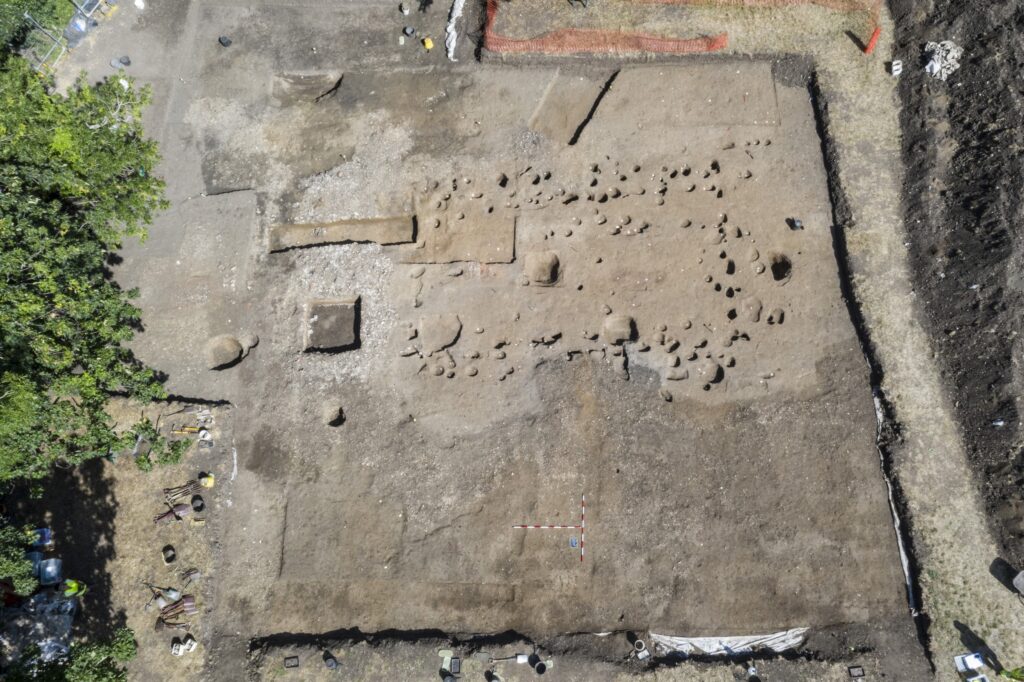
An Anglo-Saxon monastery beside the River Thames may have served as Britain’s earliest known hospital, caring for people with terminal illnesses and serious injuries centuries before organised medical care was thought to have existed in the country.
The evidence comes from excavations at Cookham Abbey in Berkshire, where archaeologists from the University of Reading have uncovered a cemetery containing people who suffered from tuberculosis, cancer, severe infections and disabling injuries.
Dating to the eighth and ninth centuries, the burials are around 200 years older than the earliest hospitals traditionally associated with post-Norman Britain. Researchers are now investigating whether sick people travelled to the monastery seeking treatment, shelter and care during the final stages of their lives.
A cemetery marked by disease and injury
Excavations at Cookham have uncovered around 80 burials, with detailed osteological analysis initially carried out on 23 individuals.
Many of the skeletons displayed unusual or severe health conditions. Nine showed signs of trauma, apparently caused by accidents. One individual may have undergone surgery to the skull, while two had bone changes associated with tumours. Other remains revealed osteoarthritis, developmental disorders and impaired mobility.
One person had a shortened leg and may have required a crutch. Several skeletons displayed signs consistent with pressure sores, suggesting that the individuals had spent extended periods lying down before death. Such evidence is particularly significant because prolonged immobility would probably have required assistance from other members of the community.
The latest university announcement also refers to people suffering from cancer and serious infections receiving end-of-life care at the monastery. Professor Gabor Thomas, who leads the excavation, said the site was already known to have been a place of healing, although researchers still need to establish who the patients were and why they came to Cookham.
Were patients brought to Cookham for care?
The concentration of serious and comparatively rare diseases has raised the possibility that the cemetery did not simply serve the monastery’s permanent population.
Some of those buried there may have been local residents. Others could have belonged to the monastic community. A third possibility is that sick people travelled along the Thames to seek treatment, spiritual healing or care during the final stages of their lives.
Researchers are analysing ancient DNA and chemical signatures preserved in teeth and bones. These studies may reveal biological relationships, geographic origins, diet and the diseases that affected those buried at the site.
The results could determine whether Cookham mainly cared for its own community or attracted patients from a much wider area.
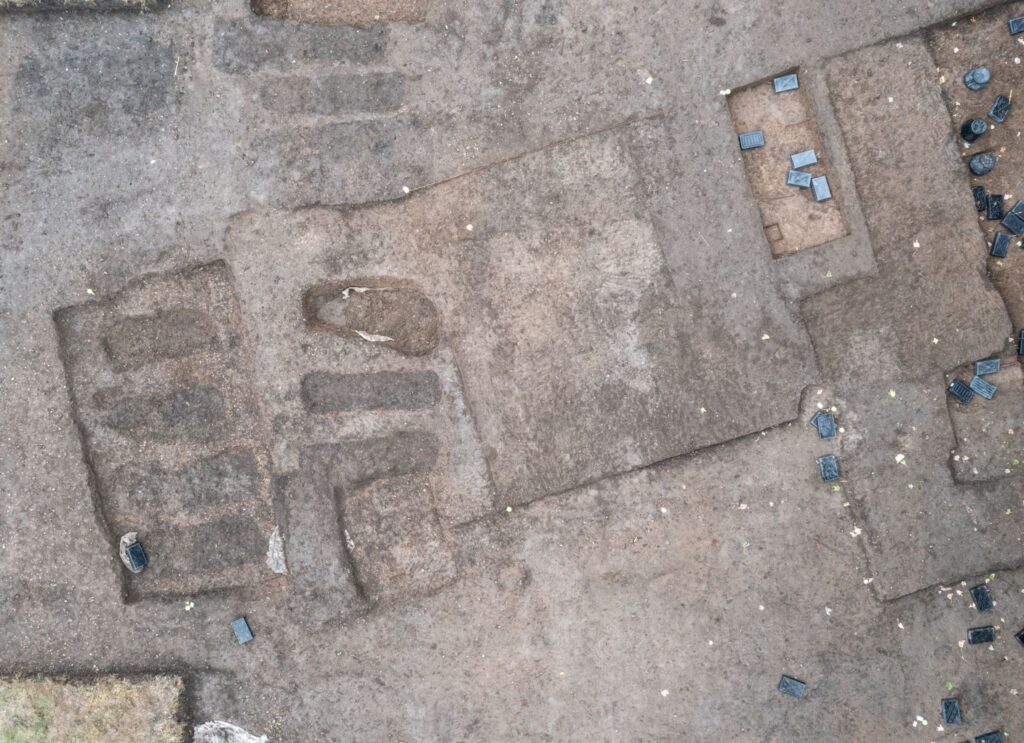
A royal monastery beside the Thames
Cookham Abbey was rediscovered in 2021 beside Holy Trinity Church after its precise location had remained uncertain for centuries.
Historical records identify it as a royal monastery governed by Queen Cynethryth, widow of King Offa of Mercia. She became abbess after Offa’s death in AD 796 and was one of the most influential women in Anglo-Saxon England.
The monastery occupied a strategically valuable position on the Thames, near the contested frontier between the kingdoms of Mercia and Wessex. The river was also one of early medieval England’s most important transport and trading routes.
Excavations have revealed streets, timber buildings, workshops, bread ovens and a waterside loading area. Archaeologists believe Cookham operated as a significant centre of production and trade, importing and exporting goods through the Middle Thames region. The settlement flourished during the eighth and early ninth centuries before apparently being abandoned toward the end of the ninth century.
The site also contains wells and the remains of what the university describes as one of England’s earliest known watermills.
Hospital, hospice or monastic infirmary?
Calling Cookham Britain’s first hospital requires caution. Archaeologists have not yet identified a purpose-built hospital ward, and the cemetery alone cannot establish exactly where or how patients were treated.
The site may instead have operated as a monastic infirmary or a hospice-like community offering food, shelter, nursing and spiritual support rather than systematic medical treatment.
Evidence for hospitals in Anglo-Saxon England is extremely limited. Most recognised medieval hospitals date from after the Norman Conquest, although researchers have long suspected that pre-Conquest monasteries maintained infirmaries and cared for sick members of their communities.
Cookham’s significance therefore lies not in proving that medical care began there, but in potentially providing unusually detailed physical evidence that an early English monastery received and supported people with severe, disabling and terminal conditions.
Excavations are continuing during the 2026 season. Further burials, scientific tests and evidence from the monastery’s communal buildings may determine whether Cookham Abbey was simply a religious settlement with an infirmary—or one of the earliest organised centres for the care of the sick in England.
Cover Image Credit: University of Reading
