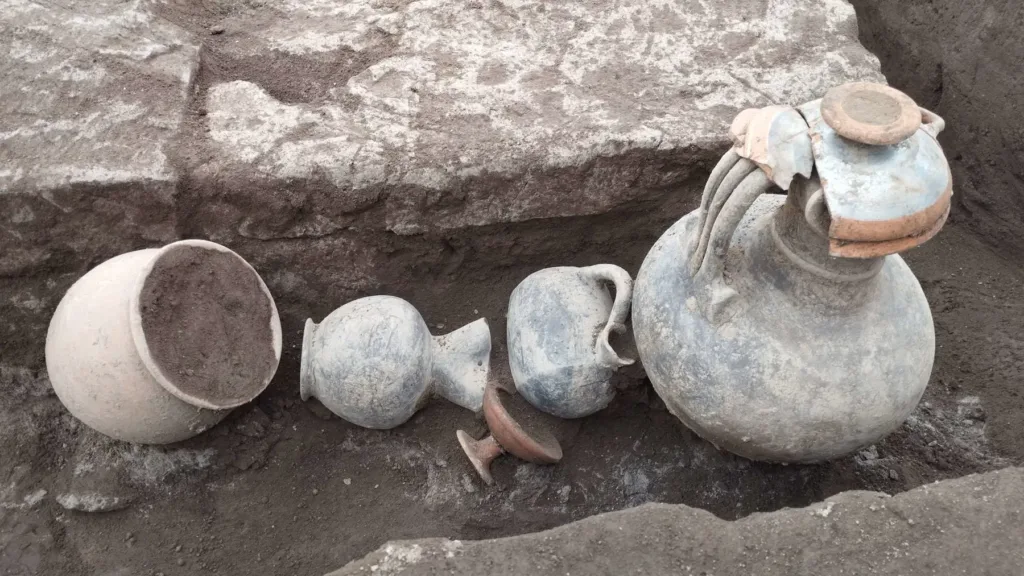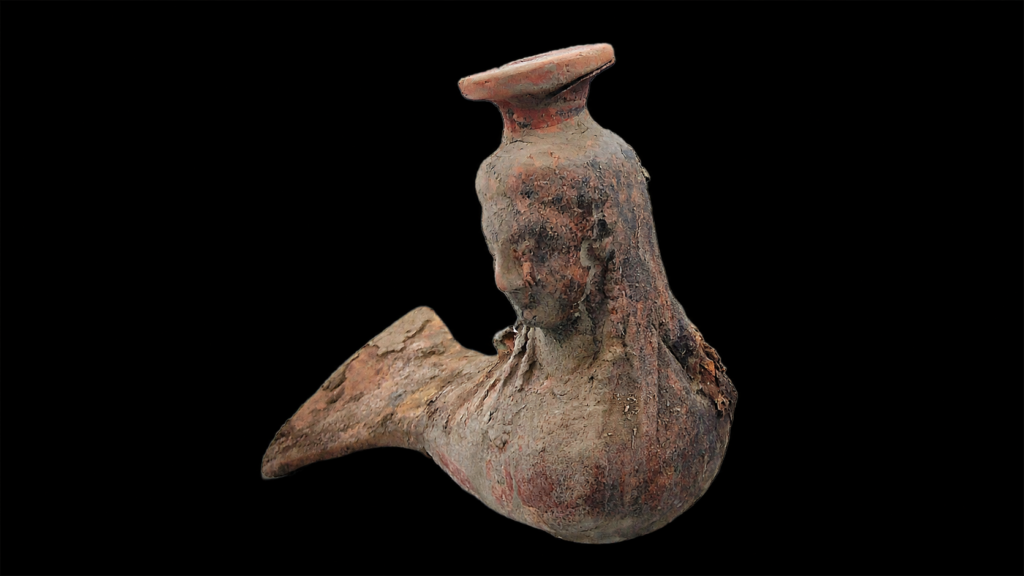
An archaic necropolis containing 85 burials has been uncovered during expansion work at the Garofalo pasta factory in Gragnano, near Naples in southern Italy.
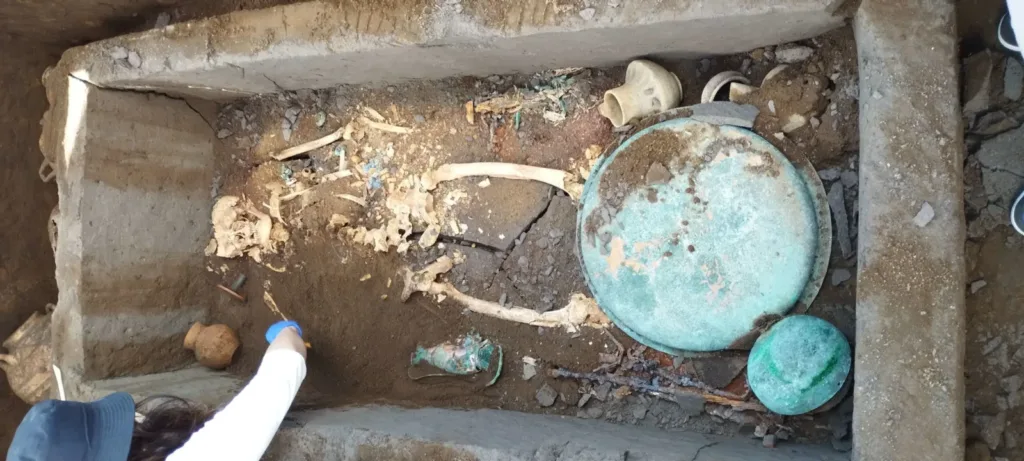
Dating to the first half of the sixth century BCE, the Gragnano necropolis has preserved not only valuable grave goods but also textiles, wooden objects, and baskets made from woven fibres. Such organic materials rarely survive for more than 2,500 years, making the cemetery an important source of information about burial customs and everyday life in pre-Roman Campania.
85 burials uncovered in Gragnano
The cemetery was discovered through preventive archaeological investigations carried out ahead of construction work at the factory on Via dei Pastai.
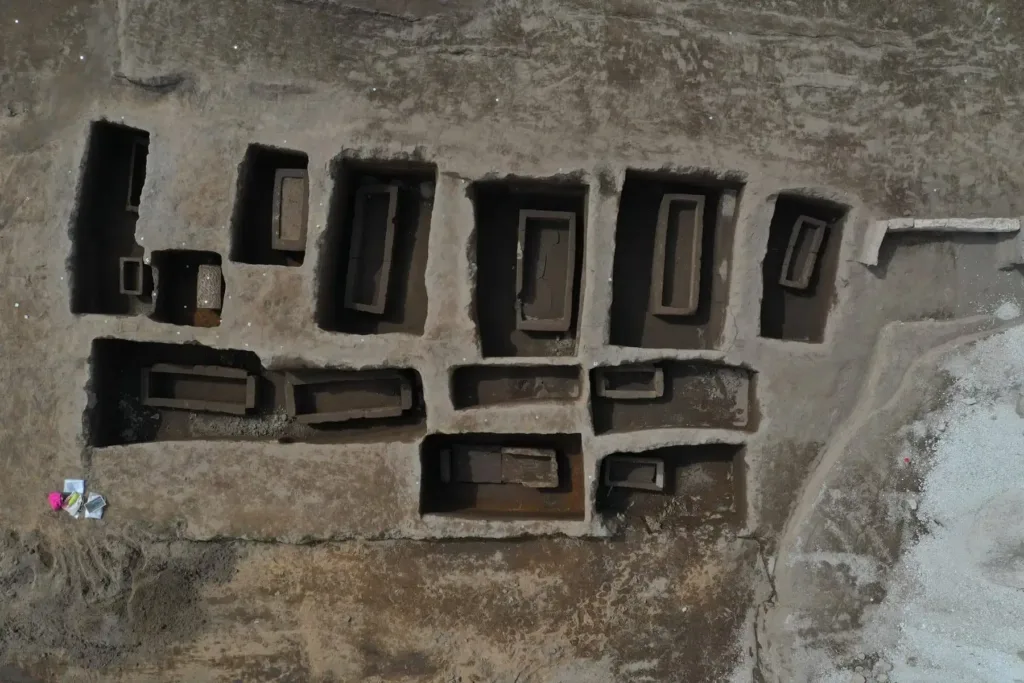
Excavations began in February 2025 and covered approximately 2,000 square metres. Archaeologists recorded 85 burials, although the examination of the human remains is still at an early stage. So far, researchers have identified 16 adults, four children and 15 infants.
The fieldwork was conducted by Geomed under the scientific direction of the Archaeology, Fine Arts and Landscape Superintendency for the Metropolitan Area of Naples. Archaeologist Francesca Mermati served as the scientific director of the investigations.
Several individuals had been placed inside funerary chests constructed from blocks of volcanic tuff. The sealed conditions inside some of these graves protected materials that would normally have decomposed, including fragments of fabric, wooden objects and woven baskets.
These remains could provide evidence about clothing, woodworking, basket production and the treatment of the dead—areas that are often difficult to reconstruct from ceramics and metal objects alone.
Luxury goods linked Gragnano to Mediterranean trade
The quality of the grave goods suggests that at least part of the cemetery was used by a wealthy and socially prominent community.
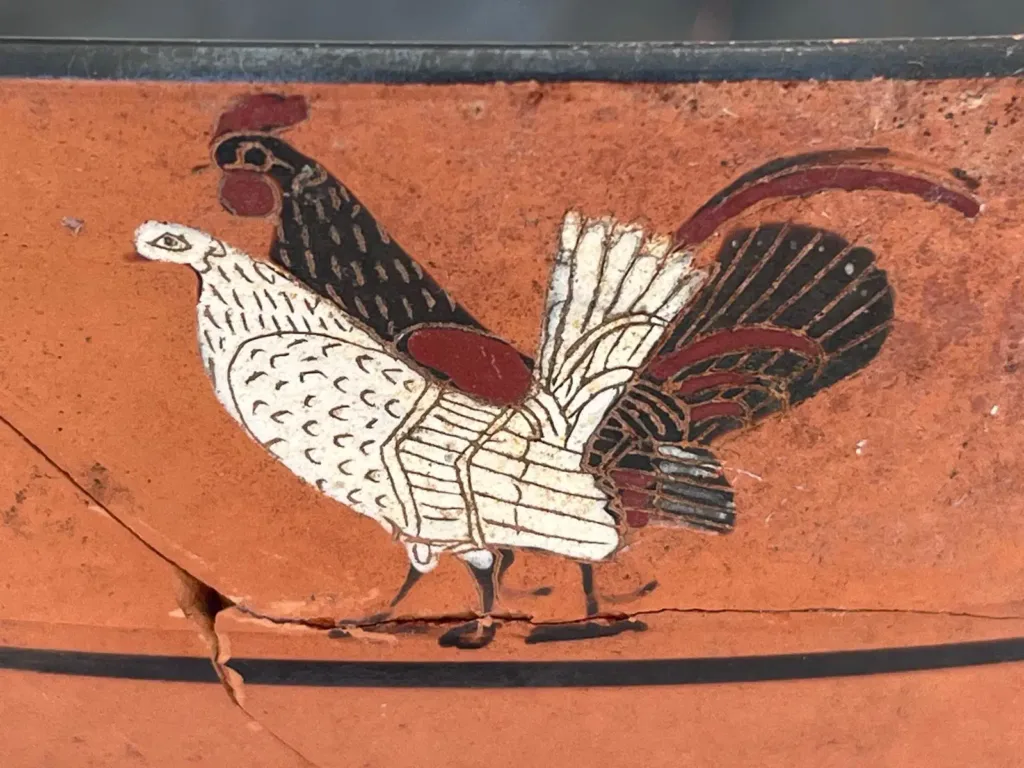
Among the finds are Egyptian scarabs associated with Naukratis, the Greek trading settlement in the Nile Delta, as well as animal-shaped amber ornaments, silver objects and bronze artefacts of Etruscan origin. Decorated pottery, jewellery, weapons and bronze dress fasteners were also recovered from the graves.
Rather than proving direct travel between Gragnano and each of these regions, the objects show that the community participated in extensive exchange networks connecting Campania with the Greek world, Egypt, Etruria and the eastern Mediterranean.
Some objects also bear alphabetic graffiti, including personal names that may identify their owners. Researchers hope these inscriptions will help clarify the cultural affiliations and commercial contacts of the people buried at the site.
An elite community of the Ager Stabianus
In antiquity, Gragnano formed part of the Ager Stabianus, the territory surrounding Stabiae and extending between the Sorrento Peninsula and the Sarno Valley.
The newly discovered cemetery dates to a period when settlements around the Bay of Naples were undergoing major economic and cultural changes. Etruscan, Greek, and local communities interacted across the region before Roman control of Campania.
The burial assemblages indicate that an elite group used funerary ceremonies to display wealth and status. Imported ornaments and luxury vessels were placed alongside the dead, while the construction of carefully sealed tuff chests required considerable labour and resources.
The discovery therefore adds evidence that the area around ancient Stabiae held a more significant position in sixth-century BCE trade and settlement networks than its later Roman remains alone might suggest.
Earlier remains beneath the cemetery
Archaeologists also identified structures and cuts beneath the necropolis dating to the Copper and Bronze Ages. These earlier remains suggest that the area had been occupied or used long before the archaic cemetery was established.
The excavation area has now been documented and is expected to be covered again, but research on the recovered material will continue.
A multidisciplinary team is conducting archaeological, bioarchaeological and archaeometric studies of the objects and human remains. Osteological and chemical analyses will examine diet, mobility, disease and living conditions among the people who inhabited the region during the sixth century BCE.
The results may eventually provide a clearer picture of the community that used the Gragnano necropolis and its place within the wider history of pre-Roman Campania.