
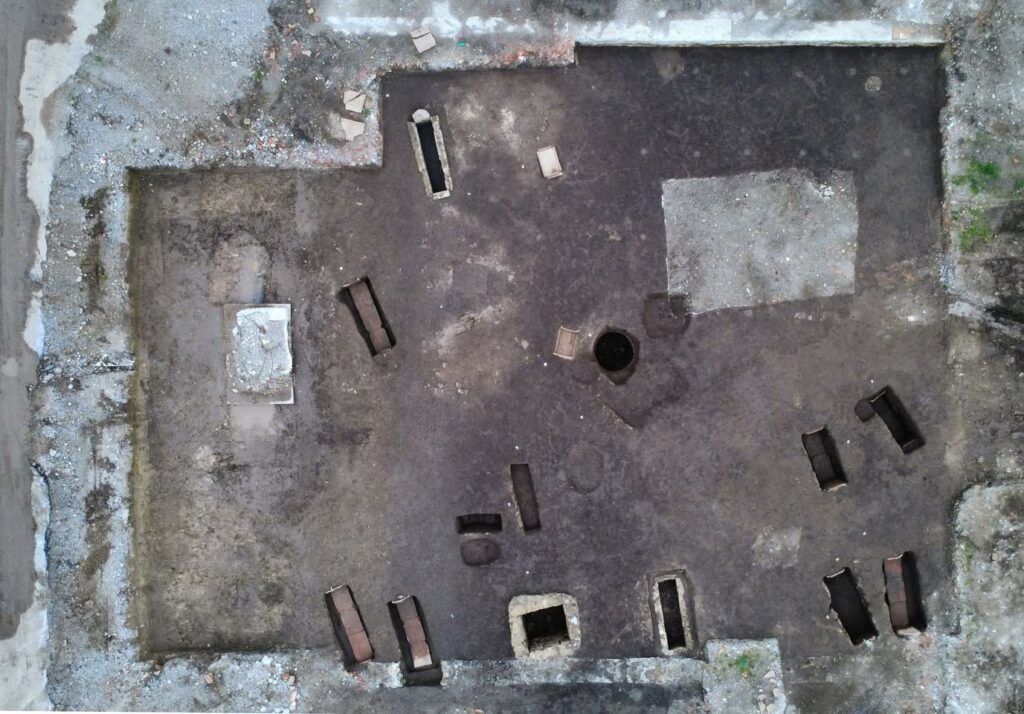
Archaeologists working in southern Italy have uncovered 34 Samnite-period tombs in the municipality of Pontecagnano Faiano, offering new insights into funerary traditions, family structures, and social symbolism in ancient Campania. The discovery was made during preventive excavations overseen by the Soprintendenza Archeologia Belle Arti e Paesaggio di Salerno e Avellino, an institution responsible for the protection of archaeological heritage in the region.
The tombs were found in an area formerly occupied by the ATI Alfani tobacco factory, where archaeologists have been investigating a section of the southern necropolis of the ancient settlement. The newly excavated graves date between the 4th and 3rd centuries BC, a period associated with the presence and cultural dominance of the Samnites in this part of southern Italy.
Decades of Archaeological Research
Archaeological research in Pontecagnano Faiano has been ongoing since the 1960s, when systematic protection and excavation efforts first began under the supervision of the heritage authorities in Salerno. Over the decades, these investigations have revealed that the site was once a major Etruscan-Campanian center, inhabited continuously from the early 9th century BC through the Roman era.
Today, archaeological work continues across several areas of the municipality. Much of the excavation activity is preventive in nature and linked to modern construction projects, including infrastructure development and private building initiatives. These investigations aim to document and preserve archaeological remains before modern transformations permanently alter the landscape.
The newly discovered burials represent another important chapter in the ongoing study of the ancient settlement and its surrounding funerary zones.
A Family-Organized Necropolis
The excavated tombs form part of the southern necropolis, a cemetery area used by the community during the Samnite period. Archaeologists determined that the burial ground was organized in family clusters, a pattern typical of necropolises in inland Campania during this era.
Most of the graves follow a relatively simple architectural model: pits dug into the ground and covered with roof-like arrangements of tiles placed in a double slope. This type of construction was widely used across the region.
However, a few tombs show variations that may reflect differences in social status or access to resources. Among the 34 burials discovered, archaeologists identified two tombs built with travertine block chambers and one constructed with a tufa stone coffin, indicating more elaborate burial arrangements.

A Remarkable Number of Child Burials
One of the most striking aspects of the discovery is the high number of child burials. Out of the 34 tombs, 15 belong to neonates and children between two and ten years old. Such a concentration provides valuable information about the demographic structure of the ancient population and the way children were integrated into funerary rituals.
The graves also reveal fascinating details through their grave goods, the objects buried alongside the deceased.
Weapons, Jewelry and Bronze Belts
The artifacts discovered in the tombs reflect patterns typical of Samnite funerary traditions. In burials identified as male, the most common objects are weapons, particularly spearheads or javelin points, symbolizing the warrior identity that characterized Samnite society.
Female burials, by contrast, contain personal ornaments, including rings and fibulae, brooch-like fasteners used to secure garments. These items often serve as gender markers in archaeological contexts.
Perhaps the most intriguing finds, however, come from the children’s graves. Archaeologists discovered large bronze belts in two tombs belonging to children aged between five and ten. Normally, such belts appear in the graves of adult male warriors, where they function as symbols of rank or social identity.
Their presence in children’s burials raises important questions for researchers. The belts could represent a symbolic inheritance of status, reflecting the social standing of the child’s family. Alternatively, they may indicate that certain aspects of identity or social role were already attributed to individuals from a very young age.
Ceramics Linked to Ritual and Banquets
Pottery found in the graves is relatively modest in quantity. Most burials contain one or two ceramic vessels, rather than extensive sets.
These vessels are typically associated with ritual or banquet contexts and include forms such as paterae (shallow libation bowls), skyphoi (two-handled drinking cups), and small cups used during ceremonial meals. Archaeologists also found lekythoi, small containers designed to hold perfumed oils or ointments used in funerary rituals.
Together, these objects suggest that the symbolic meaning of burial offerings wasoften more important than the sheer quantity of goods placed in the tomb.

Protecting and Studying the Finds
According to the Soprintendenza Archeologia Belle Arti e Paesaggio di Salerno e Avellino, excavations are still ongoing in several parts of the municipal territory. For security and preservation reasons, detailed results from these investigations will only be fully published once fieldwork and laboratory analyses have been completed.
After the research phase concludes, authorities plan to launch initiatives aimed at enhancing and presenting the discoveries to the public. These efforts may include museum exhibitions and educational projects designed to return the knowledge gained from the excavations to the local community.
A Window into Samnite Society
The newly uncovered necropolis sector highlights the extraordinary archaeological richness of the territory around Pontecagnano Faiano. More than sixty years of research in the region have gradually revealed a complex historical landscape shaped by Etruscan, Campanian, Samnite and Roman influences.
The discovery of 34 Samnite tombs—particularly the unusual child burials with bronze belts—opens new avenues for understanding social identity, family structure and ritual practices in ancient Campania.
As archaeologists continue their investigations, the site promises to deliver further insights into the lives and beliefs of the communities that inhabited this part of southern Italy more than two millennia ago.
Soprintendenza Archeologia Belle Arti e Paesaggio di Salerno e Avellino
Cover Image Credit: Soprintendenza Archeologia Belle Arti e Paesaggio di Salerno e Avellino
