
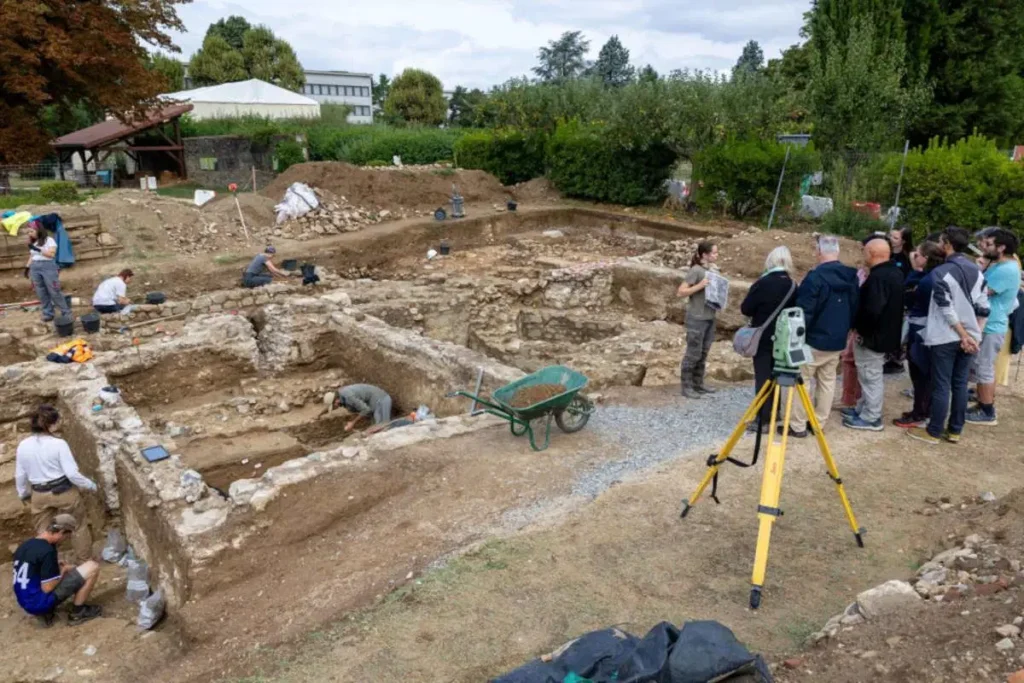
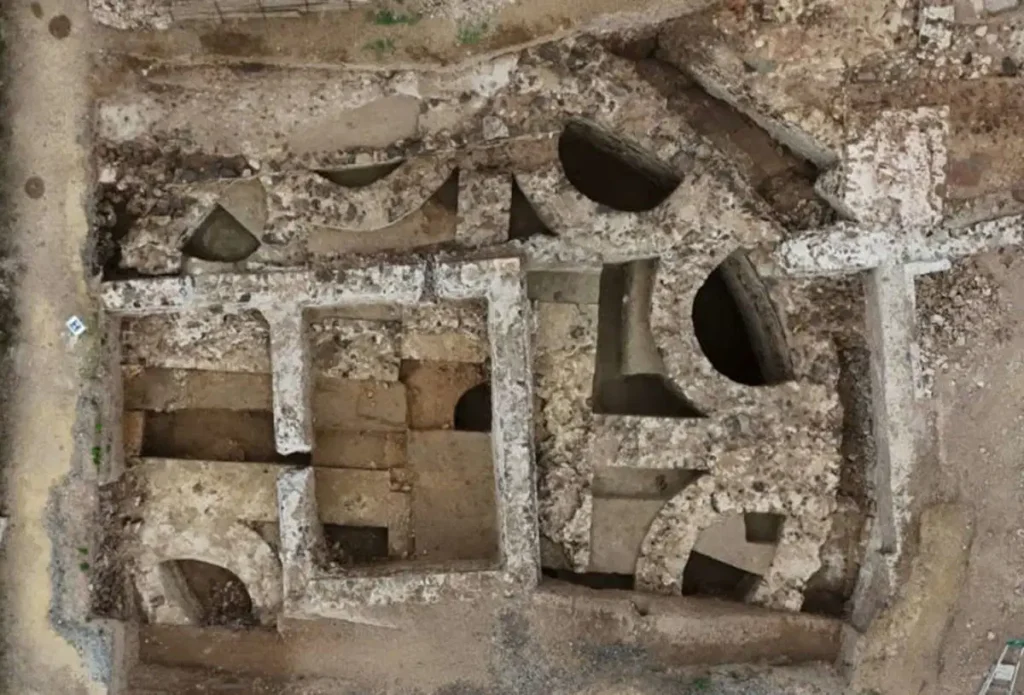
Archaeologists in France have unearthed a remarkably well-preserved Roman mausoleum in Saint-Romain-en-Gal, near Lyon, that was modeled on the famous Mausoleum of Augustus in Rome (27 B.C.–14 A.D.), the final resting place of Rome’s first emperor.
Experts describe the discovery as “exceptional,” noting that the monument’s scale and design highlight the prestige of the aristocratic figure buried there and provide a rare glimpse into the grandeur of Roman Gaul nearly 2,000 years ago.
A Tomb for the Elite, Echoing the First Emperor
The newly unearthed structure, built around A.D. 50, boasts an interior diameter of 15 meters and is believed to have risen more than six meters high. Its commanding presence would have been visible to all travelers entering Vienne, a thriving Roman colony, particularly those arriving along the Rhône River.
The choice to model the mausoleum after Augustus’ grand tomb in Rome underscores the prestige of the individual buried here. According to archaeologists, the monument likely honored a member of the aristocratic elite with strong ties to imperial authority.
“This was a person who, even in death, remained present in the world of the living,” explained Giulia Ciucci, archaeologist and scientific director of the Saint-Romain-en-Gal museum site. “The resemblance to the emperor’s mausoleum suggests a figure of significant political power and influence.”
So far, only 18 mound mausoleums have been documented across France, but this is the only circular elevation monument preserved in such remarkable condition. For archaeologists, it is not just a rare find, but also a crucial piece of evidence that links provincial Gaul more closely to the grandeur of the imperial capital.
A Discovery Witnessed by the Public
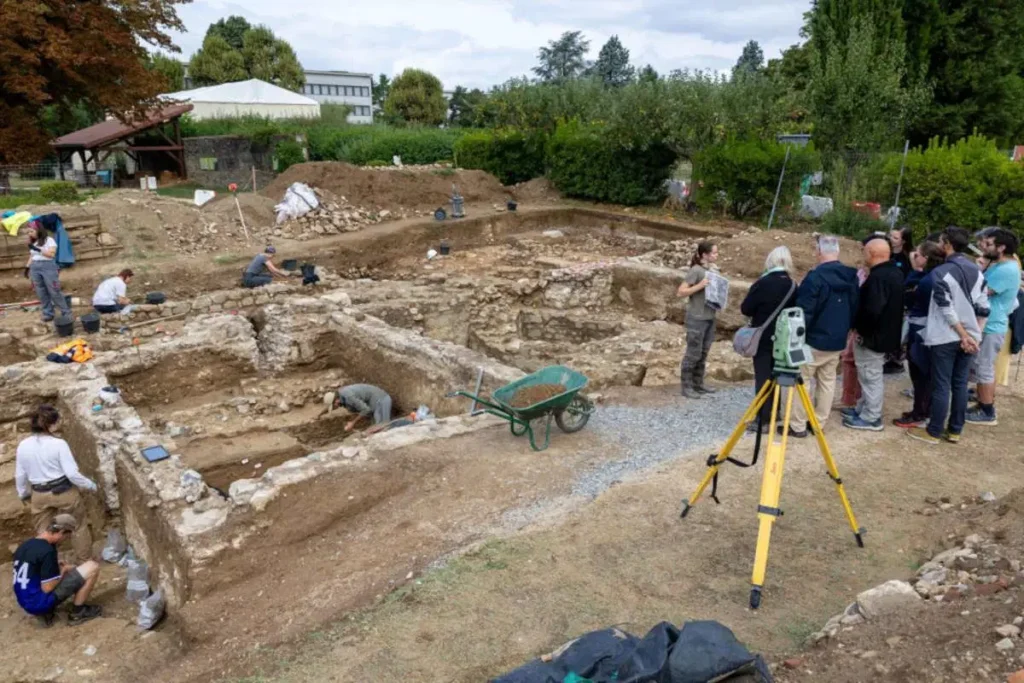
Adding to the significance of the find is the fact that it unfolded in full view of visitors, students, and residents throughout the summer excavation season.
“We have all dreamed of being there when a discovery happens,” said Martine Publié, vice-president of the Rhône department in charge of Culture and Tourism. “These excavations will leave an indelible mark not only on archaeology students but also on the visitors who watched their past come back to life.”
For Émilie Alonso, director of the departmental museum, the discovery reinforces the mission of Saint-Romain-en-Gal as a “museum on site,” where history is unearthed and exhibited in the very place it was lived. Excavations will continue in collaboration with universities in Aix-Marseille, Université de Franche-Comté, and the CNRS, extending into 2026 and 2027, with hopes of one day identifying the tomb’s occupant.
Ancient Shops Shed Light on Daily Life
While the mausoleum is the headline discovery, archaeologists also uncovered traces of three ancient shops dating from the 1st to 2nd centuries A.D. near the Northern Baths of the site. These shops were part of a commercial complex first identified in the 1980s, consisting of at least eight units.
The shops were destroyed by fire, but paradoxically, the blaze helped preserve wooden structures and artisan tools. Researchers found that two workshops were occupied by fullers, craftsmen who cleaned and strengthened wool fabrics, especially the white togas worn by Roman citizens. A third shop contained a kiln, likely used either for glassmaking or culinary purposes.
“The quality and diversity of these remains will allow us to better understand local commerce,” said Benjamin Clément, professor of Roman archaeology at the Université de Franche-Comté. “We know much about long-distance trade in this period, but it is rare to have such well-preserved evidence of everyday local economic activity.”
Reconstructing the Story of Roman Vienne
Together, the discoveries highlight the dual character of Roman society: the monumental and the everyday. The mausoleum, echoing the grandeur of Augustus’ tomb, represents power, prestige, and Rome’s political reach. The shops, meanwhile, provide a glimpse into the rhythms of daily life, where artisans labored to sustain the economy of Vienne.
By combining elite funerary architecture with traces of ordinary commerce, the excavations at Saint-Romain-en-Gal enrich our understanding of Roman Gaul as a vibrant hub of culture, trade, and political influence.
As excavations continue, archaeologists hope to solve enduring mysteries: Who was the powerful individual laid to rest in the mausoleum? How did local workshops sustain the community in relation to imperial trade networks? For now, one thing is certain—the soil of Saint-Romain-en-Gal still holds many secrets waiting to be uncovered.
Cover Image Credit: Julien Bourreau, Musée Gallo-Romain
