
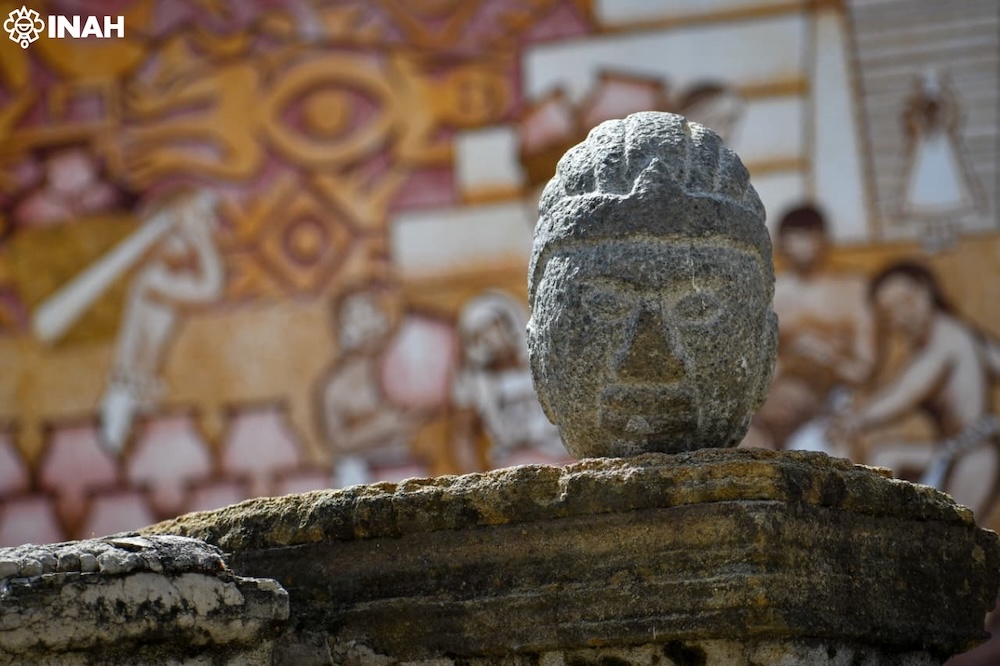
A remarkable archaeological discovery in central Mexico is offering fresh insight into ancient belief systems and cultural connections across Mesoamerica. A stone sculpture believed to represent the maize god has been recovered in San Damián Texoloc, Tlaxcala, drawing attention from researchers and historians alike. The artifact, dated to the Epiclassic period (600–900 CE), is associated with the Olmeca-Xicalanca culture and is currently under study by Mexico’s National Institute of Anthropology and History (INAH).
A Chance Discovery in Tlaxcala
The sculpture was found unexpectedly a few months ago during excavation work on private property, when a trench was being opened. The recovery effort was led by archaeologist José Eduardo Contreras Martínez of the INAH Tlaxcala Center. Such accidental finds are not uncommon in regions rich with pre-Hispanic history, but this particular piece stands out due to its artistic detail and symbolic importance.
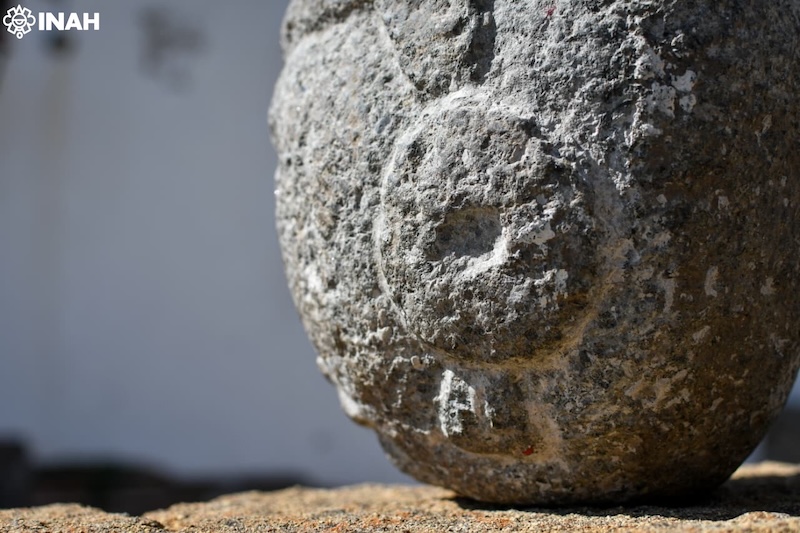
Measuring approximately 29 centimeters in height and weighing around 30 kilograms, the sculpture depicts the head of a young figure with distinctive features: an elongated skull, almond-shaped eyes, a broad nose, and full lips. These traits are linked to populations that once inhabited the southeastern Gulf Coast region of Mexico, indicating possible cultural exchange or migration patterns.
Symbolism of the Maize God
Early analysis suggests the figure represents the maize god, a central deity in Mesoamerican cosmology. Maize was not just a staple crop—it was the foundation of life, identity, and survival for many ancient civilizations. The depiction of this deity in sculpture reinforces its role as a symbol of fertility, sustenance, and political power.
The basalt stone head features intricate adornments, including a tiara with a triangular projection at its center, flanked by large circular ear ornaments with feather-like pendants. The hairstyle—long, thick, and swept backward—along with a flat base, suggests the sculpture was designed to stand upright, possibly as a standalone ceremonial object.
According to Contreras Martínez, the sculpture likely did not belong to a larger monument but instead served as an independent representation of the maize god. This aligns with known practices in the region, particularly in Cacaxtla, the capital of the Olmeca-Xicalanca culture, where maize symbolism appears prominently in murals and ceremonial art.
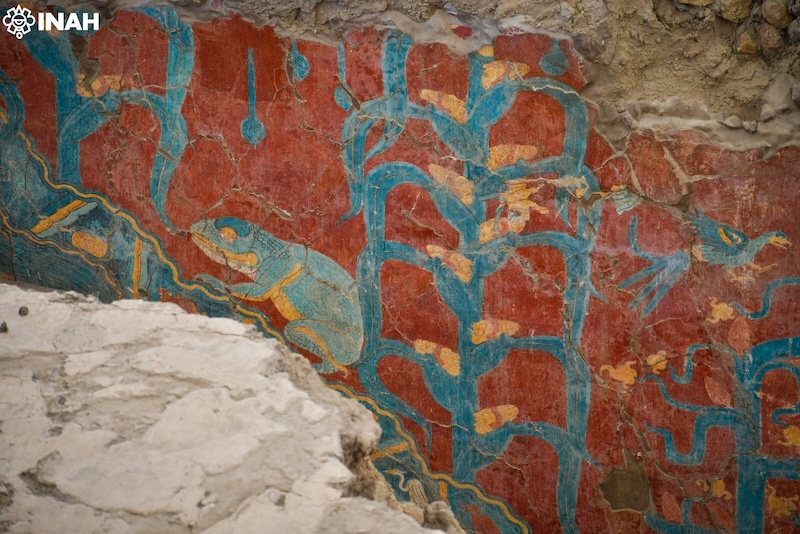
In Tlaxcala, representations of maize and its patron deities are also present in the mural paintings of Cacaxtla. Photo: Enrique Chávez, CINAH Tlaxcala.
Connections to Cacaxtla Murals and Maya Codices
The discovery gains further significance when compared to iconography found in nearby archaeological sites. In the murals of Cacaxtla—especially those in the so-called Red Temple—elongated skulls appear symbolically in place of maize cobs, surrounded by mythological beings linked to the underworld. This visual language reinforces the association between human identity and agricultural fertility.
Similarly, the famous Battle Mural at Cacaxtla depicts warriors dressed as birds—symbols tied to the maize god—being attacked by warriors associated with rain and storm deities. This narrative echoes themes found in the Maya Dresden Codex, one of the most important surviving pre-Hispanic manuscripts. On page 42 of the codex, the maize god (referred to as God E) is shown mortally wounded by Chaak, the rain god, illustrating a mythological struggle tied to agricultural cycles.
Another scene from page 34 of the same codex shows the maize god’s head positioned atop a pyramid-like structure, resting on the glyph “Kab” (earth), while figures perform rituals for rain and sustenance. These parallels highlight a shared mythological framework across different Mesoamerican cultures.
Cultural Exchange and Historical Context
The presence of maize god imagery in Tlaxcala suggests influence from the Maya region during the Terminal Classic period (650–900 CE). Researchers believe that narratives surrounding the life and death of the maize god spread widely during this time, appearing in murals, ceramics, and codices.
The triangular design of the tiara on the newly discovered sculpture may even point to older traditions. It resembles the stylized maize sprout seen in Olmec representations from the Middle Preclassic period (1000–400 BCE), indicating a long continuity of symbolic motifs across centuries.
Claudia Curiel de Icaza, Mexico’s Secretary of Culture, emphasized the importance of such discoveries: the study of this piece contributes to understanding a specific time period and culture while deepening knowledge of the historical processes that shaped Mexico’s identity.
Preservation and Ongoing Research
The sculpture is currently secured and under detailed study in the Research Section of the Ocotelulco Site Museum in Tlaxcala.
Specialists are analyzing its stylistic elements, material composition, and cultural context to better understand its origins and significance.
This discovery also underscores the importance of protecting cultural heritage, especially in areas where archaeological remains may lie beneath modern developments. INAH continues to play a crucial role in safeguarding and studying Mexico’s rich historical legacy.
New Clues About the Maize God’s Cultural Reach
Finds like the Tlaxcala maize god sculpture are more than isolated artifacts—they are pieces of a larger puzzle that help reconstruct ancient worldviews. They reveal how civilizations understood life, death, nature, and power. In this case, the sculpture reinforces the central role of maize not only as food but as a divine force intertwined with identity and governance.
As research continues, this artifact may provide new insights into the Olmeca-Xicalanca culture and its connections to broader Mesoamerican traditions. For now, it stands as a powerful reminder of the depth and complexity of ancient Mexico’s cultural heritage—and how much there is still to discover.
Cover Image Credit: Enrique Chávez, CINAH Tlaxcala.
