
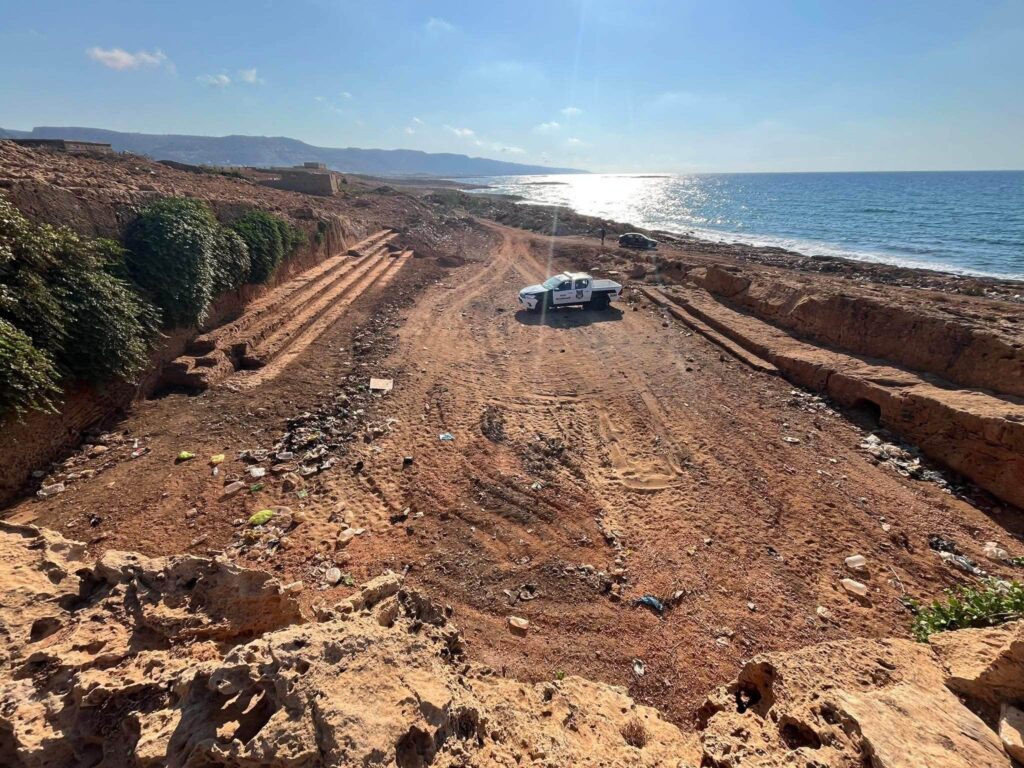
Archaeologists working at the ancient city of Apollonia on Libya’s eastern Mediterranean coast have rediscovered a rare Greek hippodrome and identified a previously unknown theater overlooking the sea.
The French Archaeological Mission in Libya announced the findings in Susa, the modern town beside the ruins. The discoveries also include sacred complexes that could reveal more about religious life in one of ancient Cyrenaica’s most important coastal cities.
Vincent Michel, director of the French mission, described the Greek racecourse as an exceptional scientific find. According to Michel, no comparable hippodrome is currently known elsewhere in Cyrenaica or across the wider Mediterranean region.
The distinction between the two discoveries is important. The seaside theater is newly identified, while the Greek racecourse has been described in the official announcement as a rediscovery. Further excavation and documentation will be needed before the date, dimensions and development phases of both structures can be established.
Rare racecourse could reshape Apollonia’s history
Hippodromes were large open-air venues used primarily for horse and chariot racing. They also served as major civic gathering places, where sporting competition, public ceremony and political display could converge.
Unlike stone theaters, however, ancient racecourses often leave limited archaeological traces. Their long tracks were usually defined by earthworks, boundary walls and architectural features that could disappear beneath later construction or centuries of sediment.
The Apollonia hippodrome may therefore provide unusually important evidence for organized sport and public entertainment in Greek North Africa. Its presence suggests that the city possessed a more extensive civic landscape than previously documented.
Michel said the structure could lead researchers to reconsider Apollonia’s position within the ancient Mediterranean. Archaeologists have not yet released a full scientific description, and details concerning the racecourse’s chronology, layout and preservation are expected to follow.
A new theater facing the Mediterranean
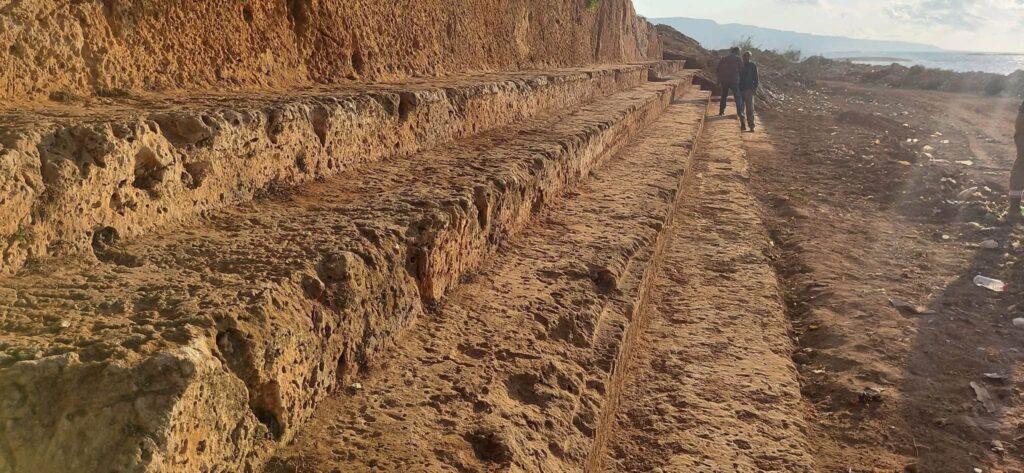
The mission also announced the discovery of a theater directly overlooking the Mediterranean Sea. Initial reports do not provide its measurements or precise date, and researchers have not yet published enough architectural evidence to determine whether it functioned as a full theater or a smaller performance building such as an odeon.
Apollonia already contains a well-known theater constructed near the shoreline. The newly identified structure therefore appears to represent an additional performance venue rather than a re-examination of the city’s familiar coastal monument.
Its location could offer new evidence for the development of Apollonia’s public spaces and the relationship between the city, its harbor and the Mediterranean coast.
The discoveries were announced in the presence of representatives from Libya’s Department of Antiquities, the Ministry of Tourism and Antiquities, local heritage organizations and members of the French archaeological team, including archaeologist Jean-Sylvain Caillou.
Apollonia began as the port of Cyrene
Apollonia developed as the harbor of Cyrene, the major Greek city founded inland by settlers from the Aegean island of Thera during the seventh century BC. Located roughly 16 kilometers from Cyrene, the port connected the agricultural and urban centers of the Green Mountain region with maritime routes across the eastern Mediterranean.
Initially dependent on Cyrene, Apollonia became independent toward the end of the Hellenistic period. It later formed part of the Cyrenaican Pentapolis, the network of five leading cities that also included Cyrene, Ptolemais, Taucheira and Berenice.
The city continued to prosper under Roman rule and remained occupied into Late Antiquity. Its surviving remains include defensive walls, bath complexes, harbor installations, Christian basilicas, residential areas and religious spaces.
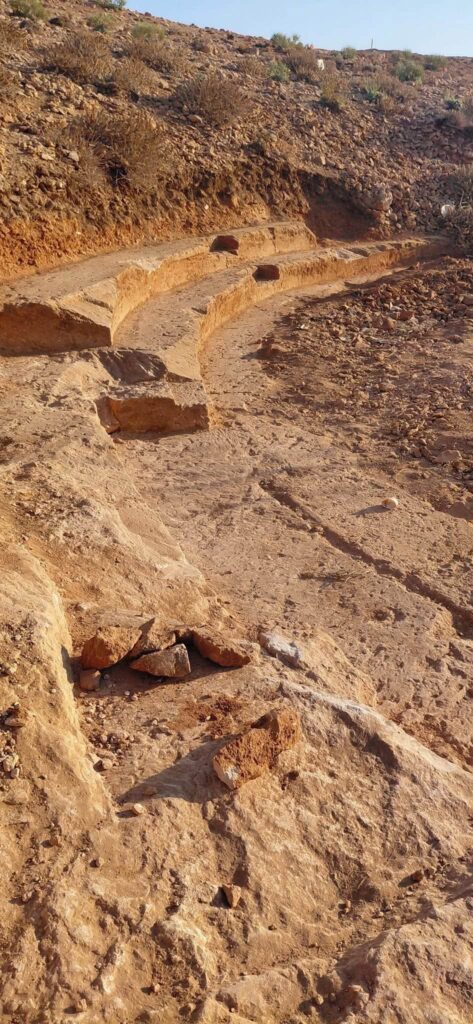
Research in the Kallikrateia district previously revealed 19 rock-cut altars and numerous religious objects dating to the fourth and third centuries BC. Archaeologists also uncovered a partially rock-cut building that may have been used for offerings or sacrifices. These finds show that sacred activity occupied an important place in the urban landscape long before Apollonia became a major Roman and Byzantine center.
Part of the ancient city now lies beneath the sea
Apollonia’s coastal position made it a successful harbor, but it has also left the ruins vulnerable to erosion and changing sea levels. According to the French Ministry of Culture, approximately one-third of the ancient city is now underwater.
Underwater investigations of the harbor began in 1986, while later work examined the fortifications, baths, cemeteries and religious districts. The French Archaeological Mission in Libya has studied Apollonia since 1976, with Vincent Michel directing the project since 2011.
The rediscovered hippodrome, seaside theater and sacred complexes now add a new chapter to that research. Together, they suggest that Apollonia’s public and ceremonial landscape was larger—and potentially more distinctive—than archaeologists had previously understood.
Mission archéologique française de Libye (French Archaeological Mission in Libya)
Cover Image Credit: Mission archéologique française de Libye via Facebook
