
9 December 2025 The Future is the Product of the Past

Archaeologists Found Evidence of a Lost Temple in Chorazin Linked to Jesus’ Healing Miracles

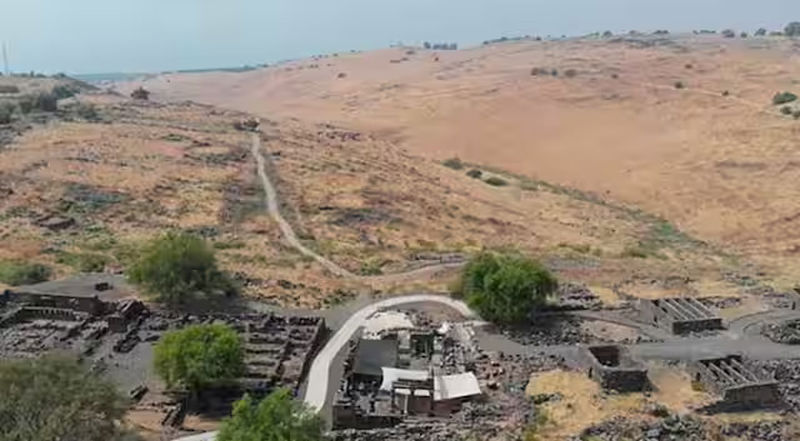
Recent archaeological excavations in Israel may have unearthed the remains of a long-lost temple, believed to be the very site where Jesus is believed to have performed miracles, and preached according to New Testament accounts.

According to various passages in the New Testament, Christ preached to his followers and healed those who were sick in a synagogue which was located in the ancient Israeli city of Chorazin. There are 3rd and 4th-century temple ruins there, but up until recently, there was no proof that the temple existed during Jesus’ lifetime. The recent discovery could confirm the existence of a temple at this site at the time of Christ.

Lead archaeologist Achia Cohen-Tavor, from Dagesh Tourist Archaeology, described the discovery as one of the most significant of his career. Upon removing the floor of the third-century synagogue, his team found large, strategically placed boulders that predated the existing structure by several centuries.

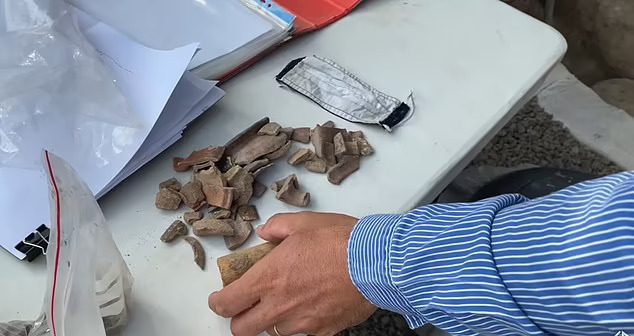
The team went to work removing the giant rocks, finding pottery, coins, and cookware nestled between them artifacts that could potentially date back to the first century.

“We can’t date the rocks themselves, but we can date the items found between them,” Cohen-Tavor explained in a video documenting the excavation.


📣 Our WhatsApp channel is now LIVE! Stay up-to-date with the latest news and updates, just click here to follow us on WhatsApp and never miss a thing!!


Pottery and coins were also found nestled between large rocks, allowing the team to date the site what they believe could be the time of Christ. Photo: YouTube Screenshot/Sergio & Rhonda in Israel

The discoveries provide crucial evidence about the first-century synagogue, although more research is needed to confirm the full significance of the site.

According to the Book of Matthew, Chorazin was a city where Jesus taught, but he later cursed it for its lack of repentance. The excavation’s findings suggest that the path leading to the synagogue might have been walked by Jesus over 2,000 years ago.

The third-century synagogue, discovered in 1905, was built from basalt stones and adorned with Jewish motifs. It featured three entrances, with the front facing south toward Jerusalem, as was customary at the time.

A notable feature of this synagogue is the “Chair of Moses,” a stone seat mentioned in the Bible, where the Torah reader would sit. This chair is mentioned in the Bible, and similar ones have been found in other early synagogues, such as on the island of Delos in Greece and at Hammath Tiberias near the Sea of Galilee. It’s likely that when Jesus taught in Galilean synagogues, He used such a seat, reserved for those in authority.

This discovery could confirm that the temple where Jesus preached and performed miracles in Chorazin was indeed real. The archaeology team is hopeful that the discovered artifacts will yield conclusive evidence.

Related Articles

On the beach of Herculaneum, a victim of the Vesuvius explosion was discovered with his bag

4 December 2021

4 December 2021

Archaeologists released haunting images Wednesday of the skeletal remains of a man buried by the eruption of Mount Vesuvius in...

Maya Archaeological site for sale on Facebook has stirred controversy in Yucatán and across Mexico

31 March 2023

31 March 2023

Over 249 hectares of land for sale on Facebook Marketplace has sparked controversy in Yucatan and across Mexico. The property,...

Manot Cave yielded evidence for ritualistic gathering 35,000 years ago, the earliest on the Asian continent

13 January 2025

13 January 2025

Archaeological research at the Manot Cave in what is now the Galilee in northern Israel has uncovered evidence of ritualistic...

‘Holy Grail of shipwrecks’ worth $20 billion in treasure to be raised from seabed

10 November 2023

10 November 2023

A treasure ship described as the “holy grail of shipwrecks” will reportedly be lifted from the sea floor where it...

A rare 2,500-year-old shipwreck found off the Greek island of Kythera

5 November 2021

5 November 2021

A rare shipwreck from the ancient era was discovered during the maritime survey for the Crete-Peloponnese subsea link. The Independent...

The DNA of 4000-years-old hazelnut shells found in Kültepe

11 November 2023

11 November 2023

Excavations conducted ten years ago at the archaeological site of Kültepe Kanesh Karum, which dates back 6,000 years and is...

Archaeologists Discover a New Pyramid from the Caral Culture, Known as South America’s Oldest Civilization

4 February 2025

4 February 2025

The team from the Caral Archaeological Zone has discovered a new pyramidal structure in the “Sector F” of the Chupacigarro...

A Monumental 3,800-Year-Old Warrior Kurgan Discovered in Azerbaijan

16 July 2025

16 July 2025

A monumental discovery has emerged from the windswept plains of Ceyranchol in western Azerbaijan: a 3,800-year-old Middle Bronze Age kurgan,...

Archaeologists unearth the long-lost homestead of King Pompey in Lynn

3 July 2024

3 July 2024

Archaeologists from the University of New Hampshire (UNH) and a historian from Northeastern University believe they might have found the...

Archaeologists Uncovered a Roman-Era Clay Theater Ticket in Ancient City of Prusias ad Hypium

1 December 2024

1 December 2024

Excavations at the ancient city of Prusias Ad Hypium in the Konuralp region of Düzce in northwestern Türkiye have uncovered...

Neo-Assyrian Writing Boards: The Role of Beeswax, Orpiment, and Carbon Black in 7th Century BC Writing Techniques

13 April 2025

13 April 2025

Recent scientific investigations into the writing boards excavated from the ancient Assyrian city of Nimrud have shed new light on...

A Roman Urn Found in Cartagena Reveals a Forgotten Governor and Rare Lot-Casting Rituals

24 November 2025

24 November 2025

The recent discovery of a Roman inscription in Cartagena has illuminated an obscured chapter of Hispania Citerior’s history, revealing the...

A 1700-year-old Roman water tunnel dug into the mountain was discovered in Adıyaman province in southeastern Türkiye

13 September 2023

13 September 2023

It was revealed that in the Besni district of Adıyaman province, located in the Southeastern Anatolia Region of Turkey, the...

Dartmoor mining discovery rewrites more than 1,000 years of history

18 July 2021

18 July 2021

A new discovery at a Dartmoor mine in England dates human activity there back potentially by more than 1,000 years....

Jomon Ruins Adding to UNESCO World Heritage List

26 May 2021

26 May 2021

An international advisory panel has recommended that a group of ruins from the ancient Jomon period in northern Japan is...