
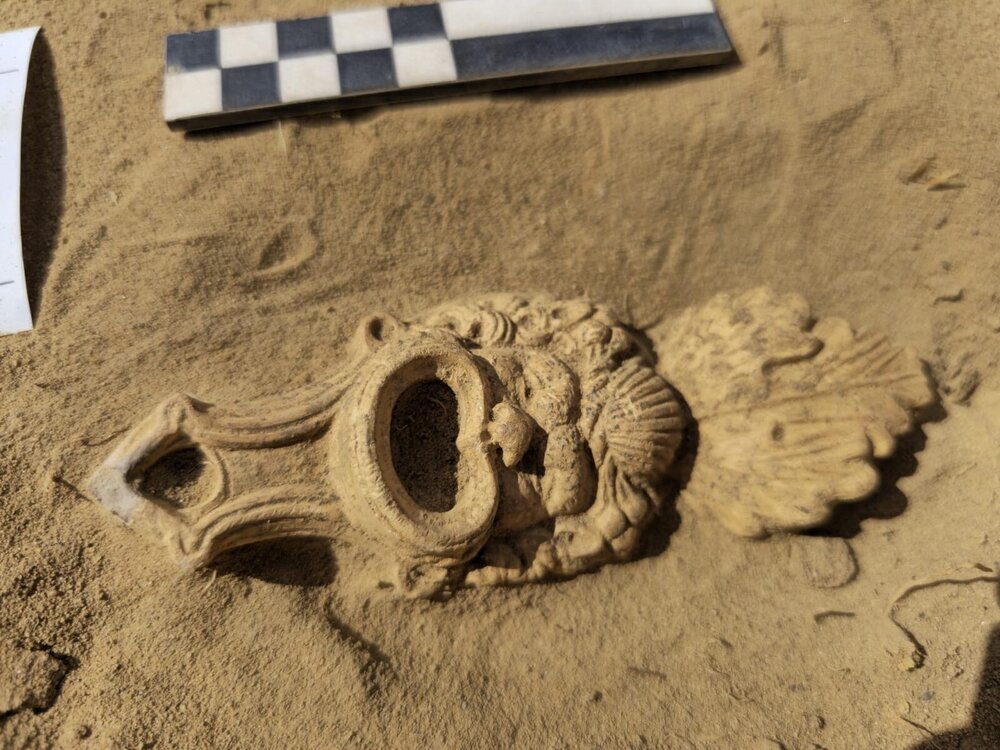
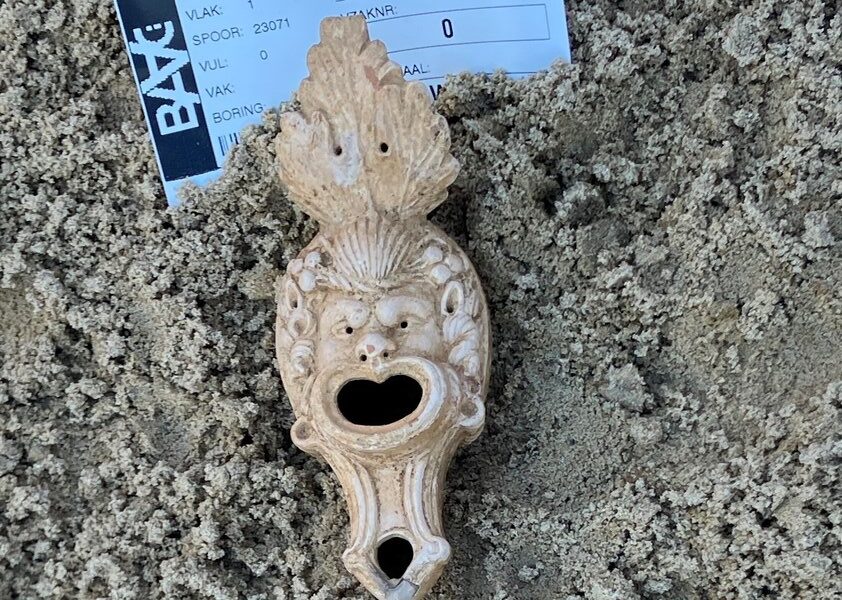
Archaeologists in Cuijk, North Brabant, have unearthed a remarkable discovery: a nearly 1,800-year-old Roman oil lamp adorned with a decorative mask. Found during excavations at the former Nutricia site, this artifact is not only intact but also considered a museum-quality piece, making it one of the most extraordinary finds in the Netherlands.
“Its exceptional condition and intricate design make it a true top piece,” said municipal archaeologist Johan van Kampen.
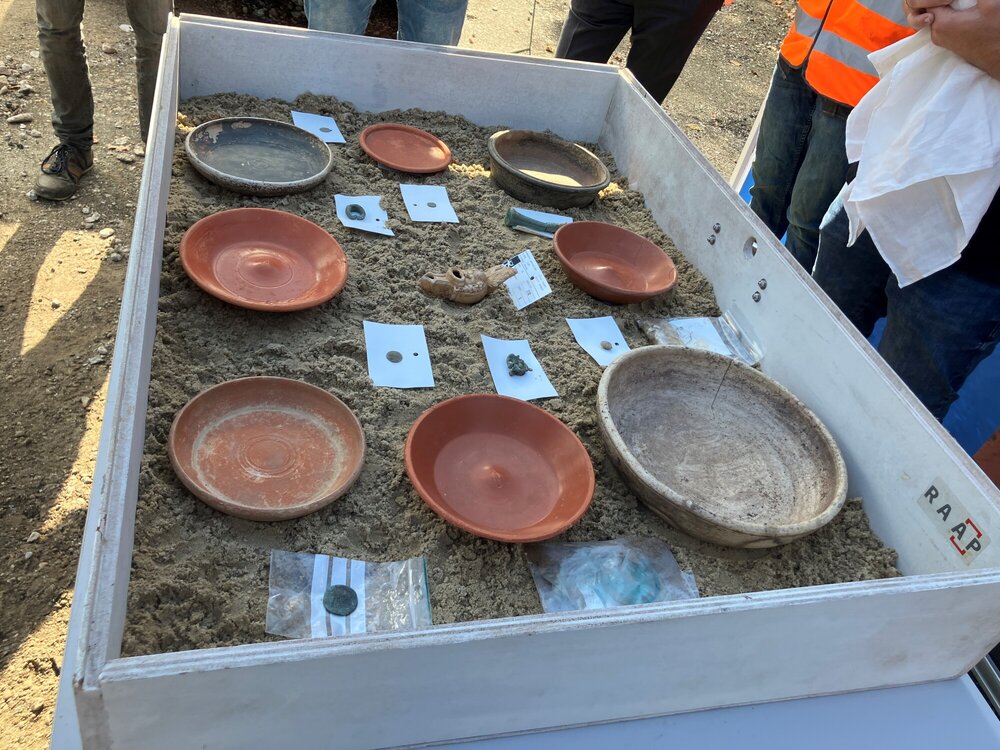
The lamp was found within what is now recognized as the largest Roman burial ground ever uncovered in Brabant. Since excavations began in June, more than seventy graves have been unearthed, revealing coins, vases, jewelry, and other objects that accompanied the deceased into the afterlife. The oil lamp, however, is the centerpiece, both for its artistry and symbolic meaning.
A Symbol of Light in the Afterlife
Dating to the second century AD, the lamp is believed to have been placed in a grave to guide the deceased on their journey to the afterlife. “It was meant to literally and figuratively bring light into the darkness,” Van Kampen explained. The piece’s intricate decorations, including motifs uncommon in the Netherlands, underscore its uniqueness.
While Roman oil lamps have been found before in the region, one with such refined ornamentation is virtually unprecedented. A comparable lamp with a theatrical mask design was reported as a “unicum” in the Netherlands, confirming the extraordinary craftsmanship of these artifacts.
Excavations Reveal Ceuclum’s Wealth and Reach
The burial ground forms part of the ancient Roman settlement of Ceuclum, the name given to what is now Cuijk. Strategically located on the Maas River between Maastricht and Nijmegen, Ceuclum played an important role in regional trade and movement within the Roman Empire.
The sheer scale of the necropolis has surprised experts. Archaeologists are currently examining a 1.6-hectare section, which represents less than a quarter of the entire site. Estimates suggest the burial ground may cover as much as 5.5 to 6 hectares. Remarkably, many of the items uncovered are almost completely intact—a rare occurrence in archaeology. This preservation is likely due to burial customs: grave goods were carefully placed with the deceased and then immediately covered with sand, protecting them for centuries.
“Every spade we put in the ground brings up another story,” said Van Kampen. “Through these objects, we not only see the rituals of the dead but also the wealth and cultural connections of the living.” Indeed, several of the artifacts are believed to have been imported, revealing how integrated Brabant was into broader Roman trade networks.
Brabant’s Roman Legacy
Brabant’s Roman heritage is often overshadowed by the more prominent remains in Nijmegen or Maastricht, yet discoveries like this highlight the province’s deep historical roots. During the Roman era, North Brabant lay at the frontier of the empire, a zone where military, trade, and civilian life intersected. Roman roads and river routes made settlements like Ceuclum vital waypoints for commerce and cultural exchange.
Archaeological evidence across Brabant points to a thriving Roman presence, from farmsteads and villas to military posts. The Cuijk necropolis adds another layer to this story, demonstrating that the community was not only prosperous but also closely connected to Roman funerary traditions. Each grave, with its collection of everyday items, acts as a snapshot of life nearly two millennia ago.
What Lies Ahead
So far, only 15 percent of the Cuijk burial site has been investigated, leaving archaeologists optimistic about further discoveries. Richer graves may still lie hidden, promising new insights into the social hierarchy, economic conditions, and cultural practices of the Roman inhabitants of Brabant.
For the people of Cuijk and the wider province, the findings are more than just academic. They reaffirm the region’s identity as a place where local heritage and European history intertwine. “The soil here is full of stories,” Van Kampen emphasized. “And we’re only beginning to uncover them.”
The discovery of the 1,800-year-old oil lamp not only enriches our understanding of Roman life in the Low Countries but also shines a light—literally and symbolically—on the enduring connection between Brabant and its ancient past.
Municipality of Land van Cuijk
Cover Image Credit: Municipality of Land van Cuijk (Gemeente Land van Cuijk)
