
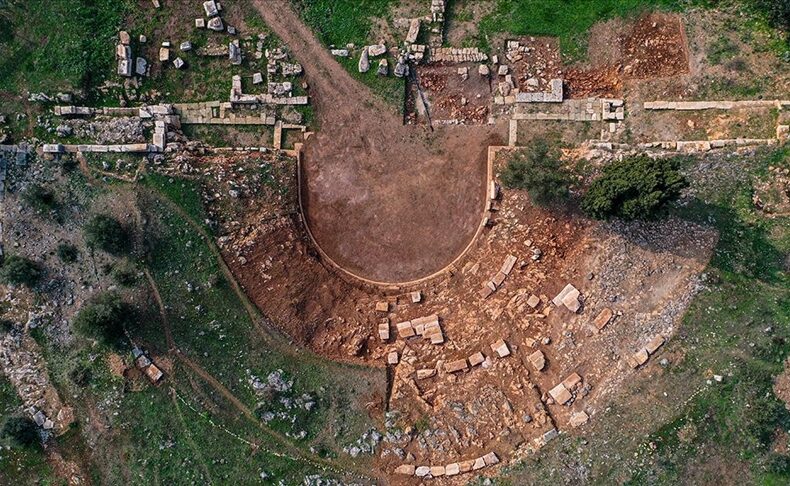
Archaeologists working at the ancient city of Apollonia ad Rhyndacum in Gölyazı, Türkiye, have uncovered a remarkable piece of history: the name of a prominent priestess etched into a Roman-era theatre seat. Dating back to the 2nd century during the Roman Empire, this discovery provides a rare glimpse into the social and religious roles of women in antiquity.
The ancient theatre, located on a hill overlooking Uluabat Lake in Bursa’s Nilüfer district, is believed to have been capable of accommodating around 5,000 spectators. During ongoing excavations, researchers focused on seating areas that had been scattered or displaced over centuries. It was in one of the uppermost rows, known as the summa cavea, that they discovered the inscription reading “Lonidos.” Experts suggest this could be the name of an important female priestess, highlighting the possibility of women holding prominent roles in religious ceremonies or community leadership during the Roman period.
“This discovery is extremely significant,” explained Prof. Dr. Derya Şahin, head of the excavation team from Bursa Uludağ University’s Archaeology Department. “Finding a female priest’s name on a theatre seat suggests she may have been honored or recognized in a formal and visible capacity within the public space. It sheds light on the active role women played in religious life nearly 1,800 years ago.”
The theatre itself is an impressive example of Roman architectural and cultural sophistication. Built during the Hellenistic period and later adapted in the Roman era, the structure features tiered seating, VIP sections reminiscent of modern boxes, and an orchestra measuring approximately 28 meters wide. Archaeologists have been carefully restoring the 42 scattered seats uncovered so far, reestablishing their original positions to preserve the theatre’s historical integrity.
Inscriptions like Lonidos’ are exceptionally rare. Female religious figures in the Roman Empire were often underrepresented in surviving records, yet they sometimes wielded considerable influence within temples and community rituals. The appearance of her name in such a prominent seating area suggests not only social recognition but also potential ceremonial or administrative responsibilities in religious practices.
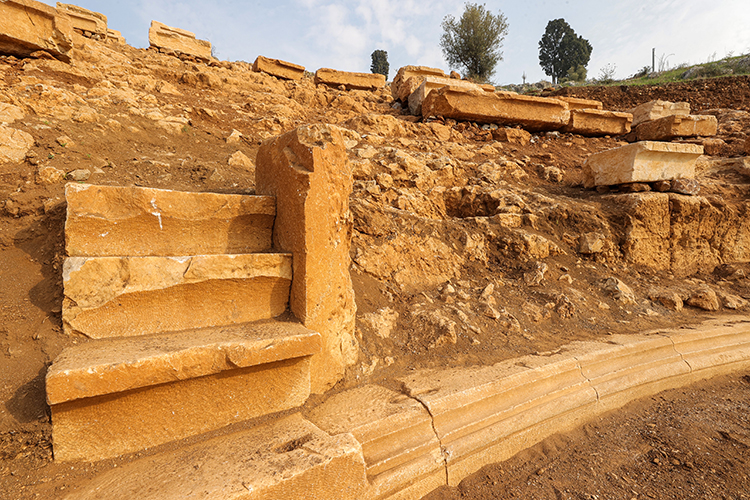
“Seats in the upper cavea were often reserved for notable figures,” Prof. Dr. Şahin added. “The fact that a woman’s name appears here is extraordinary. It opens new discussions about gender and visibility in ancient societies, particularly in Roman provinces.”
The find also has implications for the study of Roman theatre. These venues were more than entertainment spaces—they were cultural hubs where politics, religion, and social hierarchy intersected. Identifying Lonidos’ name on a seat emphasizes the importance of individual identities in shaping the historical narrative of public spaces.
Conservation of the theatre is ongoing. Archaeologists are employing “anastilosis,” a method of restoring structures using original materials, to reposition the 42 recovered seats. Many of these seats were buried or displaced over time, making the task both complex and significant. The restoration not only preserves the structural integrity of the theatre but also allows visitors to experience it as close to its original form as possible.
Public interest in the discovery is already high. Gölyazı, often described as one of Europe’s most picturesque towns, attracts tourists eager to explore its rich history. Exhibiting artifacts such as the Lonidos inscription will provide an educational opportunity to highlight the contributions of women in ancient societies—a topic often overlooked in mainstream historical accounts.
Further research is planned to uncover more about Lonidos’ role and status. Scholars are examining comparable inscriptions and historical sources to better understand the religious and civic duties of women in the region. Each new finding contributes to a more nuanced understanding of gender, culture, and society in Roman antiquity.
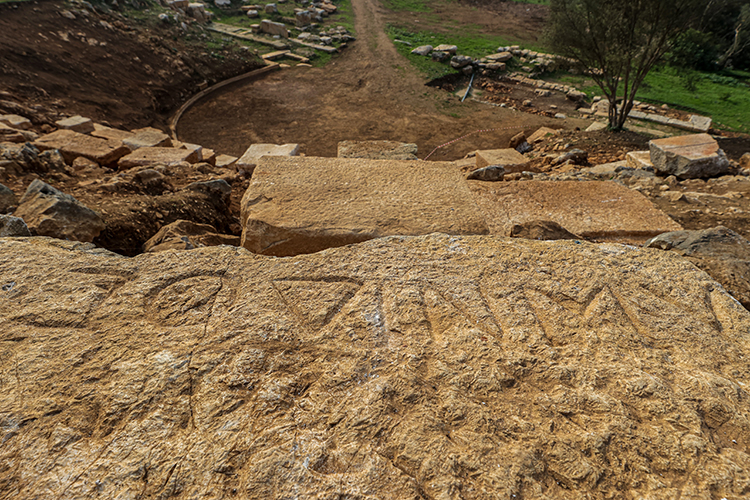
“This is a rare chance to connect with history on a personal level,” Prof. Dr. Şahin said. “Lonidos’ name is not just an inscription; it is a testament to the lives of women who played influential roles in shaping their communities almost two millennia ago.”
The discovery of Lonidos’ name transforms the Gölyazı theatre from a mere archaeological site into a narrative of identity, gender, and religion in the Roman Empire. It underscores the importance of ongoing archaeological work in revealing hidden histories and restoring ancient structures for educational and cultural enrichment.
As excavation and restoration efforts continue, the Apollonia ad Rhyndacum Ancient City is poised to provide further insights into the intersection of architecture, society, and religion in antiquity, reminding us that even small inscriptions can illuminate centuries of human history.
Cover Image Credit: Mustafa Yılmaz/AA
