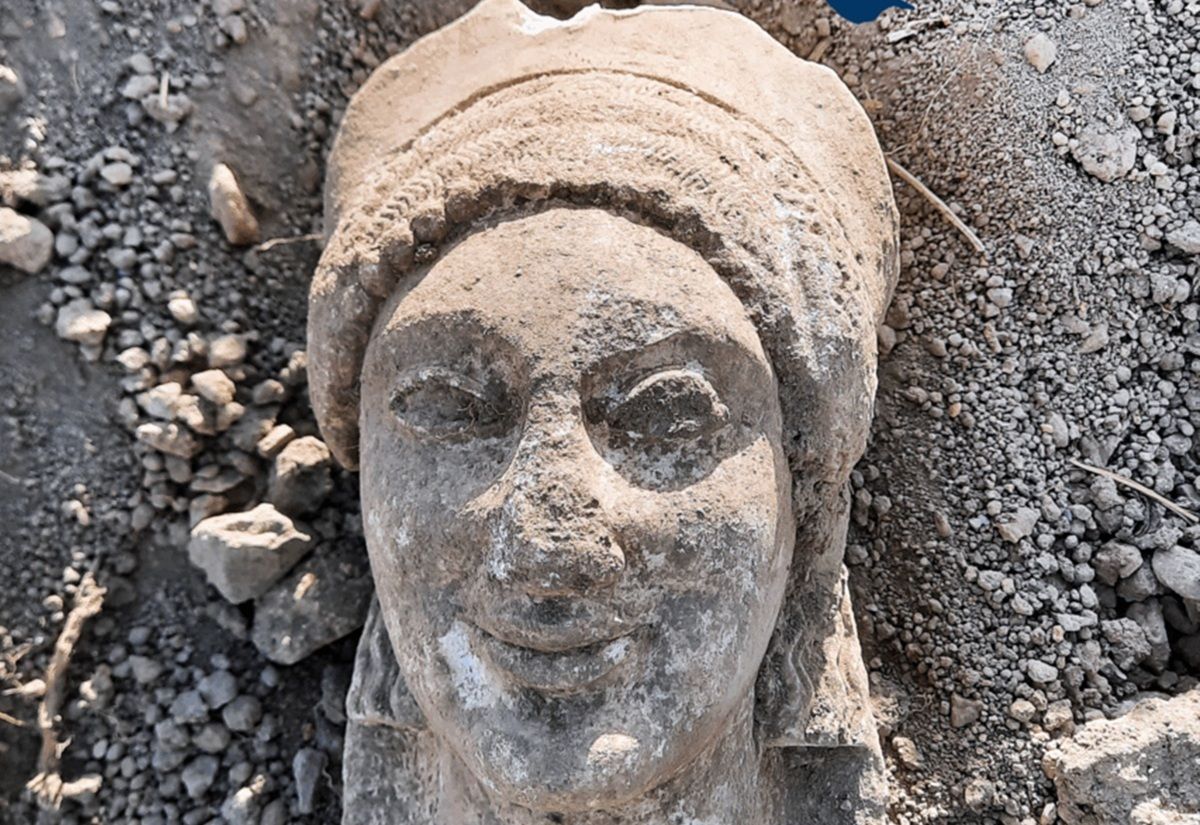
A remarkable archaeological discovery by teams from the University of Freiburg and Johannes Gutenberg University Mainz is reshaping our understanding of cultural exchange in the ancient Mediterranean. Excavations in the former Etruscan city of Vulci have revealed the exquisitely crafted head of a Greek marble Kore statue—an extraordinarily rare example of large-scale Greek sculpture found outside Greece. Estimated to be more than 2,500 years old, the find offers new evidence of artistic transfer, religious links, and political interaction between the Greeks and the Etruscans during the archaic period.
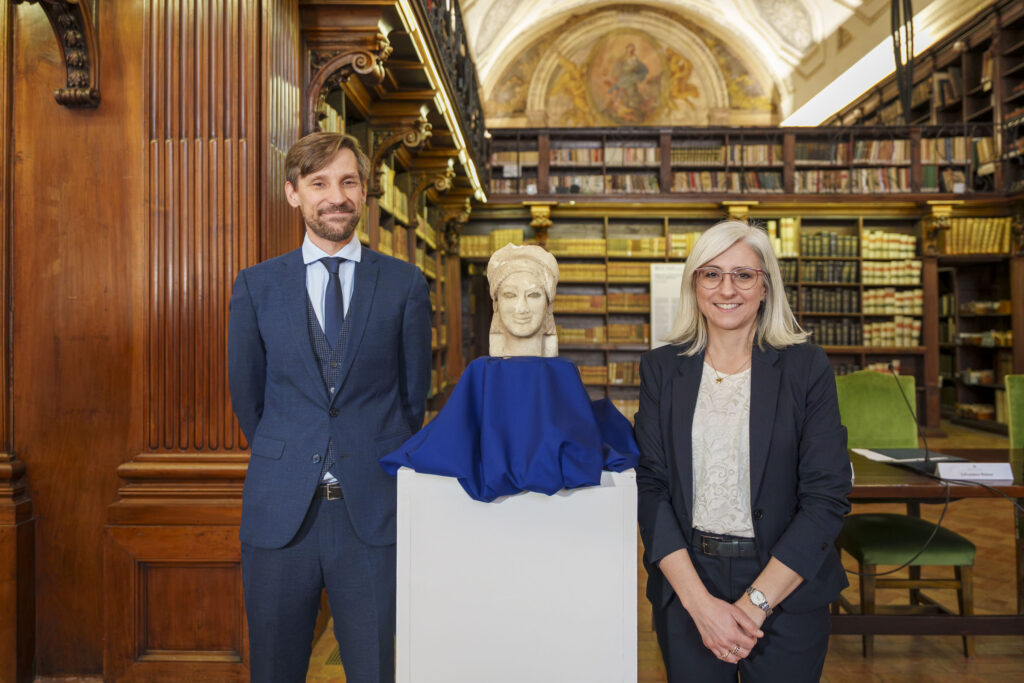
Presented publicly for the first time in Rome in the presence of Italy’s Minister of Culture Alessandro Giuli, the discovery marks a turning point in the ongoing “Vulci Cityscape” research project, which has been investigating the urban development of one of Etruria’s most powerful ancient cities since 2020.
A Find That Challenges Historical Assumptions
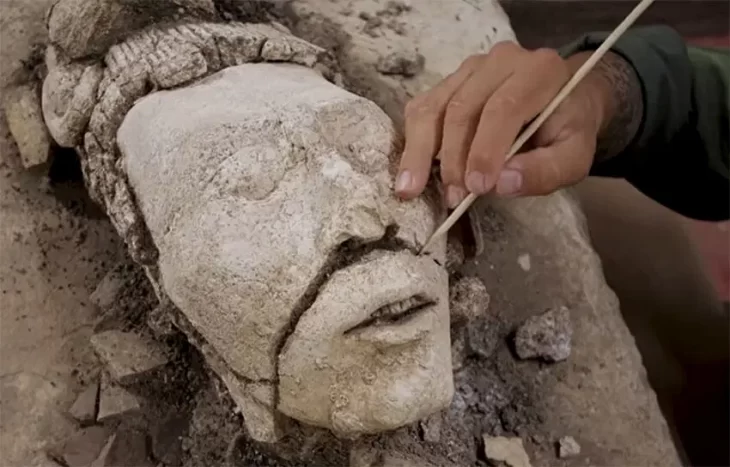
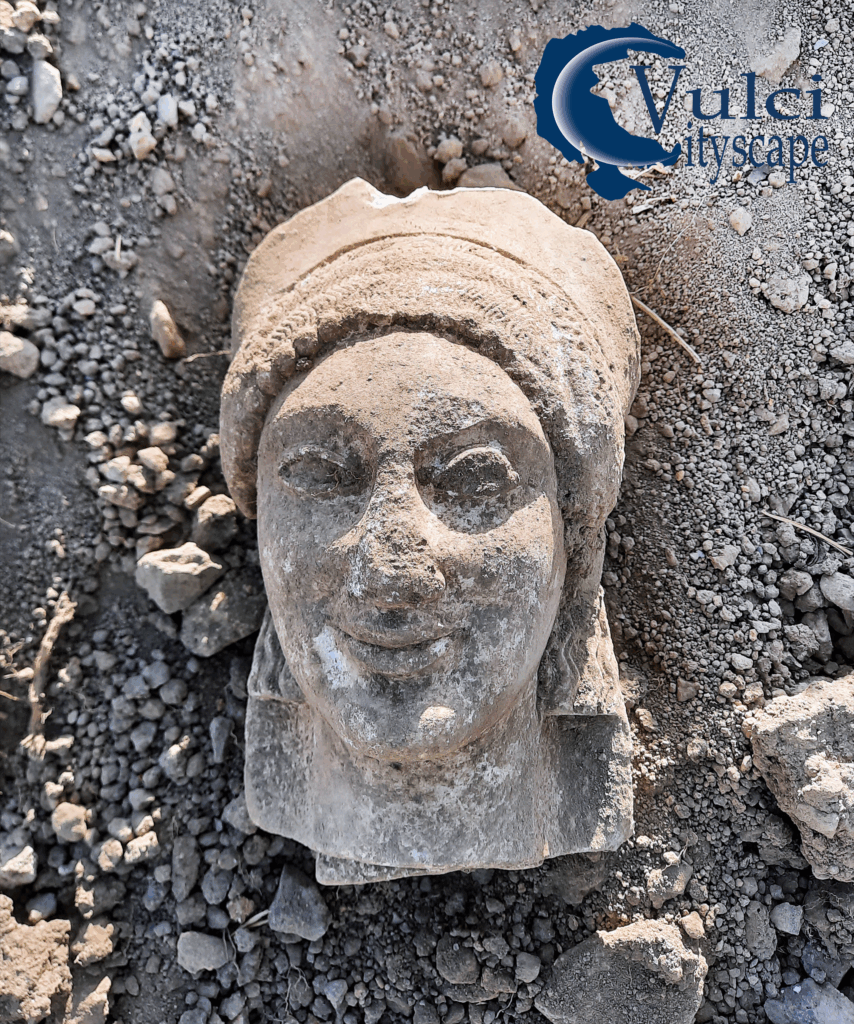
The newly uncovered statue head was discovered within the remains of a monumental late-archaic temple, itself only identified by archaeologists in 2020. Buried beneath the soil of the Latium region for over two millennia, the Kore head lay astonishingly well preserved. Few large marble sculptures of Greek origin have ever been recovered from Etruria, and none with comparable craftsmanship or intact detail.
According to Dr. Mariachiara Franceschini of the University of Freiburg and Dr. Paul P. Pasieka of the University of Mainz—co-directors of the Vulci Cityscape project—the sculpture provides fresh confirmation that Greek-Etruscan contact was far more extensive than previously believed.
“Greek pottery has long dominated our understanding of cultural interaction between Greece and Etruria,” Franceschini explained. “But this statue reveals a deeper, more sophisticated pattern of exchange, including the movement of high-quality sculpture, artisans, and religious ideas.”
📣 Our WhatsApp channel is now LIVE! Stay up-to-date with the latest news and updates, just click here to follow us on WhatsApp and never miss a thing!!
A Kore With Athens in Her Features
The marble head represents a Kore, a type of statue depicting a young woman, typically shown in richly detailed clothing and often linked to religious offerings or funerary monuments. This particular Kore shares striking similarities with the famous statues of the Athenian Acropolis.
The sculpture’s stylistic features—its carefully arranged hairstyle, delicately modeled facial structure, and a finely carved diadem—point unmistakably to an Attic workshop, likely in Athens, around the early 5th century BCE.
“We believe it was crafted in Attica and imported to Etruria,” Pasieka said. “That alone signals a level of artistic exchange far beyond what is commonly assumed for this period.”
Even more remarkable are the traces of original paint preserved on the marble surface. These pigments, rarely found in such condition on ancient sculpture, will help researchers reconstruct the statue’s original appearance and offer new insights into ancient polychromy.
A Temple Inspired by Greece, Built by the Etruscans
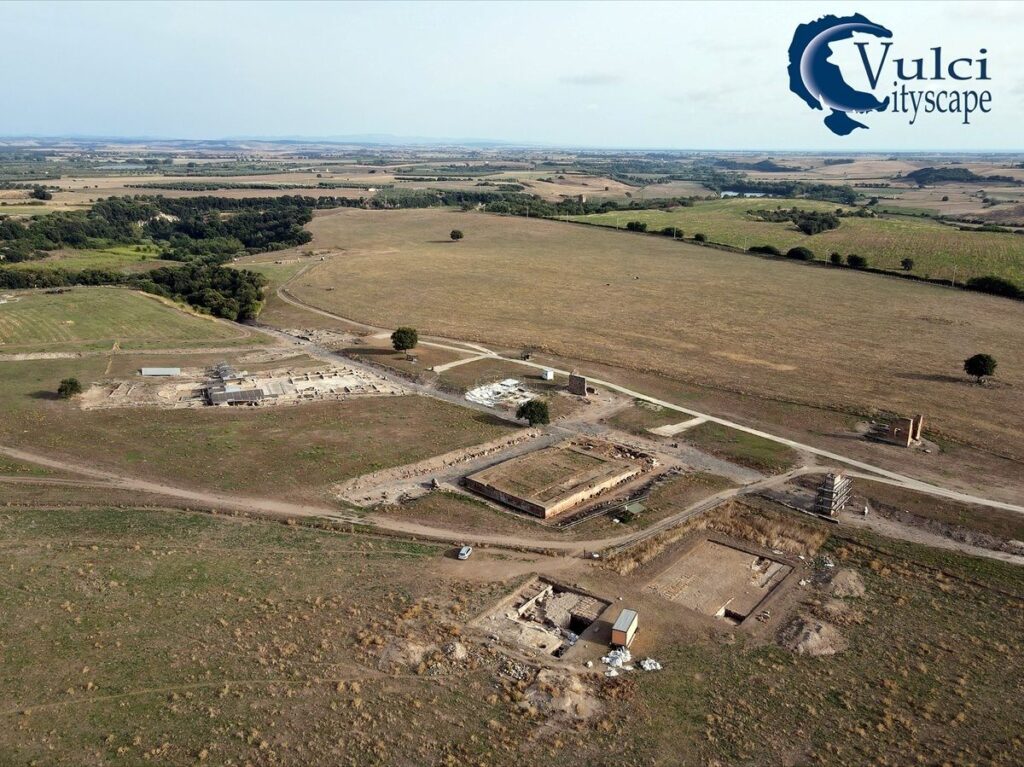
The Kore head was found in the area surrounding a monumental temple constructed at the transition from the 6th to the 5th century BCE. The building belongs to the architectural tradition of Etrusco-Italic peripteroi—temples with a central cella and a surrounding colonnade, clearly influenced by Greek prototypes.
This temple stood alongside the well-known Tempio Grande, forming a sacred district that dominated the city’s central plateau.
Archaeologists suspect that the Kore may have been part of a larger sculptural program linked to the temple’s early history—either as a votive figure or as part of a religious monument. Although further excavation is required to establish the statue’s exact original context, its association with such a significant architectural complex suggests that Vulci’s political and religious elites were actively engaging with Greek artistic traditions.
Rewriting the Story of Vulci’s Golden Age
During the 6th and 5th centuries BCE, Vulci was one of the most powerful Etruscan city-states, controlling trade routes that connected the Tyrrhenian Sea with the inland regions of central Italy. The city flourished as a cultural crossroads, and the discovery of the Kore head reinforces this narrative of openness and exchange.
“The early 5th century BCE was an extraordinary moment of artistic and cultural innovation not only in Greece but also in Etruria,” Franceschini noted. “This find places Vulci firmly within that shared history.”
While imported Greek pottery has long testified to trade between the two civilizations, the arrival of monumental sculpture implies more direct cultural contact—possibly even the involvement of Greek craftsmen working in Etruria.
Future Excavations Promise More Revelations
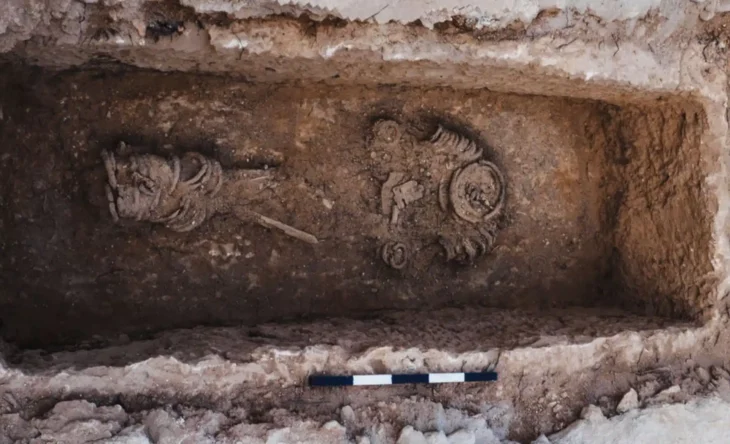
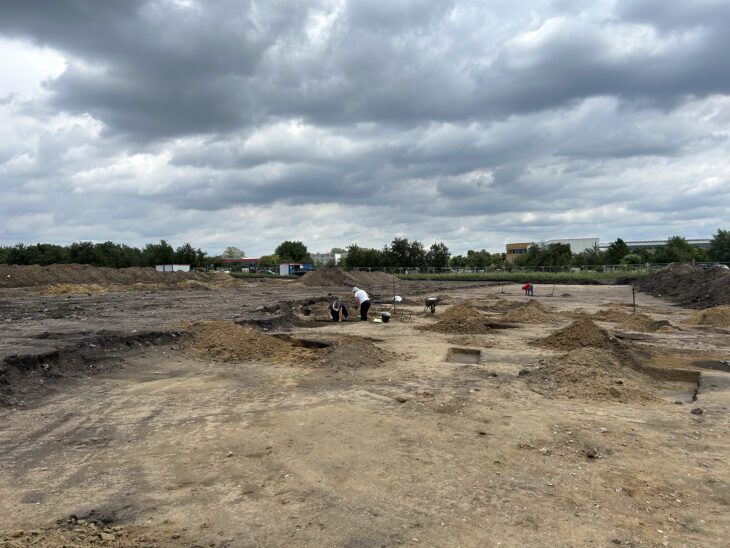
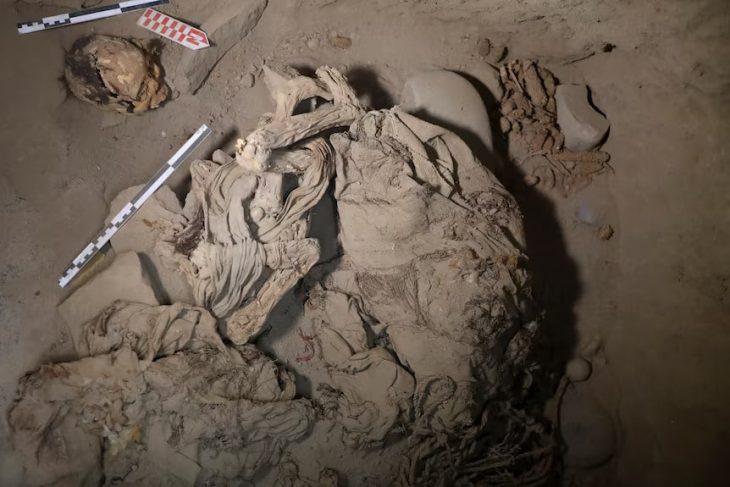
The Kore discovery is only one chapter in what archaeologists expect to be a multi-year investigation of Vulci’s temple district. Recent excavations have already uncovered evidence of activity spanning from the city’s Bronze Age origins through late antiquity and the early Middle Ages. A set of late-antique burials found during the 2025 excavation season underscores the site’s long-term significance.
Upcoming campaigns will continue to deploy advanced archaeological methods—including remote sensing, stratigraphic micro-excavation, and digital reconstruction—to understand how Vulci’s urban landscape evolved over centuries.
International Collaboration at the Heart of the Project
The Vulci Cityscape project stands as a model of international cooperation, uniting German universities with key Italian heritage authorities in a long-term effort to reconstruct the ancient city’s urban history.
The work is carried out in close collaboration with the Soprintendenza Archeologia Belle Arti e Paesaggio per la provincia di Viterbo e per l’Etruria Meridionale, as well as the archaeological park of Vulci, whose teams play an essential role in coordinating local logistics, conservation efforts, and site stewardship.
This multinational initiative is made possible through substantial support from several major research foundations, including the Fritz Thyssen Foundation, the Gerda Henkel Foundation, and the German Research Foundation (DFG). Since 2024, the DFG has provided continuous funding, ensuring that the project will be able to advance its archaeological and analytical work at least through 2027.
A Landmark Discovery for Mediterranean Archaeology
The Kore head from Vulci stands as one of the most important archaeological finds in recent decades. It bridges two major ancient cultures, challenges established scholarly assumptions, and enriches our understanding of artistic exchange across the Mediterranean world.
As restoration continues at the Istituto Centrale per il Restauro in Rome and researchers prepare the first scholarly publications on the find, the Kore promises to reshape historical narratives surrounding archaic Vulci—and perhaps reveal that the city’s connection to the Greek world was far stronger than anyone imagined.
Johannes Gutenberg University Mainz
Cover Image Credit: The Kore statue head at the time of discovery. Mariachiara Franceschini