
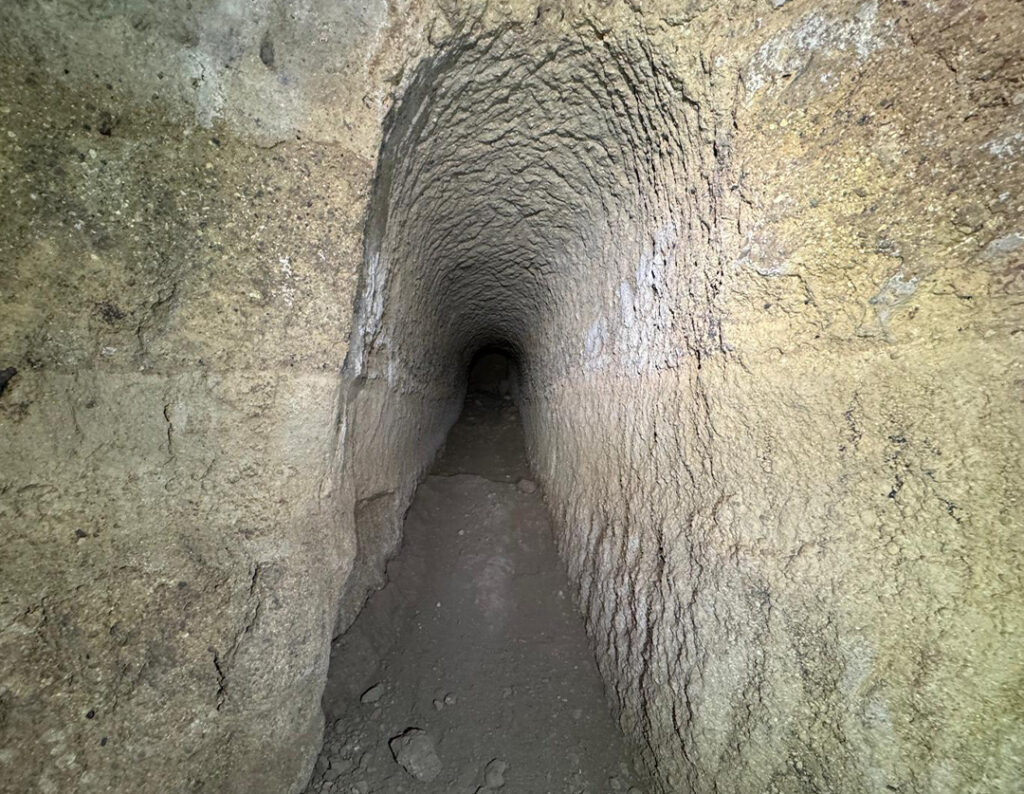
For the first time, archaeologists have completed a full technological mapping of the underground tunnel system beneath the ancient Etruscan city of Veio, a major urban center that once rivaled early Rome. Using state-of-the-art rover technology—originally developed for aerospace missions—researchers have reconstructed a complex subterranean landscape: hydraulic systems, ritual basins, hidden channels, cisterns, wells, and long-forgotten galleries that underpinned one of the most sophisticated cities of pre-Roman Italy.
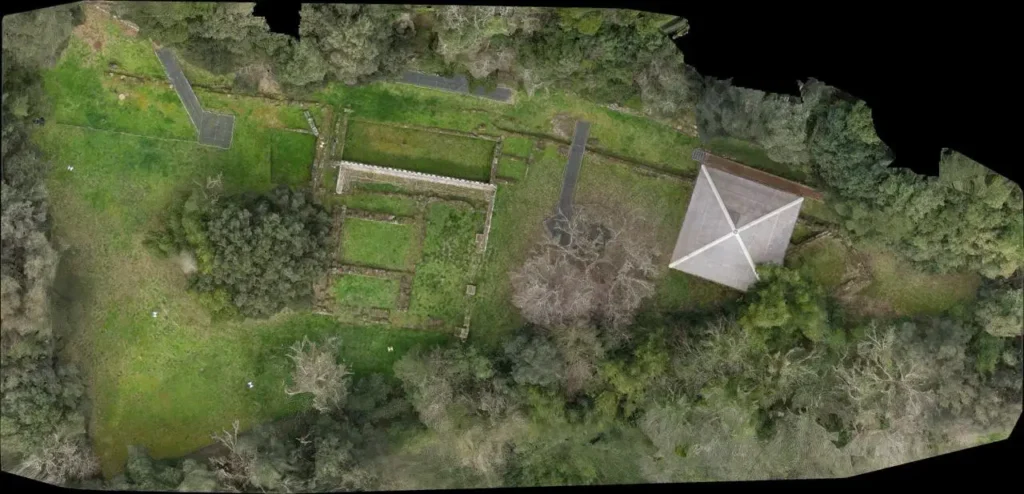
The new investigation is part of a multi-institutional project supported by Italy’s Ministry of Culture, led by the Museo Nazionale Etrusco di Villa Giulia and Sapienza University of Rome. The work focuses particularly on the Sanctuary of Portonaccio, one of the most important religious complexes of ancient Etruria and home to the famous temple of Apollo.
A Technological Leap in Etruscan Archaeology
Archaeologists deployed the autonomous rover Magellano, equipped with a NASA-inspired rocker-bogie suspension system, to navigate the tight and irregular underground passages beneath Veio. The rover transmits real-time data and imagery via radio link, allowing researchers above ground to monitor progress in areas too narrow or unsafe for humans.
The aim is not simply exploration—it is systematization. For the first time, the entire underground hydraulic infrastructure that connected the Campetti plateau, the sanctuary terrace, and the Cannetaccio valley has been digitally documented. The highlight is the large sacred pool situated beside the Apollo temple, a crucial feature of Etruscan ritual practice later reused by the Romans after their conquest of Veio in 396 BCE.
This integration of geophysical survey, archaeological mapping, and autonomous robotics marks a turning point in how Etruscan cities are studied. It also exposes just how advanced Etruscan engineering truly was: subterranean water management, monumental sanctuaries, intricate urban planning, and ritual architecture far older than the Roman world that would eventually absorb it.
Veio: The Etruscan City That Nearly Stopped Rome
Long before Rome became an imperial power, it had a formidable rival at its northern doorstep: Veio (Latin: Veii). Located only 12–15 km from the Roman Forum, Veio controlled the Tiber River corridor, rich agricultural land, and mineral resources from the surrounding region. In the Early Iron Age and Archaic period, it was one of the leading cities of the Etruscan League, a loose confederation of culturally connected city-states.
Veio’s influence stretched across central Italy. It dominated trade routes between the Tyrrhenian coast and inland communities, produced exceptional bronzes and terracotta sculpture—including the renowned Apollo di Veio—and developed sanctuaries such as Portonaccio into influential religious hubs. Its military strength was significant enough to draw Rome into decades of conflict, culminating in the legendary ten-year siege narrated by Livy. When Veio finally fell in 396 BCE to the Roman general Marcus Furius Camillus, the geopolitical balance of central Italy changed forever.
The modern mapping of its tunnels shows why Veio resisted so effectively: the city relied on a sophisticated water system and hidden subterranean passages that facilitated defense, mobility, and ritual activities. The new dataset confirms that these networks were not random excavations but organized engineering projects.
New Discoveries at the Sanctuary of Portonaccio
The Portonaccio complex is famous for its innovative temple architecture and large terracotta statues. But the new survey reveals something more fundamental: the sanctuary was built atop a carefully managed water landscape.
Instead of isolated water features, the researchers have now demonstrated that the sanctuary and its surroundings were connected by a tightly organized hydraulic system. Channels guided water between ritual areas and more practical zones of the complex, while multiple cisterns reveal the scale of the hydraulic planning underlying daily and ceremonial life. The monumental ritual basin beside the temple of Apollo appears to have served both purification practices and later Roman reuse, acting as a central node in the sanctuary’s spiritual topography. All of this was supported by a network of subterranean passages—constructed not only for maintenance of the hydraulic system but also likely used for specific ceremonial or processional functions within the sacred precinct.
The combination of religious iconography, water control, and architectural planning paints a picture of Etruscan spirituality as deeply intertwined with landscape engineering. This is a culture that aligned natural forces, ritual meaning, and urban planning long before the Romans systematized similar practices.
Etruscan Legacy: What We Still Don’t Know
Despite their influence, the Etruscans remain one of antiquity’s most enigmatic civilizations. Their language is only partially understood, their origins are still debated, and their religious practices—though visible in monumental sanctuaries like Portonaccio—contain layers of symbolism that scholars continue to decode.
The new mapping project may offer crucial clues. The tunnels, the sacred pool, and the hydraulic layout may preserve information about purification rites, processional routes, and the interplay between divinity and water in Etruscan belief. As excavation director Luana Toniolo notes, the findings represent “a completely new dataset” for understanding Veio’s inner workings. Meanwhile, Italy’s Director General of Museums, Massimo Osanna, emphasizes that the project demonstrates how advanced technology can rewrite archaeological narratives—especially in sites where traditional excavation is limited.
Veio is not just another ancient settlement—it is a cornerstone for understanding the birth of urban Italy. Every new piece of data helps illuminate how the Etruscans shaped early Mediterranean civilization and influenced Rome itself. With the first full mapping of the city’s underground world, archaeologists now have a blueprint for future research—one that promises to bring clarity to a culture that has long existed in the shadows.
Ministero della Cultura (Italy Ministry of Culture)
Cover Image Credit: Ministero della Cultura (Italy Ministry of Culture) via Facebook
