
8 December 2025 The Future is the Product of the Past

An Unprecedented Discovery: Archaeologists Found a Viking Age Vulva Stone -A Counterpart to Phallic Symbols?

Archaeologists in Norway may have uncovered the first known vulva stone from the Viking Age. The find could reshape our understanding of gender symbolism and fertility cults in Norse culture.

A Surprising Find in a Viking Grave

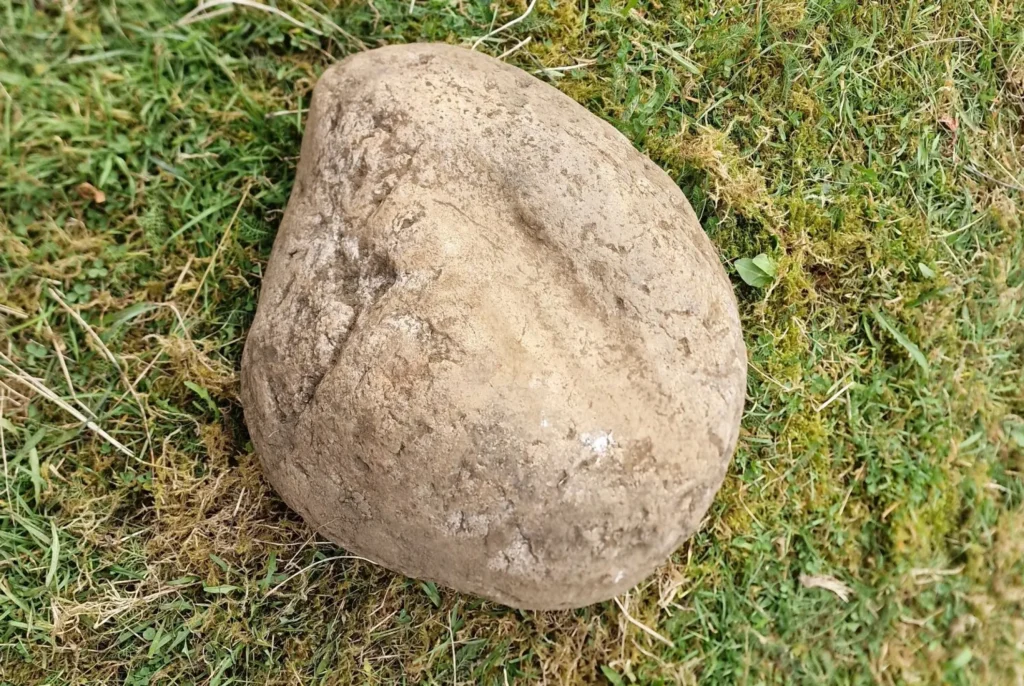
When researchers turned over a peculiar stone in a Viking Age grave at Skumsnes farm in Western Norway, they were astonished. The smooth, rounded object appeared to resemble female genitalia. For archaeologist Søren Diinhoff from the University Museum of Bergen, the symbolism was too striking to ignore.

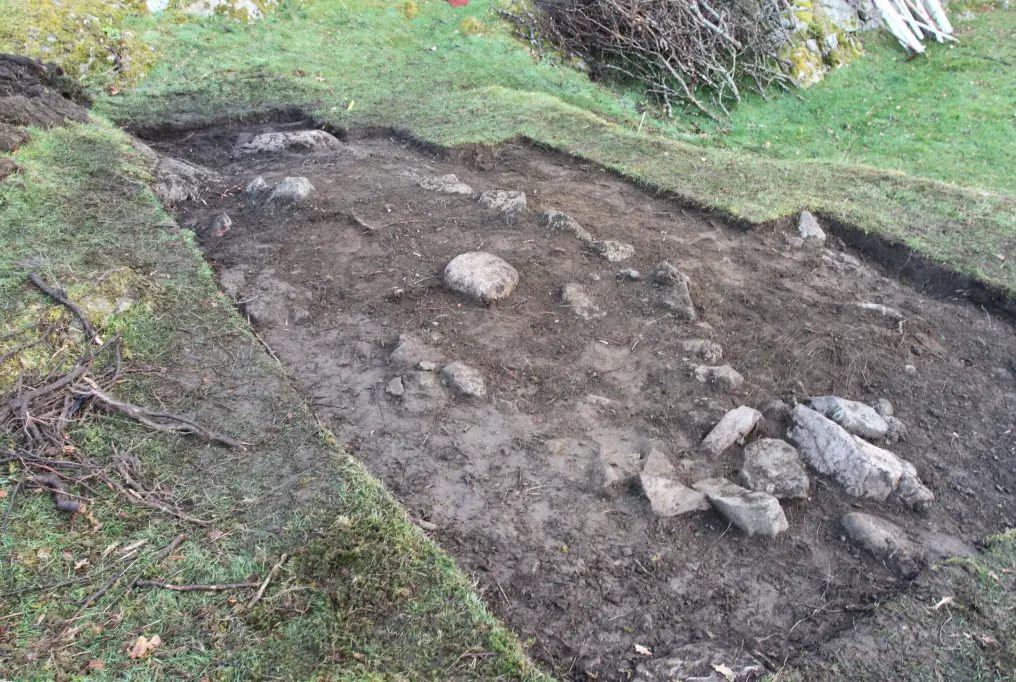
“The stone from the Skumsnes grave, I believe, is such a clear symbol that even an old sceptic like me must acknowledge it,” Diinhoff explained. The stone was discovered in autumn 2024, placed at the center of a ship-shaped grave belonging to a woman—precisely where the mast of the boat would have stood.

Vulva Stones: A Counterpart to Phallic Symbols?

For decades, archaeologists have uncovered phallic stones across Scandinavia, many of them linked to fertility rituals and male graves. But a vulva stone? That would be unprecedented. According to Diinhoff, the stone’s placement and unusual shape suggest it was chosen deliberately to symbolize the woman buried there.

Archaeologist Torun Zachrisson of the Uppland Museum in Sweden agrees that such an interpretation is possible. She points to figurines from Denmark and northern Germany, dating as far back as 500 CE, that highlight female genitalia and may be linked to the fertility goddess Freyja. “It’s not unthinkable that such objects were connected to goddess worship,” Zachrisson notes.


📣 Our WhatsApp channel is now LIVE! Stay up-to-date with the latest news and updates, just click here to follow us on WhatsApp and never miss a thing!!


The stone, interpreted as a vulva stone, was discovered at the center of the grave, positioned between a necklace and a bronze key. Archaeologists emphasize that its placement was deliberate, not random. Credit: University Museum of Bergen

Fertility and Gender in Viking Rituals

The Viking Age (c. 793–1066 CE) was steeped in rituals surrounding fertility, death, and rebirth. Scholars have long debated the symbolic meaning of grave goods and stone arrangements. While phallic stones have often been interpreted as male fertility markers, round grave orbs found in women’s graves may have represented female fertility, eggs, or even bread—themes tied to life-giving power.

On the Swedish island of Lovö, for instance, grave orbs were found in half of all women’s burials. Archaeologist Bo Petré has suggested these orbs represented the ability to give life through childbirth. Could the Skumsnes stone represent a similar, but far more direct, symbol of womanhood?

Skepticism Among Experts

Not all archaeologists are fully convinced. Marianne Moen, head of Archaeology at the Museum of Cultural History in Oslo, warns that vulva symbolism can be difficult to prove. “The shape of the stone allows for many possible interpretations,” she says. Unlike phallic stones, which are often unmistakably carved, the Skumsnes stone was likely unaltered, though it was carried from far away and stood out among the local grave materials.

Archaeologist Frans-Arne Stylegar has even suggested the object could have been a stone anchor used in Viking boat graves. Still, he acknowledges its symbolic role, whether linked to fertility or ritual.
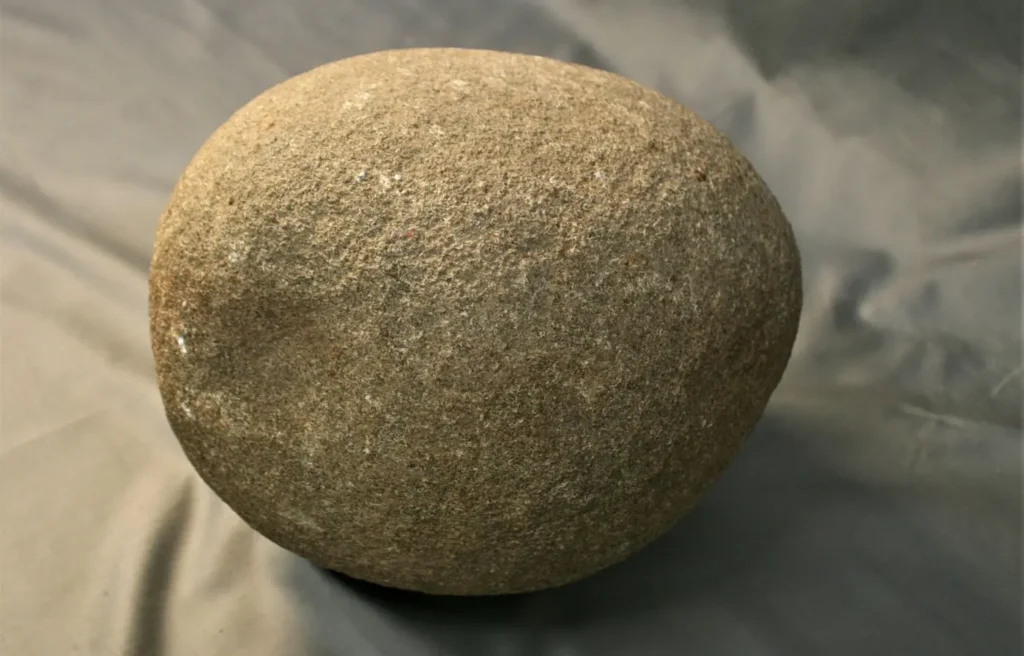
A grave orb from Södermanland, featuring a dent on one edge. The stone dates between 500 and 1000 CE, according to the Sörmland Museum. Credit: Sörmland Museum

Rethinking Viking Symbolism

The possible discovery of a vulva stone challenges long-standing assumptions about gendered symbolism in Viking archaeology. Historically, the focus has leaned toward male-associated artifacts, mirroring the patriarchal structures of the Late Iron Age. Yet, as Swedish archaeologist Rebecka Jonsson points out, “It really does seem like a fairly solid interpretation, given the context of the grave.”

If confirmed, the Skumsnes find may represent a female counterpart to the many phallic stones of Scandinavia—highlighting the spiritual and cultural significance of women in Norse society.

Looking Ahead

For now, the Skumsnes vulva stone remains unique. Whether it marks the beginning of a broader category of artifacts or stands as a one-of-a-kind symbol is yet to be seen. As Zachrisson concludes: “Time will tell whether more finds of the same kind appear. And if so, whether that means we’ve been overlooking something all along.”

One thing is clear: the stone has sparked new debates about gender, fertility, and symbolism in Viking Age culture. And for archaeologists, it’s a reminder that even the smallest stones can shift the way we see history.

Science Norway

Cover Image Credit: University Museum of Bergen

Related Articles

The ancient necropolis area in Turkey’s Antalya becomes a museum

22 July 2023

22 July 2023

The East Garage Necropolis Area, which was once a public market in the southern province of Antalya and where archaeological...

Assyriologist solves archaeological mystery from 700 BC in Khorsabad, Iraq

7 May 2024

7 May 2024

A new interpretation of a set of temple symbols that have puzzled scholars for more than a century has been...

One of the oldest known mosques in the world uncovered in Israel

23 June 2022

23 June 2022

A team of Israeli archaeologists has discovered what is one of the oldest known mosques in the world. Israeli archaeologists...

The Splendor of the Seven Descending Gods of Tulum Resurfaced

11 February 2024

11 February 2024

The National Institute of Anthropology and History (INAH) says the splendor of the seven Descending Gods of Tulum has resurfaced....

The exciting discovery of a 4000-year-old stone box grave in western Norway

10 November 2023

10 November 2023

Archaeologists report an extremely important 4,000-year-old stone box grave has been unearthed in Western Norway, describing it as the most...

Unique Gold Ring and Crystal Amulet among 30,000 Medieval Treasures Uncovered in Sweden

7 March 2024

7 March 2024

In the Swedish medieval city of Kalmar, archaeologists from the State Historical Museums unearthed the remains of over 30,000 objects...

2,700-year-old Children’s Cemetery unearthed in Turkey’s Tenedos

2 March 2024

2 March 2024

A 2700-year-old children’s cemetery was discovered during ongoing excavations in the ancient city of Tenedos in Bozcaada,  southeast of the...

1700-year-old weaving workshop discovered in southeast Turkey

4 December 2021

4 December 2021

Excavations carried out in the ancient city of Perre in the southeastern province of Adıyaman have unearthed a 1,700-year-old weaving...

In Parion, one of the most important cities of the Troas region, 2,000-year-old mother-child graves were unearthed

1 November 2022

1 November 2022

Archaeological excavations in the ancient city of Parion, the most important harbor city in the Hellenistic era, have uncovered  2,000-year-old...

Medieval Secrets Revealed: Archaeologists Discover Reading Stone Beneath World-Famous University

30 October 2025

30 October 2025

Archaeologists at Oxford uncover a perfectly preserved medieval reading stone alongside ancient halls, manuscripts, and artifacts that shed new light...

Czech archaeologists discovered a unique bronze belt buckle dating back to the eighth century

12 December 2023

12 December 2023

Czech archaeologists have unearthed a bronze belt buckle from the early Middle Ages, depicting a snake devouring a frog-like creature....

3,000-Year-Old Rare Carved Stone Unearthed at Prehistoric Cult Site in Norway

20 August 2025

20 August 2025

Archaeologists in Norway have uncovered a rare 3,000-year-old carved stone at a prehistoric cult site buried beneath clay after a...

A Unique Discovery in Europe: Ancient Stone Circles Cover 2,800-Year-Old Graves of Children in Norway

29 June 2024

29 June 2024

Archaeologists from the Museum of Cultural History in Oslo discovered an unknown burial site in a quarry near Fredrikstad, in...

3000 Years Old Bronze Age Settlement Unveiled Ahead of New Stadium Construction

27 July 2025

27 July 2025

Archaeologists have uncovered an expansive Late Bronze Age settlement in Wolmirstedt, Saxony-Anhalt, ahead of the construction of a new multimillion-euro...

A First in Anatolia: Rare Egyptian God Statue Unearthed in Commagene’s ‘Stairway to Eternity’ Tomb

1 September 2025

1 September 2025

In the ancient city of Perre, once a flourishing capital of the Commagene Kingdom in southeastern Türkiye, archaeologists have uncovered...