
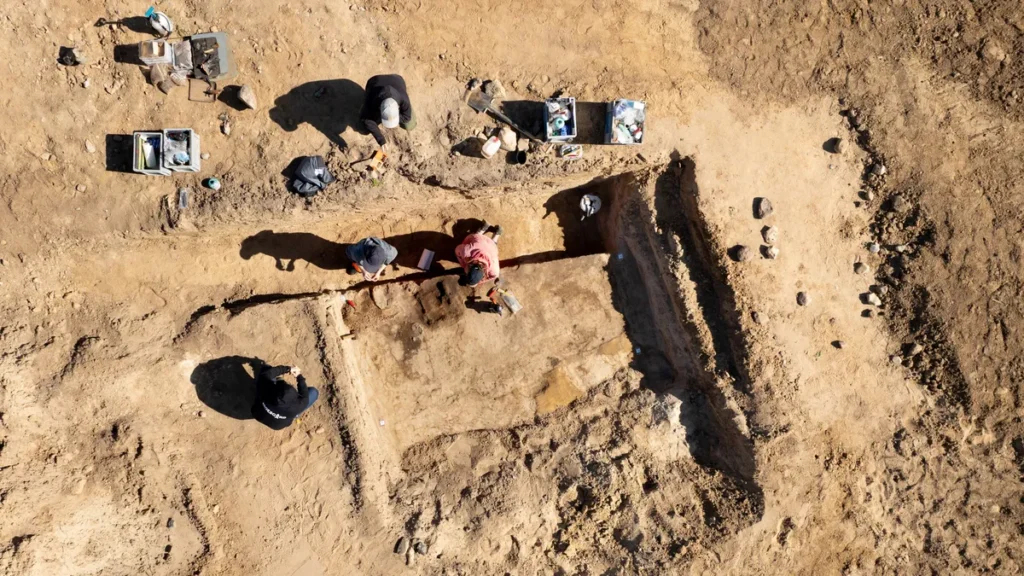
13 January 2026 The Future is the Product of the Past

Viking Tomb Discovery in Denmark May Reveal Elite Family Linked to King Harald Bluetooth

A stunning archaeological discovery near Aarhus, Denmark, has revealed 30 Viking Age graves that may belong to a powerful aristocratic family possibly connected to King Harald Bluetooth — the legendary unifier of Denmark and Norway.

Located in the village of Lisbjerg, just north of Aarhus (known as Aros during the Viking Age), the burial site is part of an elite settlement dating back to the late 900s. Archaeologists from Moesgaard Museum unearthed a wide range of grave goods, including coins, ceramics, glass beads, and a rare wooden casket inlaid with precious metals — all signs of high social status and long-distance trade connections.

Royal Ties and Social Hierarchy

“This burial site at Lisbjerg is quite special,” said excavation leader Liv Stidsing Reher-Langberg. The graves’ varying richness hints at a complex social structure — possibly a chieftain’s family along with servants or enslaved individuals. The nearby discovery of a large fortified manor farm strengthens the theory that this site was tied to the elite ruling class under Harald Bluetooth.

The chieftain who ruled Lisbjerg is believed to have held significant influence, second only to the king, exerting economic, political, and religious power throughout the region.
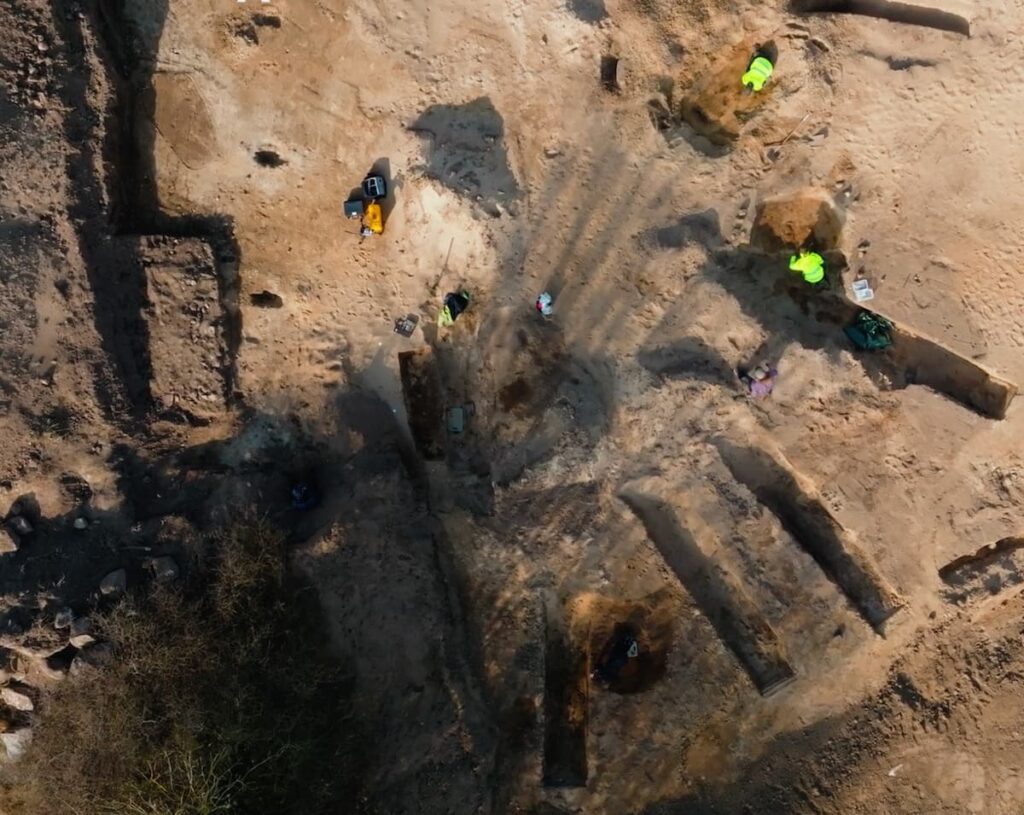
A closer look at the excavation site where 30 Viking Age graves were uncovered near Aarhus, Denmark. Credit: Moesgaard Museum

The Exceptional Woman’s Casket

The most extraordinary find was a finely crafted oak casket, likely owned by a high-ranking woman. Measuring about 32 by 32 centimeters and reinforced with silver fittings, the box featured an intricate locking mechanism. X-ray analysis revealed a silver filigree bead (possibly a brooch), a delicate pair of scissors, a needle, and a gold-threaded ribbon inside — personal items that highlight the owner’s elite status.


📣 Our WhatsApp channel is now LIVE! Stay up-to-date with the latest news and updates, just click here to follow us on WhatsApp and never miss a thing!!


“These types of caskets are extremely rare,” noted Naja Kjærgård Laursen, a spokesperson from Moesgaard Museum. “Only one similar piece has been found, in nearby Haldum.”
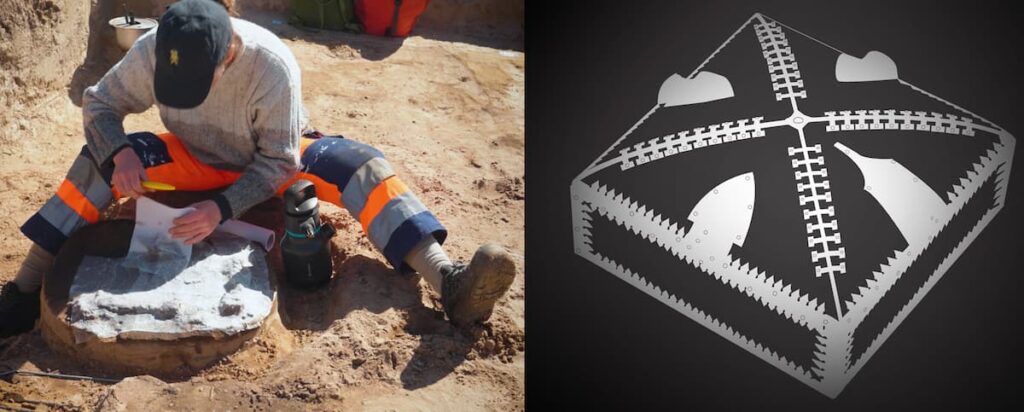
The soil block containing the chest, alongside an X-ray-based illustration revealing its detailed interior. Credit: Moesgaard Museum

Pagan Rituals and Global Connections

The tombs, dated between 900 and 1000 AD, are thought to be pagan, offering a glimpse into Denmark’s pre-Christian funerary practices. The luxurious grave goods — some of them originating from far-off regions — suggest the buried individuals were part of a wide-ranging Viking trade network.

Historian Kasper H. Andersen of the Moesgaard Museum emphasized the significance: “The Aarhus region, especially Aros, was one of the key political and commercial hubs in Scandinavia. These findings reflect a society where elite families held power and maintained international connections.”
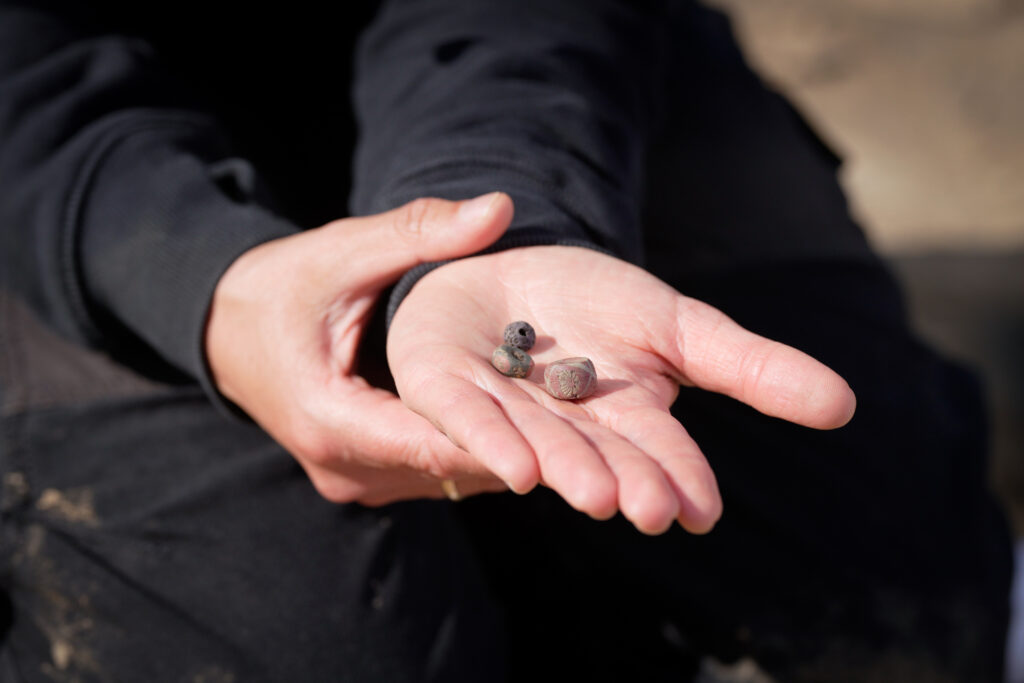

Glass and decorative beads recovered from the Viking burials. Credit: Moesgaard Museum

A Lasting Legacy

Though the area initially showed signs of pre-Roman Iron Age activity, the Viking Age tombs came as a surprise. The nearby manor farm — first excavated in 1989 and linked to Aros by a main road — further reinforces Lisbjerg’s importance as a center of wealth and governance.

Now undergoing conservation and analysis, many of the artifacts will soon be displayed at the Moesgaard Museum. Researchers hope the discovery will spark further studies into Viking Age society, elite burial traditions, and the legacy of Harald Bluetooth’s reign.

Via Ritzau

Cover Image Credit: Archaeologists uncover lavish Viking Age graves near Aarhus, Denmark, revealing elite burials possibly linked to King Harald Bluetooth. Credit: Moesgaard Museum

Related Articles

1900 years old a Customs Inscription from the Lycian civilization reveals Anatolia’s strategic importance in maritime trade

16 September 2023

16 September 2023

A Customs Inscription from the Lycian civilization, located in Andriake port in the southern province of Antalya’s Demre district, tells...

3,500-Year-Old Hittite Linen Fabric Exhibited for the First Time

10 March 2025

10 March 2025

A remarkable artifact, a piece of Hittite linen fabric dating back 3,500 years, has been publicly exhibited for the first...

Isles of Scilly Iron Age warrior buried with a mirror and sword was probably a woman

27 July 2023

27 July 2023

Archaeologists conducted a DNA analysis of the tooth enamel of a person who died more than two millennia ago on...

Rare clay figurine found in Italian Cave dating back 7000 years

26 July 2023

26 July 2023

Archaeologists from Sapienza University of Rome discovered a figure with female features in the Battifratta cave, near Poggio Nativo in...

1,600-year-old Hunnic double burial found in Poland

15 June 2024

15 June 2024

In 2018, archaeologists uncovered a 1,600-year-old double burial in the village of Czulice near Krakow, Poland, containing the remains of...

Saudi shipwreck excavation reveals hundreds of 18th-century artifacts on sunken ship in the north Red Sea

25 February 2022

25 February 2022

Divers from Saudi Arabia’s Heritage Authority have discovered a shipwreck in the Red Sea from the 18th century filled with...

Archaeologists Discover Unique Hieroglyphic Version of Ptolemy III’s Canopus Decree

10 September 2025

10 September 2025

Archaeologists in Egypt uncover a rare and complete hieroglyphic version of the Canopus Decree of King Ptolemy III at Tell...

Unique Roman Cavalry Parade Helmet Recreated

6 April 2024

6 April 2024

Two replicas have been created of the gilded silver unique Roman cavalry helmet that amateur archaeologists found in 2001 while...

10,000-year-old rock art discovered in the Indian village of Medikonda

3 July 2021

3 July 2021

Rock art containing tiger, human and animal figures was found at the Jogulamba Gadwal site in Telangana, India. The New...

Deadly 7.7 quakes hit Turkey destroys historical Gaziantep Castle

6 February 2023

6 February 2023

A deadly 7.7 magnitude earthquake that rocked the southern province of Kahramanmaraş, with tremors felt in the neighboring provinces, has...

Ancient terracotta dancers, and musicians unearthed in China

13 November 2022

13 November 2022

Chinese archaeologists recently discovered a large group of terracotta figurines from a tomb in a group dating to the Northern...

Restored walls collapse in 1500-year-old Shahr-e Belqeys, concerns mount over further damage

12 May 2024

12 May 2024

Recently, a portion of the restored walls of 1500-year-old Shahr-e Belqeys (“City of Belqeys”), a historical city made of mudbricks...

9,200-year-old Noongar habitation discovered at Augusta archaeological dig site

28 July 2021

28 July 2021

An archaeological dig in Augusta, in West Australia‘s South West, has uncovered evidence of Noongar habitation dating back an estimated...

Archaeologists discover Stargazer idol fragment in Turkey’s In the ancient city of Beçin

15 December 2021

15 December 2021

During archaeological excavations in the ancient city of Beçin in the Milas district of southern Turkey’s Muğla, the head of...

Researchers decipher enigmatic ancient ‘Unknown Kushan Script’

13 July 2023

13 July 2023

A research team at the University of Cologne’s Department of Linguistics deciphered a writing system belonging to the Kushan Empire,...