
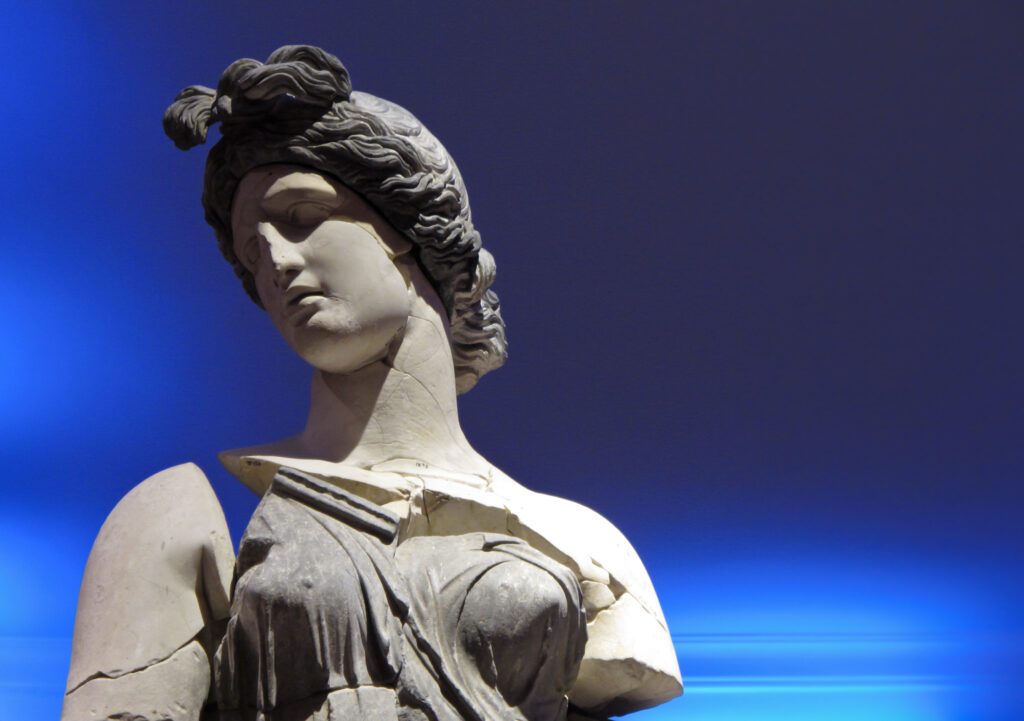
A rare two-colored marble statue from the ancient city of Perge still seems to hold the rhythm of a dance nearly 1,800 years after it was carved. With white marble used for the exposed skin and dark marble shaping the hair and flowing garment, the Roman-period figure turns contrast, movement, and theatrical elegance into a single image.
Known as the Dancing Woman of Perge, the statue is one of the most striking works associated with the ancient city near modern Antalya in southern Türkiye. Unlike the familiar image of white marble sculpture, this figure was carved from two contrasting stones: white marble for the exposed skin and dark marble for the hair and clothing. The result is not only decorative. It creates a visual separation between body and garment, making the figure appear almost alive under changing light.
A Roman statue with Hellenistic movement
The statue is generally dated to the 2nd century AD, a period when Perge was one of the major urban centers of Roman Pamphylia. Roman artists of this era often looked back to Greek and Hellenistic models, but they also developed a taste for dramatic surfaces, technical display, and emotional immediacy.
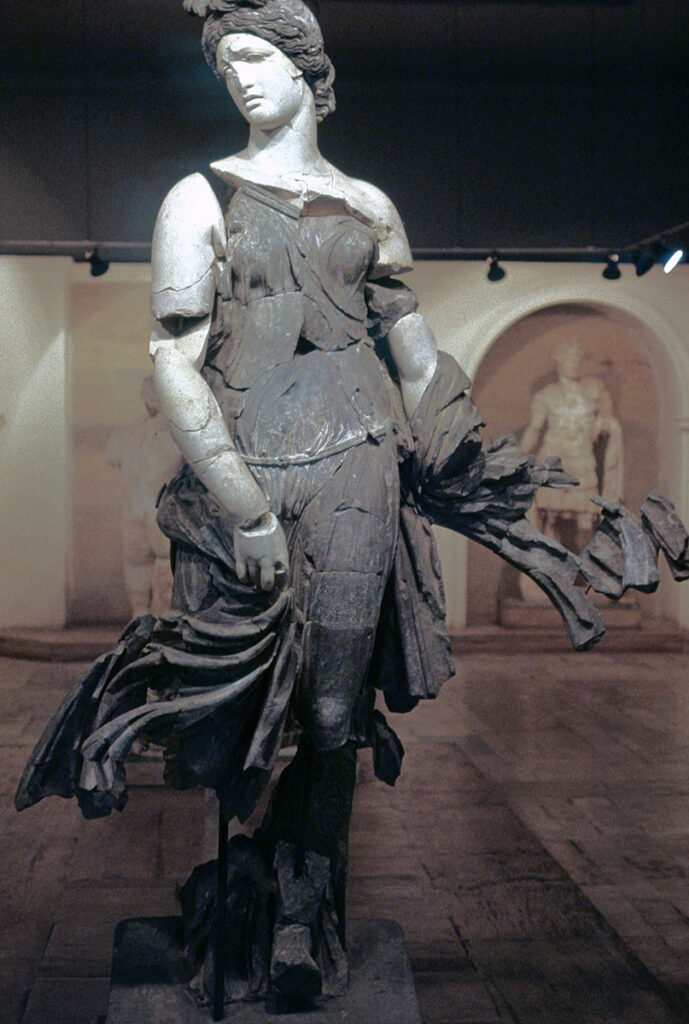
The Dancing Woman fits that world closely. Her body is not presented in a static, frontal pose. Instead, the figure seems caught in the middle of a turn. The garment wraps, lifts, and flows around the body, giving the marble an unusually soft and animated character. This sense of motion recalls the late Hellenistic “rococo” taste, a style known for theatrical poses, swirling drapery, and elegant, almost playful movement.
Color Contrast Carved into the Marble
The statue’s black-and-white composition is its most memorable feature. In ancient sculpture, color was not an exception. Greek and Roman statues were often painted, gilded, or combined with different materials. In this case, the contrast is built directly into the marble itself.
The white stone draws attention to the face, neck, and arms, while the darker stone gives weight and depth to the clothing and hair. This makes the statue more than a depiction of a dancer. It becomes a study in surface, rhythm, and illusion. The sculptor did not simply carve a body; he staged a performance in stone.
Perge and the art of marble
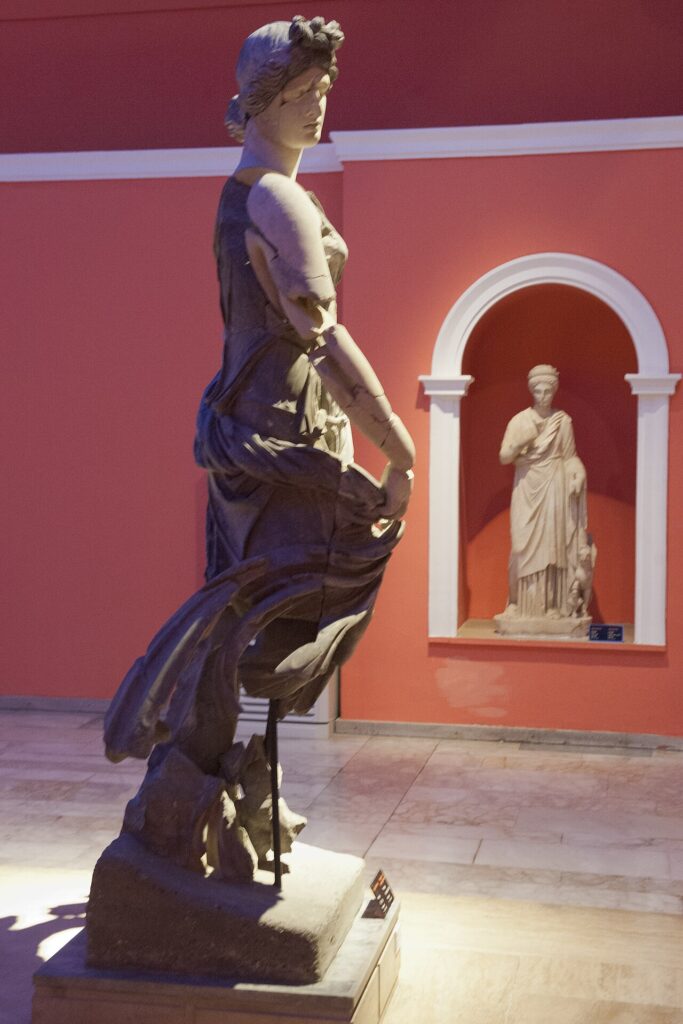
Perge is especially important for Roman-period sculpture in Anatolia. Excavations at the city have produced statues of gods, emperors, civic figures, and mythological subjects, many of them now displayed in the Antalya Museum. These works show the wealth of the city and the strength of its artistic workshops during the Roman Empire.
The Dancing Woman stands apart because it combines technical ambition with visual elegance. Its two-colored marble, dynamic posture, and refined drapery make it one of the clearest examples of how Roman sculpture in Perge could preserve Greek artistic memory while creating something visually fresh.
More than 1,800 years after it was carved, the statue still performs its quiet dance, not through movement, but through the illusion of movement held permanently in marble.
Sculptures of the museum in Antalya
Cover Image Credit: Carlos Delgado – Public Domain
